Artwork
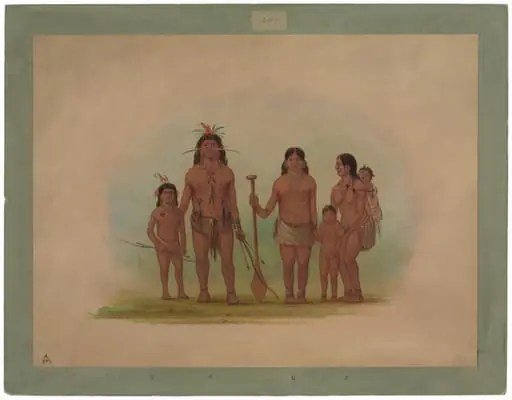
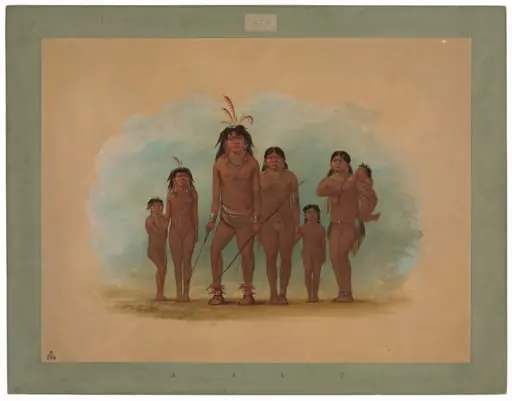
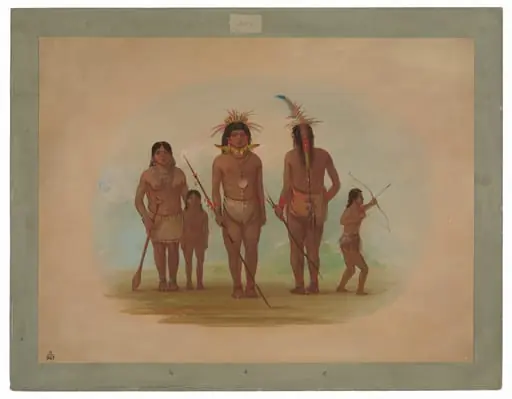
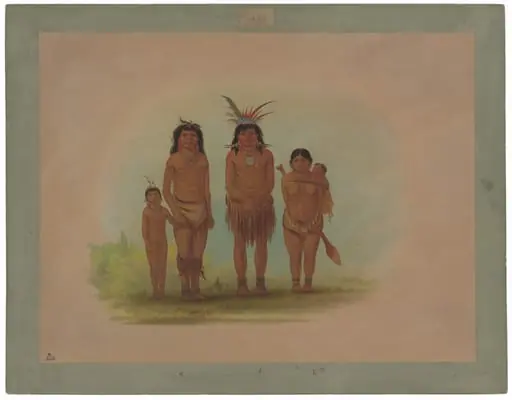
A Connibo Indian Family
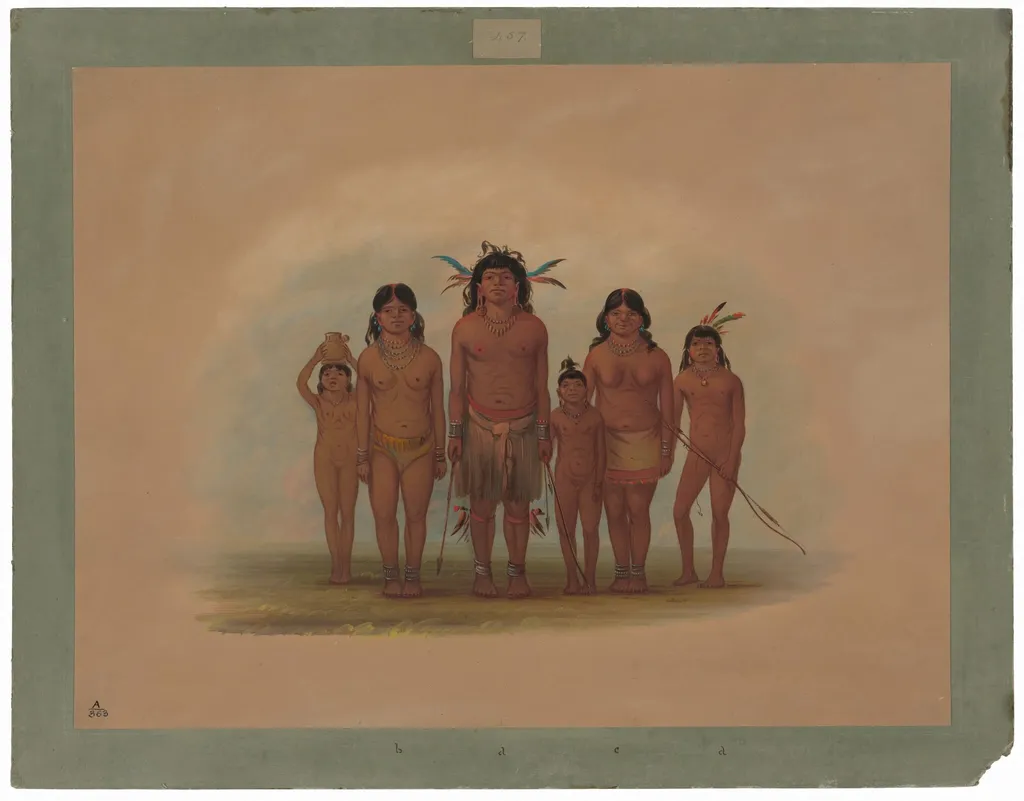
A Connibo Indian Family is an oil painting by the American Folk Art artist George Catlin. It dates from 1862 and is held in the collection of the National Gallery of Art.
About this work
Overview
Created in 1862, *A Connibo Indian Family* is an oil painting executed on card that has been affixed to a paperboard support. The work belongs to the tradition of American folk art and presents a straightforward family portrait of five figures arranged in a linear composition.
Subject & Meaning
The canvas portrays a Connibo family, with two central adults distinguished by feathered headbands and ornamental necklaces, flanked by three other members who hold modest objects such as a pot and a stick. The arrangement emphasizes kinship and daily life, offering a visual record of personal attire and material culture.
Technique & Style
Catlin employed a limited palette of earthy browns and reds, applying the oil medium in a flat, unmodulated manner typical of folk‑art conventions. The background is rendered in a uniform light tone with a faint green wash at the top, allowing the figures and their accessories to remain the visual focus.
History & Provenance
George Catlin (1796–1872), a lawyer‑turned painter and chronicler of the American frontier, produced the piece during his extensive travels among Native peoples. Known for documenting indigenous groups, Catlin’s works were often created on portable supports such as card, facilitating field work and later collection by museums and private patrons.
Artist & collection

Artist
George Catlin ( KAT-lin; July 26, 1796 – December 23, 1872) was an American lawyer, painter, author, and traveler, who specialized in portraits of Native Americans in the American frontier.

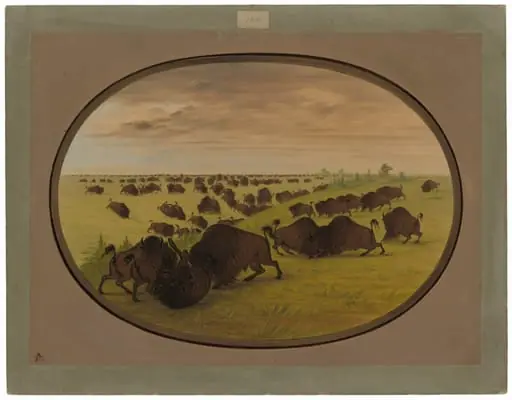 Bulls Fighting
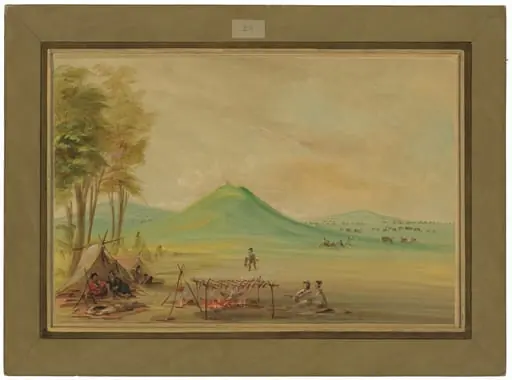 Expedition Encamped on a Texas Prairie. April 1686
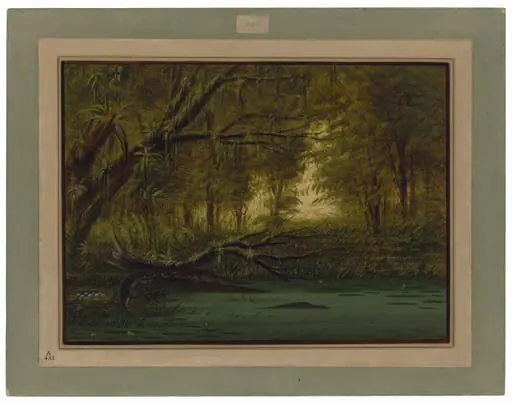 An Alligator's Nest
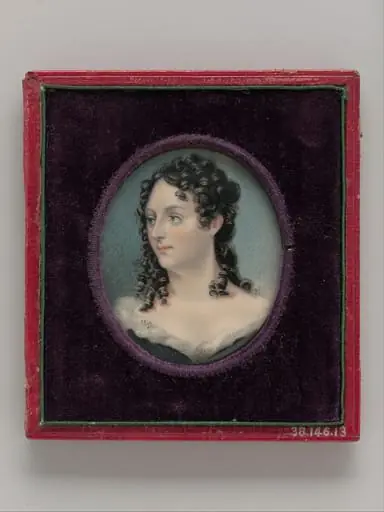 Mrs. George Catlin (Clara Bartlet Gregory)
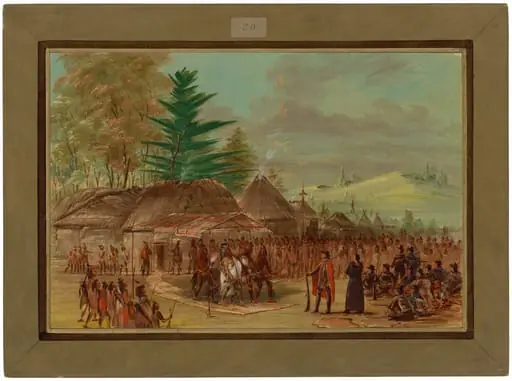 Chief of the Taensa Indians Receiving La Salle. March 20, 1682
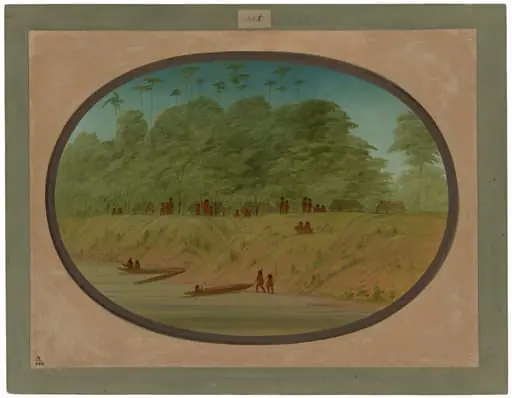 A Small Village - Payaguas Indians
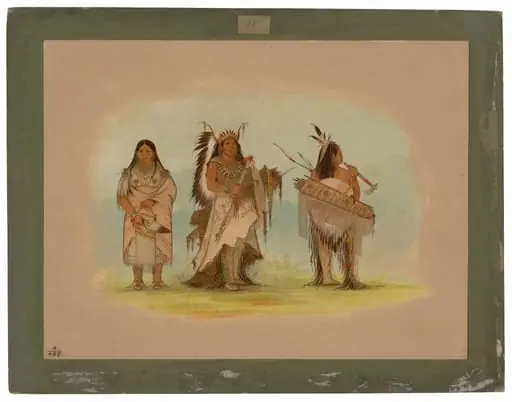 Omaha Chief, His Wife, and a Warrior
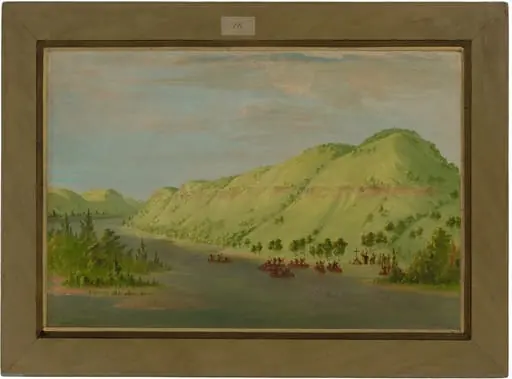 Father Hennepin Leaving the Mississippi to Join La Salle. May 8, 1680