Artwork
A Small Tobos Village
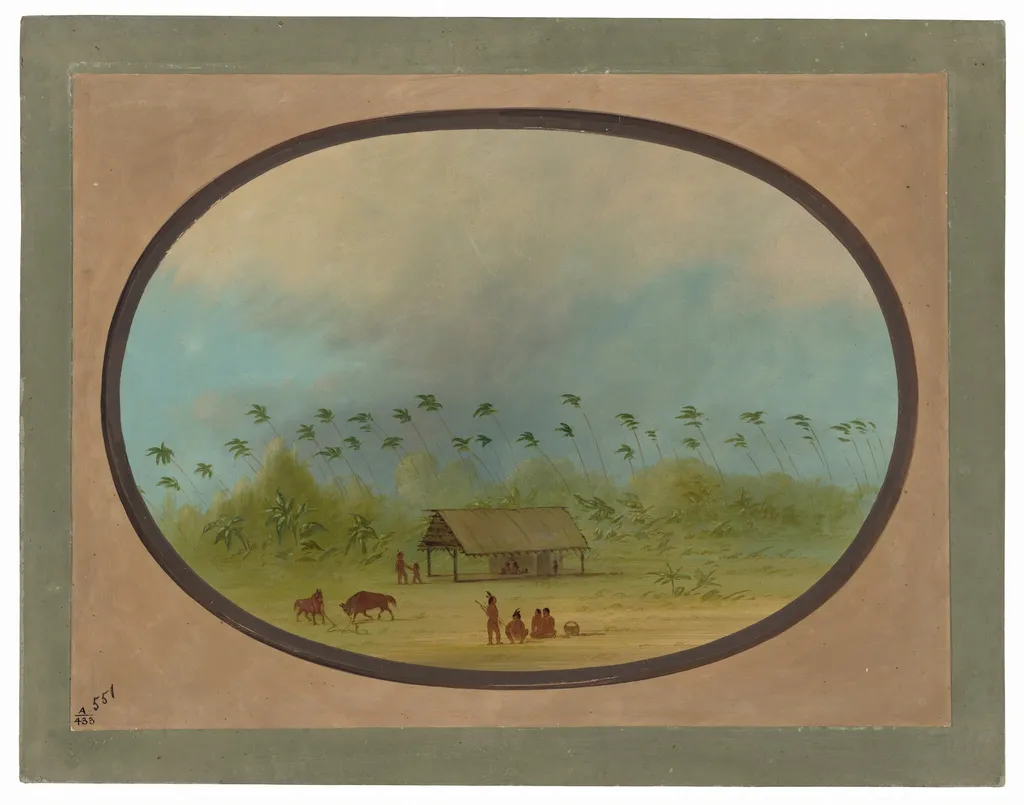
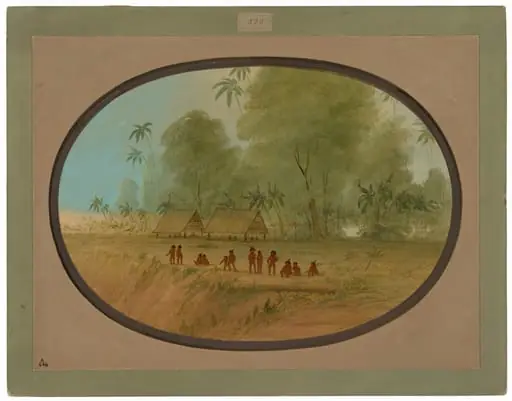
A Small Tobos Village is an oil painting by the Impressionist artist George Catlin. It dates from 1862 and is held in the collection of the National Gallery of Art.
About this work
Overview
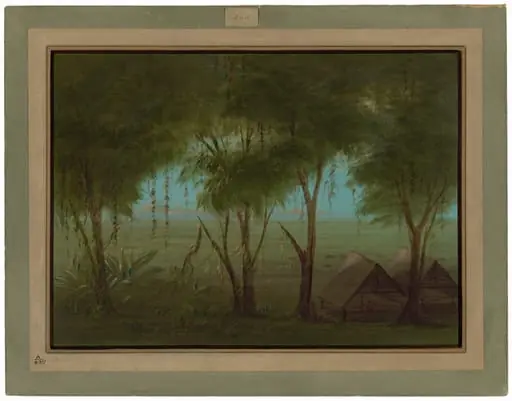
Created in 1862, *A Small Tobos Village* is an oil painting executed on card that has been mounted on paperboard. The composition centers on a solitary, robust tree whose leafy canopy dominates the scene, while modest wooden structures form a quiet settlement behind it.
Subject & Meaning
The work portrays a modest Native American village, identified as a Tobos community, set against a sparse landscape. The lone tree, with its thick trunk and expansive foliage, serves as a focal point, emphasizing the isolation and stillness of the settlement.
Technique & Style
Catlin employed oil pigments on a card support, a choice that allowed for vivid coloration while maintaining a relatively flat surface. The brushwork is precise in rendering the tree’s bark and leaves, yet the village structures are suggested with broader, less detailed strokes, creating a contrast between natural and built elements.
History & Provenance
George Catlin, an American lawyer‑turned‑artist, traveled to the western frontier during the 1830s to document Plains Indian life. Although the scene reflects an earlier period of his fieldwork, the painting was completed many years later, indicating that the artist continued to develop the image long after his return east.
Context
The painting belongs to a later phase of Catlin’s oeuvre, when his earlier, more populated depictions of Native communities gave way to quieter, more solitary landscapes. This shift mirrors a broader 19th‑century interest in the vanishing frontier and the nostalgic preservation of remote locales.
Artist & collection

Artist
George Catlin ( KAT-lin; July 26, 1796 – December 23, 1872) was an American lawyer, painter, author, and traveler, who specialized in portraits of Native Americans in the American frontier.

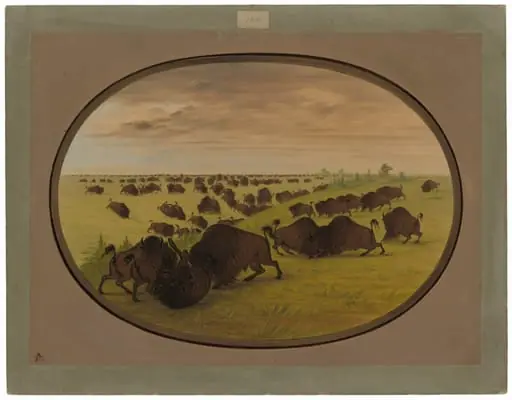 Bulls Fighting
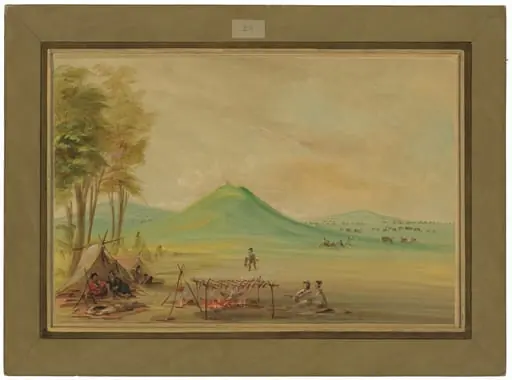 Expedition Encamped on a Texas Prairie. April 1686
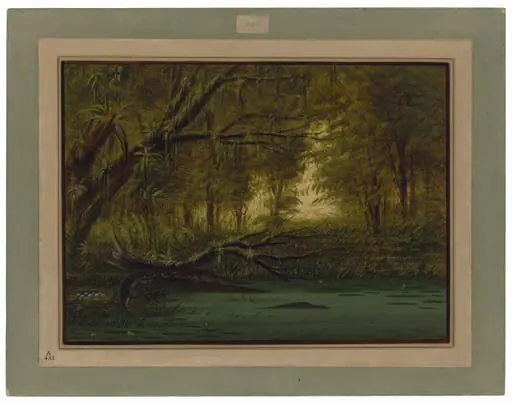 An Alligator's Nest
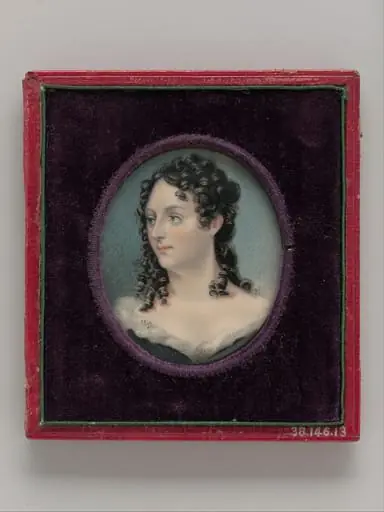 Mrs. George Catlin (Clara Bartlet Gregory)
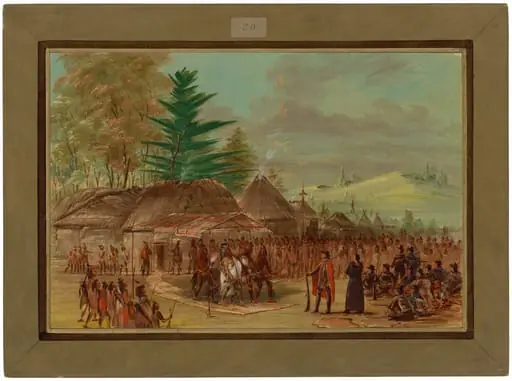 Chief of the Taensa Indians Receiving La Salle. March 20, 1682
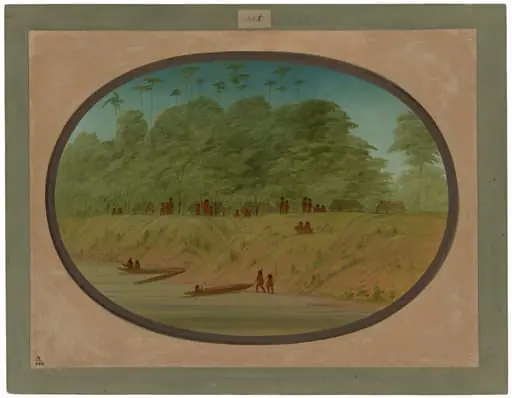 A Small Village - Payaguas Indians
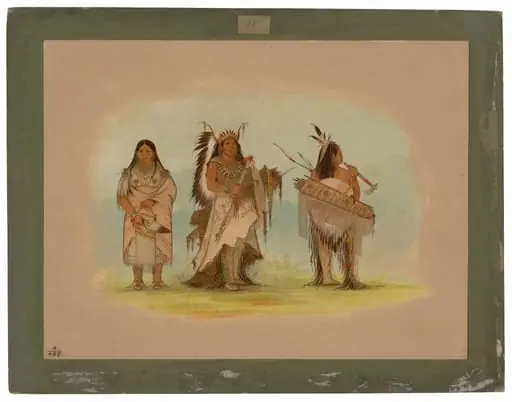 Omaha Chief, His Wife, and a Warrior
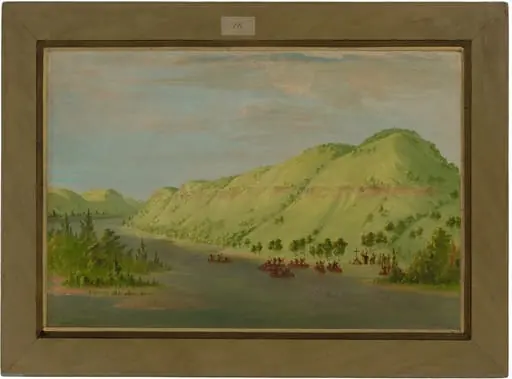 Father Hennepin Leaving the Mississippi to Join La Salle. May 8, 1680