Artwork
Alaeutian Chief and Two Warriors
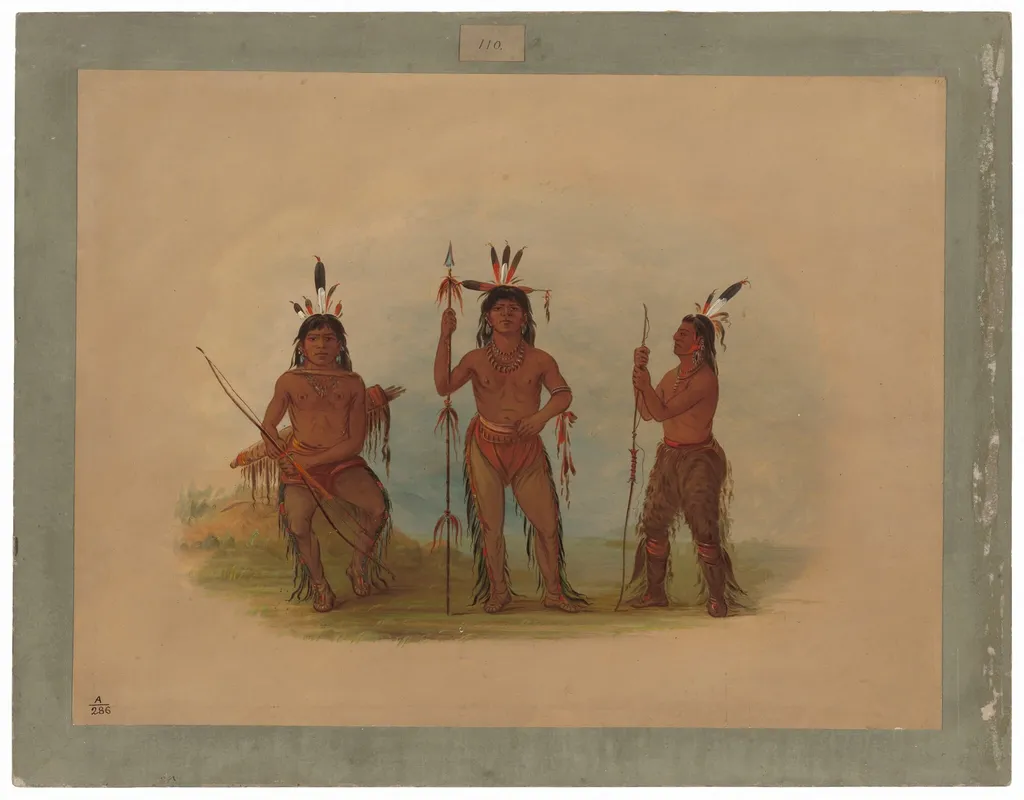
Alaeutian Chief and Two Warriors is an oil painting by the Impressionist artist George Catlin. It dates from 1862 and is held in the collection of the National Gallery of Art.
About this work
Overview
Alaeutian Chief and Two Warriors is an 1862 oil painting on card mounted on paperboard, created by George Catlin as part of his comprehensive documentation of Native American cultures.
Subject & Meaning
The painting portrays three Native American men, identified as an Alaeutian chief and two warriors, in traditional attire, conveying a sense of dignity and cultural authenticity through meticulous ethnographic detail.
Technique & Style
Catlin employed oil on card mounted on paperboard to achieve a textured, depthful effect. The work exhibits realism, characteristic of Catlin's style, with detailed rendering of regalia, weaponry (bow, arrow, spear, staff), and natural surroundings.
History & Provenance
Created during Catlin's later period, following five extensive trips to the American West in the 1830s, this piece reflects his continued interest in documenting Indigenous lives, albeit with a subject from a region (Alaeutian) distinct from his more commonly depicted Plains Indians.
Context
This work sits within Catlin's broader project of cultural preservation through art and writing, undertaken during a time of significant change and encroachment on Native American territories in 19th-century America.
Artist & collection

Artist
George Catlin ( KAT-lin; July 26, 1796 – December 23, 1872) was an American lawyer, painter, author, and traveler, who specialized in portraits of Native Americans in the American frontier.

 Bulls Fighting
 Expedition Encamped on a Texas Prairie. April 1686
 An Alligator's Nest
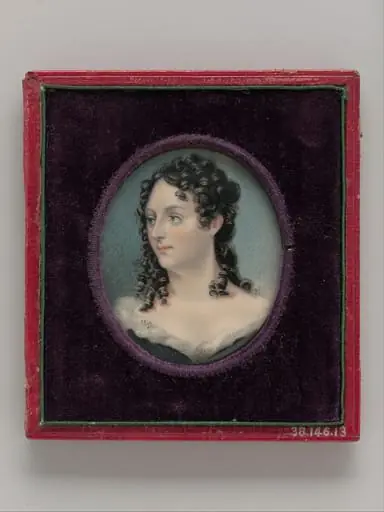 Mrs. George Catlin (Clara Bartlet Gregory)
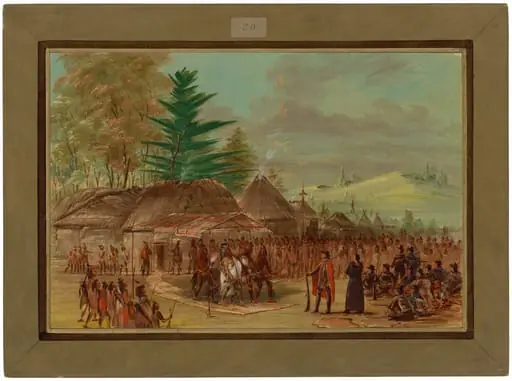 Chief of the Taensa Indians Receiving La Salle. March 20, 1682
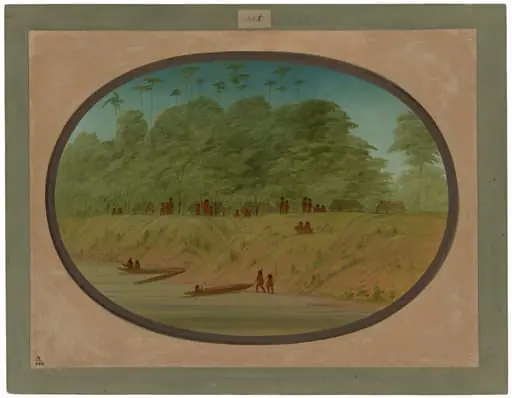 A Small Village - Payaguas Indians
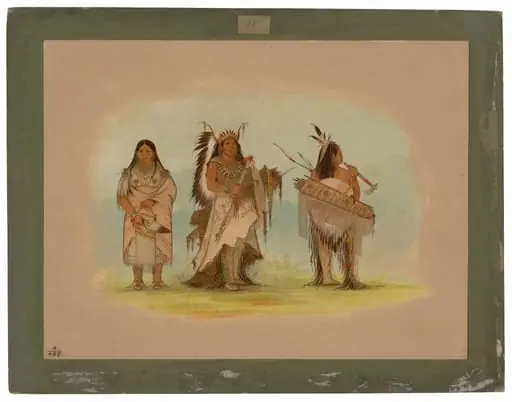 Omaha Chief, His Wife, and a Warrior
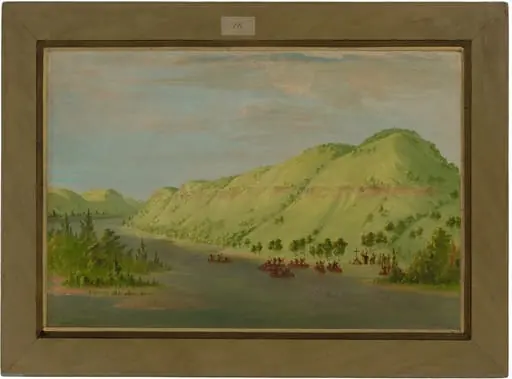 Father Hennepin Leaving the Mississippi to Join La Salle. May 8, 1680
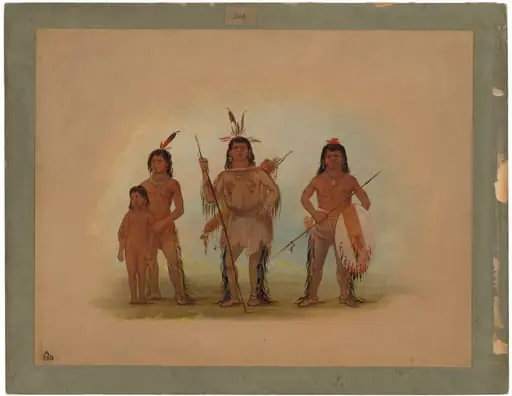 Spokan Chief, Two Warriors, and a Boy
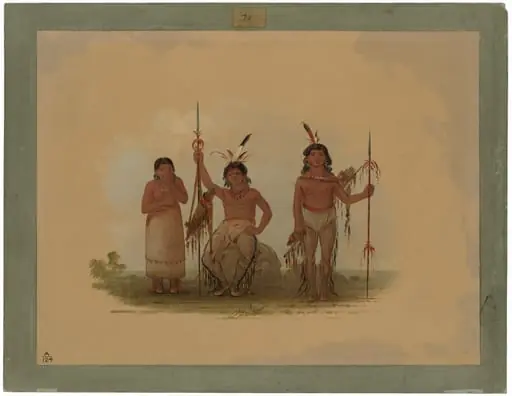 Two Arapaho Warriors and a Woman
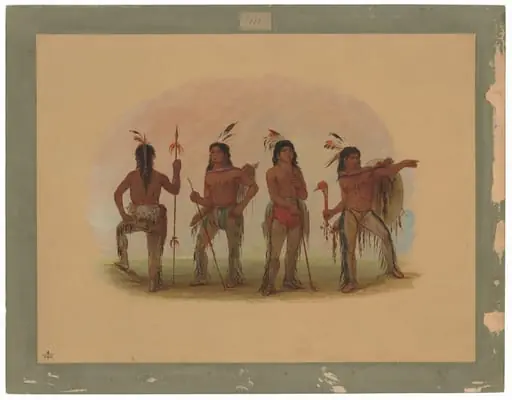 Four Navaho Warriors
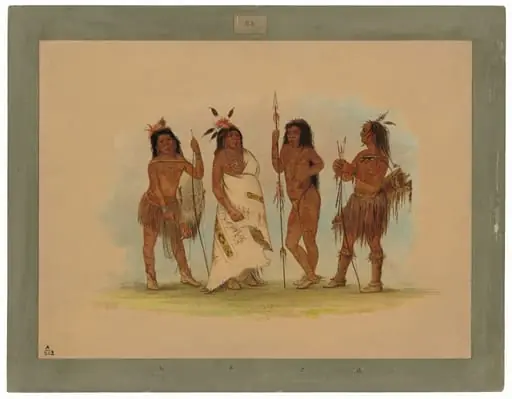 Apachee Chief and Three Warriors
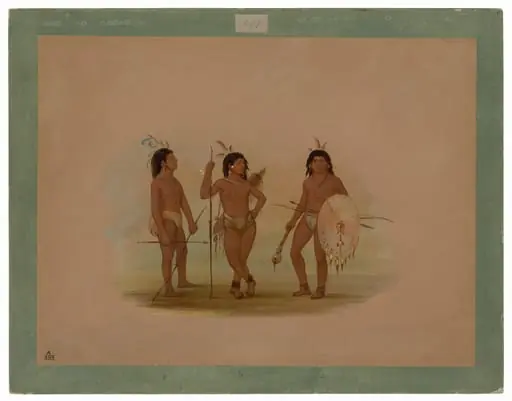 A Puelchee Chief and Two Young Warriors
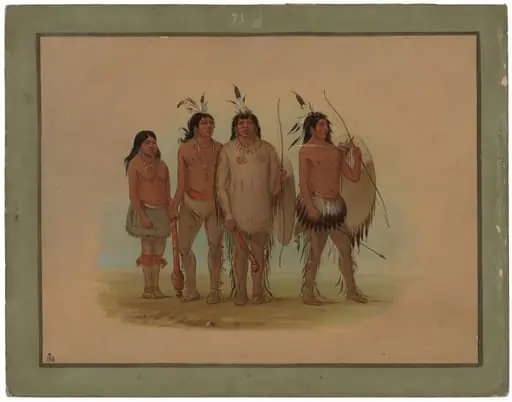 Kiowa Chief, His Wife, and Two Warriors
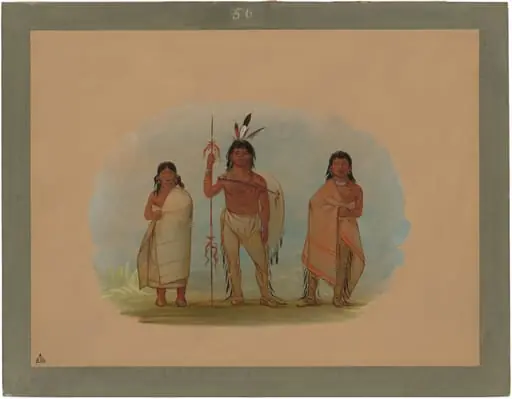 Ottowa Chief, His Wife, and a Warrior
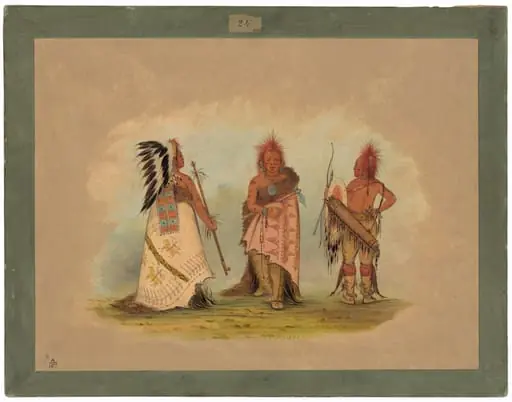 A Pawnee Chief with Two Warriors
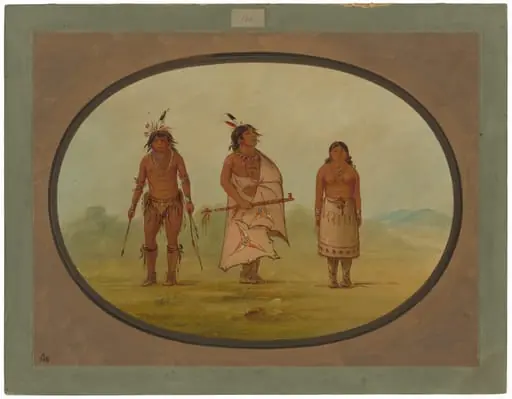 Mohave Chief, a Warrior, and His Wife
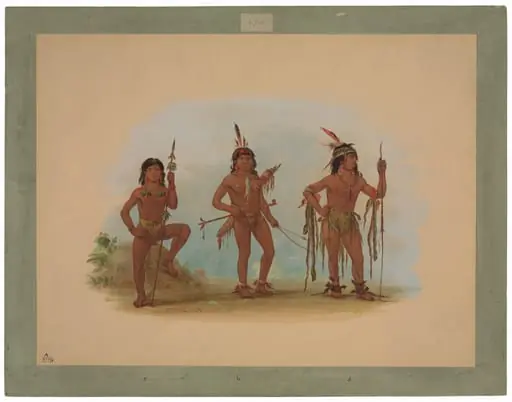 Lengua Medicine Man with Two Warriors
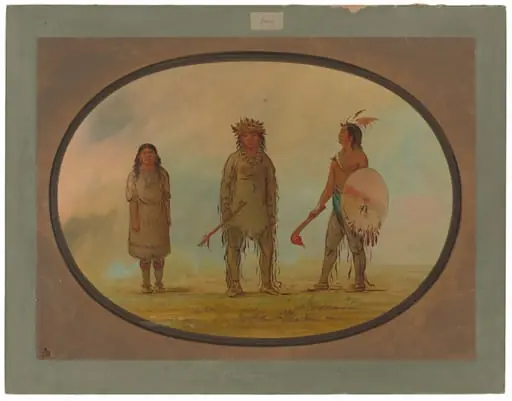 Athapasca Chief, His Wife, and a Warrior