Artwork
Mohave Chief, a Warrior, and His Wife
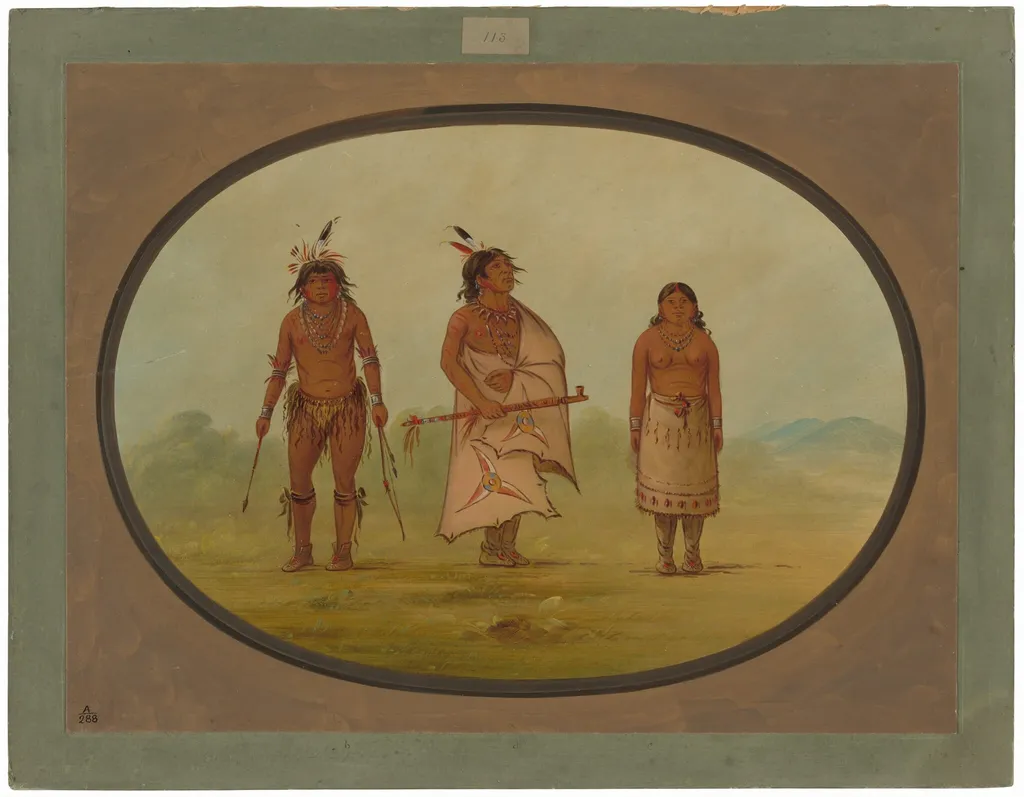
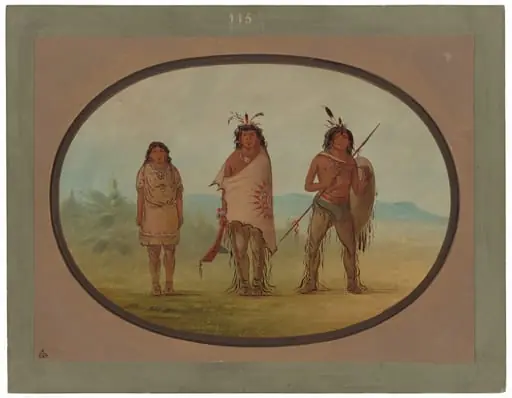
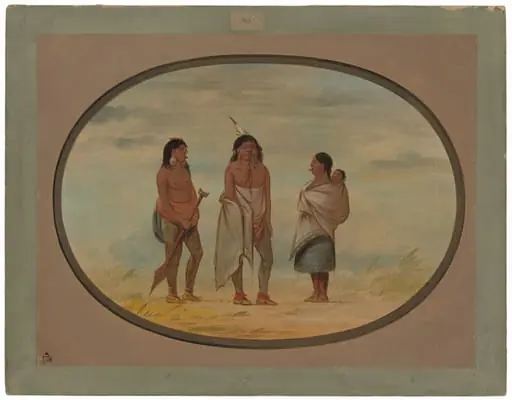
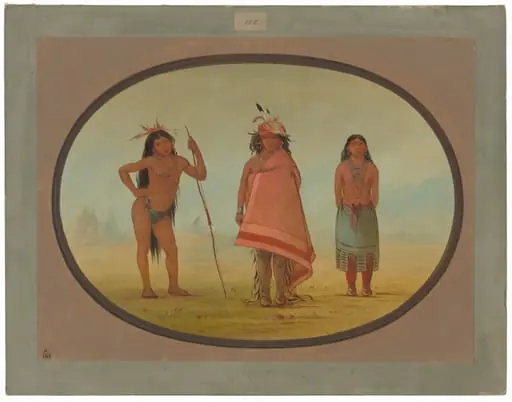
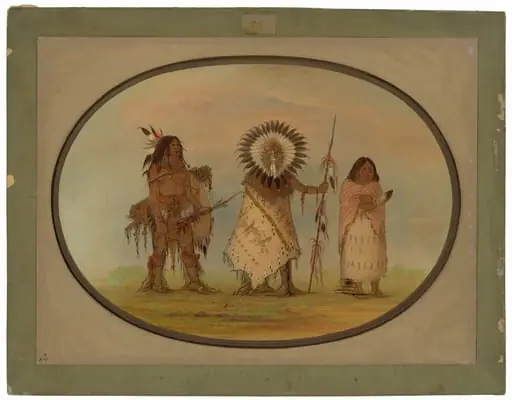
Mohave Chief, a Warrior, and His Wife is an oil painting by the American Folk Art artist George Catlin. It dates from 1862 and is held in the collection of the National Gallery of Art. Created in 1862, the work presents three figures— a chief, a warrior, and a woman—arranged side by side against a muted horizon.
About this work
Overview
Created in 1862, the work presents three figures— a chief, a warrior, and a woman—arranged side by side against a muted horizon.
Created in 1862, the work presents three figures— a chief, a warrior, and a woman—arranged side by side against a muted horizon. The chief on the left bears a tall feathered headdress and a spear, the central figure holds a staff and wears a patterned robe, while the woman on the right stands modestly in a simple skirt with a necklace. The background consists of soft, indistinct hills beneath a pale sky.
Subject & Meaning
The composition records a moment in Mohave life, emphasizing the roles of leadership, martial presence, and domestic partnership. By placing the chief, his warrior companion, and the chief’s wife together, the artist highlights the interconnected social structure of the tribe, suggesting respect for authority, the importance of defense, and the continuity of family within the community.
Technique & Style
Executed in oil on a card that has been mounted on paperboard, the painting employs a restrained palette of earth tones—browns, tans, and subdued greens—interrupted by vivid accents in the feathered headdress and ornamental jewelry. The handling of form is straightforward and direct, aligning with a realist approach that seeks to document rather than idealize the subjects.
History & Provenance
The piece was produced by George Catlin, a former lawyer who turned to painting as a means of recording the lives of Native peoples during his multiple expeditions to the western frontier in the 1830s and 1840s. Although created later in his career, the work continues his systematic visual archive of Indigenous cultures, a collection that later entered public and private holdings focused on American folk art.
Context
Catlin’s portrait belongs to the broader American folk art tradition, a category characterized by self‑trained artists who prioritized narrative content over academic technique. The painting reflects the mid‑nineteenth‑century fascination with the "vanishing" Native American societies and serves as a visual ethnography produced for audiences eager to glimpse frontier life.
Artist & collection

Artist
George Catlin ( KAT-lin; July 26, 1796 – December 23, 1872) was an American lawyer, painter, author, and traveler, who specialized in portraits of Native Americans in the American frontier.

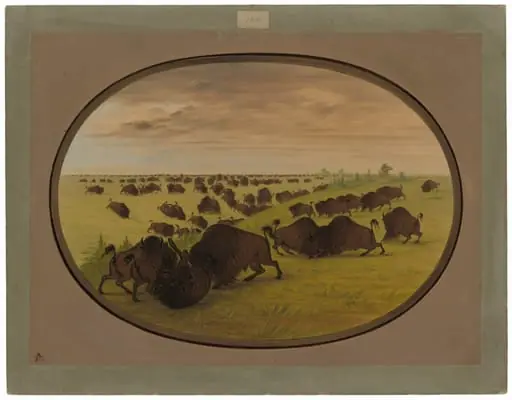 Bulls Fighting
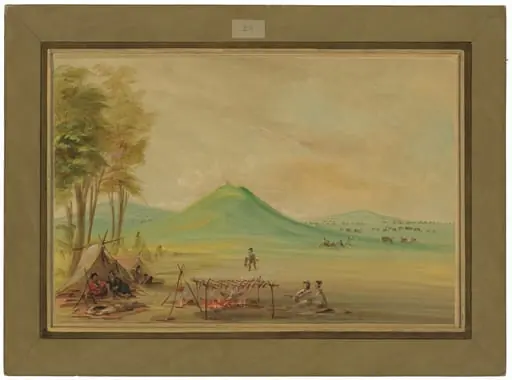 Expedition Encamped on a Texas Prairie. April 1686
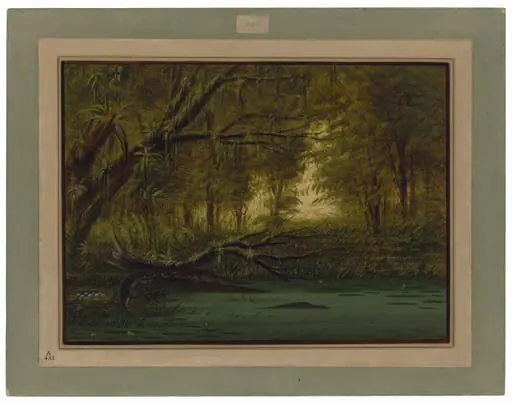 An Alligator's Nest
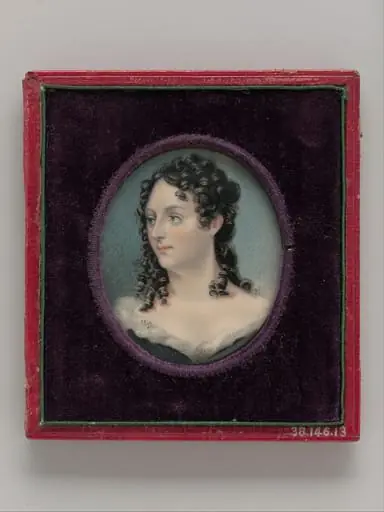 Mrs. George Catlin (Clara Bartlet Gregory)
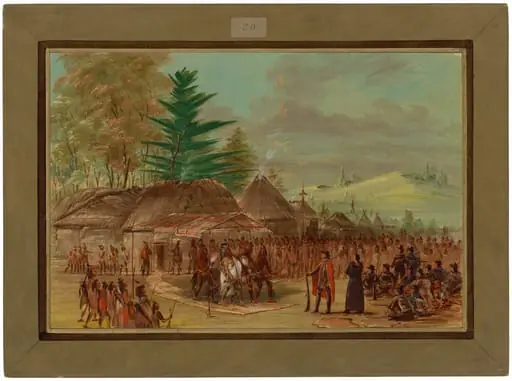 Chief of the Taensa Indians Receiving La Salle. March 20, 1682
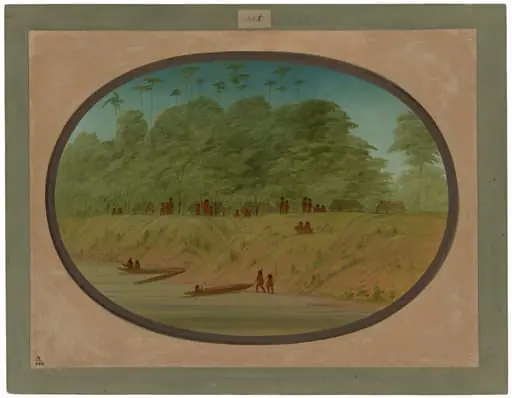 A Small Village - Payaguas Indians
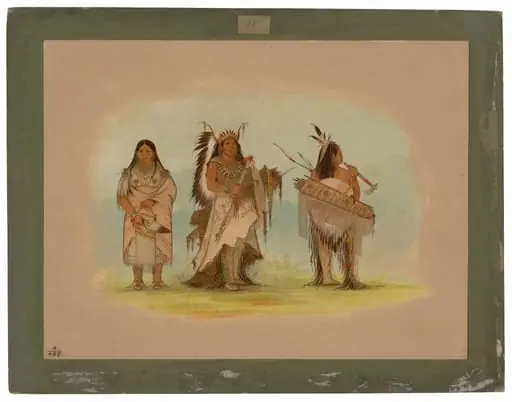 Omaha Chief, His Wife, and a Warrior
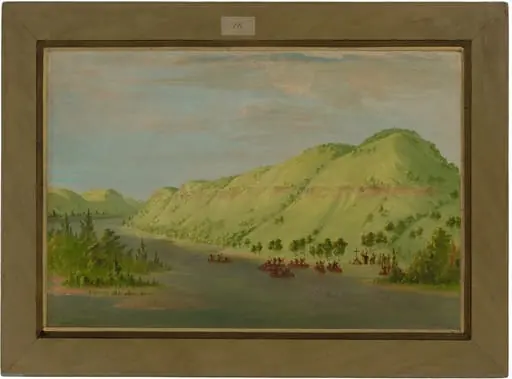 Father Hennepin Leaving the Mississippi to Join La Salle. May 8, 1680