Artwork
An Omagua Village - Boat Sketch
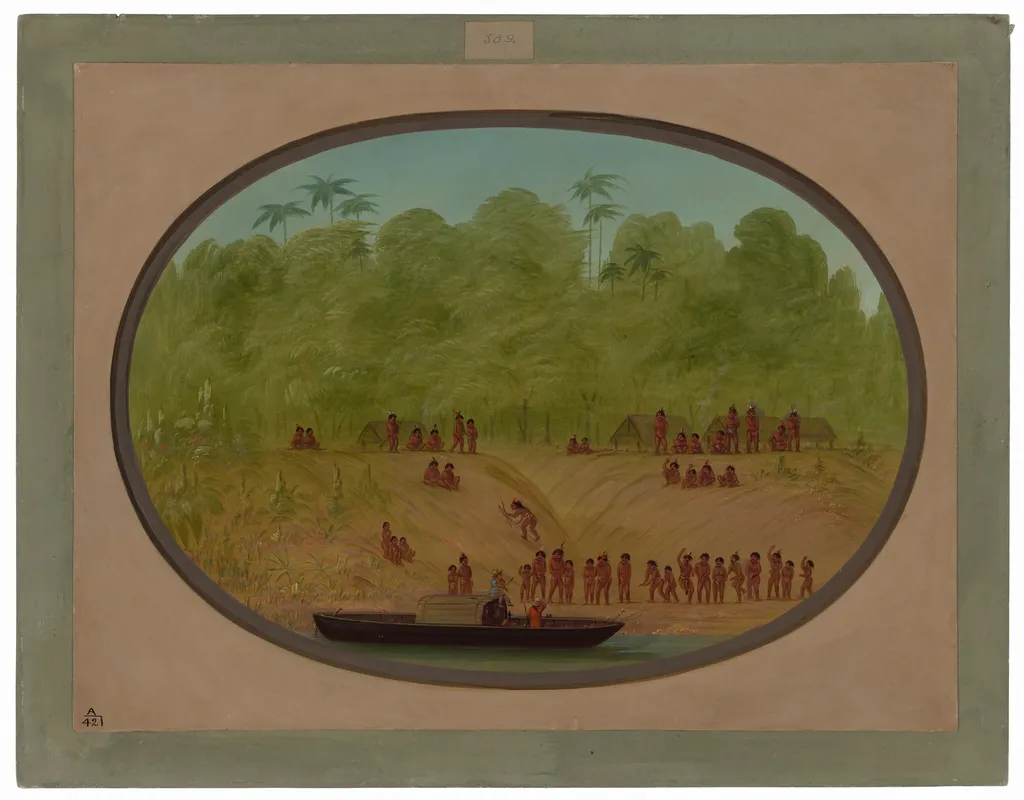
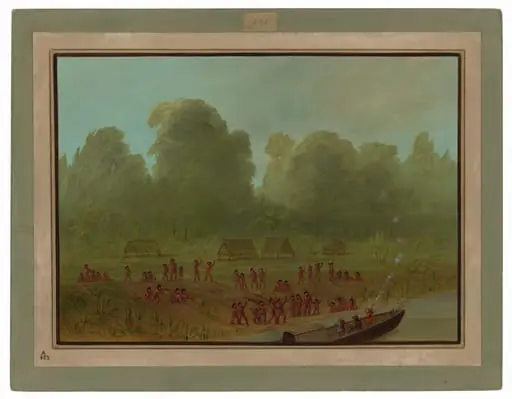
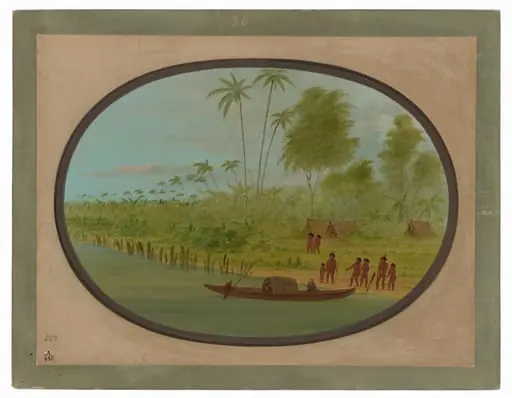
An Omagua Village - Boat Sketch is an oil painting by the Impressionist artist George Catlin. It dates from 1862 and is held in the collection of the National Gallery of Art. Created in 1862, this modest oil sketch measures roughly five by seven inches and is mounted on paperboard.
About this work
Overview
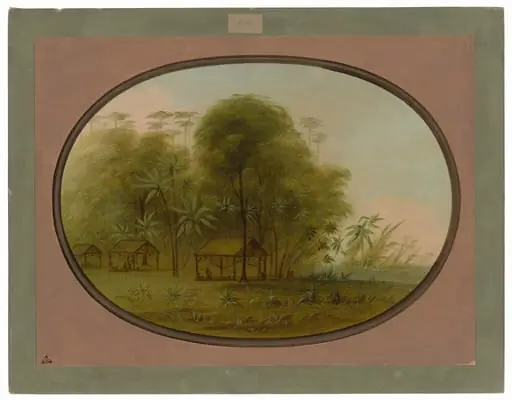
Created in 1862, this modest oil sketch measures roughly five by seven inches and is mounted on paperboard. It portrays a tranquil river scene with thatched dwellings, a wooden boat, and a solitary tree under a bright sky, rendered in swift brushwork that captures fleeting light.
Subject & Meaning
The composition focuses on an Omagua settlement along a calm river, emphasizing the everyday architecture of thatched huts and the presence of a small boat, suggesting a moment of routine riverine life among the indigenous community.
Technique & Style
Catlin employed rapid, loose strokes to convey surface texture, particularly in the water’s sheen and the tree’s foliage. The oil on card medium allows for a compact, immediate rendering, while the mounting on paperboard provides a stable support for the delicate work.
History & Provenance
American lawyer‑artist George Catlin, noted for his extensive documentation of Native American peoples, produced this piece during his later period when his interest expanded beyond portraiture to broader landscapes. The sketch now forms part of the National Gallery of Art’s collection in Washington.
Context
Catlin’s earlier career involved detailed engravings of sites such as the Erie Canal, and his 1830s journeys into the western frontier yielded numerous portraits of Plains Indians. By the 1860s, his focus had shifted toward recording the environments inhabited by the peoples he had previously depicted.
Artist & collection

Artist
George Catlin ( KAT-lin; July 26, 1796 – December 23, 1872) was an American lawyer, painter, author, and traveler, who specialized in portraits of Native Americans in the American frontier.

 Bulls Fighting
 Expedition Encamped on a Texas Prairie. April 1686
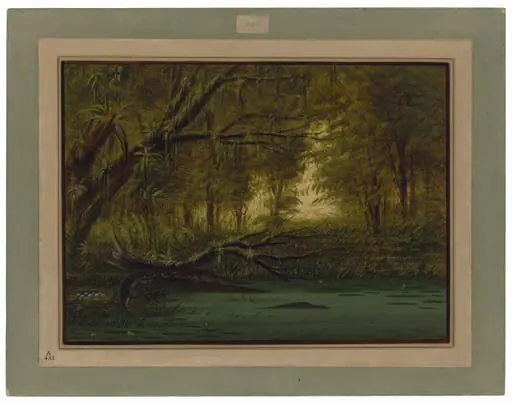 An Alligator's Nest
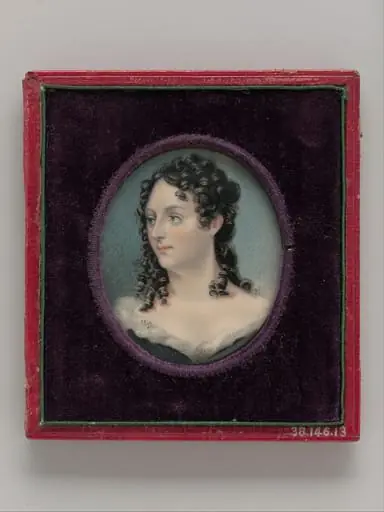 Mrs. George Catlin (Clara Bartlet Gregory)
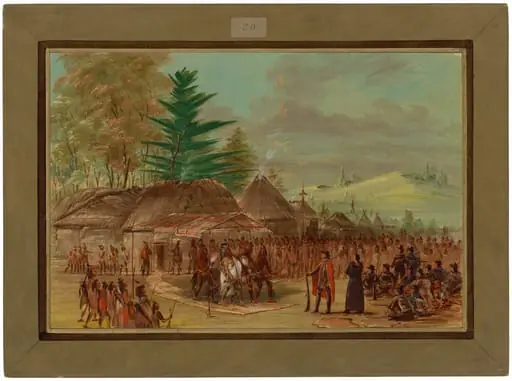 Chief of the Taensa Indians Receiving La Salle. March 20, 1682
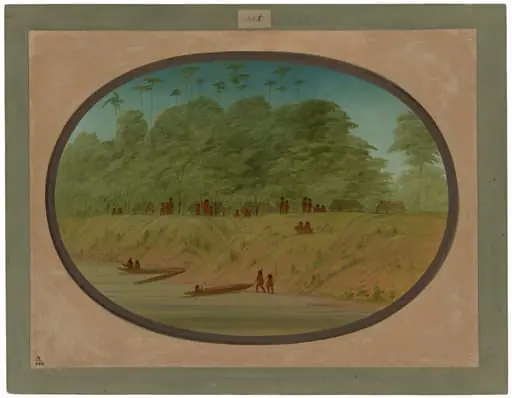 A Small Village - Payaguas Indians
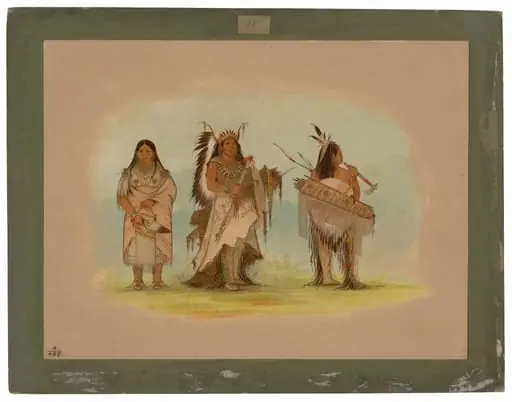 Omaha Chief, His Wife, and a Warrior
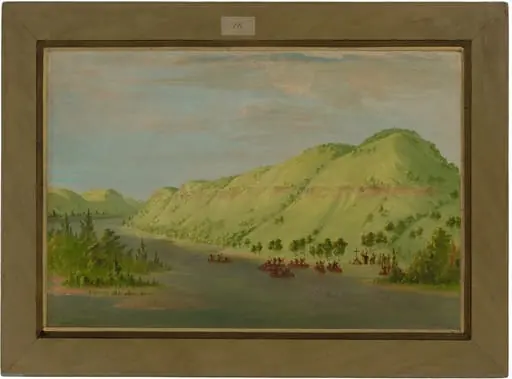 Father Hennepin Leaving the Mississippi to Join La Salle. May 8, 1680