Artwork
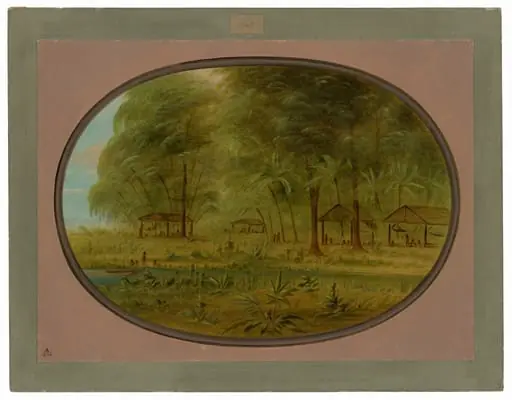
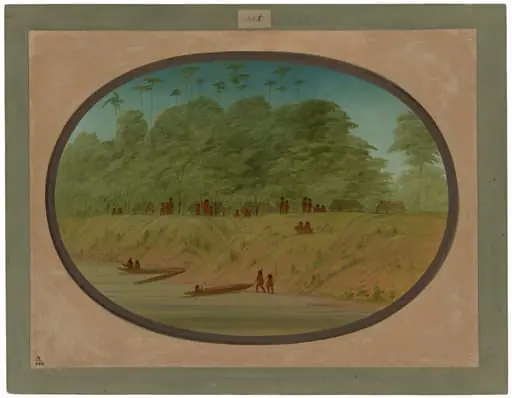
Arowak Village
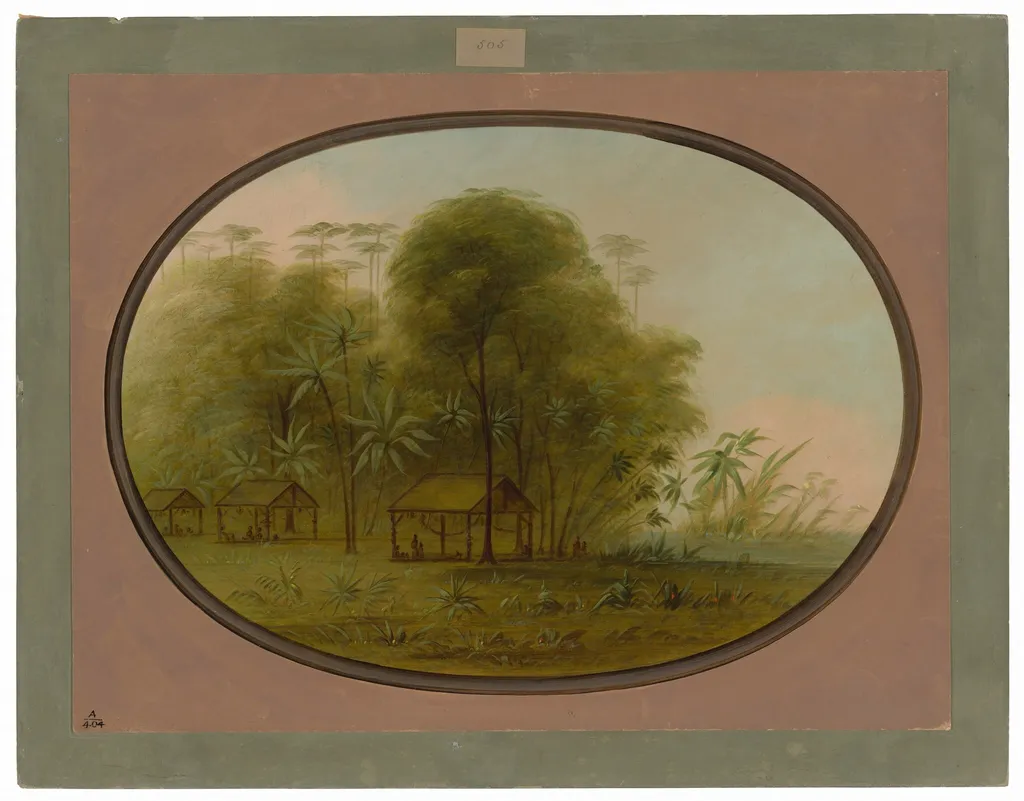
Arowak Village is an oil painting by the Impressionist artist George Catlin. It dates from 1862 and is held in the collection of the National Gallery of Art.
About this work
Overview
George Catlin’s 1862 work *Arowan Village* presents a modestly sized oil painting on card, later affixed to paperboard. The composition centers on a Native American settlement framed by a solitary, prominent tree, with figures engaged in daily activities. The piece reflects Catlin’s ongoing effort to record frontier life through direct observation.
Subject & Meaning
The scene captures a moment of ordinary village life among Plains peoples, emphasizing the relationship between the inhabitants and their natural surroundings. The dominant tree serves as both a visual anchor and a symbol of the community’s rootedness, while the figures convey a sense of routine and social interaction within the settlement.
Technique & Style
Executed in oil on card, the painting demonstrates Catlin’s relatively loose brushwork and muted palette, characteristic of his later field sketches. The mounting on paperboard suggests a practical approach to transport and preservation, aligning with the artist’s habit of creating portable works during his extensive travels.
History & Provenance
Catlin undertook five expeditions into the western territories during the 1830s, producing portraits and scenes of Indigenous groups. Prior to his western focus, he produced engravings of New York’s Erie Canal, some of which appeared in a lithographic publication. *Arowan Village* now belongs to the National Gallery of Art in Washington, where it is displayed among his other documentary works.
Artist & collection

Artist
George Catlin ( KAT-lin; July 26, 1796 – December 23, 1872) was an American lawyer, painter, author, and traveler, who specialized in portraits of Native Americans in the American frontier.

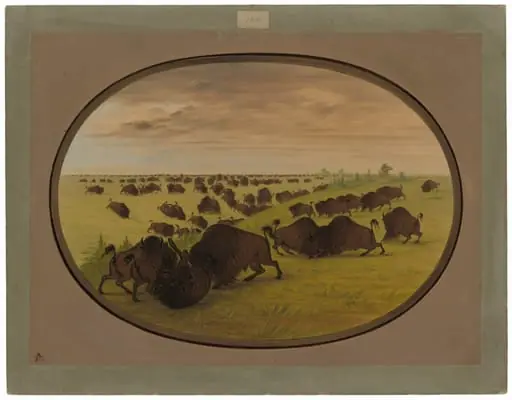 Bulls Fighting
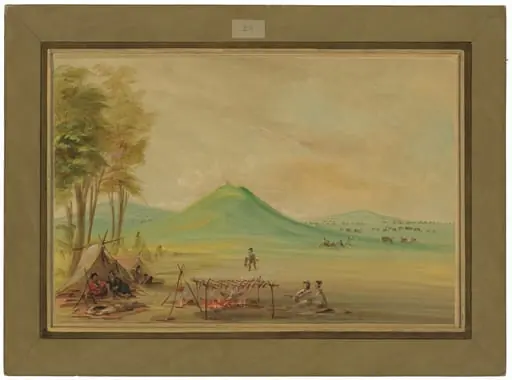 Expedition Encamped on a Texas Prairie. April 1686
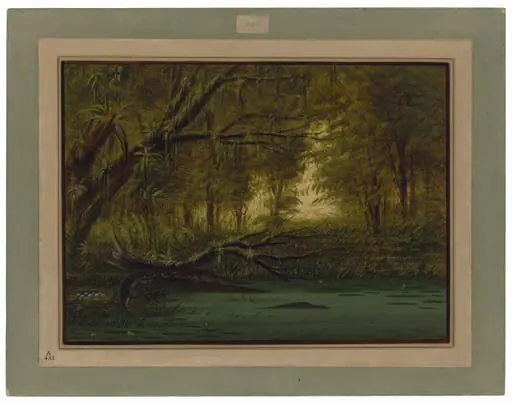 An Alligator's Nest
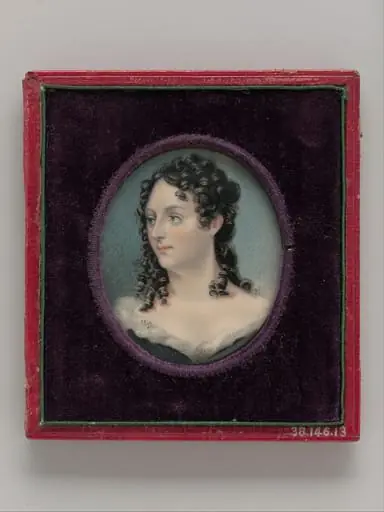 Mrs. George Catlin (Clara Bartlet Gregory)
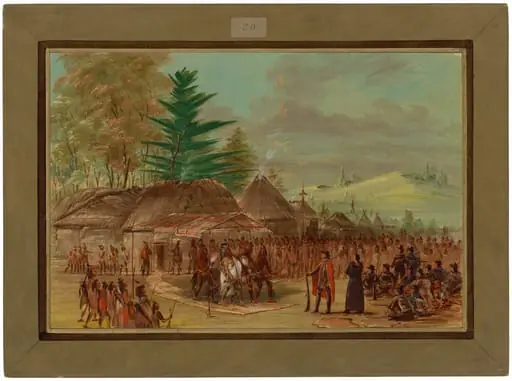 Chief of the Taensa Indians Receiving La Salle. March 20, 1682
 A Small Village - Payaguas Indians
 Omaha Chief, His Wife, and a Warrior
 Father Hennepin Leaving the Mississippi to Join La Salle. May 8, 1680