Artwork
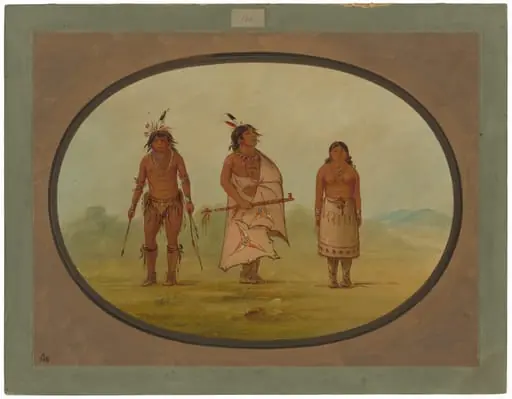
Cochimtee Chief, His Wife, and a Warrior
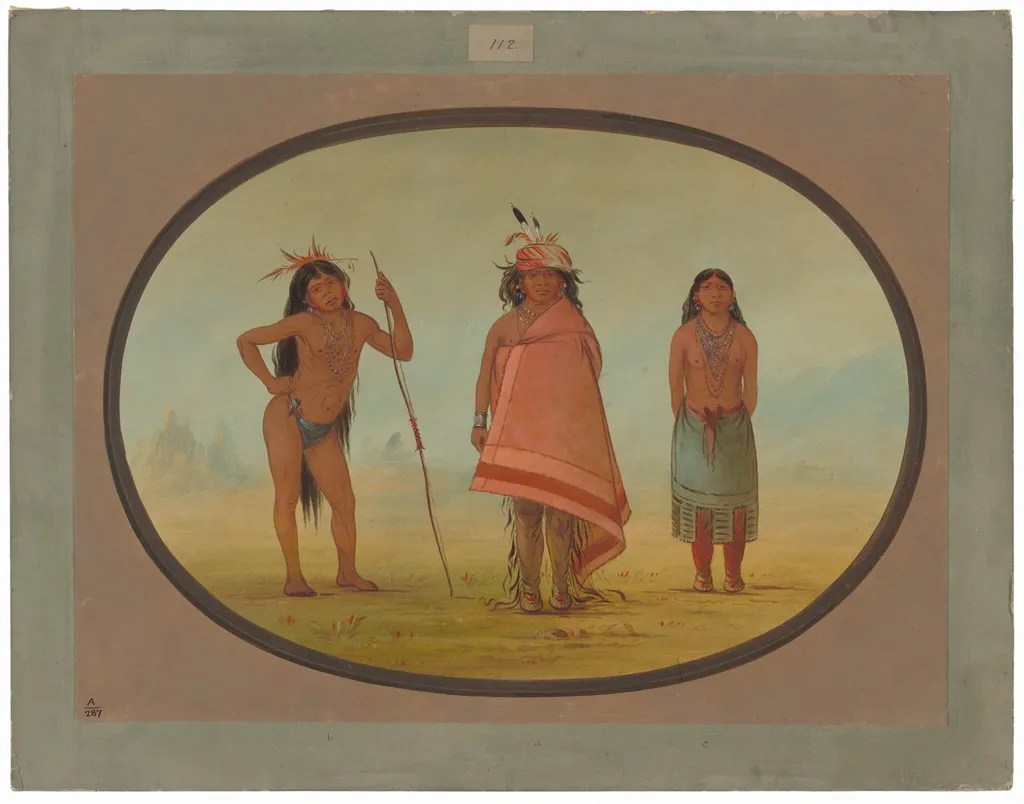
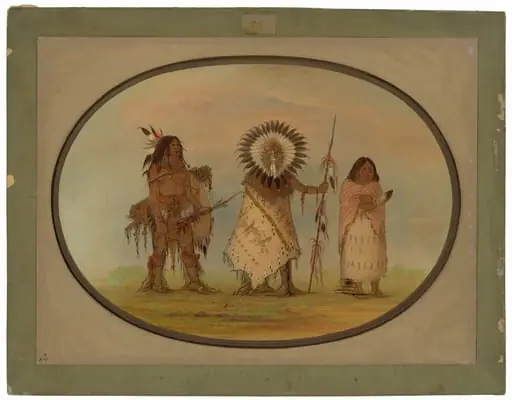
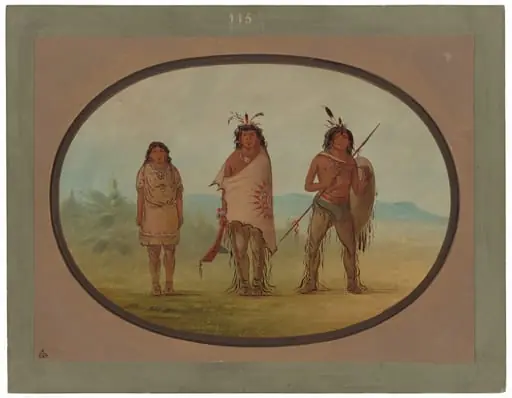
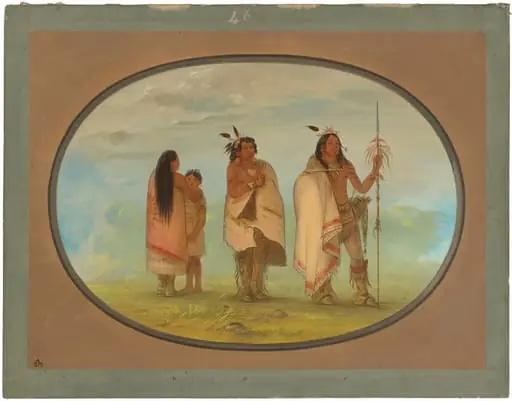
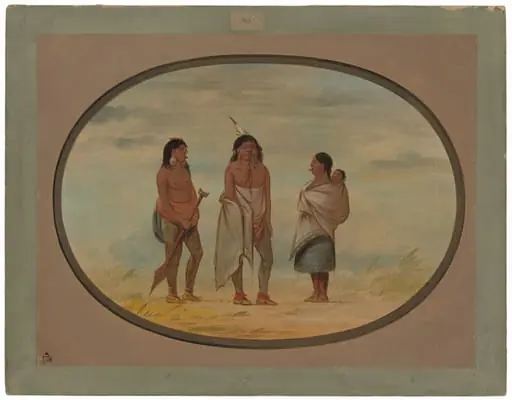
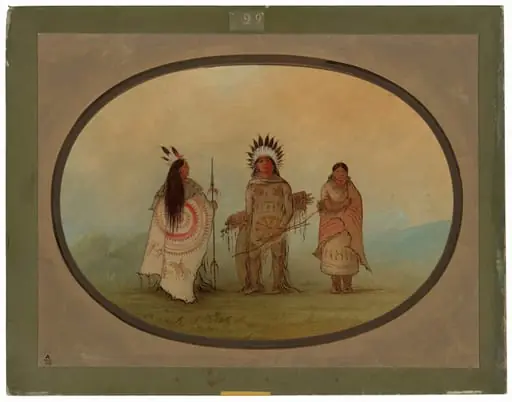
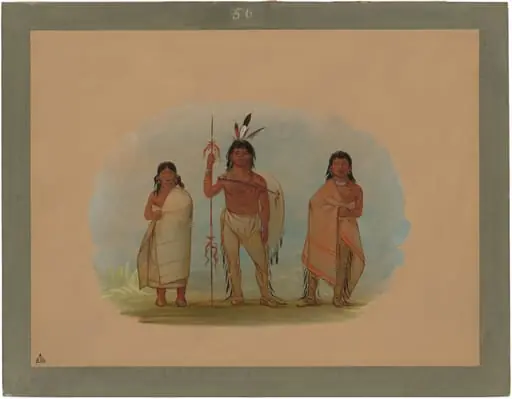
Cochimtee Chief, His Wife, and a Warrior is an oil painting by the American Folk Art artist George Catlin. It dates from 1862 and is held in the collection of the National Gallery of Art.
About this work
Overview
Created in 1862, this oil painting on card, later mounted on paperboard, presents three figures—a chief, his spouse, and a warrior—arranged frontally against a desert backdrop. The composition places the trio on a sandy plain with sparse vegetation, while distant mountains and a muted sky frame the scene, lending a tranquil, contemplative atmosphere.
Subject & Meaning
The central figure, distinguished by a blanket and feathered headdress, represents a tribal chief, flanked by his wife in a long skirt and a warrior holding a spear and wearing a loincloth. Their poised stance and gazes toward the horizon suggest a moment of quiet reflection, perhaps alluding to leadership, familial bonds, and the responsibilities of protection within their community.
Technique & Style
Executed with oil pigments on a card support, the work reflects the American folk art tradition, characterized by straightforward modeling and a limited palette of earth tones. Subtle lighting enhances the warmth of the figures, while the simplified landscape and modest detailing convey an intimate, almost narrative quality typical of self‑taught artists of the period.
History & Provenance
The painting was produced by George Catlin, a lawyer‑turned‑artist who traversed the western frontier in the 1830s to record Plains Indian life. Though primarily known for his extensive field studies, Catlin created this piece later in his career, contributing to the visual archive of Native American portraiture and remaining within private collections since its creation.
Artist & collection

Artist
George Catlin ( KAT-lin; July 26, 1796 – December 23, 1872) was an American lawyer, painter, author, and traveler, who specialized in portraits of Native Americans in the American frontier.

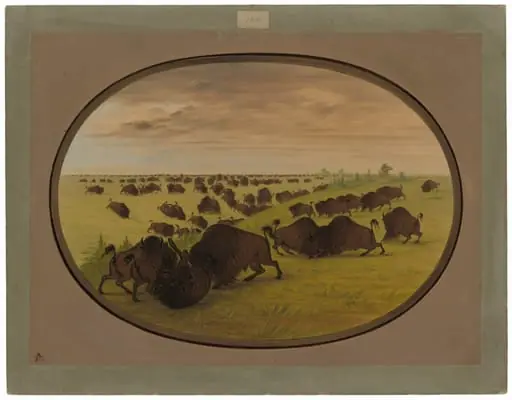 Bulls Fighting
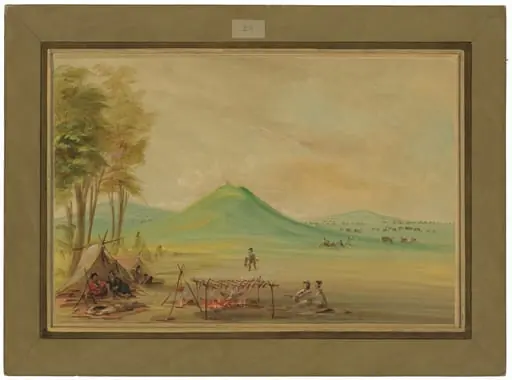 Expedition Encamped on a Texas Prairie. April 1686
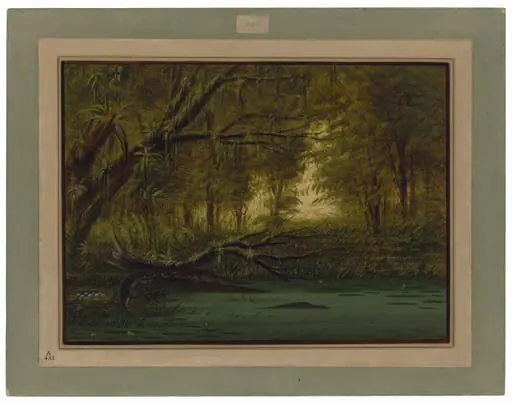 An Alligator's Nest
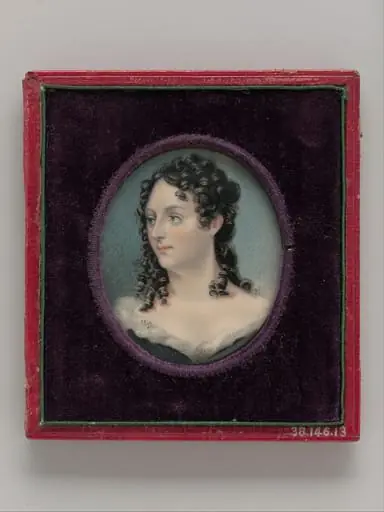 Mrs. George Catlin (Clara Bartlet Gregory)
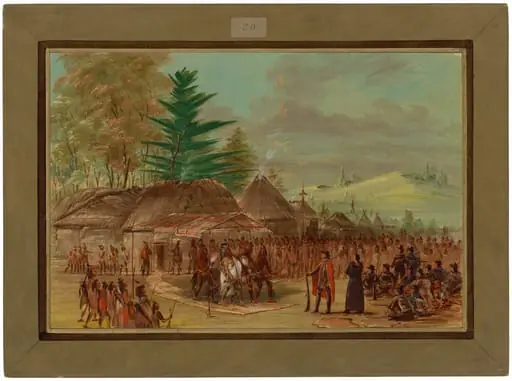 Chief of the Taensa Indians Receiving La Salle. March 20, 1682
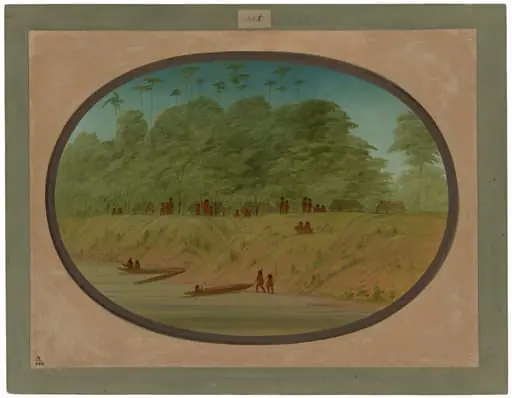 A Small Village - Payaguas Indians
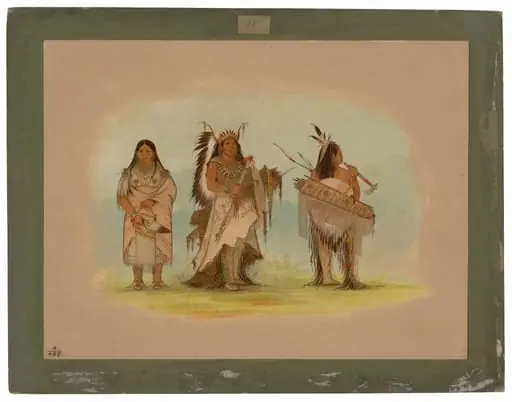 Omaha Chief, His Wife, and a Warrior
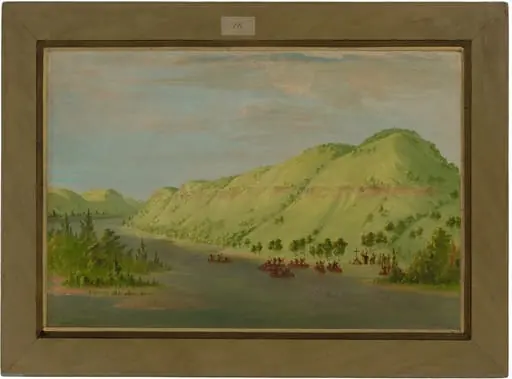 Father Hennepin Leaving the Mississippi to Join La Salle. May 8, 1680