Artwork
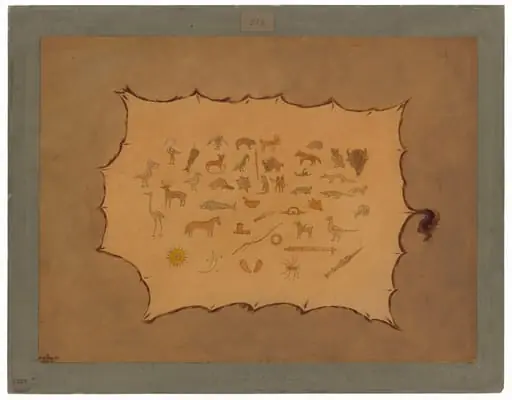
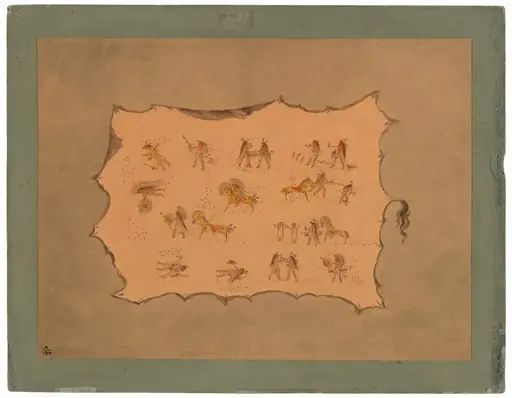
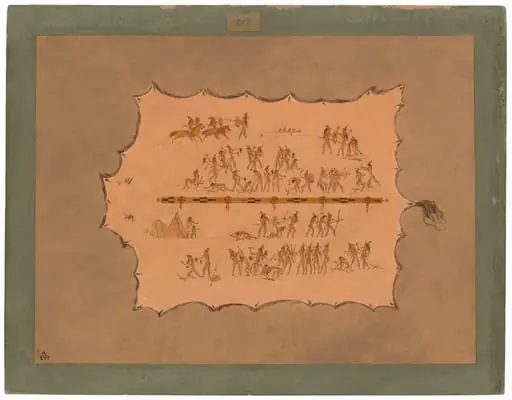
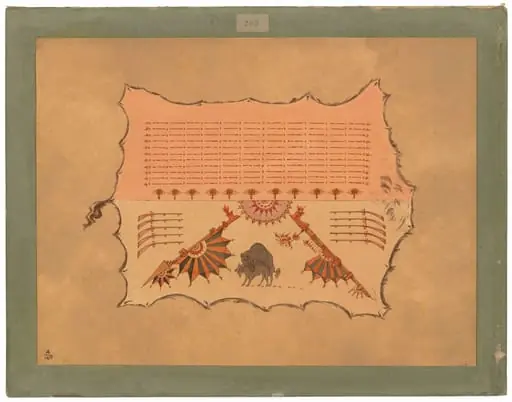
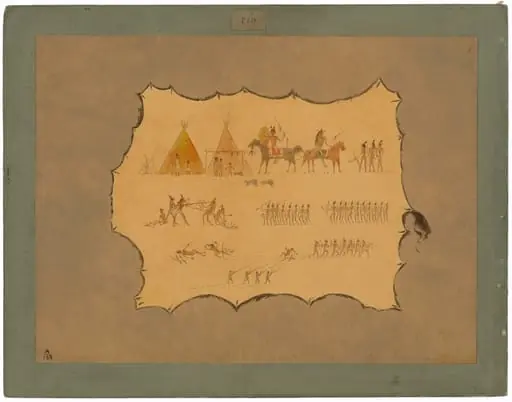
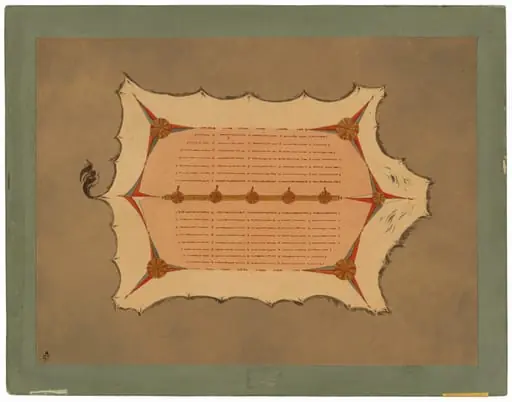
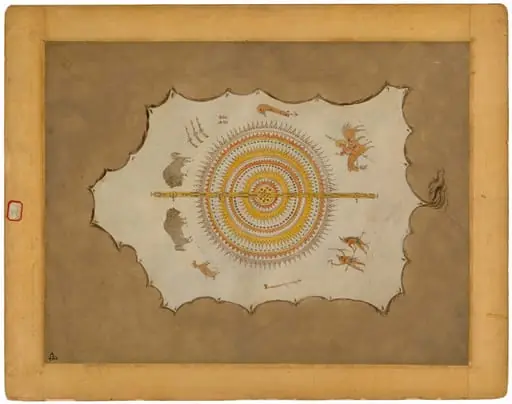
Facsimile of Chief Four Men's Robe - Mandan
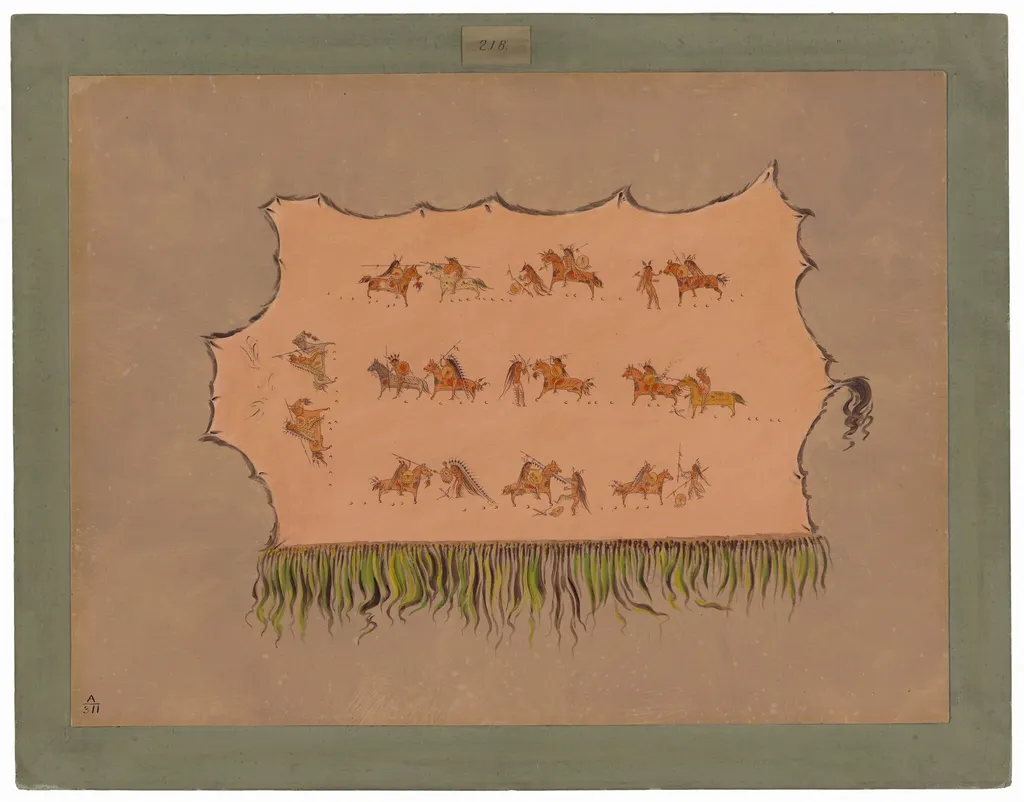
Facsimile of Chief Four Men's Robe - Mandan is an oil painting by the American Folk Art artist George Catlin. It dates from 1865 and is held in the collection of the National Gallery of Art.
About this work
Overview
In 1865 George Catlin created an oil painting on card, later mounted on paperboard, that reproduces a Mandan ceremonial robe belonging to Chief Four Men. The work forms part of his extensive visual record of Native American cultures, combining portraiture and ethnographic illustration.
Subject & Meaning
The image presents a procession of mounted figures moving in a line across a flat, peach‑toned background. Riders in simple attire carry spears or bows, suggesting a ceremonial or martial display linked to the robe’s original function within Mandan society.
Technique & Style
Catlin employed a loose, sketch‑like brushwork that conveys motion in the horses and riders. The composition is framed by a green‑painted wooden border with an irregular edge, while the lower field features stylized, wavy green grass, reinforcing a decorative, almost emblematic quality.
History & Provenance
Created during Catlin’s later phase of documenting Indigenous peoples, the piece follows his earlier travels in the 1830s that produced numerous Plains Indian portraits. It reflects his shift from landscape engravings and lithographic illustrations to more focused ethnographic subjects.
Context
The painting aligns with Catlin’s broader mission to preserve visual and written accounts of Native cultures amid rapid change in the mid‑19th century United States. By reproducing a ceremonial garment, he aimed to capture both material culture and the associated social practices of the Mandan.
Artist & collection

Artist
George Catlin ( KAT-lin; July 26, 1796 – December 23, 1872) was an American lawyer, painter, author, and traveler, who specialized in portraits of Native Americans in the American frontier.

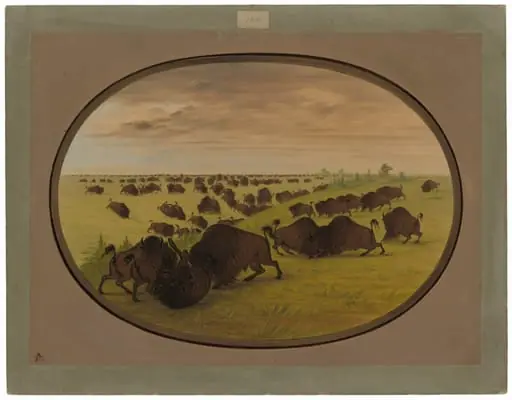 Bulls Fighting
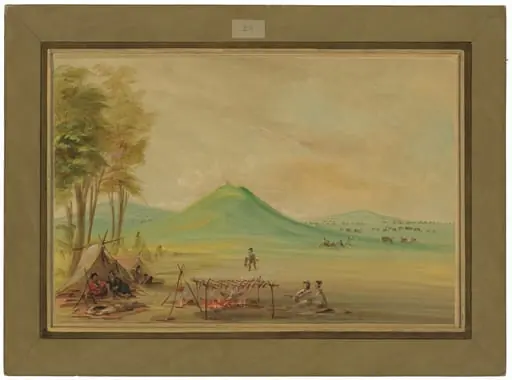 Expedition Encamped on a Texas Prairie. April 1686
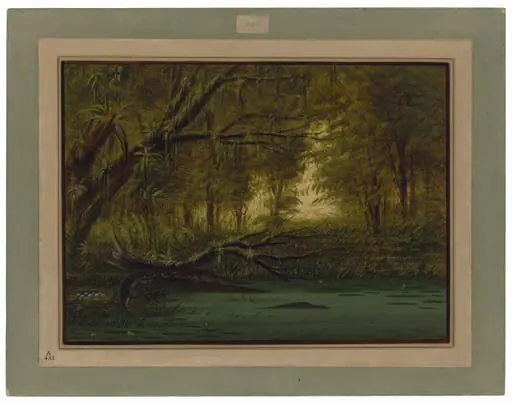 An Alligator's Nest
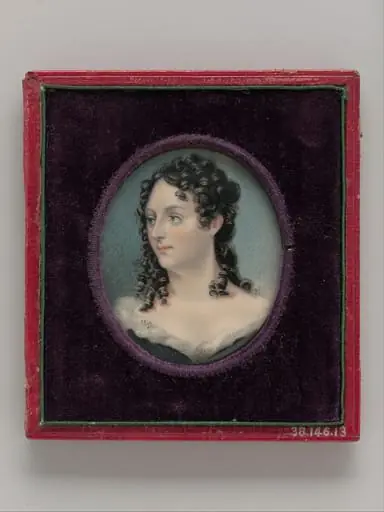 Mrs. George Catlin (Clara Bartlet Gregory)
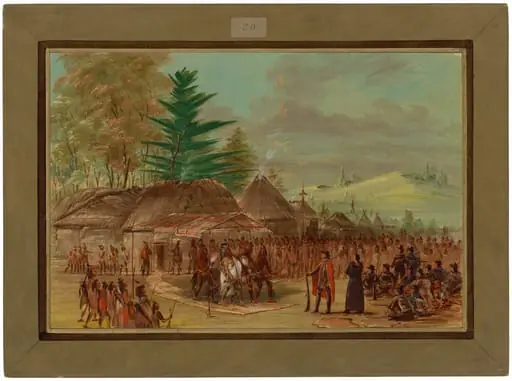 Chief of the Taensa Indians Receiving La Salle. March 20, 1682
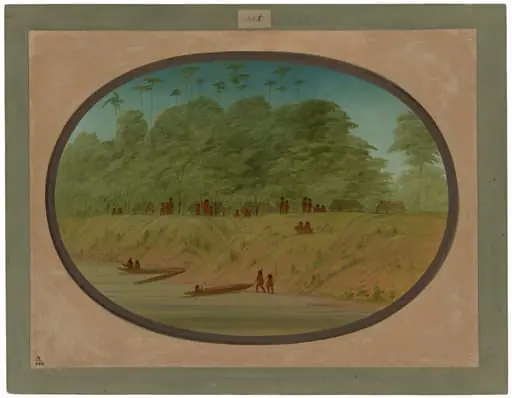 A Small Village - Payaguas Indians
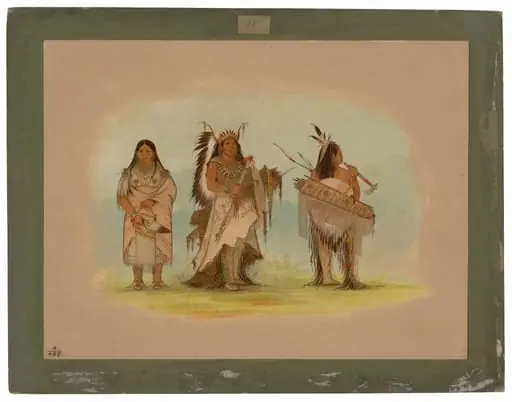 Omaha Chief, His Wife, and a Warrior
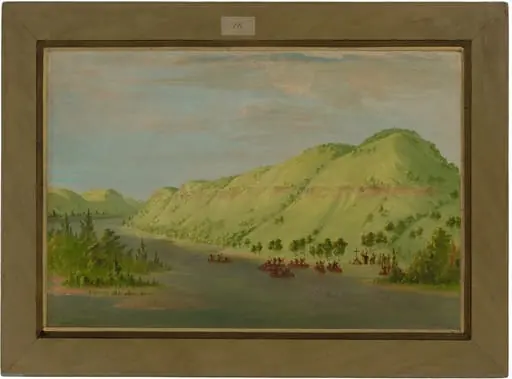 Father Hennepin Leaving the Mississippi to Join La Salle. May 8, 1680