Artwork
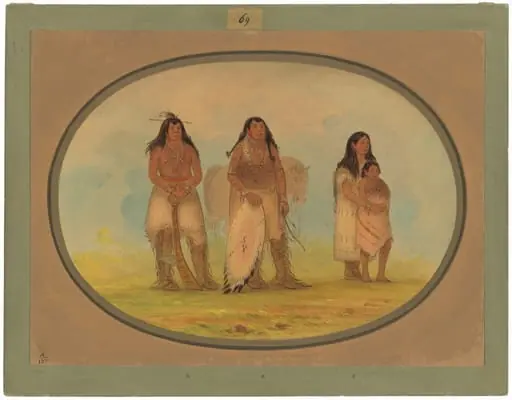
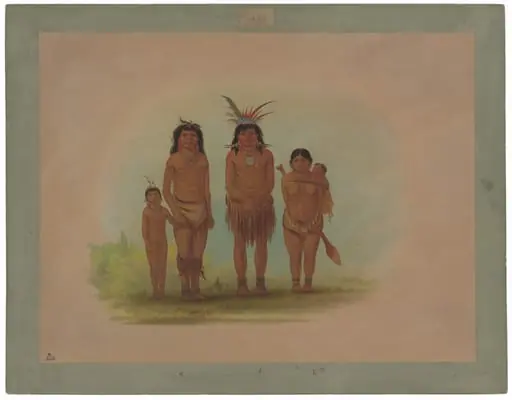
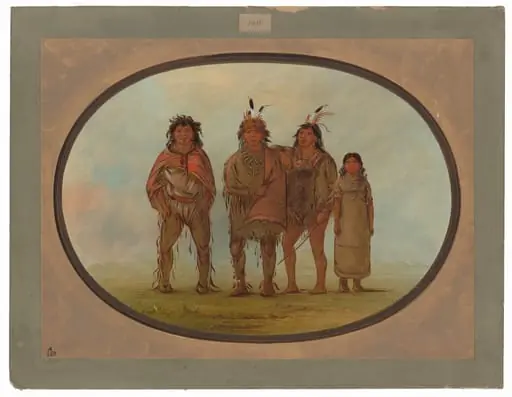
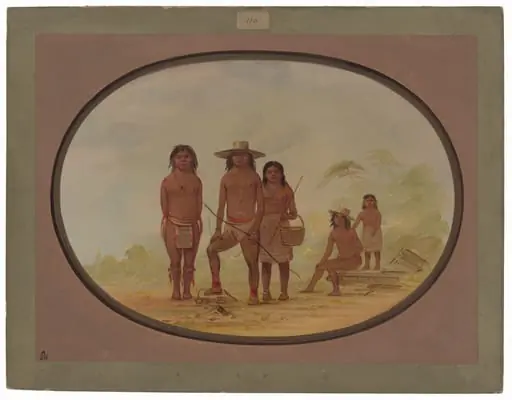
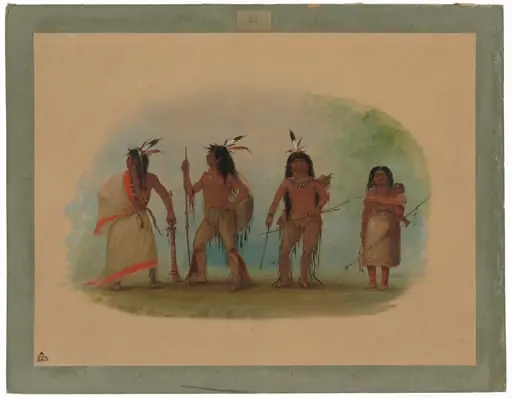
Four Flathead Indians
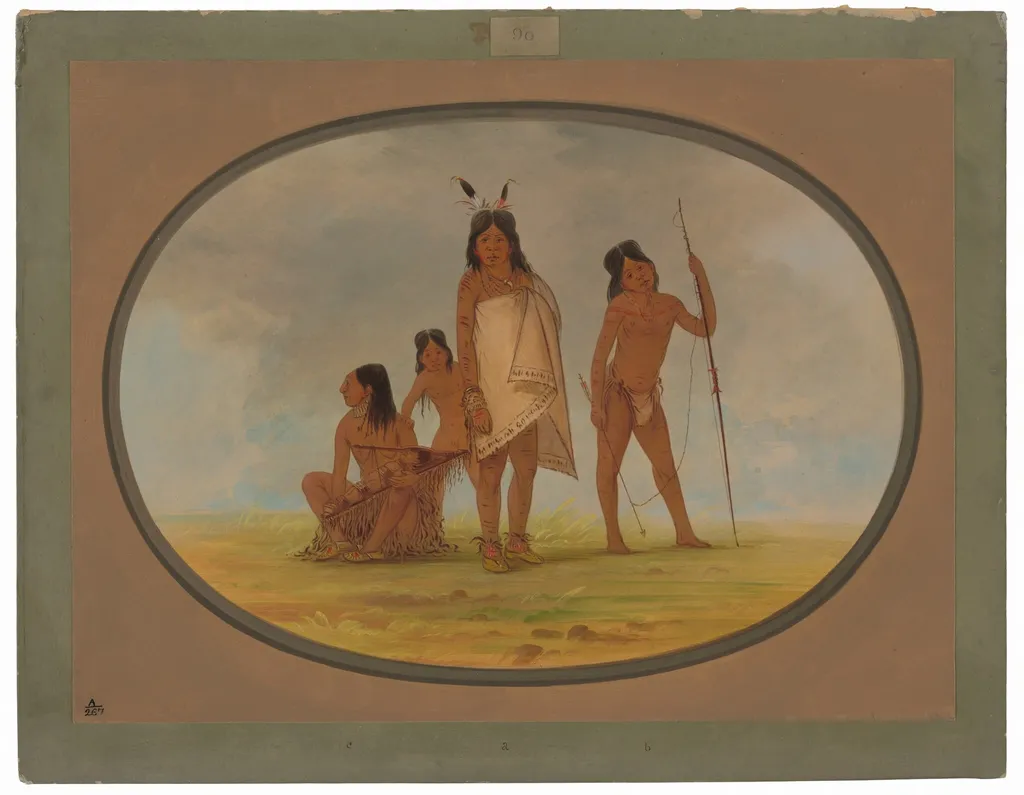
Four Flathead Indians is an oil painting by the Impressionist artist George Catlin. It dates from 1862 and is held in the collection of the National Gallery of Art.
About this work
Overview
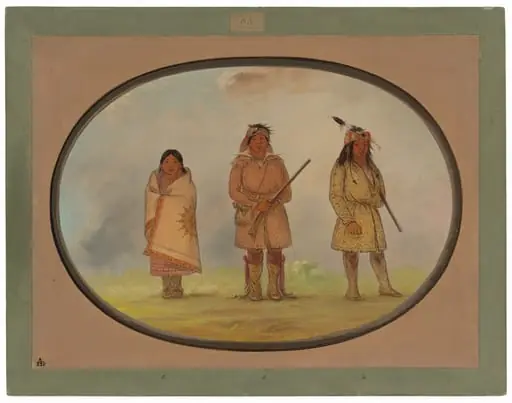
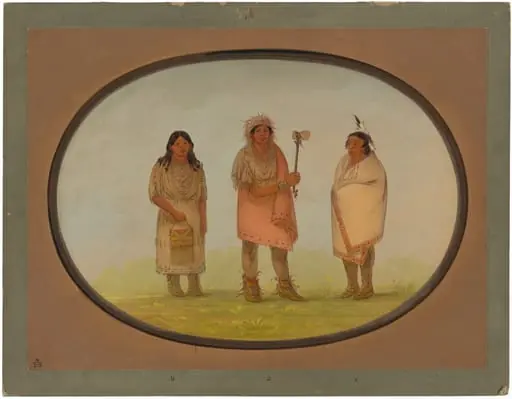
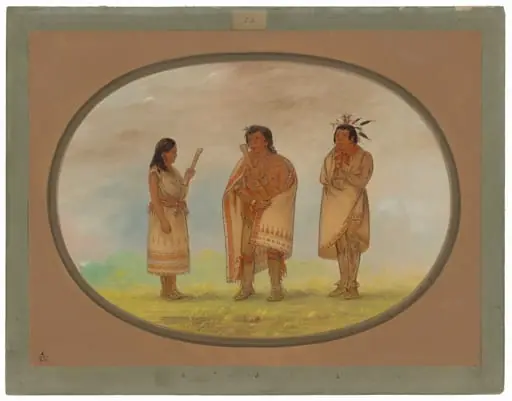
Created in 1862, *Four Flathead Indians* is an oil painting executed on card that has been mounted on paperboard. The work presents a small group of Native individuals positioned in an open field under a clear sky, rendered in a calm, naturalistic manner.
Subject & Meaning
The composition features four members of the Flathead tribe, three standing and one seated. The central figure wears a white garment and feathered headdress, while the others are clothed in simple loincloths; one figure holds a basket, suggesting everyday activity within a peaceful setting.
Technique & Style
Catlin employed oil pigments on a relatively flat support, allowing for fine detail in clothing and facial features. The painting aligns with the ledger‑art tradition of the period, emphasizing portraiture that records individual identity and cultural attire rather than dramatic narrative.
History & Provenance
George Catlin, a lawyer‑turned‑artist, traveled extensively among western tribes in the 1830s, producing a large body of work documenting Indigenous peoples. This piece, dated to the Civil War era, reflects his continued interest in preserving visual records of Native communities.
Context
The work belongs to a broader series of portraits created by Catlin to accompany his ethnographic studies. During the mid‑nineteenth century, such images served both as scientific documentation and as a means to inform eastern audiences about the peoples of the expanding frontier.
Artist & collection

Artist
George Catlin ( KAT-lin; July 26, 1796 – December 23, 1872) was an American lawyer, painter, author, and traveler, who specialized in portraits of Native Americans in the American frontier.

 Bulls Fighting
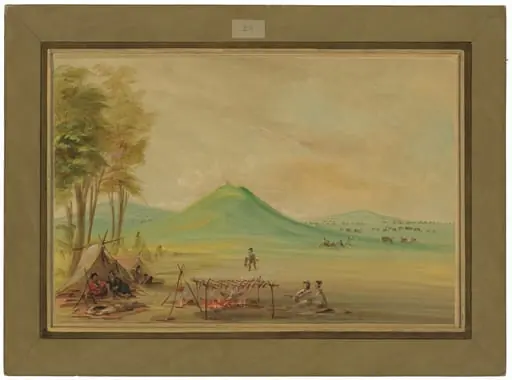 Expedition Encamped on a Texas Prairie. April 1686
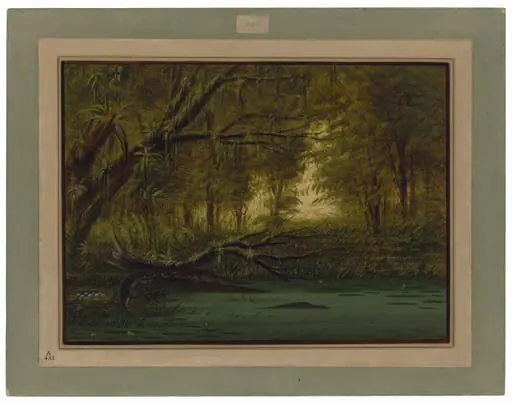 An Alligator's Nest
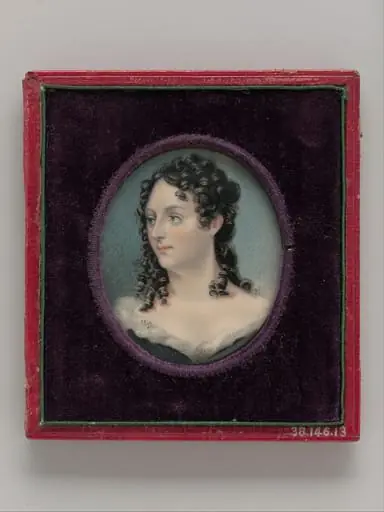 Mrs. George Catlin (Clara Bartlet Gregory)
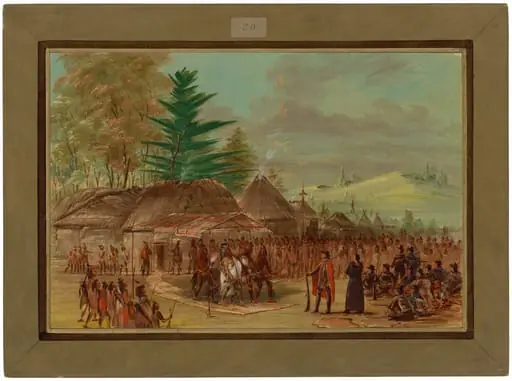 Chief of the Taensa Indians Receiving La Salle. March 20, 1682
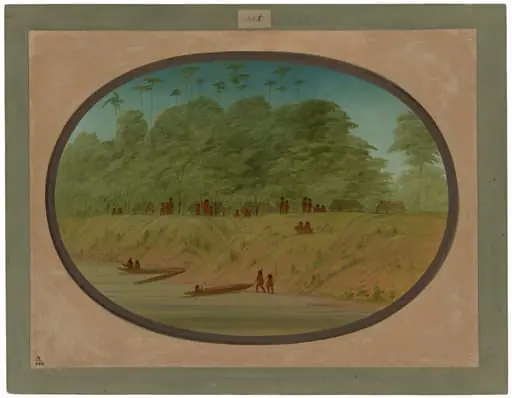 A Small Village - Payaguas Indians
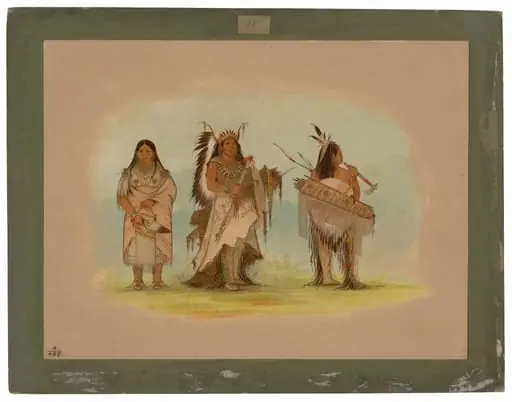 Omaha Chief, His Wife, and a Warrior
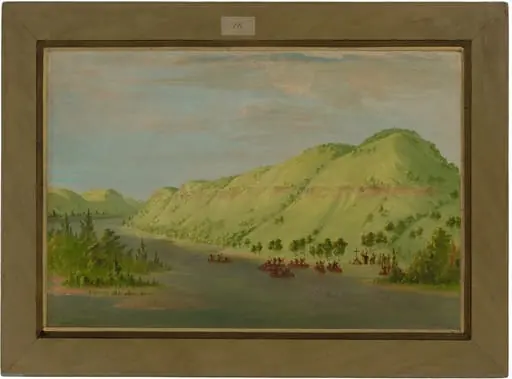 Father Hennepin Leaving the Mississippi to Join La Salle. May 8, 1680