Artwork
Three Potowotomie Indians
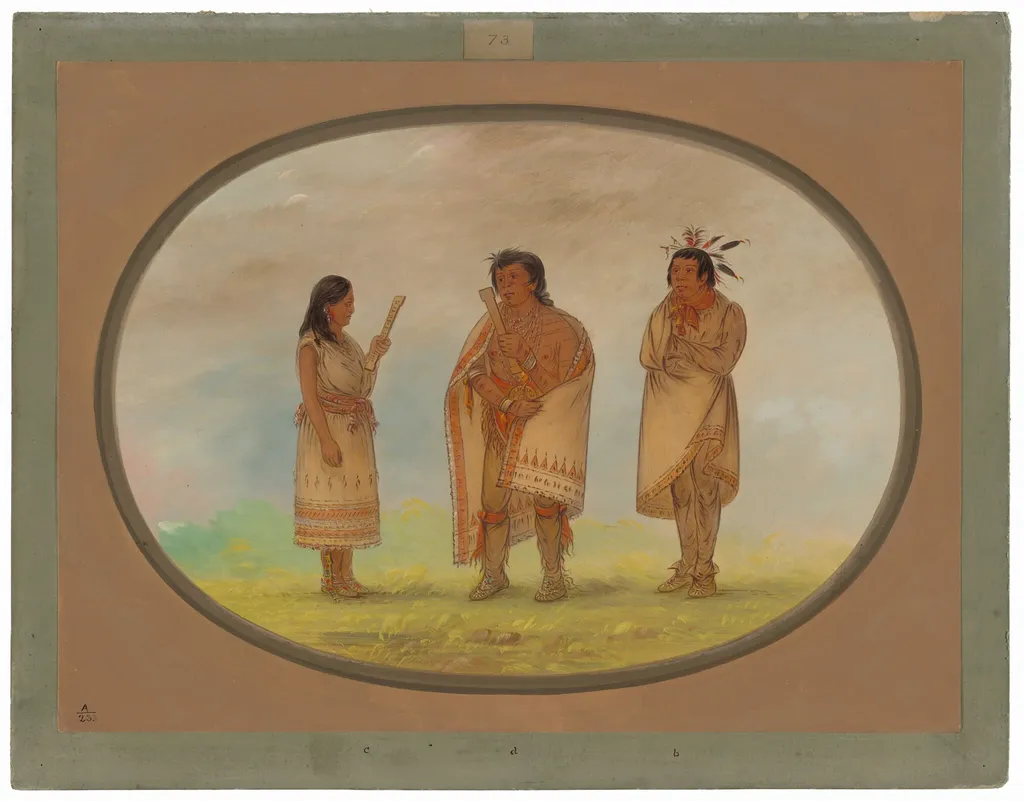
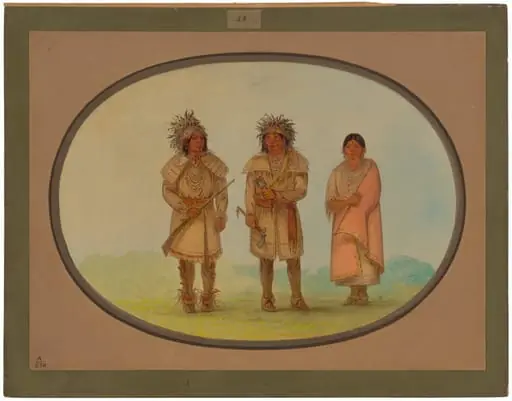
Three Potowotomie Indians is an oil painting by the American Folk Art artist George Catlin. It dates from 1865 and is held in the collection of the National Gallery of Art.
About this work
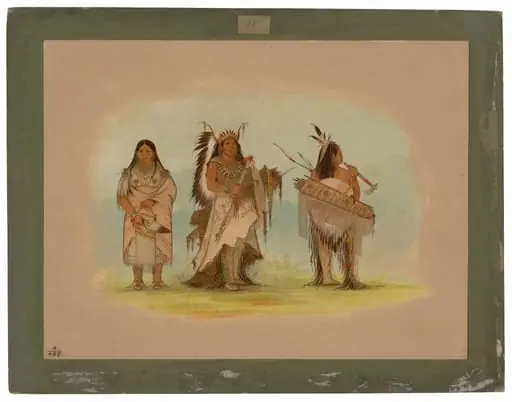
The two on the right wear similar clothing—loose shirts, leggings, and feathered headpieces—one holding a pipe, the other standing with hands crossed.
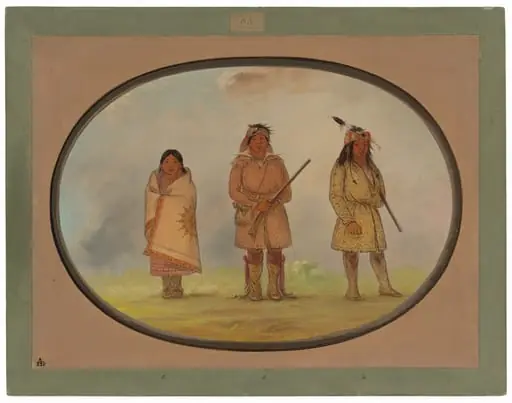
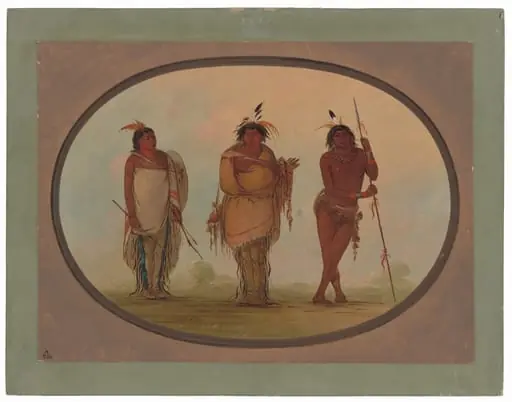
This painting shows three people standing outside in a grassy area. The person on the left is holding a small object, dressed in a long skirt with red trim. The two on the right wear similar clothing—loose shirts, leggings, and feathered headpieces—one holding a pipe, the other standing with hands crossed. The background is soft and blurry, with a faint sky and hills.
The artist painted them in a simple, direct style, focusing on their clothing and poses. This kind of straightforward painting was common in the 19th century.
If you like this style, look up Realism next.
Overview
Created in 1865, this oil painting on card, later affixed to paperboard, depicts three members of the Potowotomie tribe standing in an open, grassy setting. The figures are rendered against a muted horizon where sky and distant hills dissolve into a soft focus, emphasizing the subjects rather than the landscape.
Subject & Meaning
The central figure on the left holds a small object, possibly a ceremonial item, and wears a long skirt trimmed in red. The two figures on the right are dressed in loose shirts, leggings, and feathered headdresses; one clutches a pipe, while the other stands with his arms crossed. The composition presents a straightforward, dignified portrayal of tribal attire and posture.
Technique & Style
Catlin employed a direct, uncomplicated approach typical of mid‑19th‑century American folk portraiture. The oil medium is applied in relatively flat washes, with limited modeling, allowing the clothing details and accessories to stand out against the indistinct background. This simplicity underscores the documentary intent of the work.
History & Provenance
George Catlin, a lawyer‑turned artist, traveled to the western frontier repeatedly in the 1830s, documenting Plains peoples through portraiture. This piece belongs to the series of works he produced after those expeditions, intended to record the appearance and dress of Native American groups for an eastern audience.
Context
The painting reflects a period when Euro‑American interest in the “vanishing” Native cultures grew, prompting artists like Catlin to create visual records. While not aligned with academic fine‑art conventions, the work contributes to the broader visual archive of 19th‑century ethnographic portraiture.
Artist & collection

Artist
George Catlin ( KAT-lin; July 26, 1796 – December 23, 1872) was an American lawyer, painter, author, and traveler, who specialized in portraits of Native Americans in the American frontier.

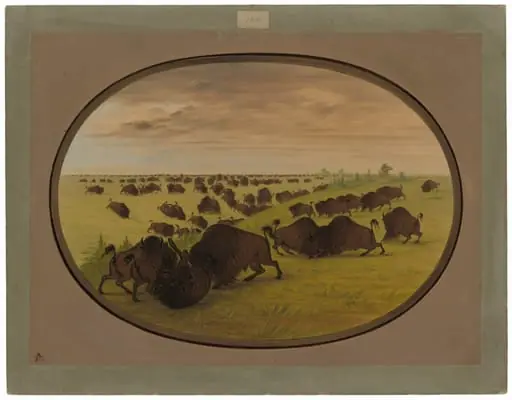 Bulls Fighting
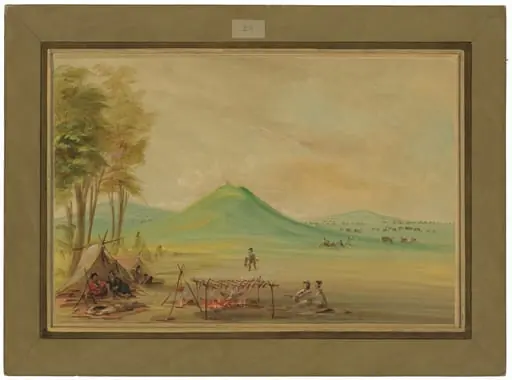 Expedition Encamped on a Texas Prairie. April 1686
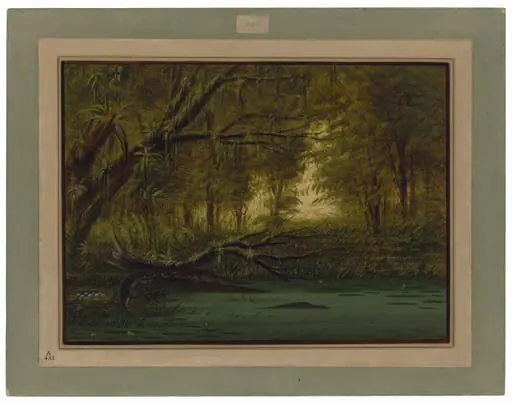 An Alligator's Nest
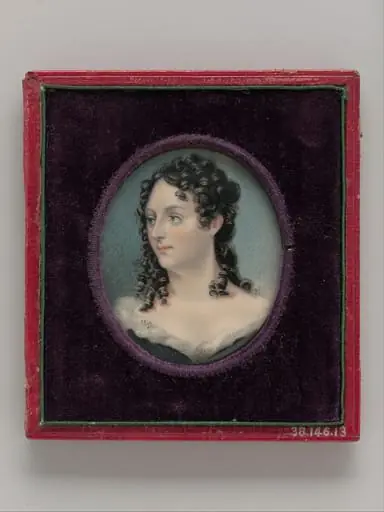 Mrs. George Catlin (Clara Bartlet Gregory)
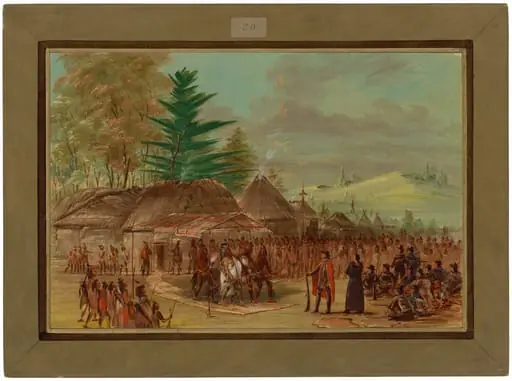 Chief of the Taensa Indians Receiving La Salle. March 20, 1682
 A Small Village - Payaguas Indians
 Omaha Chief, His Wife, and a Warrior
 Father Hennepin Leaving the Mississippi to Join La Salle. May 8, 1680