Artwork
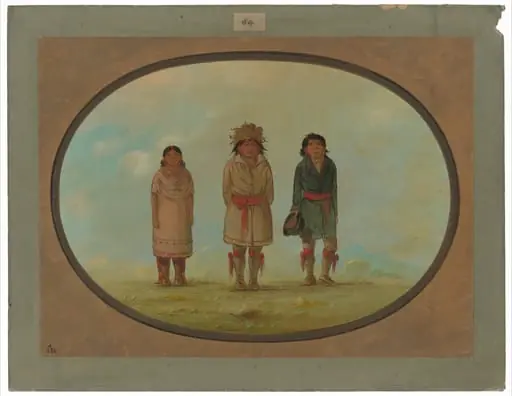
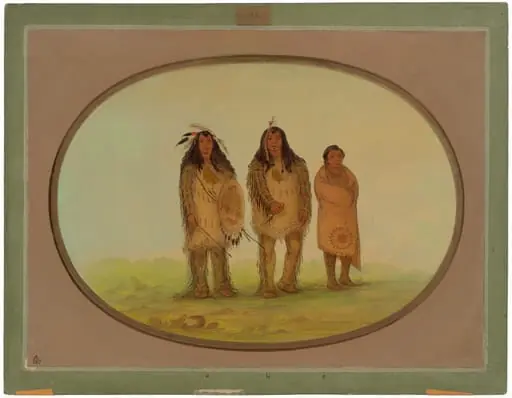
Three Esquimaux
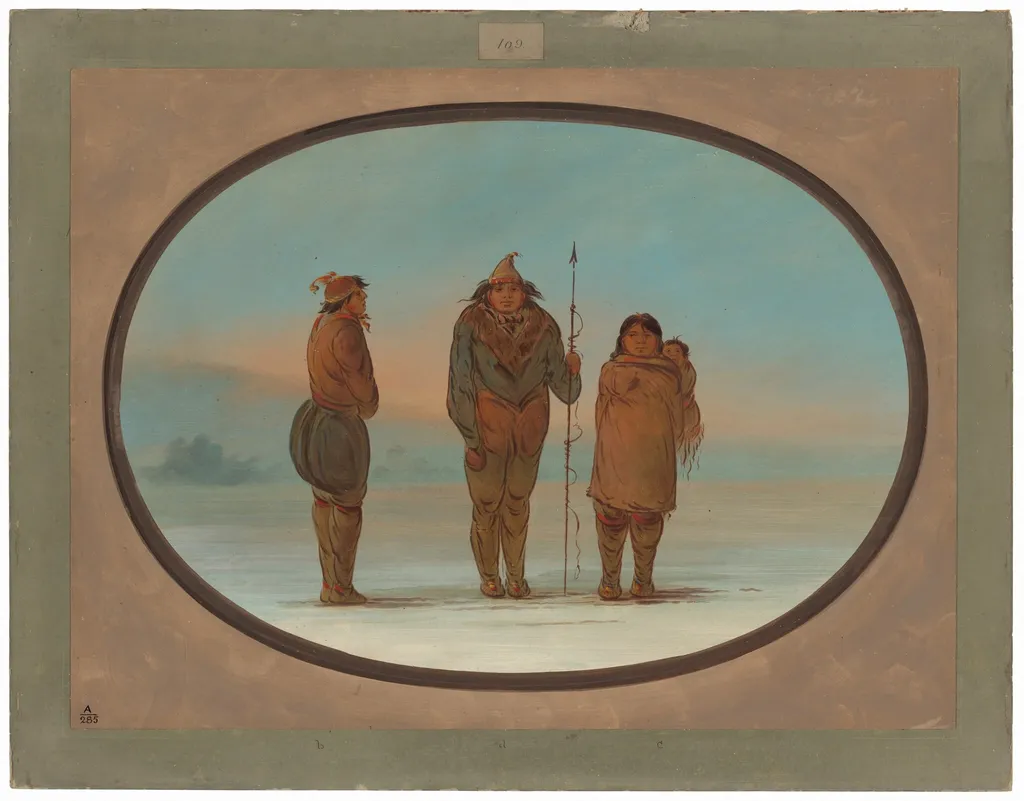
Three Esquimaux is an oil painting by the Impressionist artist George Catlin. It dates from 1862 and is held in the collection of the National Gallery of Art.
About this work
Overview
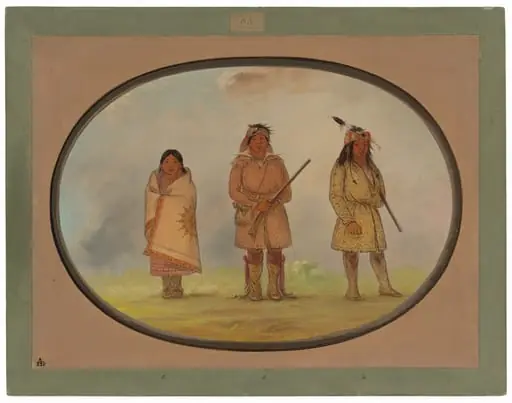
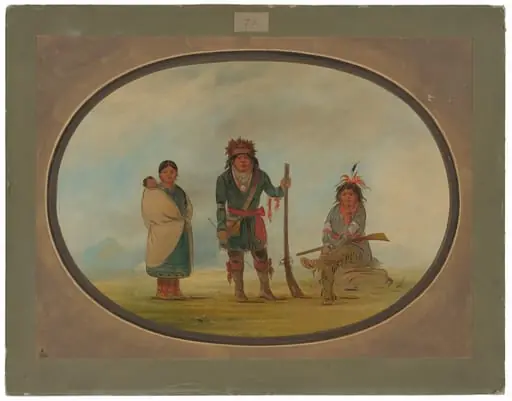
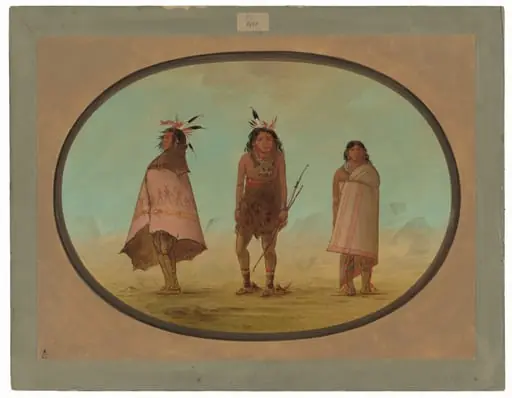
Created in 1862, *Three Esquimaux* is an oil painting executed on card that has been mounted on paperboard. The work presents three Arctic figures standing in a wintry landscape, each rendered with a restrained palette of blues, browns and beiges. The composition is quiet and still, inviting the viewer to contemplate the scene rather than to dramatize it.
Subject & Meaning
The three individuals are depicted in traditional winter attire; the leftmost figure turns away, the central figure holds a spear, and the rightmost figure carries an infant on the back. Their placement in a snowy setting suggests a focus on daily life and survival in a harsh environment, reflecting an ethnographic interest in the customs of Inuit peoples.
Technique & Style
Catlin employed oil on card, allowing for visible, textured brushwork that gives the surface a tactile quality. The muted tonal range and soft handling of light echo early Impressionist concerns with atmospheric effects, though the approach remains grounded in realistic portraiture rather than abstraction.
History & Provenance
The painting belongs to the later phase of George Catlin’s career, after his extensive travels among Native American groups in the 1830s. By the 1860s he had broadened his scope to include Arctic peoples, and *Three Esquimaux* was produced as part of this expanded documentary series. The work has remained in private collections before entering a museum holding focused on American art.
Artist & collection

Artist
George Catlin ( KAT-lin; July 26, 1796 – December 23, 1872) was an American lawyer, painter, author, and traveler, who specialized in portraits of Native Americans in the American frontier.

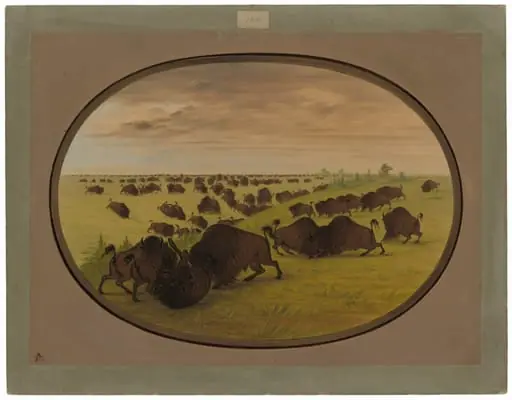 Bulls Fighting
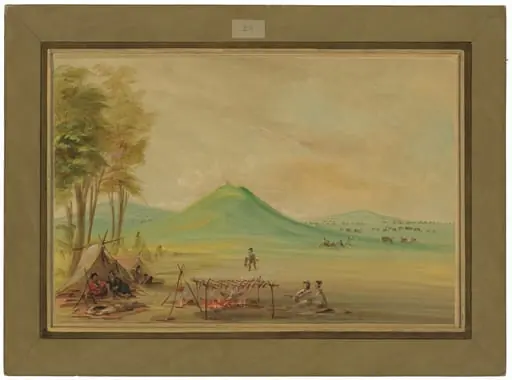 Expedition Encamped on a Texas Prairie. April 1686
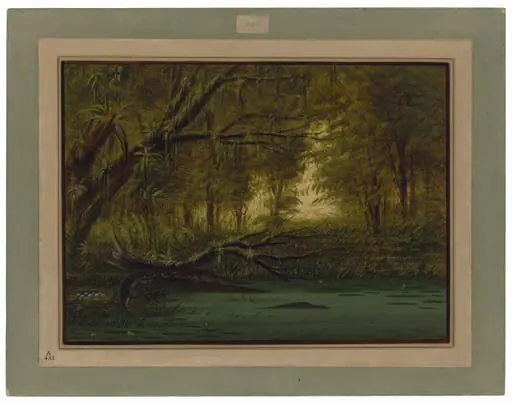 An Alligator's Nest
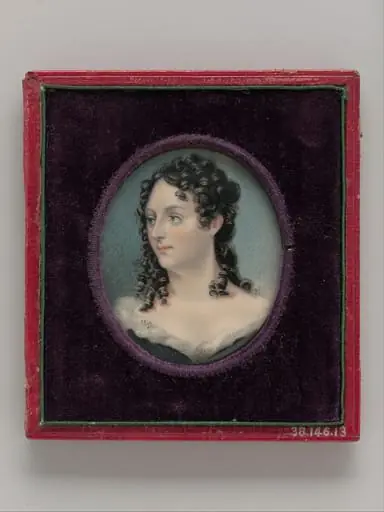 Mrs. George Catlin (Clara Bartlet Gregory)
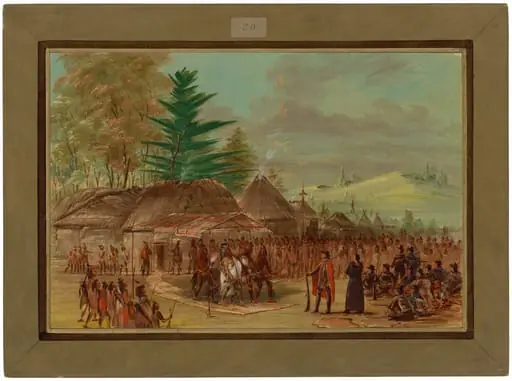 Chief of the Taensa Indians Receiving La Salle. March 20, 1682
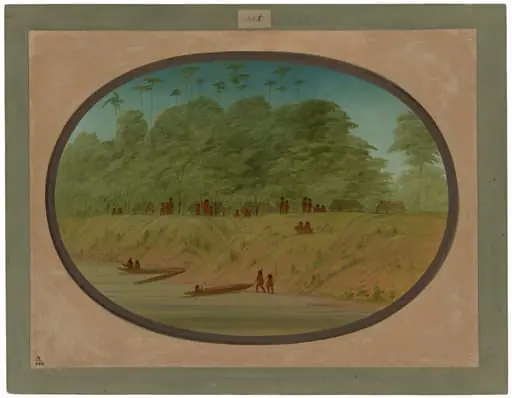 A Small Village - Payaguas Indians
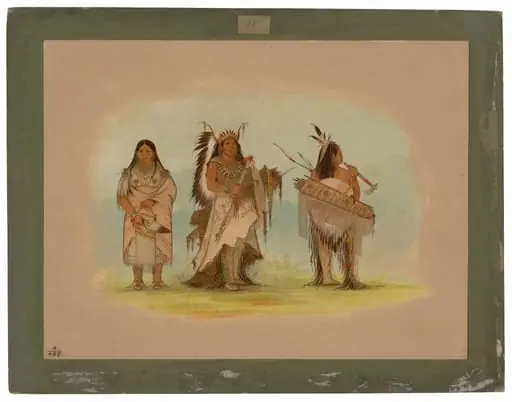 Omaha Chief, His Wife, and a Warrior
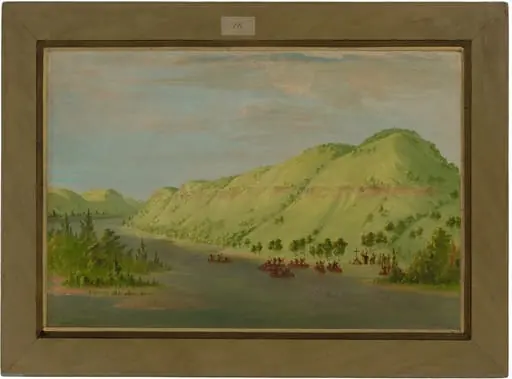 Father Hennepin Leaving the Mississippi to Join La Salle. May 8, 1680