Artwork
Two Blackfoot Warriors and a Woman
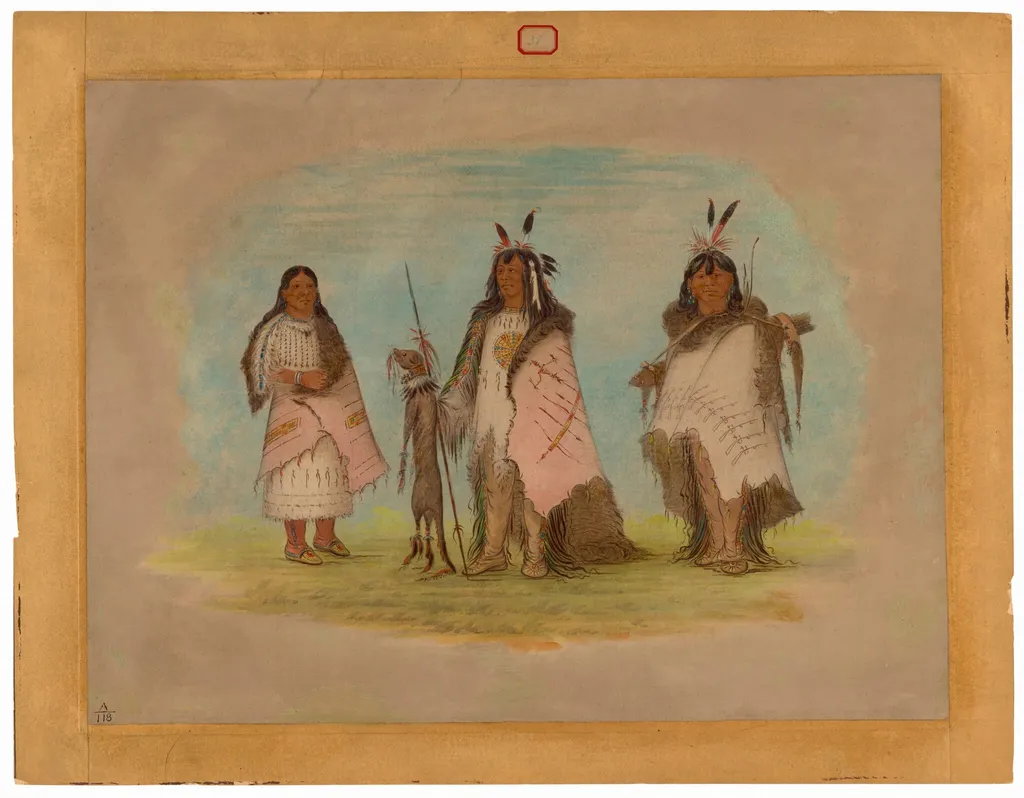
Two Blackfoot Warriors and a Woman is an oil painting by the Impressionist artist George Catlin. It dates from 1865 and is held in the collection of the National Gallery of Art.
About this work
Overview
Though executed decades after his initial travels, the work reflects his lifelong engagement with Indigenous cultures of the American Plains.
George Catlin created this oil-on-card painting in 1865, mounting it on paperboard to preserve its integrity. Though executed decades after his initial travels, the work reflects his lifelong engagement with Indigenous cultures of the American Plains. The composition presents three figures in a formal, frontal arrangement, characteristic of Catlin’s portraiture approach, which prioritized direct representation over narrative context.
Subject & Meaning
The painting depicts two Blackfoot men and a woman, each dressed in culturally specific attire, including feathered headdresses and fur-trimmed garments. The men hold spears, suggesting roles tied to defense or ceremony, while the woman’s crossed arms convey stillness or solemnity. Catlin aimed to document personal presence rather than mythologize, offering a quiet record of individual identity within a changing cultural landscape.
Technique & Style
Catlin employed oil paint on a small, rigid support to achieve fine detail and controlled texture. His brushwork is precise, emphasizing the weave of textiles, the sheen of beadwork, and the structure of feathers. The lighting is even, avoiding dramatic shadows, which aligns with the observational priorities of 19th-century ethnographic portraiture rather than Romantic idealization.
History & Provenance
Painted in 1865, this work belongs to Catlin’s later period, after his return from Europe and following the loss of much of his earlier collection. He revisited earlier sketches and memories to produce new versions of his subjects. The painting likely originated from his personal archive, later dispersed through sales and donations to institutions seeking to preserve his ethnographic record.
Context
Catlin painted during a time of rapid displacement of Plains Indigenous peoples due to westward expansion. His work emerged from a desire to record cultures he believed were vanishing. Though his intentions were documentary, his framing often reflected contemporary biases, presenting subjects as static representatives rather than dynamic communities adapting to change.
Legacy
Catlin’s portraits, including this one, remain among the most extensive visual records of Plains Indigenous life from the early 19th century. While later scholars critique his romanticized lens, his images continue to serve as primary references for cultural revival and academic study. The work endures not as an idealized vision, but as a historical artifact of encounter and representation.
Artist & collection

Artist
George Catlin ( KAT-lin; July 26, 1796 – December 23, 1872) was an American lawyer, painter, author, and traveler, who specialized in portraits of Native Americans in the American frontier.

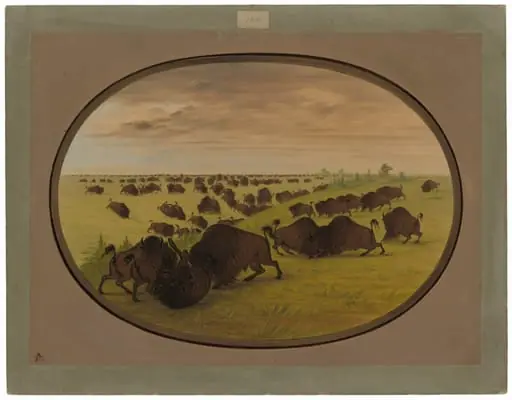 Bulls Fighting
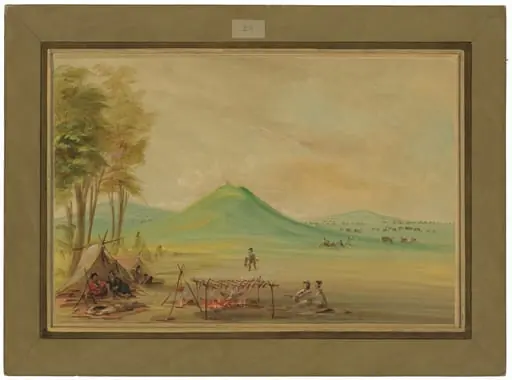 Expedition Encamped on a Texas Prairie. April 1686
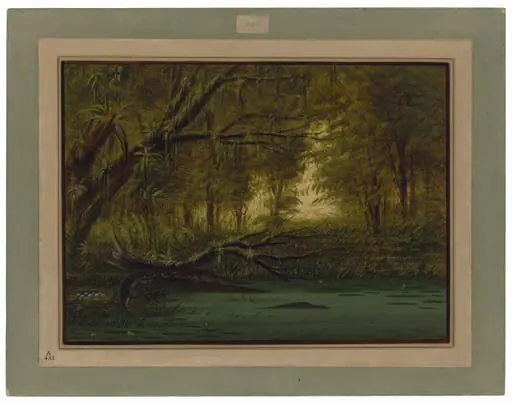 An Alligator's Nest
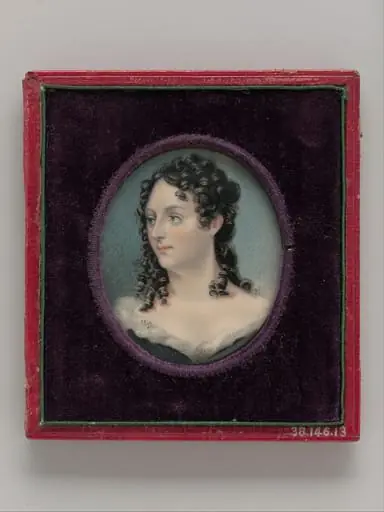 Mrs. George Catlin (Clara Bartlet Gregory)
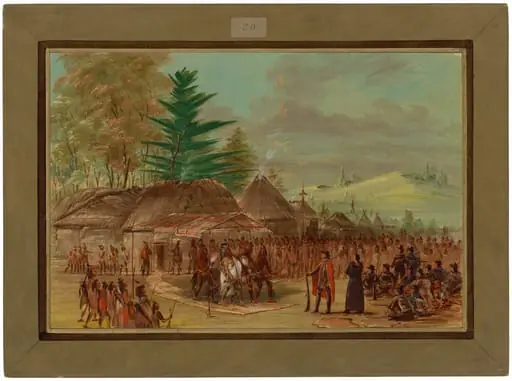 Chief of the Taensa Indians Receiving La Salle. March 20, 1682
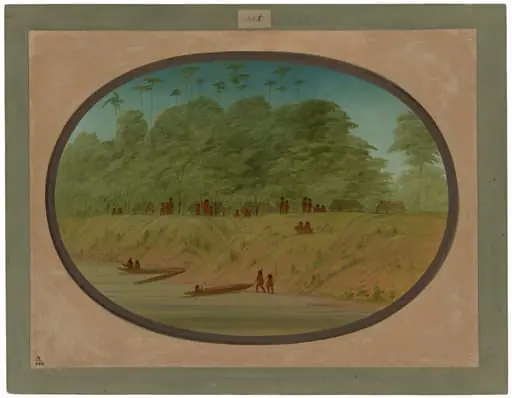 A Small Village - Payaguas Indians
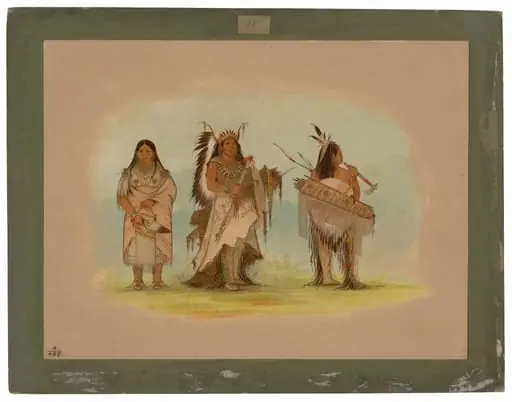 Omaha Chief, His Wife, and a Warrior
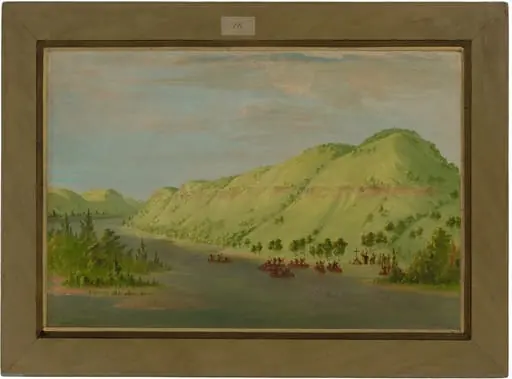 Father Hennepin Leaving the Mississippi to Join La Salle. May 8, 1680
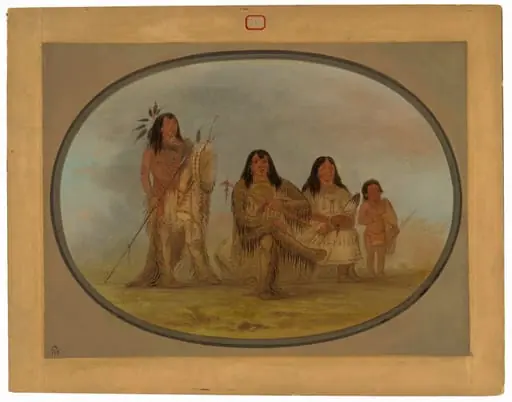 A Blackfoot Chief, His Wife, and a Medicine Man
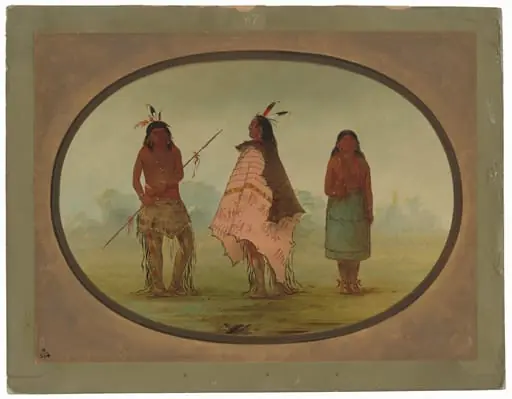 Two Apachee Warriors and a Woman
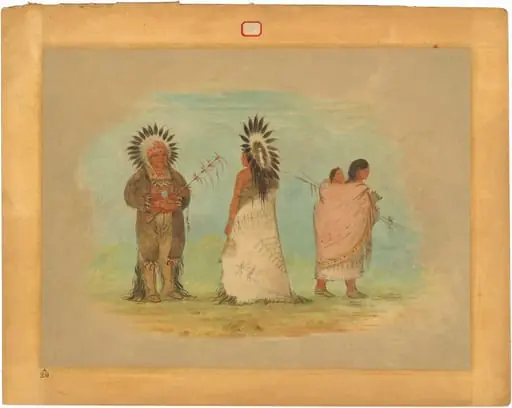 Two Ottoe Chiefs and a Woman
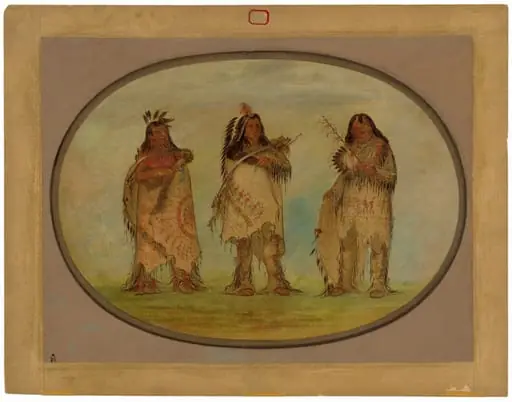 Three Distinguished Warriors of the Sioux Tribe
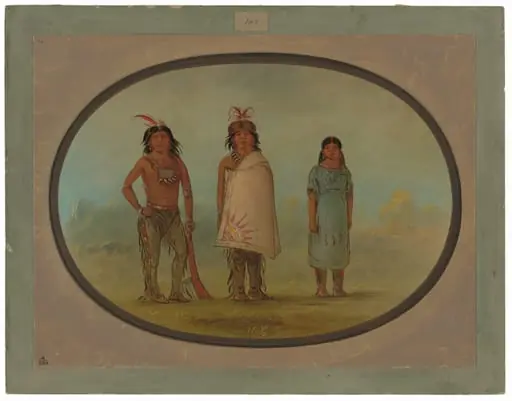 Two Chippewyan Warriors and a Woman
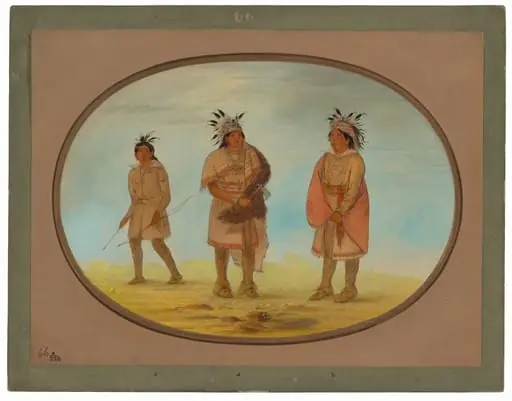 Two Weeah Warriors and a Woman
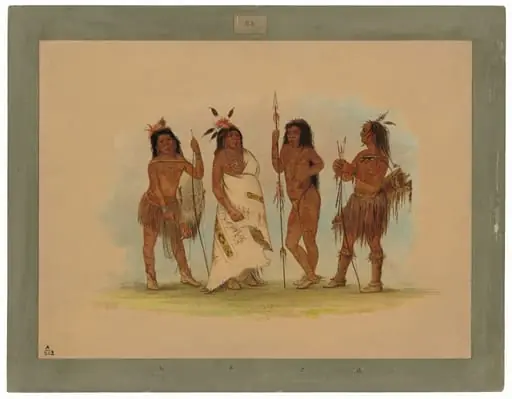 Apachee Chief and Three Warriors
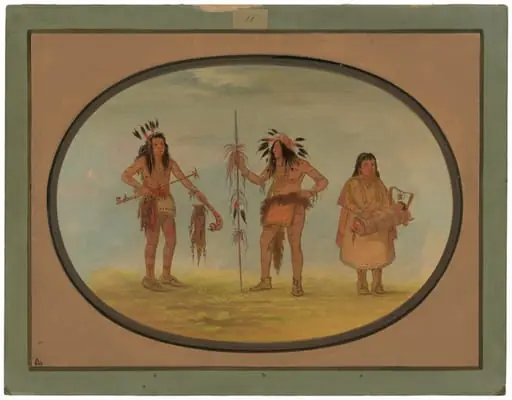 Two Ojibbeway Warriors and a Woman
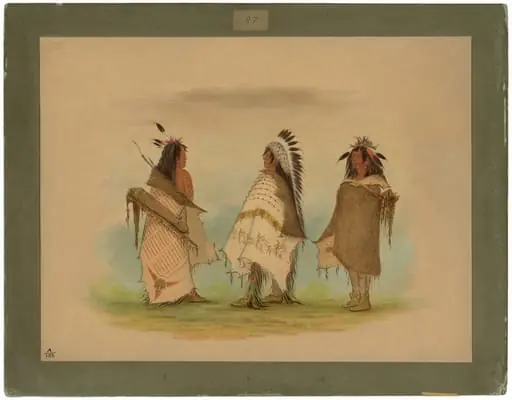 Three Shoshonee Warriors
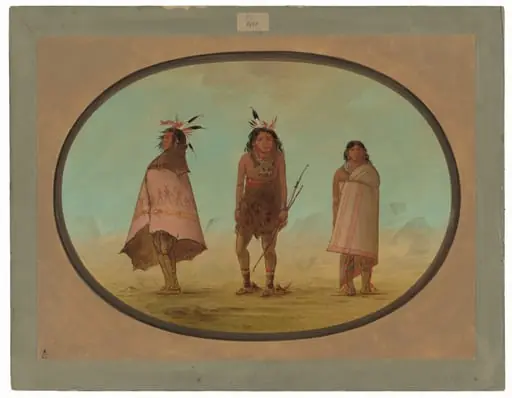 Yntah Medicine Man, a Warrior, and a Woman