Artwork
Hollyhocks
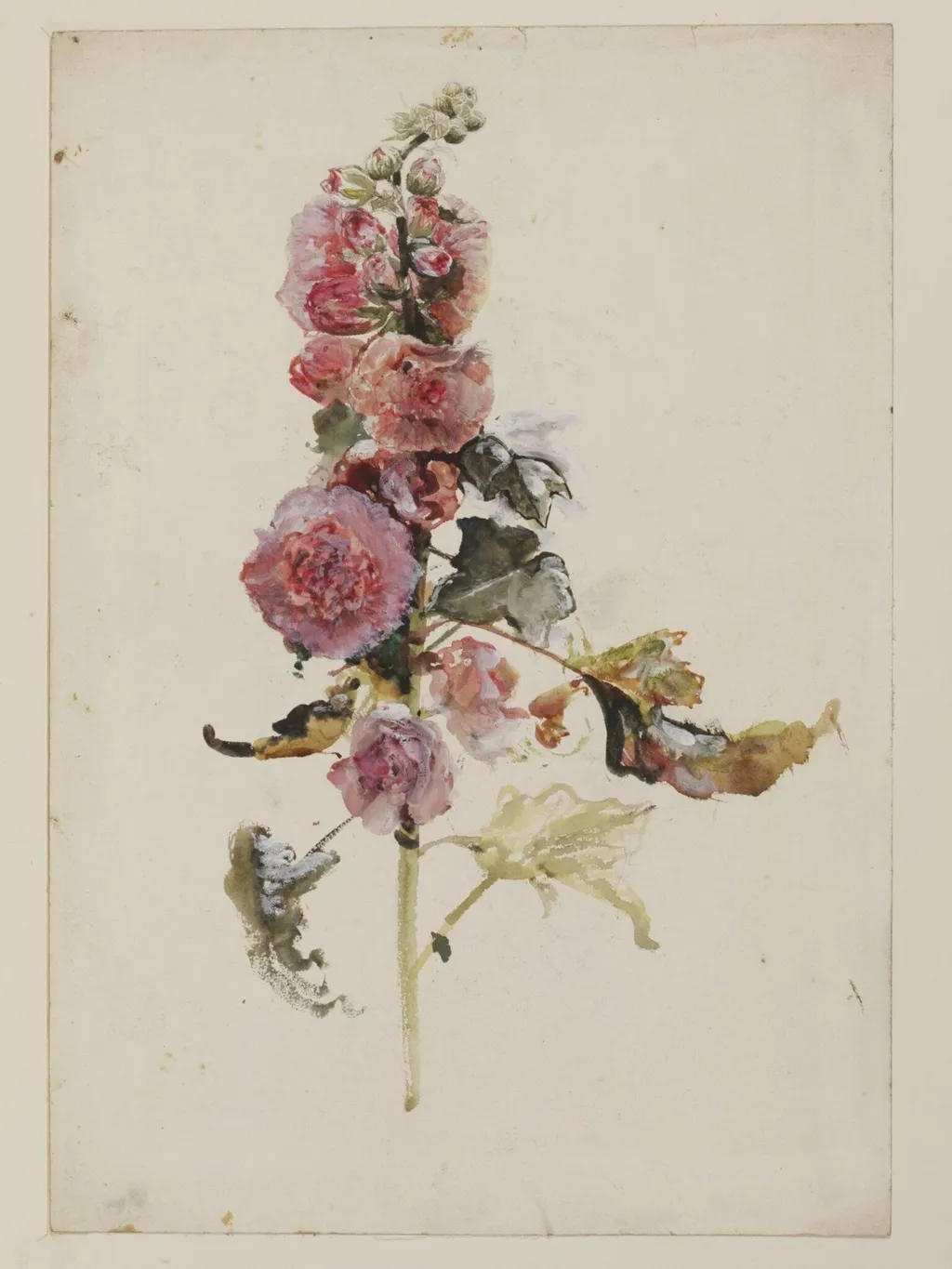
Hollyhocks is a watercolor work on paper by the Impressionist artist Cecil Gordon Lawson. It dates from 1877 and is held in the collection of the Victoria and Albert Museum.
About this work
Overview
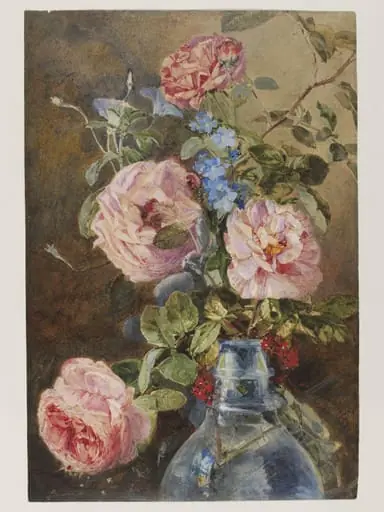
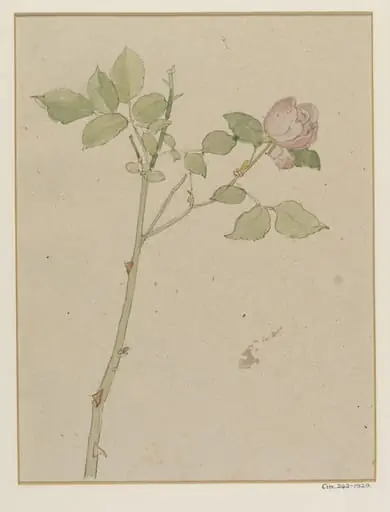
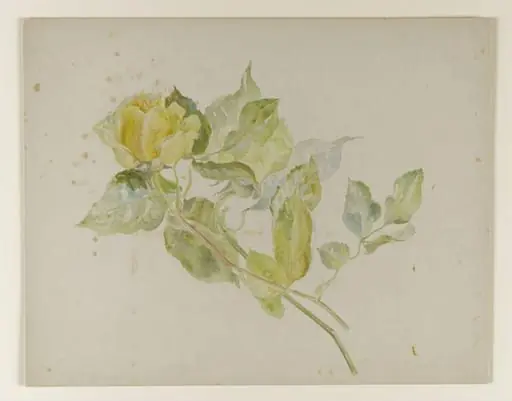
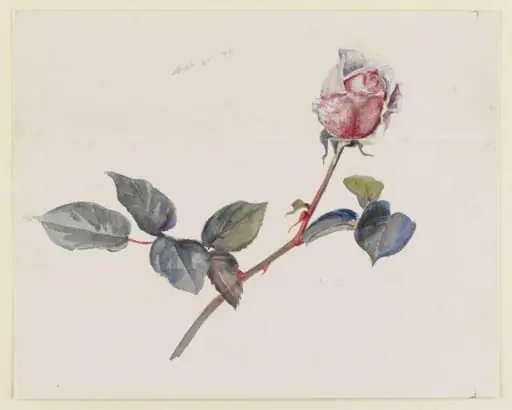
Cecil Gordon Lawson’s 1877 watercolour, executed on a vertical sheet, presents a cluster of hollyhocks rendered in pink and white. The composition is spare, with the flowers set against an unadorned pale background, emphasizing their form and colour. The work functions as a preliminary study, likely intended to inform a later, larger oil composition titled The Minister’s Garden.
Subject & Meaning
The painting isolates the hollyhocks, allowing their delicate blossoms and sturdy stems to dominate the visual field. By focusing on a single floral motif, Lawson explores the interplay of light and pigment, suggesting a quiet, observational study of nature rather than a narrative scene.
Technique & Style
Lawson employs loose, rapid brushwork typical of watercolor, allowing pigment to bleed and merge on the paper. Dark, near‑black strokes define stems and foliage, while the petals dissolve into soft washes of pink and white. The unfinished, slightly messy quality reflects the medium’s fluidity and the artist’s intent to capture immediacy.
History & Provenance
Created in 1877, the study was probably used as a preparatory sketch for Lawson’s subsequent oil painting, The Minister’s Garden. Its provenance traces back to the artist’s studio, later entering public collections that document his preparatory processes.
Context
During the late nineteenth century, British artists often produced watercolor studies to plan larger works, capitalizing on the medium’s speed and transparency. Lawson’s focus on garden flora aligns with contemporary interests in domestic horticulture and the visual documentation of everyday landscapes.
Artist & collection