Artwork
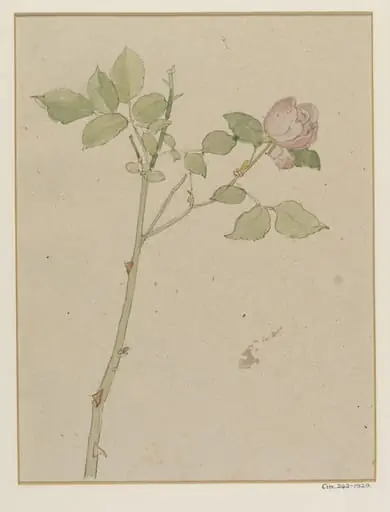
Pink rosebud with leaves
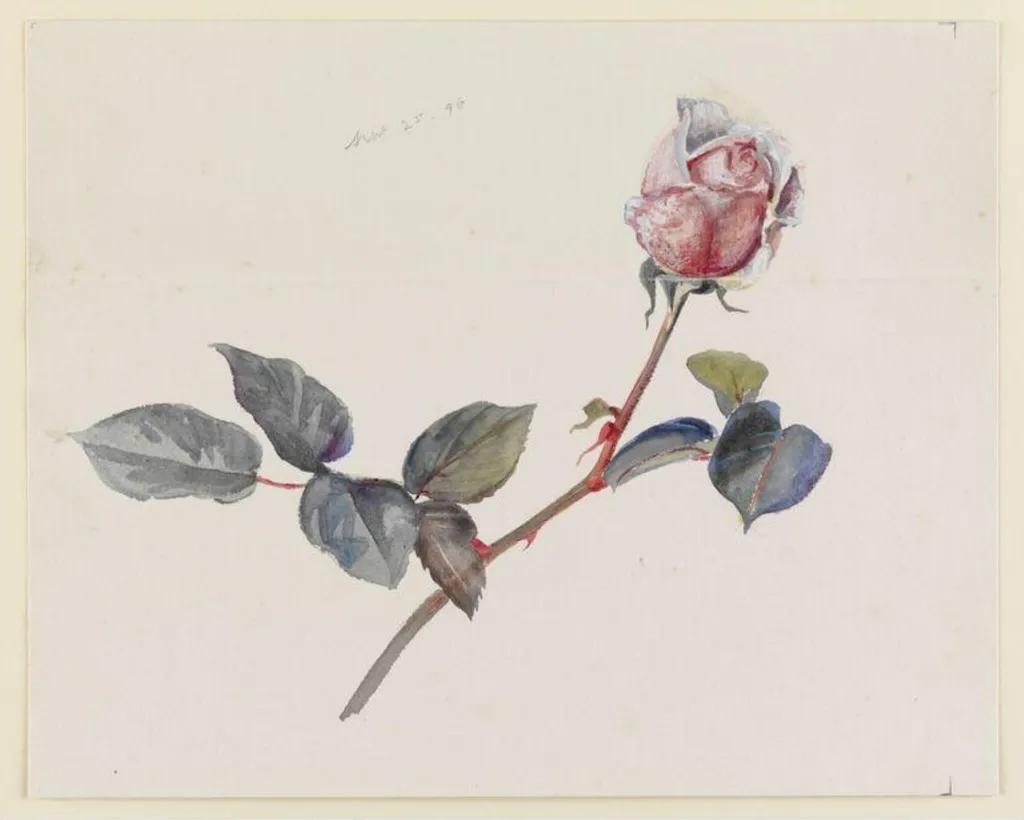
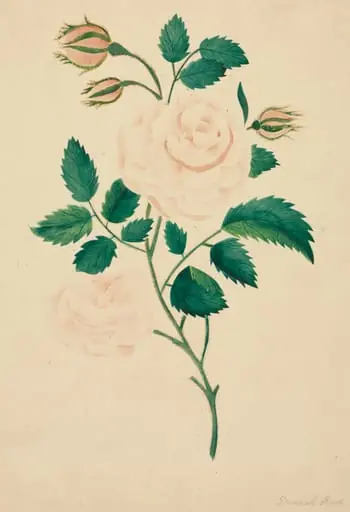
Pink rosebud with leaves is a watercolor work on paper by the Impressionist artist Beatrix Potter. It dates from 25 and is held in the collection of the Victoria and Albert Museum. This watercolour depicts a single pink rosebud accompanied by its leaves, rendered with precise observation.
About this work
Overview
Created by Beatrix Potter during a stay in Near Sawrey, it reflects her deep engagement with botanical study outside of her literary work.
This watercolour depicts a single pink rosebud accompanied by its leaves, rendered with precise observation. Created by Beatrix Potter during a stay in Near Sawrey, it reflects her deep engagement with botanical study outside of her literary work. The piece belongs to a broader series of natural history sketches she produced in the late 19th and early 20th centuries, grounded in direct observation rather than idealized representation.
Subject & Meaning
The rosebud is presented without symbolic embellishment, focusing instead on its physical form: the tightly furled petals, the texture of the stem, and the arrangement of the leaves. Potter’s choice to isolate this single element suggests an interest in botanical accuracy over narrative or emotional content. It reflects her scientific curiosity, treating the flower as a subject worthy of detailed study in its own right.
Technique & Style
Executed in watercolour, the work demonstrates careful layering and controlled washes to capture subtle shifts in hue and light. Potter’s brushwork is restrained, emphasizing clarity and detail over expressive flair. The use of fine lines to define veins in the leaves and the delicate gradation of pink in the petals reveal her training in observational drawing and her familiarity with scientific illustration techniques.
History & Provenance
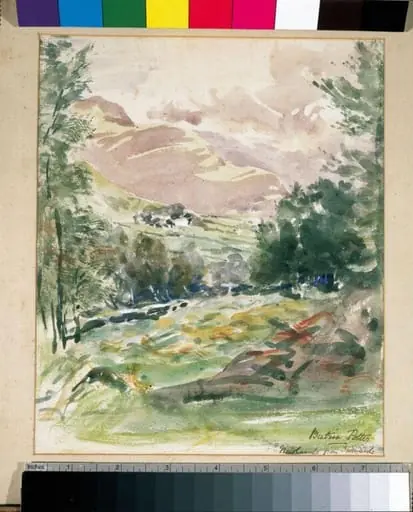
The sketch was made during Potter’s time at Lakefield, a property in Near Sawrey, before she purchased Hill Top Farm in 1905. It is one of many botanical studies she produced during her frequent visits to the Lake District. Scholar Leslie Linder identified the location based on her correspondence and sketchbook annotations, linking the work to her personal environment and daily practice of natural observation.
Context
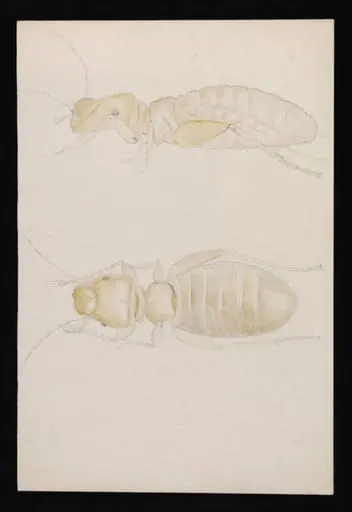
Potter’s botanical studies were part of a broader scientific interest that included mycology and entomology. She regularly visited the Natural History Museum, examined specimens under magnification, and maintained a personal collection of insects and shells. These activities were pursued seriously, though largely outside formal academic circles due to the gendered constraints of her era. Her art served both aesthetic and investigative purposes.
Legacy
While best known for her children’s books, Potter’s botanical and zoological drawings remain significant as examples of amateur scientific illustration from the period. They reveal a disciplined eye and a commitment to accuracy that predated her literary fame. These works are now valued for their contribution to the history of natural history art and as evidence of a woman engaging with science on her own terms.
Artist & collection
Artist
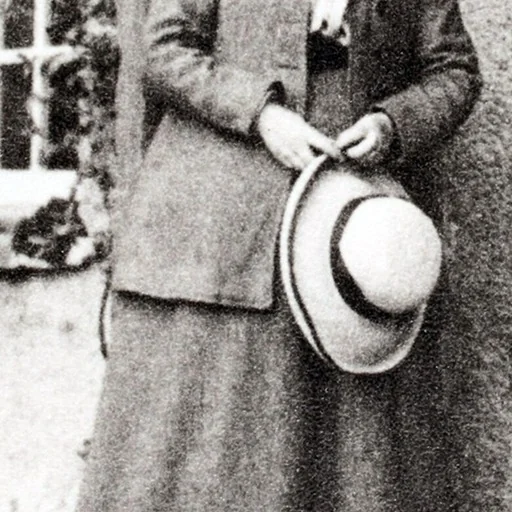
Helen Beatrix Heelis (née Potter; 28 July 1866 – 22 December 1943), usually known as Beatrix Potter ( BEE-ə-triks), was an English writer, illustrator, natural scientist, and conservationist.