Artwork
Untitled
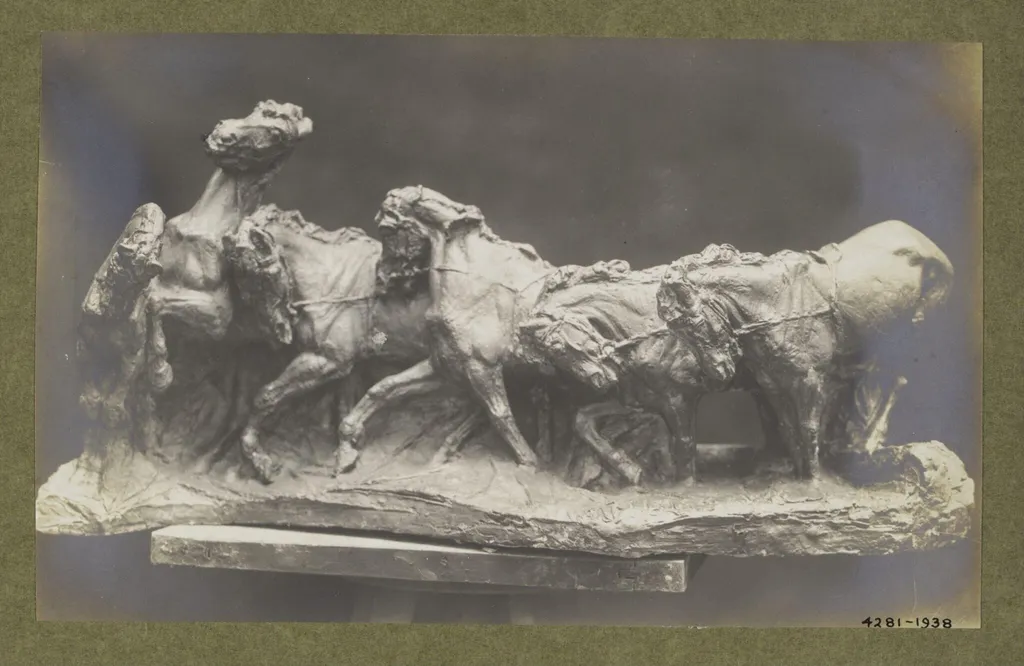
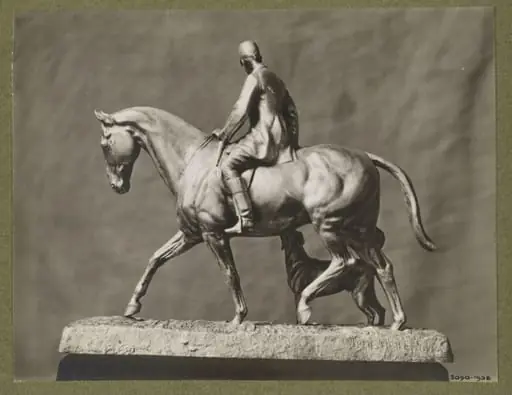
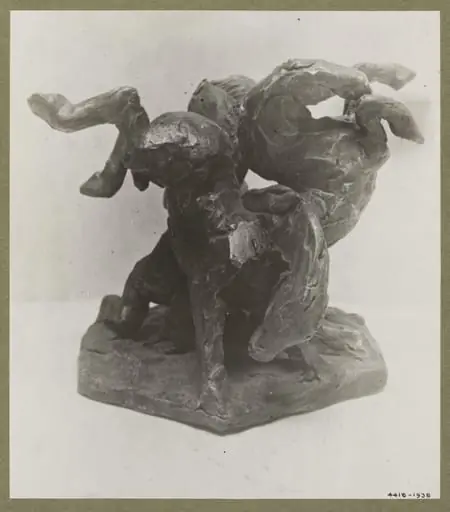
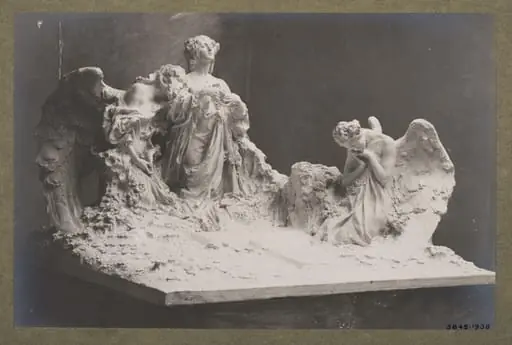
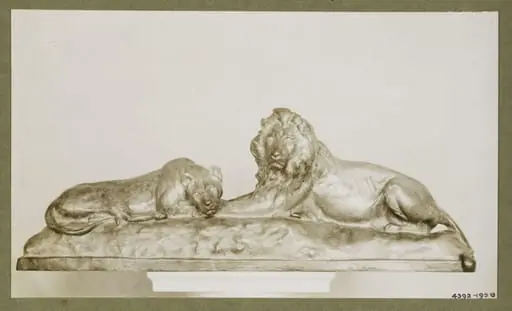
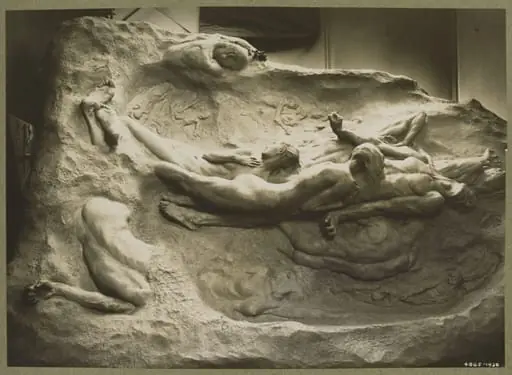
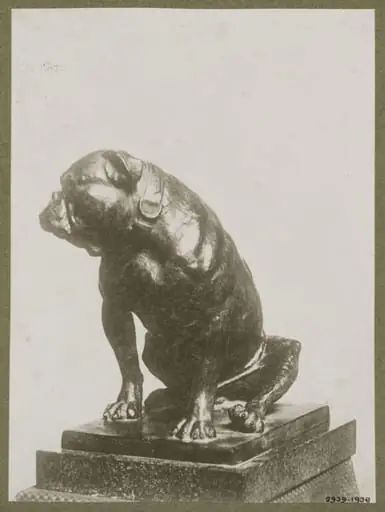
Untitled is a photographic photography by Emil Herman Robert Cedercreutz. It is held in the collection of the Victoria and Albert Museum. This photograph, part of the Archive of Art and Design, captures a clay model of two horses pulling a wagon.
About this work
Overview
The image preserves a transient, unpolished moment in the sculptural process, reflecting its function as a working study rather than a finished piece.
This photograph, part of the Archive of Art and Design, captures a clay model of two horses pulling a wagon. It was submitted in response to questionnaires sent by William Kineton Parkes in the 1920s and later mounted on green card as part of his collection, bequeathed to the archive in 1938. The image preserves a transient, unpolished moment in the sculptural process, reflecting its function as a working study rather than a finished piece.
Subject & Meaning
The scene depicts two horses in motion, muscles taut, pulling a crude, uneven wagon. The composition conveys physical labor and kinetic energy, with no attempt to idealize the forms. The roughness suggests immediacy—likely a preparatory study made to explore movement or weight distribution. It reveals the sculptor’s focus on anatomical truth and dynamic tension over aesthetic refinement.
Technique & Style
The clay model was shaped rapidly, with visible finger marks and uneven surfaces, indicating direct, hands-on modeling without smoothing or finishing. This unrefined approach was typical of preliminary studies, where form and motion were prioritized over detail. The photograph captures the material’s raw state, preserving the sculptor’s gesture and the transient nature of the work.
History & Provenance
William Kineton Parkes, an art historian and librarian with expertise in sculpture, collected such studies in the 1920s to document contemporary sculptural practices. This photograph was one of many responses to his mailed questionnaires. After his death in 1938, his collection, including this item, was bequeathed to what is now the Archive of Art and Design, ensuring its preservation as a record of artistic process.
Context
In early 20th-century sculpture, quick clay studies were essential tools for exploring form, balance, and movement before casting in bronze or stone. Artists often used such models to test compositions or train their hands. Parkes’s initiative to gather these works reflected a growing interest in documenting the behind-the-scenes labor of sculpture, not just its final products.
Legacy
This photograph endures as evidence of the everyday, unglamorous work underlying sculptural creation. It contributes to a broader archive that illuminates how artists thought through form in real time. Its preservation underscores the value placed on process over polish, offering insight into the practical realities of sculptural practice in the interwar period.
Artist & collection