Artwork
Bust of a Girl
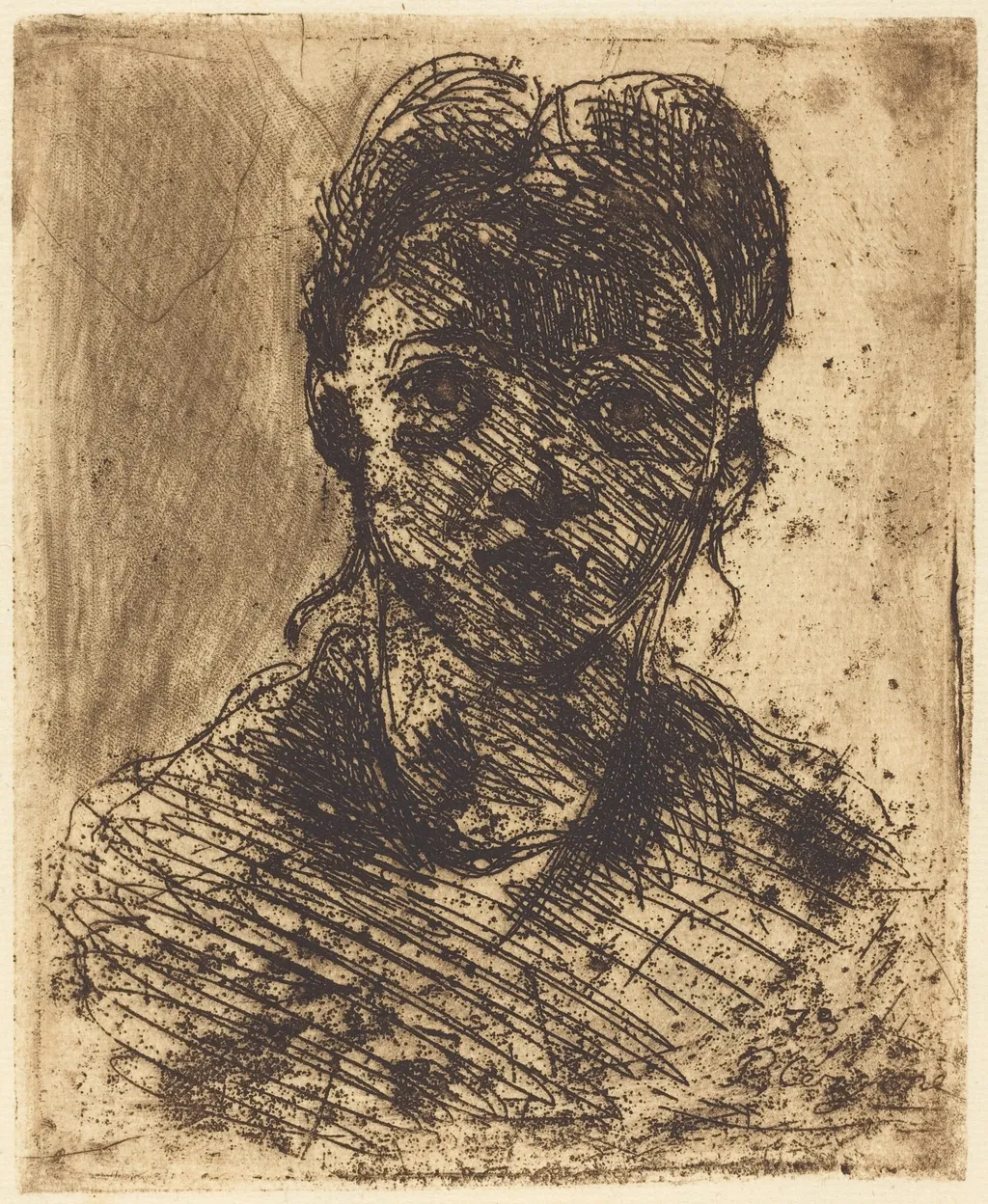
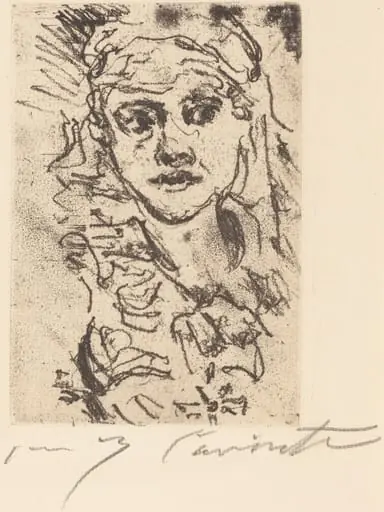
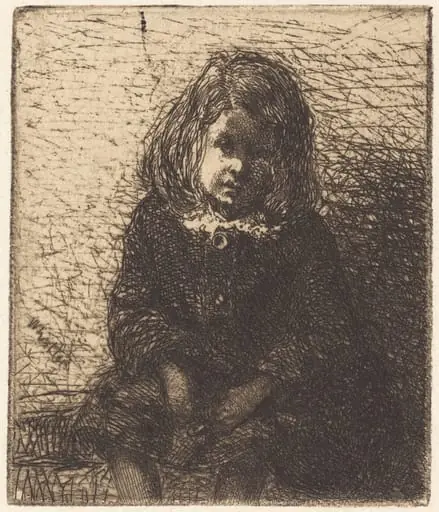
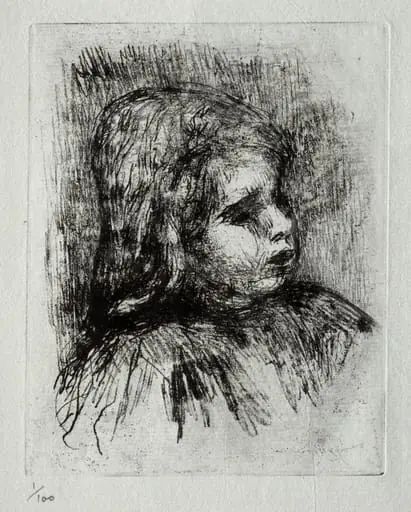
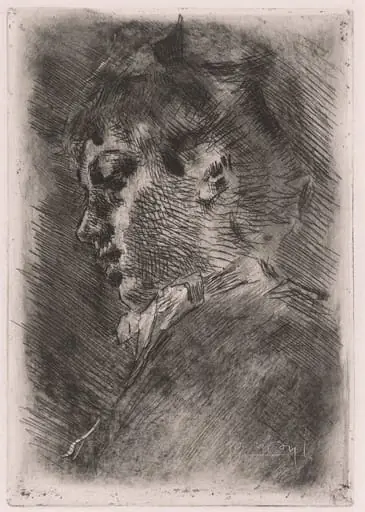
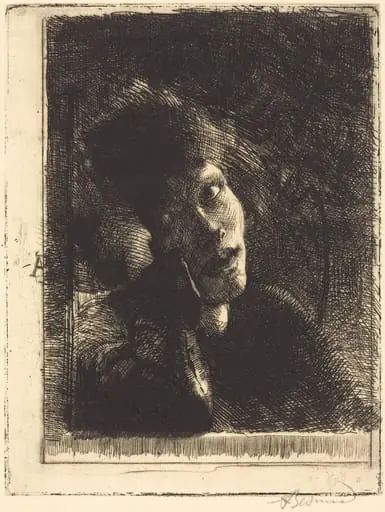
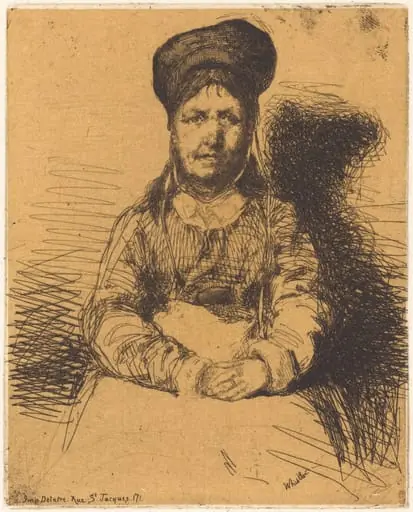
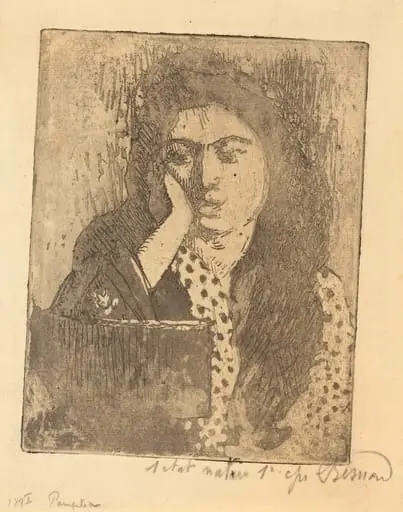
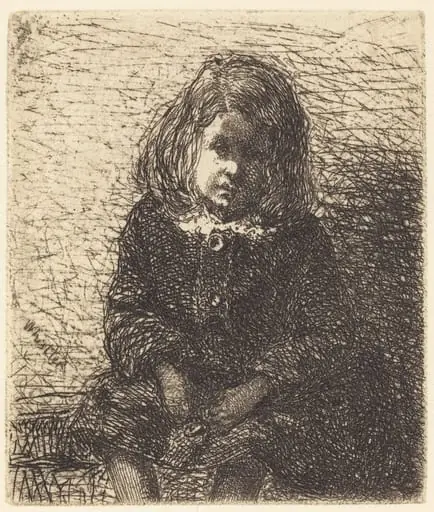
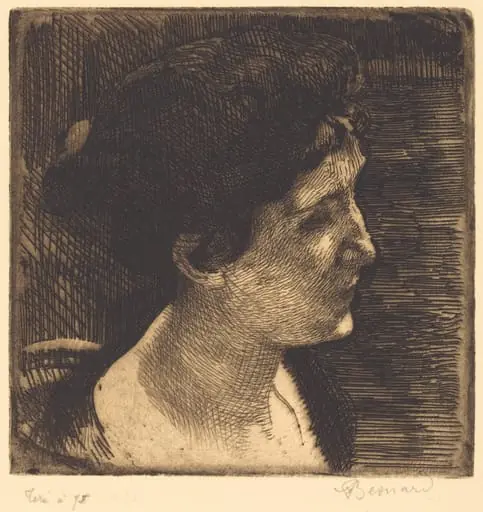
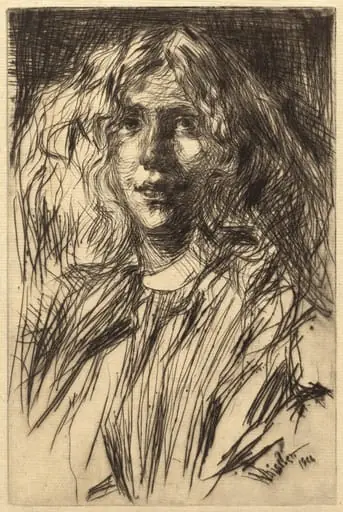
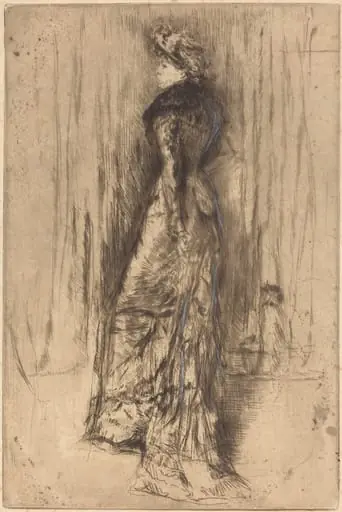
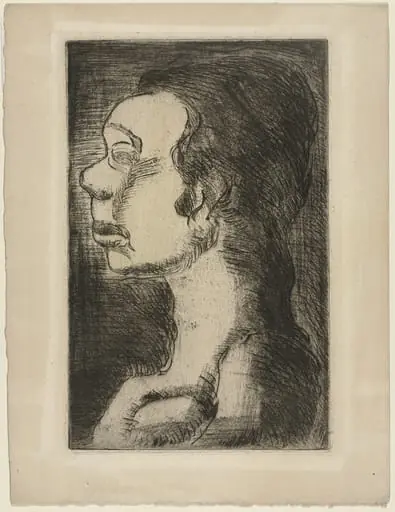
Bust of a Girl is an ink print by the Impressionist artist Paul Cezanne. It dates from 1873 and is held in the collection of the National Gallery of Art. Created in 1873, this etching by Paul Cézanne depicts a young woman’s bust in profile, rendered on laid paper with subtle tonal variations.
About this work
Overview
Created in 1873, this etching by Paul Cézanne depicts a young woman’s bust in profile, rendered on laid paper with subtle tonal variations.
Created in 1873, this etching by Paul Cézanne depicts a young woman’s bust in profile, rendered on laid paper with subtle tonal variations. The composition is spare, emphasizing the figure against an unworked background. Cézanne employed a roulette—a small, toothed wheel—to generate fine, granular textures, particularly in the hair and fabric, avoiding bold outlines in favor of delicate, built-up surfaces.
Subject & Meaning
The subject is a young woman, her face turned slightly away, eyes lowered, expression composed and introspective. Her features are rendered without idealization, suggesting a quiet, unposed presence. The absence of narrative context or ornamentation focuses attention on her demeanor, conveying a sense of stillness and inner gravity rather than theatricality or sentiment.
Technique & Style
Cézanne used etching with a roulette to achieve texture without heavy linework. The tool’s repeated pressure created a stippled effect on the hair and clothing, mimicking the play of light and shadow through density rather than contour. The background remains largely untouched, reinforcing the figure’s isolation and the work’s emphasis on materiality over detail.
History & Provenance
This print was made during Cézanne’s early period, when he was experimenting with printmaking alongside painting. It likely originated as a study or personal exercise rather than a commissioned work. No definitive record of its early ownership exists, but it survives as part of a small body of his graphic works from the 1870s, reflecting his interest in tonal structure.
Context
In the early 1870s, Cézanne was moving away from Romanticism toward a more structured, observational approach. This etching aligns with his broader shift toward capturing form through tone and texture rather than line. Contemporary printmakers often used etching for reproduction, but Cézanne treated it as a medium for direct, intimate exploration of volume and surface.
Legacy
Though not widely exhibited in his lifetime, this work exemplifies Cézanne’s innovative use of printmaking to extend his painterly concerns. His textured, non-linear approach influenced later artists exploring tonal gradation in graphic media. The piece remains a quiet testament to his method: reducing form to its essential relationships of light, mass, and surface.
Artist & collection
Artist
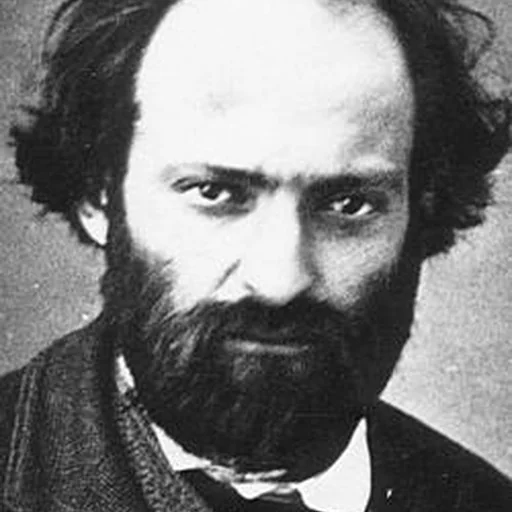
Paul Cézanne was born on January 19, 1839, in Aix-en-Provence, the son of a hatter turned wealthy banker.

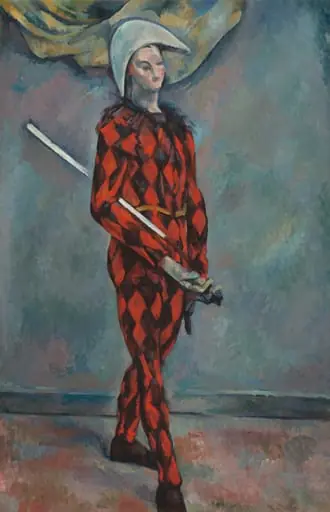 Harlequin
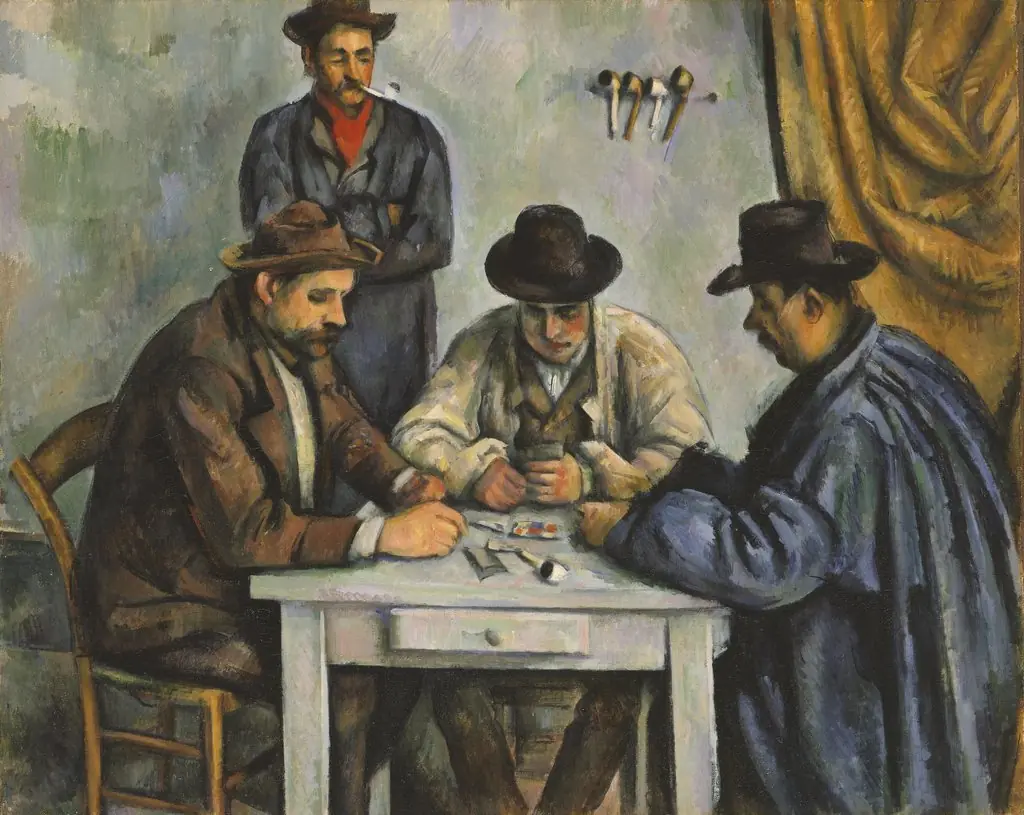 The Card Players
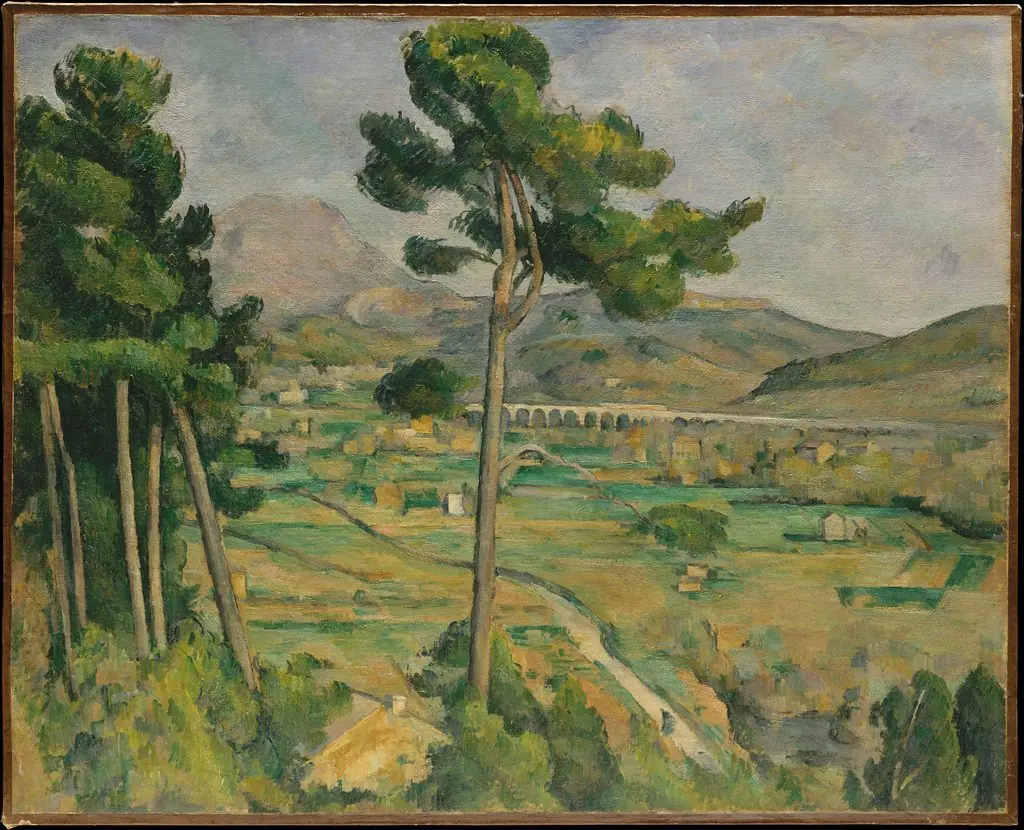 Mont Sainte-Victoire and the Viaduct of the Arc River Valley
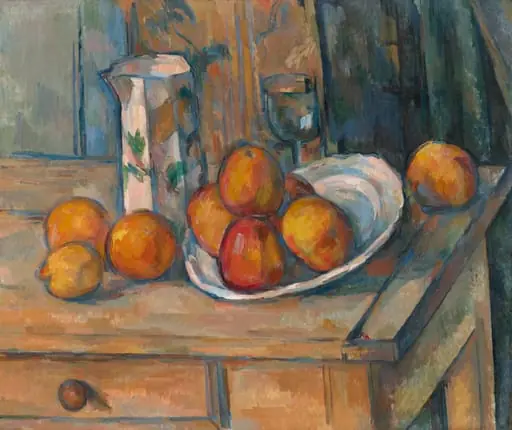 Still Life with Milk Jug and Fruit
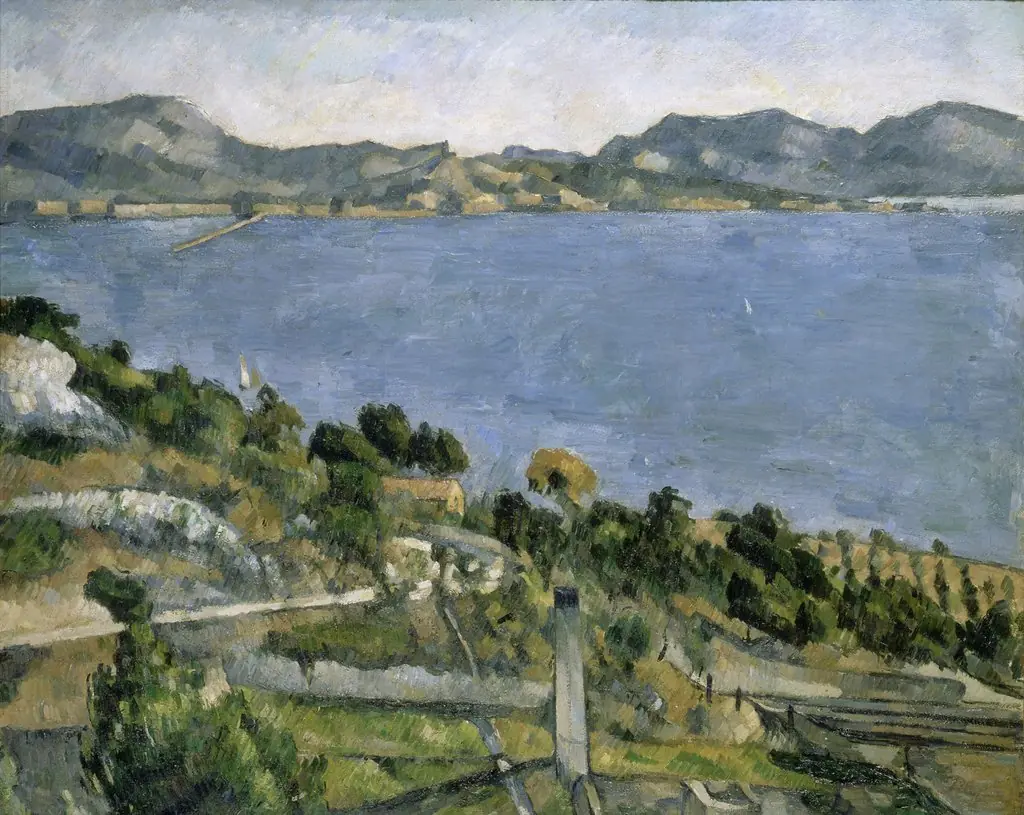 Le Golfe de Marseille vu de l'Estaque (The Gulf of Marseille Seen from L'Estaque)
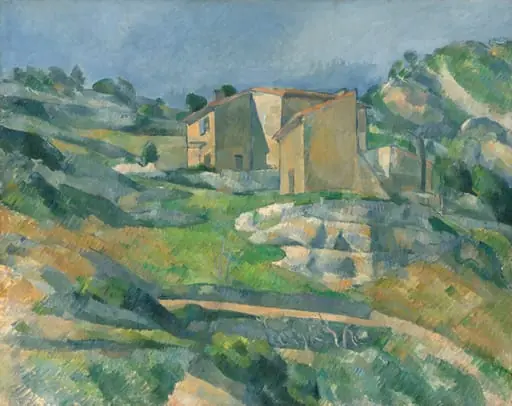 Houses in Provence: The Riaux Valley near L'Estaque
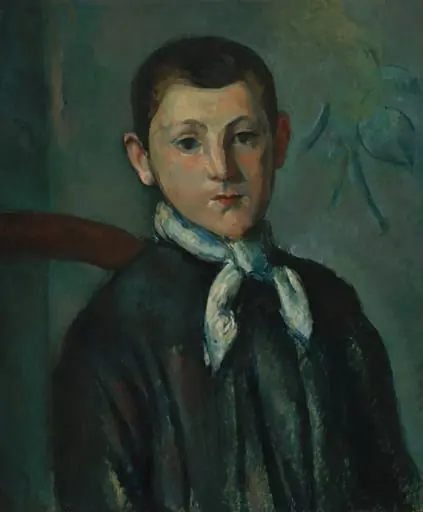 Louis Guillaume
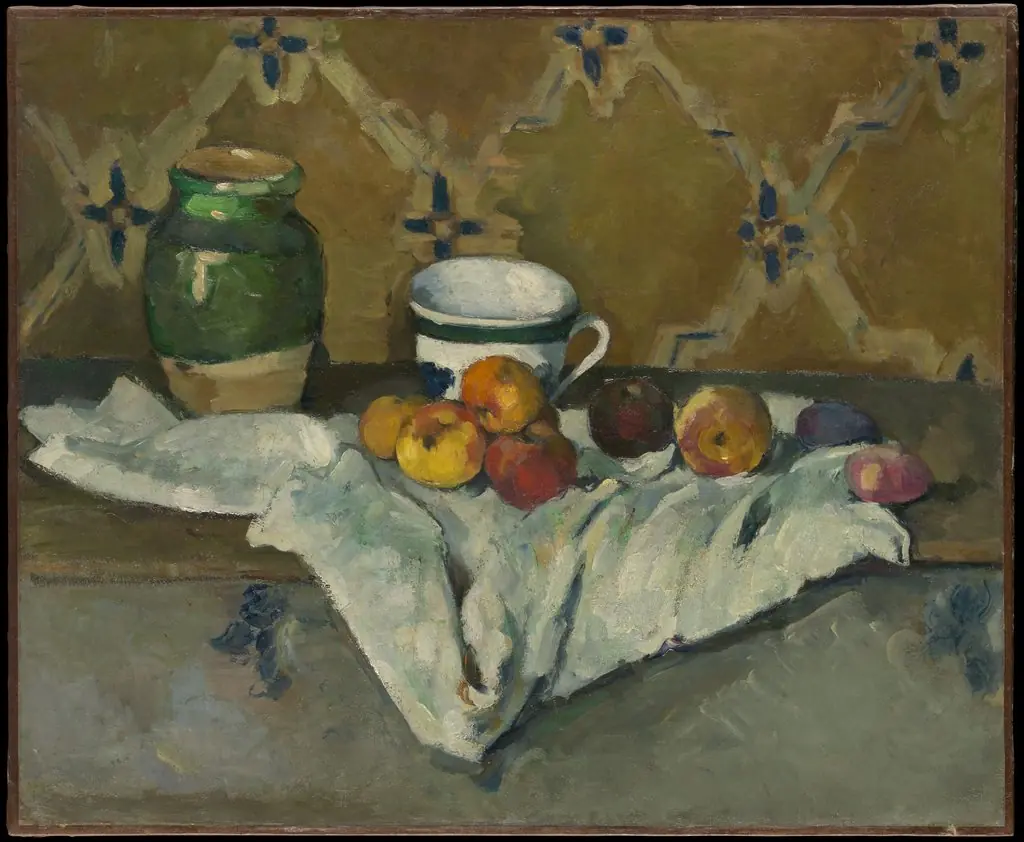 Still Life with Jar, Cup, and Apples