Artwork
Jo
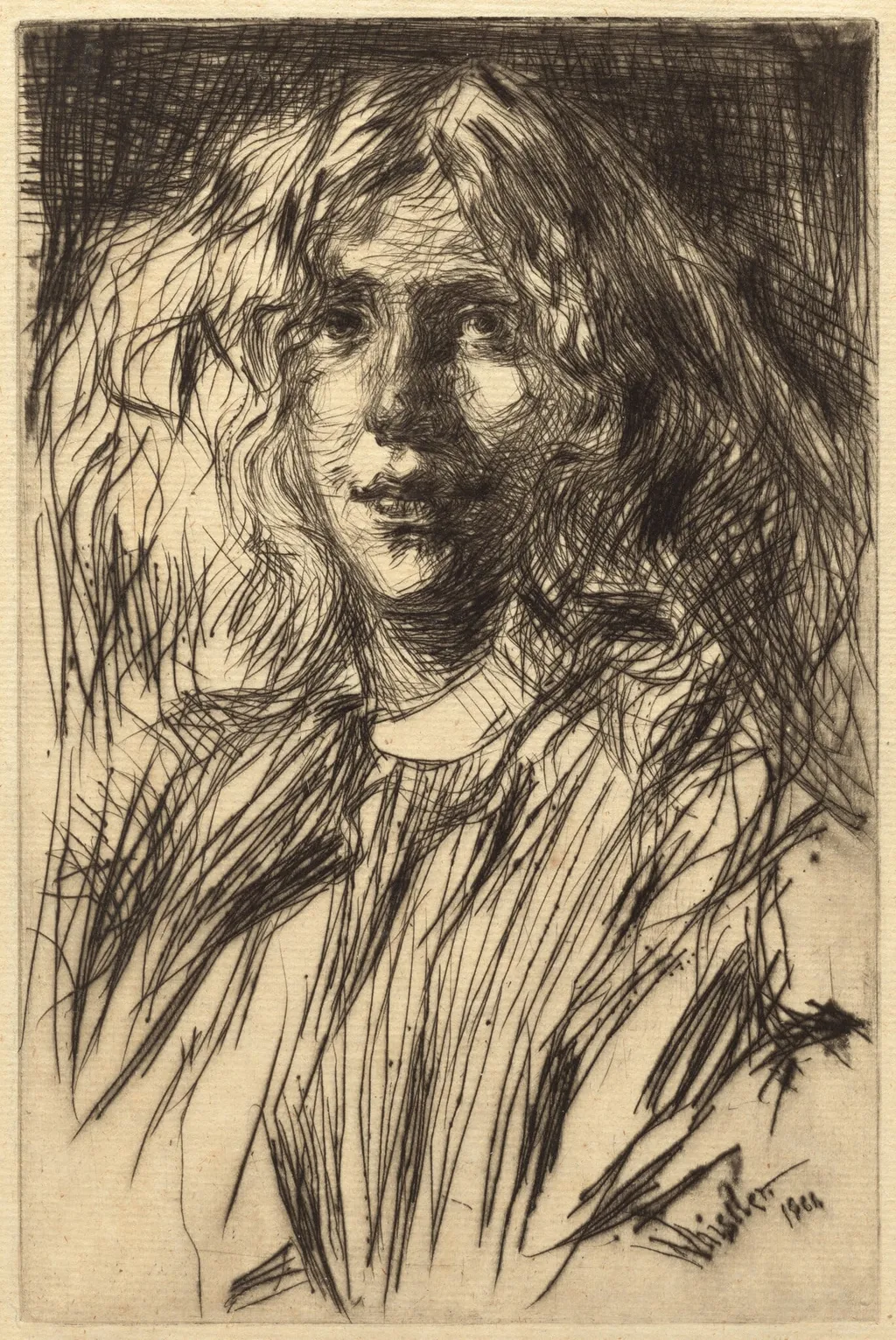
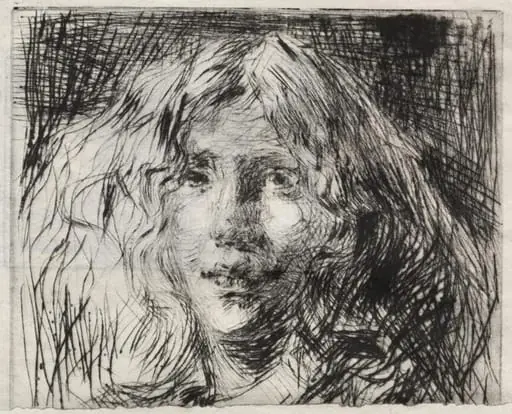
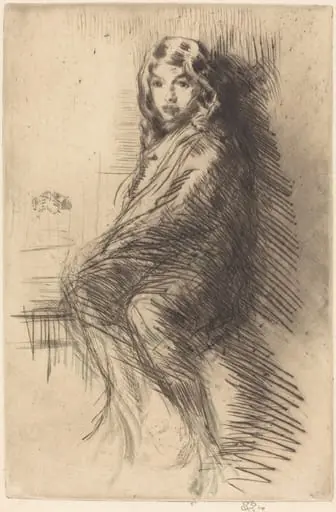
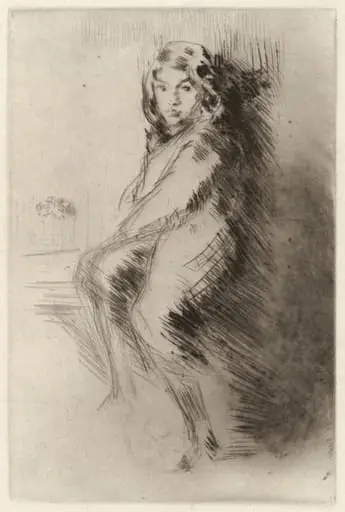
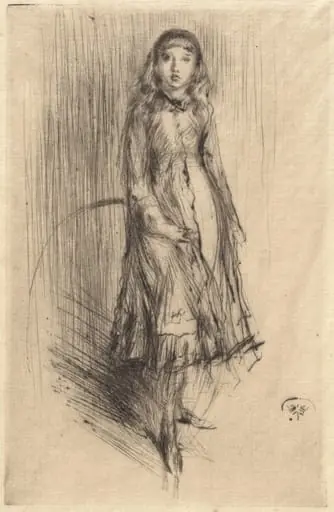
Jo is an ink print by the Impressionist artist James McNeill Whistler. It dates from 1861 and is held in the collection of the National Gallery of Art.
About this work
Overview
Whistler, an American expatriate based in London, favored the immediacy of printmaking to explore form and tone without the constraints of traditional painting.
Created in 1861, *Jo* is a drypoint print by James Abbott McNeill Whistler, executed on laid paper. As one of his early graphic works, it reflects his shift toward intimate, non-narrative portraiture. Whistler, an American expatriate based in London, favored the immediacy of printmaking to explore form and tone without the constraints of traditional painting. The piece bears his signature butterfly, a subtle emblem of his aesthetic philosophy.
Subject & Meaning
The subject is a woman, likely a model named Joanna Hiffernan, seated with her face and shoulders rendered in minimal yet deliberate strokes. Her expression is quiet and unadorned, avoiding theatricality or emotional appeal. Whistler presents her not as an idealized figure but as a presence defined by posture and texture, aligning with his belief that art should exist for its own formal qualities rather than moral or narrative content.
Technique & Style
Whistler employed drypoint, scratching directly into a metal plate to produce lines with a soft, velvety burr. The resulting image is characterized by its rough, spontaneous quality—especially evident in the tangled texture of the hair and the shadowed contours around the eyes and mouth. The laid paper’s subtle grain enhances the tactile immediacy, reinforcing the work’s intimate, sketch-like character without polished finish.
History & Provenance
Made during Whistler’s formative years in London, *Jo* emerged from his circle of artists and models, including Joanna Hiffernan, who frequently posed for him. The print was not widely circulated at the time but gained recognition later as part of his broader exploration of etching and drypoint. Its survival in private and institutional collections reflects its role in documenting his evolving graphic practice.
Context
In the early 1860s, Whistler was distancing himself from academic traditions and embracing the aesthetic principles later associated with 'art for art’s sake.' *Jo* aligns with this shift, rejecting historical or sentimental themes in favor of quiet observation. Its creation coincided with his engagement with Japanese prints and the French Realist movement, both of which influenced his focus on line, tone, and everyday subjects.
Legacy
Though modest in scale, *Jo* exemplifies Whistler’s contribution to the revival of printmaking as a serious artistic medium in the 19th century. Its emphasis on expressive line and psychological restraint influenced later printmakers and reinforced his reputation as a formalist. The work remains a key example of how intimate portraiture could convey depth without narrative or embellishment.
Own this work as a print
Artist & collection
Artist
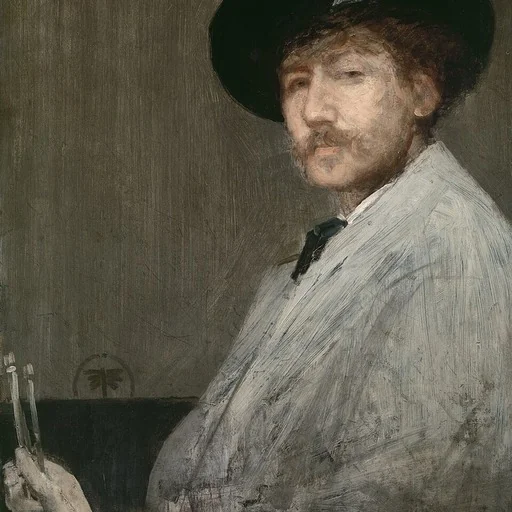
James Abbott McNeill Whistler was an American painter in oils and watercolor, and printmaker, active during the American Gilded Age and based primarily in the United Kingdom.

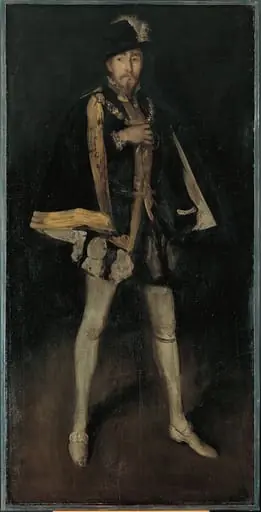 Arrangement in Black, No. 3: Sir Henry Irving as Philip II of Spain
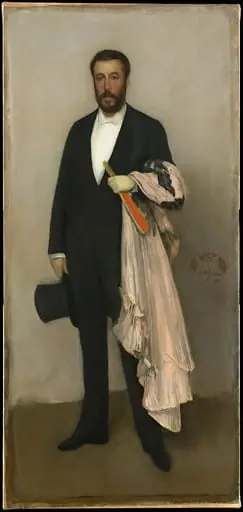 Arrangement in Flesh Colour and Black: Portrait of Theodore Duret
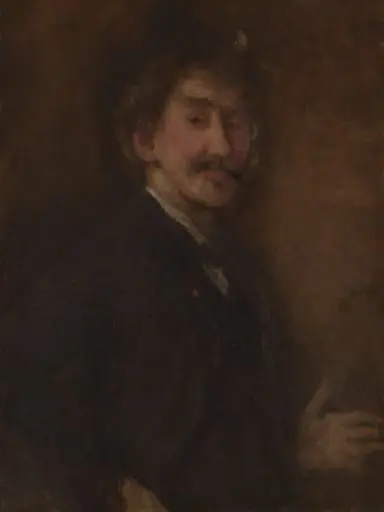 Gold and Brown: Self-Portrait
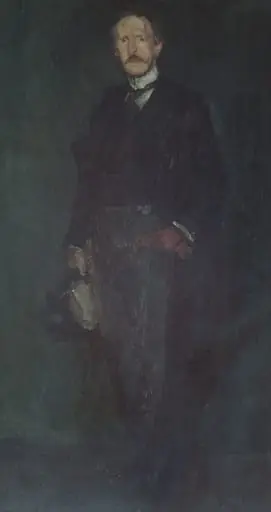 Edward Guthrie Kennedy
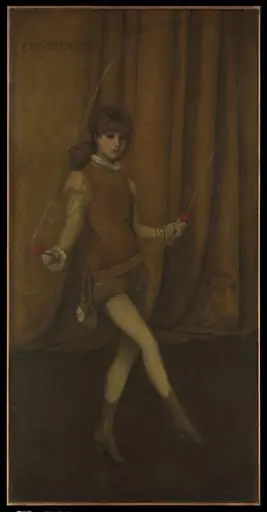 Harmony in Yellow and Gold: The Gold Girl—Connie Gilchrist
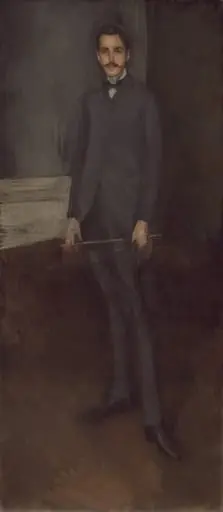 George W. Vanderbilt
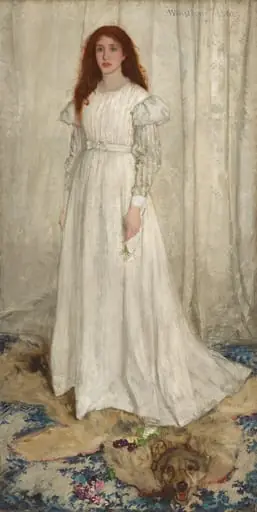 Symphony in White, No. 1: The White Girl
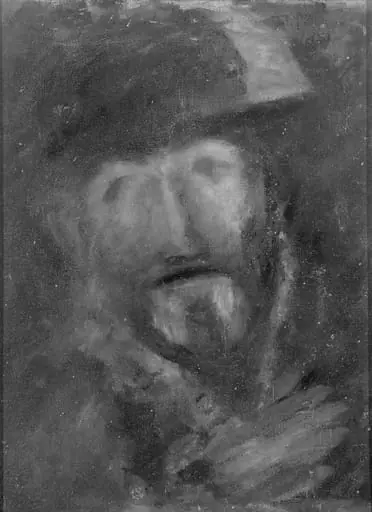 Henry Irving as Philip II of Spain