Artwork
The Bathers (Small Plate)
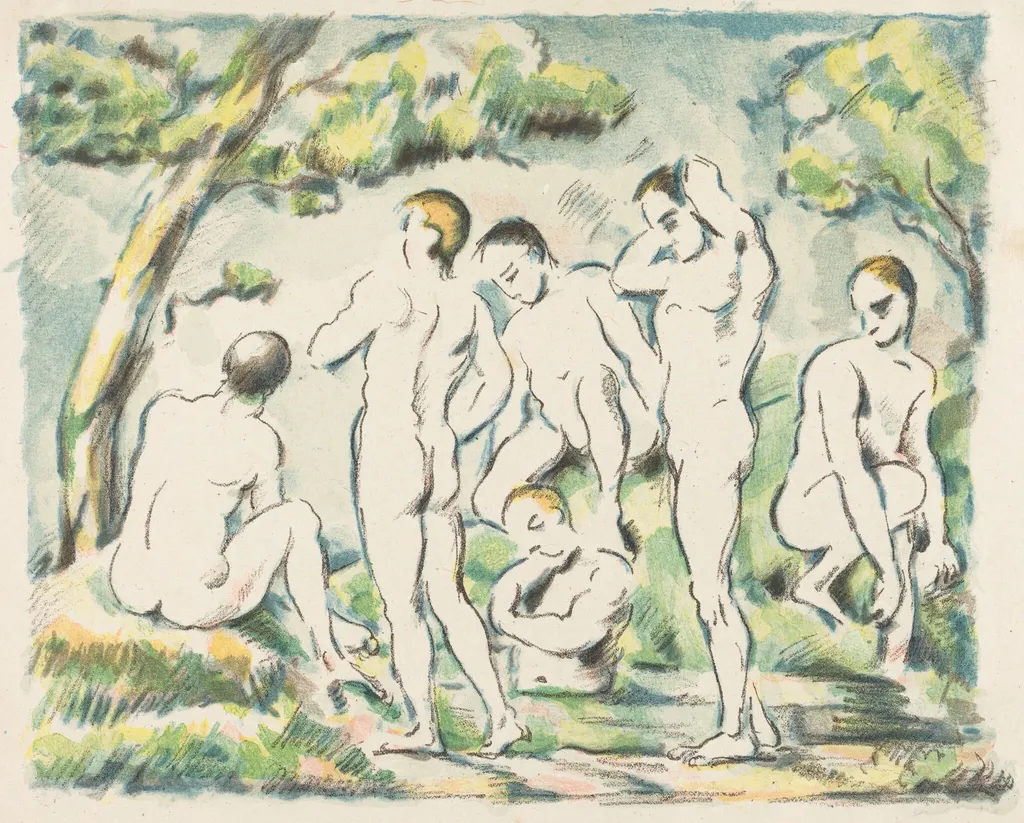
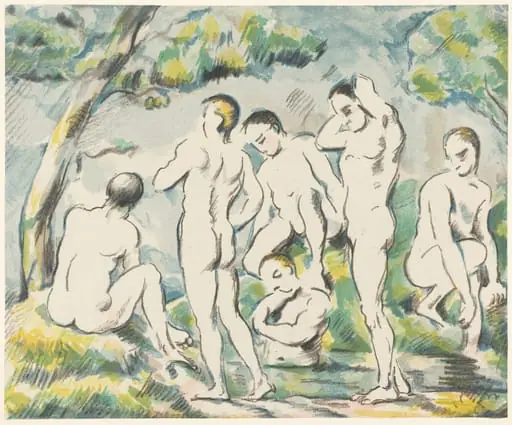
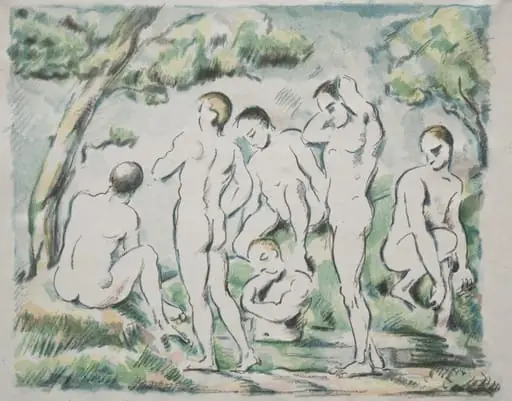
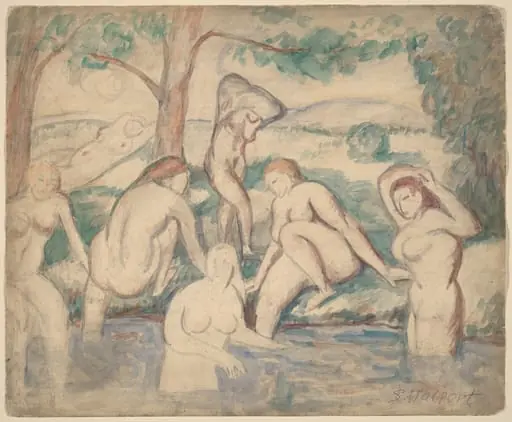
The Bathers (Small Plate) is an ink print by the Impressionist artist Paul Cezanne. It dates from 1897 and is held in the collection of the National Gallery of Art. Created in 1897, this small lithograph by Paul Cézanne depicts a group of figures in a natural setting.
About this work
Overview
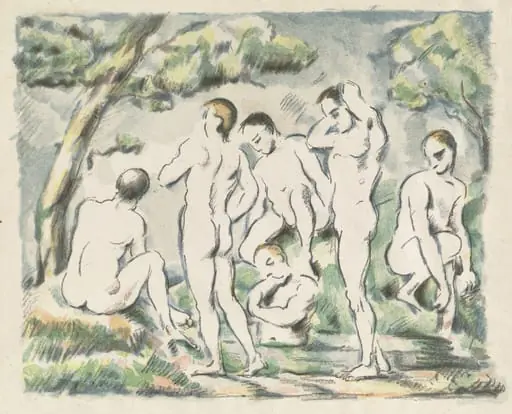
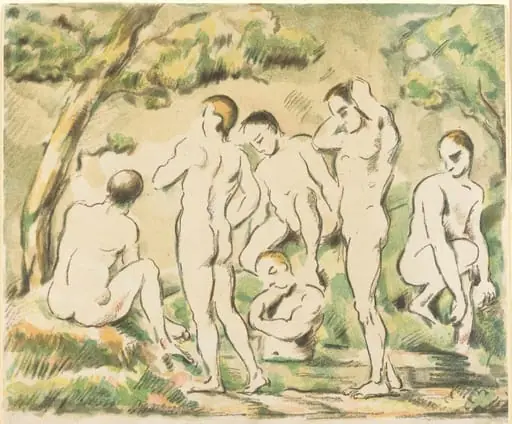
Created in 1897, this small lithograph by Paul Cézanne depicts a group of figures in a natural setting. Executed in color on China paper, the work belongs to a series exploring the human form amid landscape. Its intimate scale and delicate execution suggest a personal, experimental approach rather than a finished composition.
Subject & Meaning
Five nude figures—adults and a child—are arranged loosely within a wooded space. Postures vary: standing, crouching, seated. The central child anchors the composition, suggesting a quiet, unposed moment. There is no narrative or mythological reference; the focus is on presence, posture, and the relationship between bodies and environment.
Technique & Style
Cézanne employed color lithography, a method allowing subtle layering of hues on stone. Soft blues, yellows, and greens are applied with uneven, sketch-like strokes, creating a sense of immediacy. Forms are simplified into rounded volumes, and the trees are rendered as loose, gestural marks. The print’s texture reflects the artist’s interest in translating brushwork into print.
History & Provenance
This print is one of several small lithographs Cézanne produced in his later years, likely for private circulation rather than public sale. It was made during a period when he increasingly turned to printmaking as a means of exploring form and color outside the constraints of oil painting. Its survival in limited numbers reflects its non-commercial nature.
Context
Cézanne’s bathers series, spanning decades, reflects his fascination with classical themes reimagined through modern perception. Unlike academic treatments, these works reject idealization in favor of observed reality. The lithograph’s informal quality aligns with his broader shift toward structural simplicity and sensory immediacy in his late work.
Legacy
Though not widely exhibited in his lifetime, this lithograph exemplifies Cézanne’s influence on modern printmaking. His use of color and fragmented form in lithography anticipated later developments in Expressionism and abstraction. The work remains a quiet testament to his persistent inquiry into perception and representation.
Own this work as a print
Artist & collection
Artist
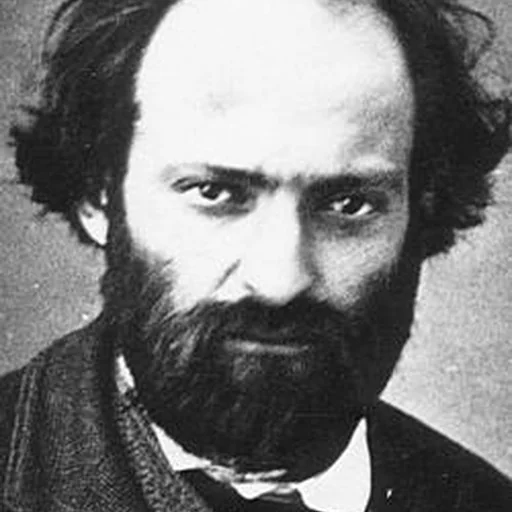
Paul Cézanne was born on January 19, 1839, in Aix-en-Provence, the son of a hatter turned wealthy banker.

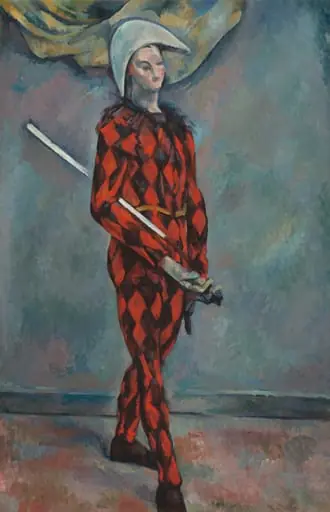 Harlequin
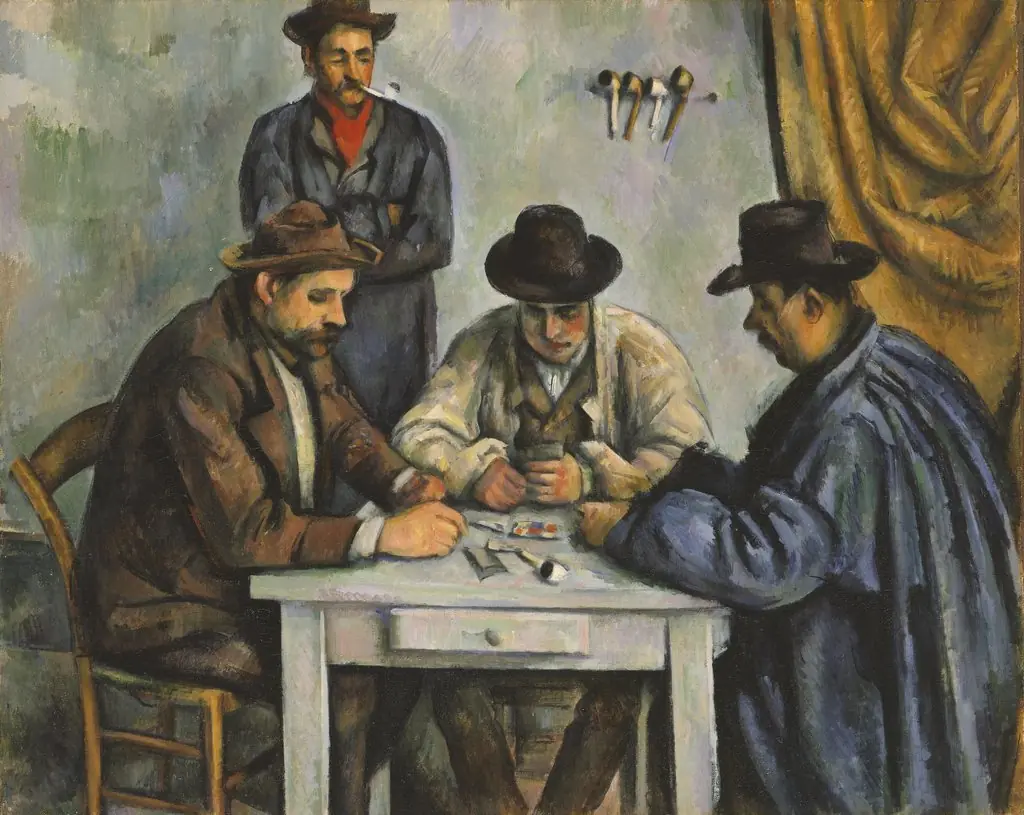 The Card Players
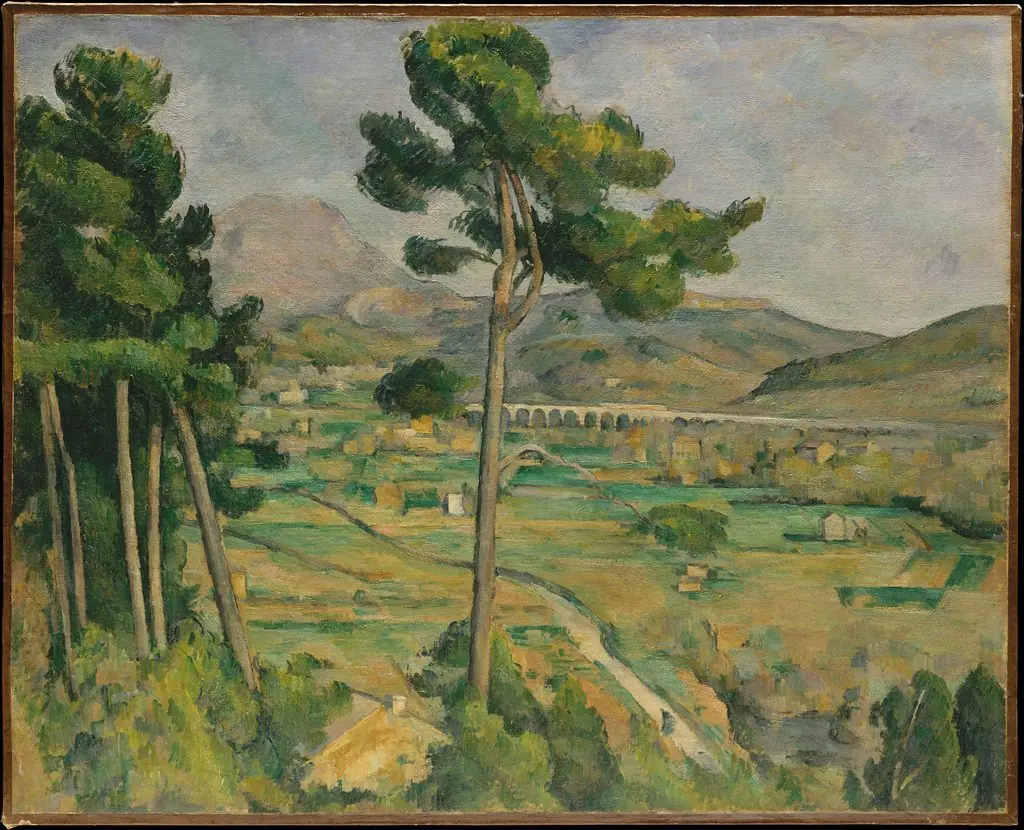 Mont Sainte-Victoire and the Viaduct of the Arc River Valley
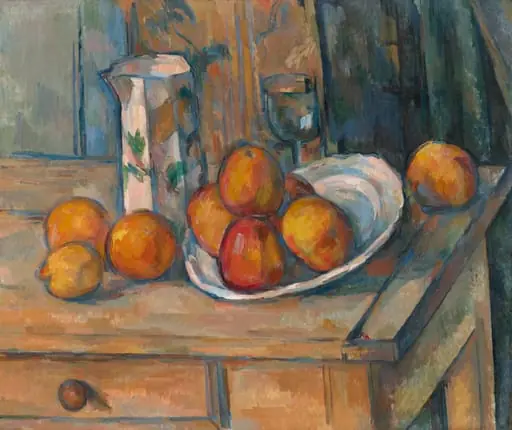 Still Life with Milk Jug and Fruit
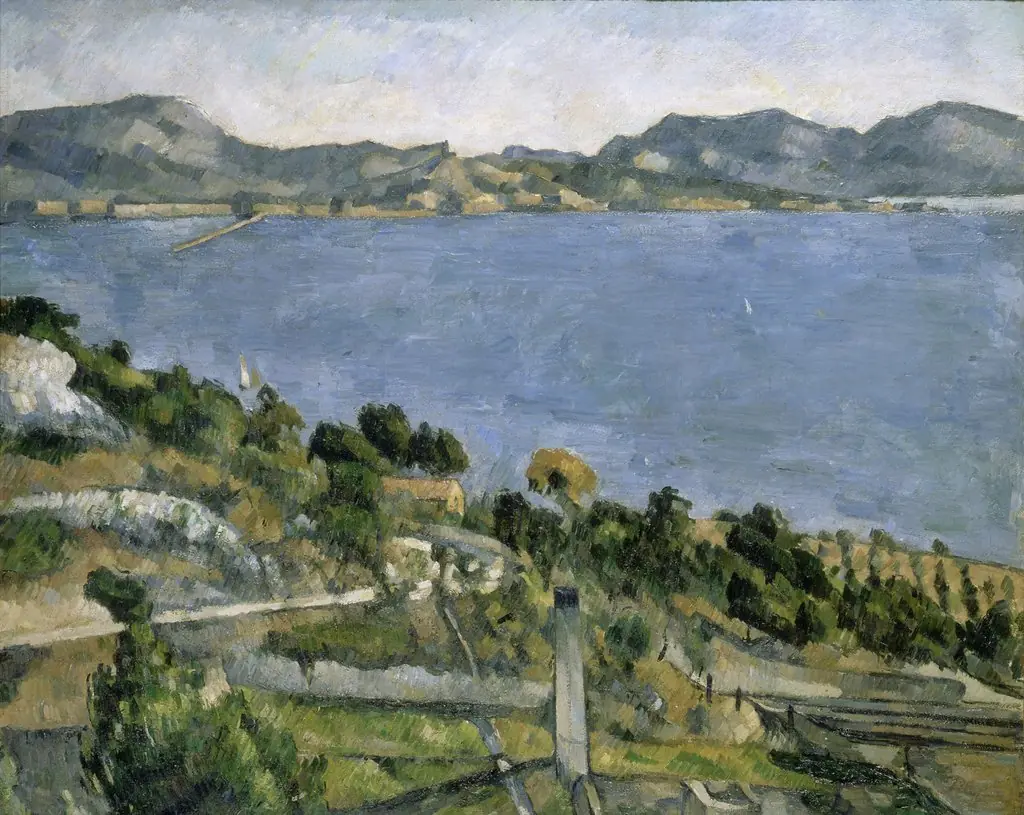 Le Golfe de Marseille vu de l'Estaque (The Gulf of Marseille Seen from L'Estaque)
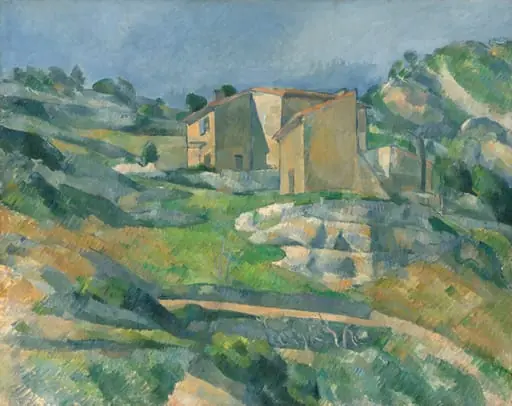 Houses in Provence: The Riaux Valley near L'Estaque
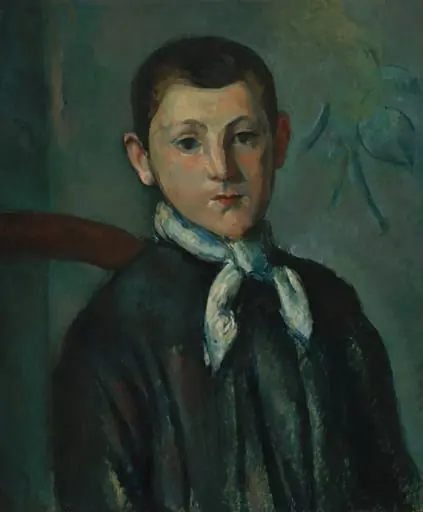 Louis Guillaume
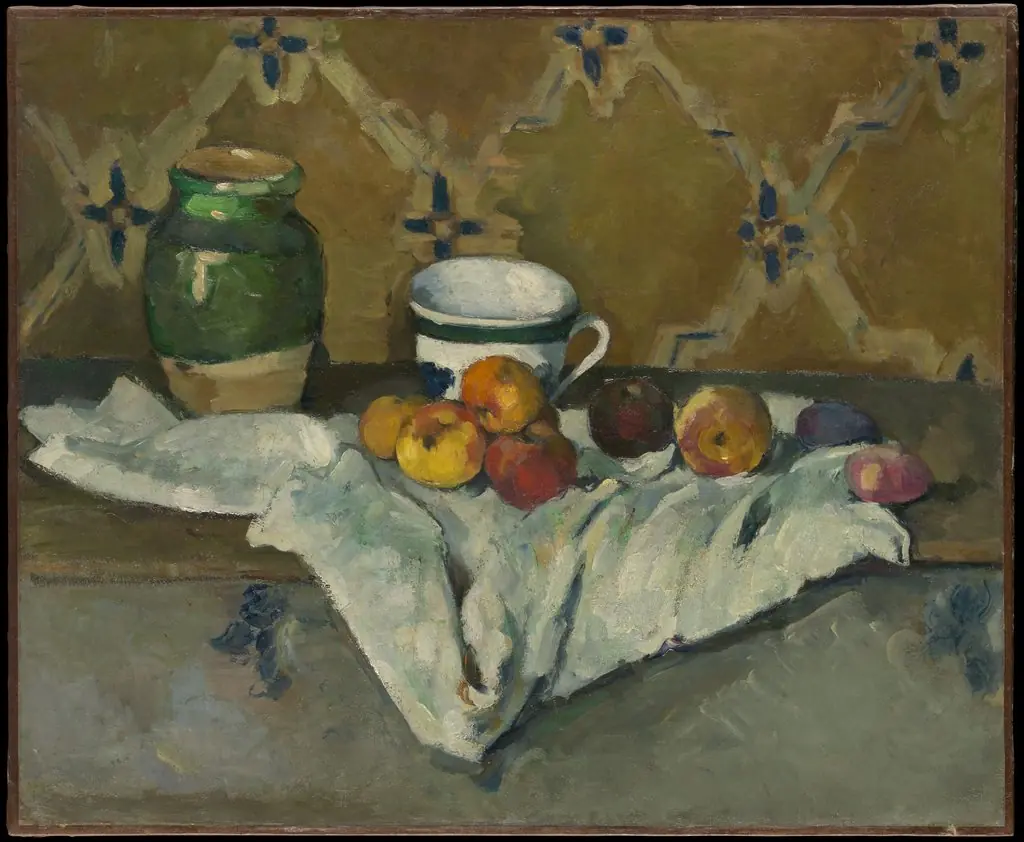 Still Life with Jar, Cup, and Apples