Artwork
Party on the Pleasure Boat Kawaichimaru
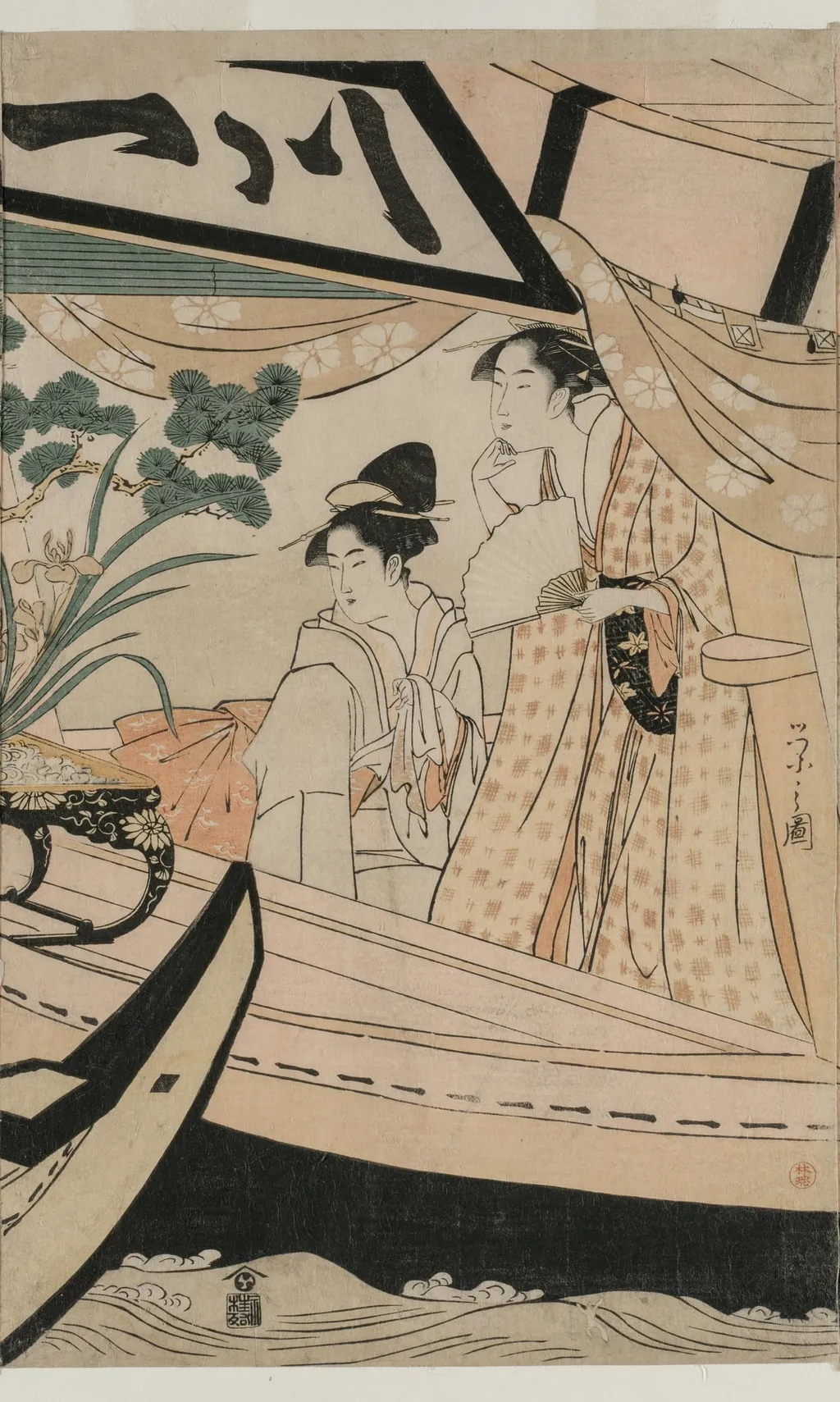
Party on the Pleasure Boat Kawaichimaru is a print by the Romanticist artist Chôbunsai Eishi. It dates from 1796 and is held in the collection of the Cleveland Museum of Art. The print depicts a riverine pleasure craft named Kawaichimaru, crowded with a troupe of entertainers and elegantly dressed women.
About this work
The artist filled the scene with small, lively moments—like the floral arrangement on the left—that make the party feel real.
A boat glides down a river, packed with musicians, dancers, and women in silk robes. One dancer’s hat is being adjusted; another woman smokes a pipe while listening to the music.
This painting shows a night out for wealthy Edo townspeople in the 1790s. The artist filled the scene with small, lively moments—like the floral arrangement on the left—that make the party feel real. The medium isn’t known, but the fine lines and bright colors are typical of Japanese woodblock prints.
To see more scenes like this, look up *japan, edo period (1615–1868)*.
Overview
The print depicts a riverine pleasure craft named Kawaichimaru, crowded with a troupe of entertainers and elegantly dressed women. The composition stretches across the vessel, showing a dancer having her headpiece adjusted, a group of musicians performing, and several ladies observing the festivities, all set against the backdrop of a nighttime outing among affluent Edo residents.
Subject & Meaning
The scene captures a leisurely excursion typical of the upper classes in late eighteenth‑century Edo, emphasizing communal enjoyment and refined leisure. The presence of a pipe‑smoking woman, a meticulously arranged floral display, and the attentive audience suggest a cultured atmosphere where music, dance, and aesthetic appreciation intertwine.
Technique & Style
Executed in the characteristic ukiyo‑e woodblock method, the work features delicate line work and a vivid palette that highlight the textures of silk robes, musical instruments, and ornamental objects. The artist’s attention to minute details—such as the individual instruments and the lacquer stand—creates a lively, almost narrative quality within the flat pictorial space.
History & Provenance
Created in the 1790s, the print reflects the popular genre of pleasure‑boat scenes that flourished during the Edo period. While the specific publisher and collector history are not recorded, the work aligns with the broader output of artists documenting urban entertainment and river travel in late‑eighteenth‑century Japan.
Context
River outings were a fashionable pastime for Edo’s merchant and samurai classes, offering a setting for music, dance, and social display. The inclusion of instruments like the shamisen and drums, alongside a formal floral arrangement, illustrates the integration of performing arts and refined aesthetics that defined the period’s urban culture.
Own this work as a print
Artist & collection

Artist
Chōbunsai Eishi (鳥文斎 栄之; 1756–1829) was a Japanese ukiyo-e artist. His last name was Hosoda (細田). His first name was Tokitomi (時富). His common name was Taminosuke (民之丞) and later Yasaburo (弥三郎). Pupil of Kano Eisen'in…

 Three Gods of Good Fortune Visit the Yoshiwara; or “Scenes of Pleasure at the Height of Spring”
 蜀山人(大田 南畝)賛 雪・月・花図 |Snow, Moon, and Cherry Blossoms (Yoshiwara in Three Seasons)
 Untitled
 Untitled
 Untitled
 Shellfish and Apparitions of the Yoshiwara Pleasure Quarter
 A Courtesan Reading a Letter
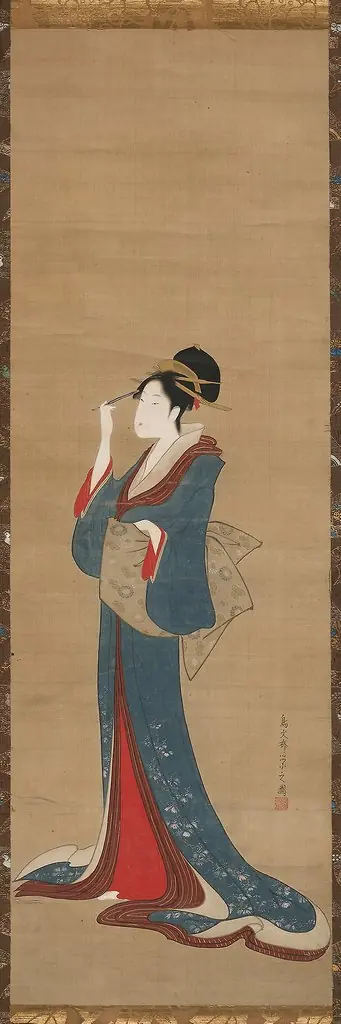 Beauty Replacing Her Hairpin
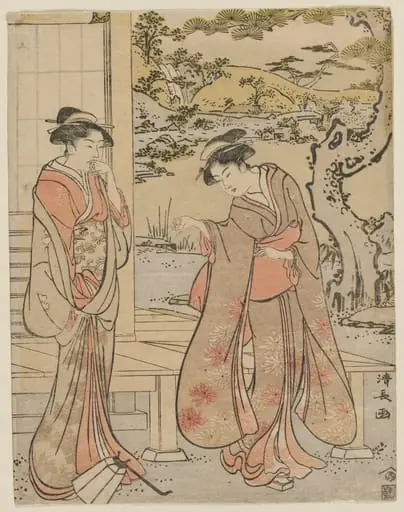 Woman Dropping a Lantern by a Porch
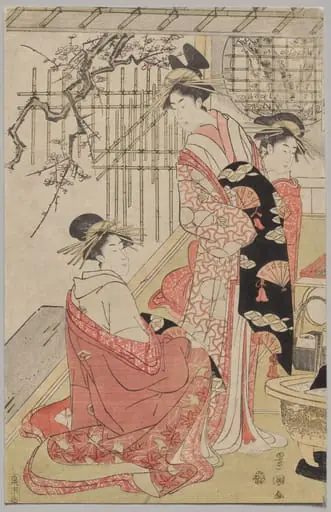 Courtesans of the Ōgiya on a Spring Outing
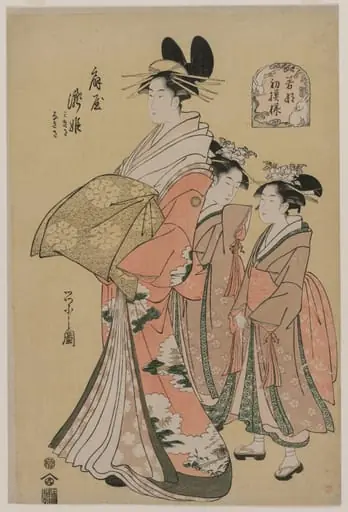 The Courtesan Takihime and Attendants (from the series New Patterns of Young Greens)
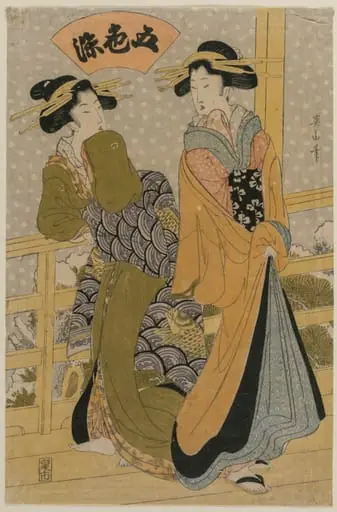 Two Courtesans on a Balcony (From the series Five Colors of Ink)
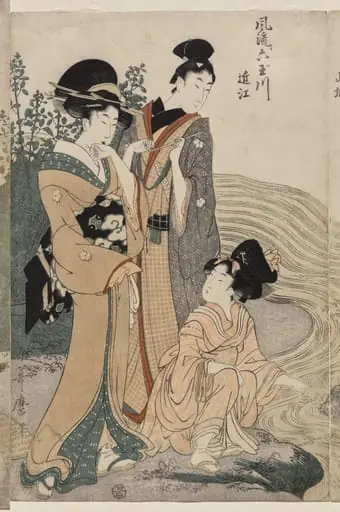 Omi Province from the series Fashionable Six Jewel Rivers (Furyu Mu Tamagawa)
 Untitled
 Untitled
 Untitled
 Untitled