Artwork
Courtesans of the Ōgiya on a Spring Outing
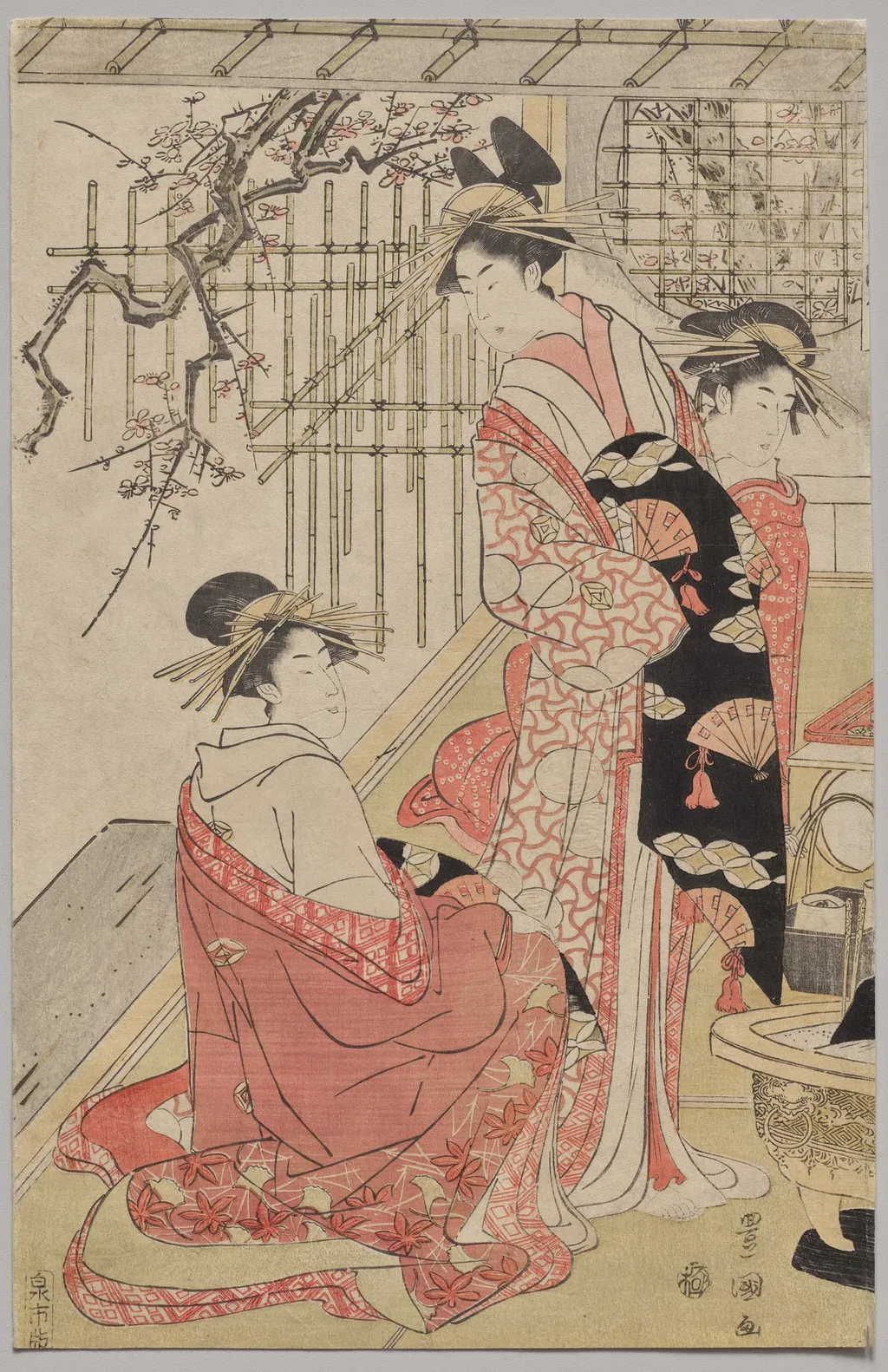
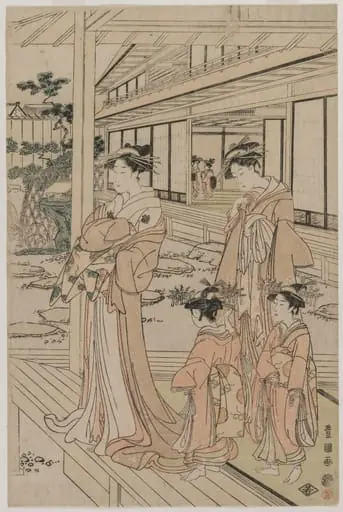
Courtesans of the Ōgiya on a Spring Outing is a print by the Romanticist artist Utagawa Toyokuni I. It dates from 1794 and is held in the collection of the Cleveland Museum of Art. This ukiyo-e print by Utagawa Toyokuni depicts a spring outing of courtesans from the Ōgiya brothel in Edo.
About this work
You can learn more about this style by looking at the work of artist: Utagawa Toyokuni (Japanese, 1769–1825).
You see two courtesans entering a pavilion, while others gather around a hibachi.
Hanaōgi, a celebrated courtesan, is shown at a desk with a brush in her hand.
She's dressed differently from the others, with loosened hair, which sets her apart.
Hanaōgi seems to be thinking before writing in a book, her head turned to one side.
This detail shows she's not just a courtesan, but also a writer or poet.
You can learn more about this style by looking at the work of artist: Utagawa Toyokuni (Japanese, 1769–1825).
Overview
This ukiyo-e print by Utagawa Toyokuni depicts a spring outing of courtesans from the Ōgiya brothel in Edo. The scene unfolds in a wooden pavilion, where figures are arranged in quiet, distinct groupings. One courtesan, Hanaōgi, is shown in a moment of contemplation at a desk, contrasting with the social activity around her. The composition captures a fleeting, intimate pause amid the ritualized world of the pleasure quarters.
Subject & Meaning
Hanaōgi, the most renowned courtesan of Ōgiya, is portrayed not merely as a figure of beauty but as a cultured individual engaged in literary practice. Her posture—head turned, brush poised—suggests deliberation in composition, implying poetic or calligraphic activity. This portrayal elevates her beyond her social role, hinting at the intellectual refinement expected of top-tier courtesans in Edo-period culture.
Technique & Style
Toyokuni employs clear outlines and flat areas of color typical of ukiyo-e woodblock printing. The figures are arranged with deliberate spatial separation, emphasizing individuality within the group. Hanaōgi’s loose hair and simpler attire contrast with the elaborate hairstyles and ornate kimonos of her companions, using visual cues to signal status and temperament rather than relying on facial expression alone.
History & Provenance
Created in the late 18th century, the print belongs to a series documenting the lives of courtesans from prominent brothels. Ōgiya was a well-known establishment in Kyoto’s Shimabara district, and Hanaōgi was a celebrated figure whose reputation extended beyond her clientele. Such prints were produced for a broad urban audience, serving as both entertainment and cultural documentation of the pleasure quarters.
Context
In Edo-period Japan, high-ranking courtesans were trained in poetry, music, and conversation as much as in etiquette and appearance. Their literary talents were part of their allure and social capital. Depictions like this one reflect the complex identity of courtesans—simultaneously objects of desire and cultivated artists—within the structured hierarchy of the Yoshiwara and Shimabara districts.
Legacy
Toyokuni’s portrayal of Hanaōgi contributed to a broader tradition of humanizing courtesans in ukiyo-e, moving beyond mere eroticism to suggest inner life and intellectual presence. These images remain valuable records of gender, class, and artistic expression in early modern Japan, offering insight into how social roles were visually negotiated and represented.
Artist & collection

Artist
Toyokuni was a born showman who made sure the energy of Edo’s kabuki stage never faded on paper.

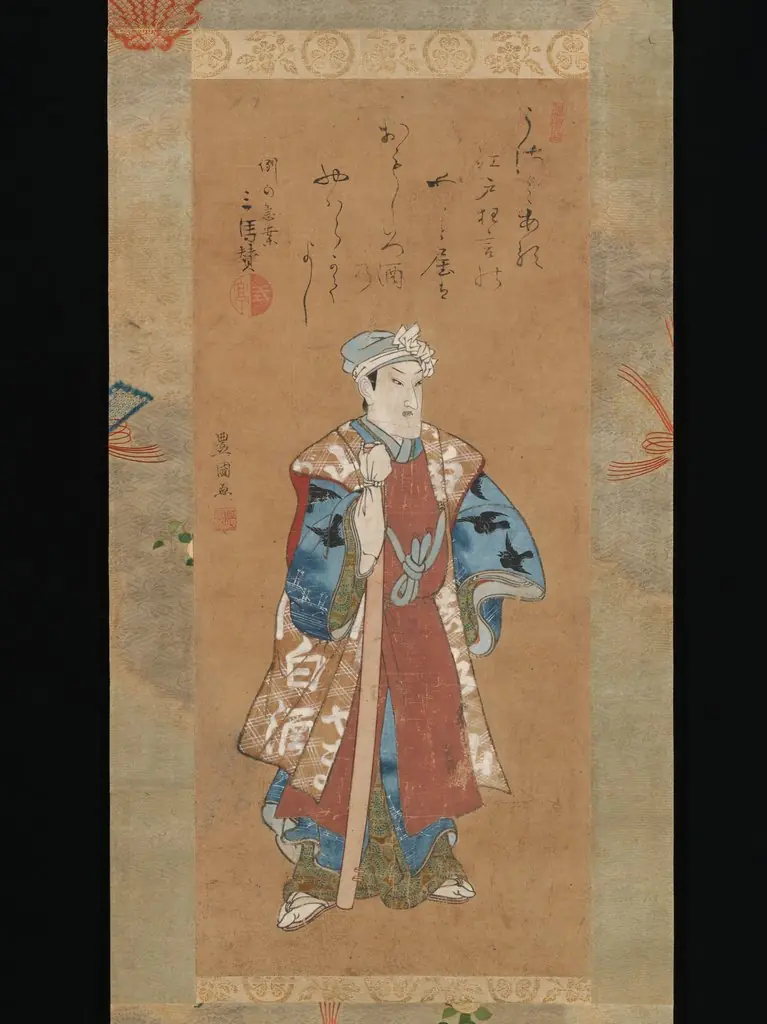 Bandō Mitsugorō II as Shinbei in the Kabuki Play "Sukeroku"
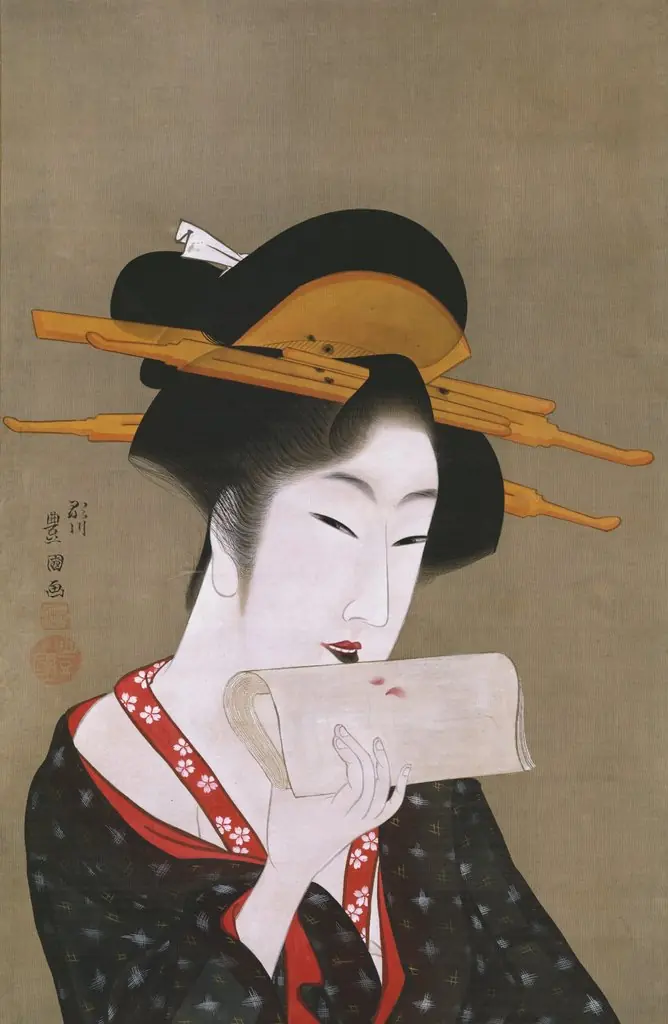 Beauty Blotting Her Lip Rouge
 Portrait of Kinokuniya Bunzaemon
 Untitled
 Tokaido Yotsuya Kaidan|Onoe Matsusuke as the Ghost of the Murdered Wife Oiwa, in "A Tale of Horror from the Yotsuya Station on the Tokaido Road"
 Untitled
 Untitled
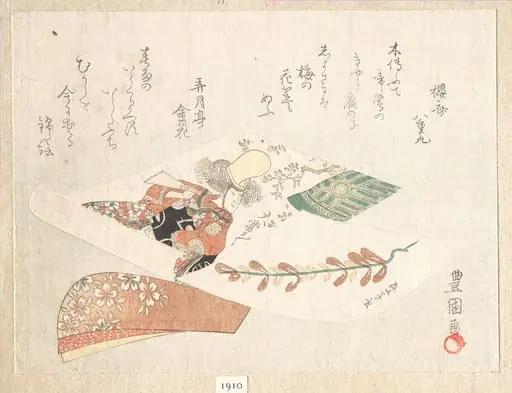 娘道成寺図の錦絵|Print of a Kabuki Dancer from the Maiden of the Dōjōji Temple (Musume Dōjōji)
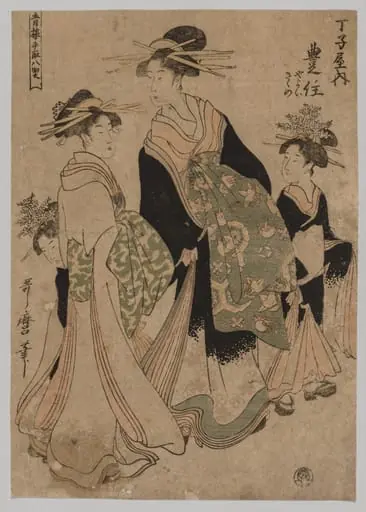 Courtesans and Attendants
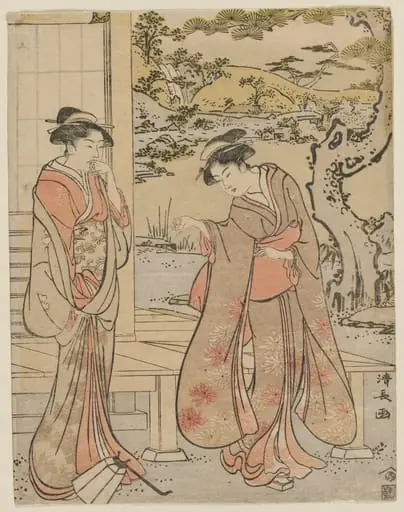 Woman Dropping a Lantern by a Porch
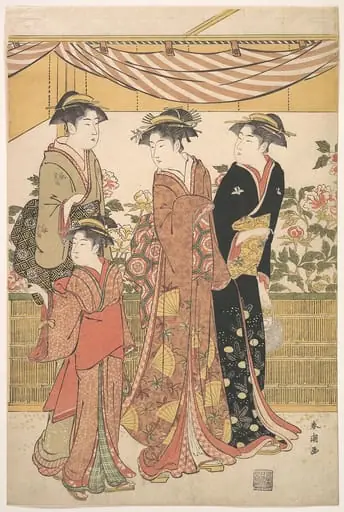 Untitled
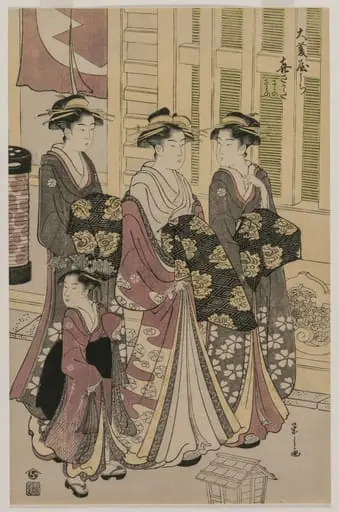 The Courtesan Kisagata of Ohishiya Strolling at Night with Two Shinzo and a Kamuro
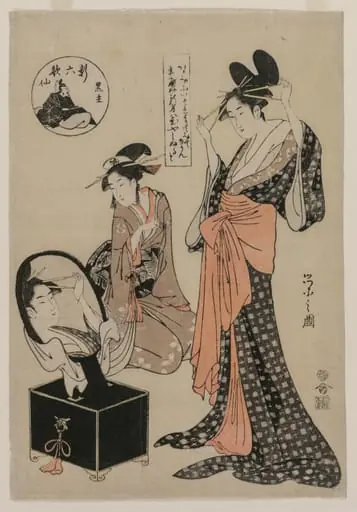 Kuronushi from the series The New Six Immortal Poets
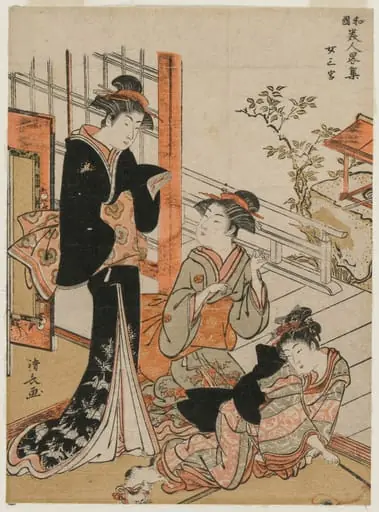 Three Women (from the series A Brief Collection of Japanese Beauties)
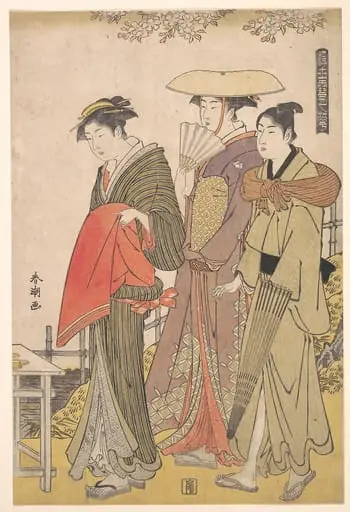 Ukiyoe Ga|The Beauty of the Floating World
 Courtesan Standing on a Veranda