Artwork
Wild Geese
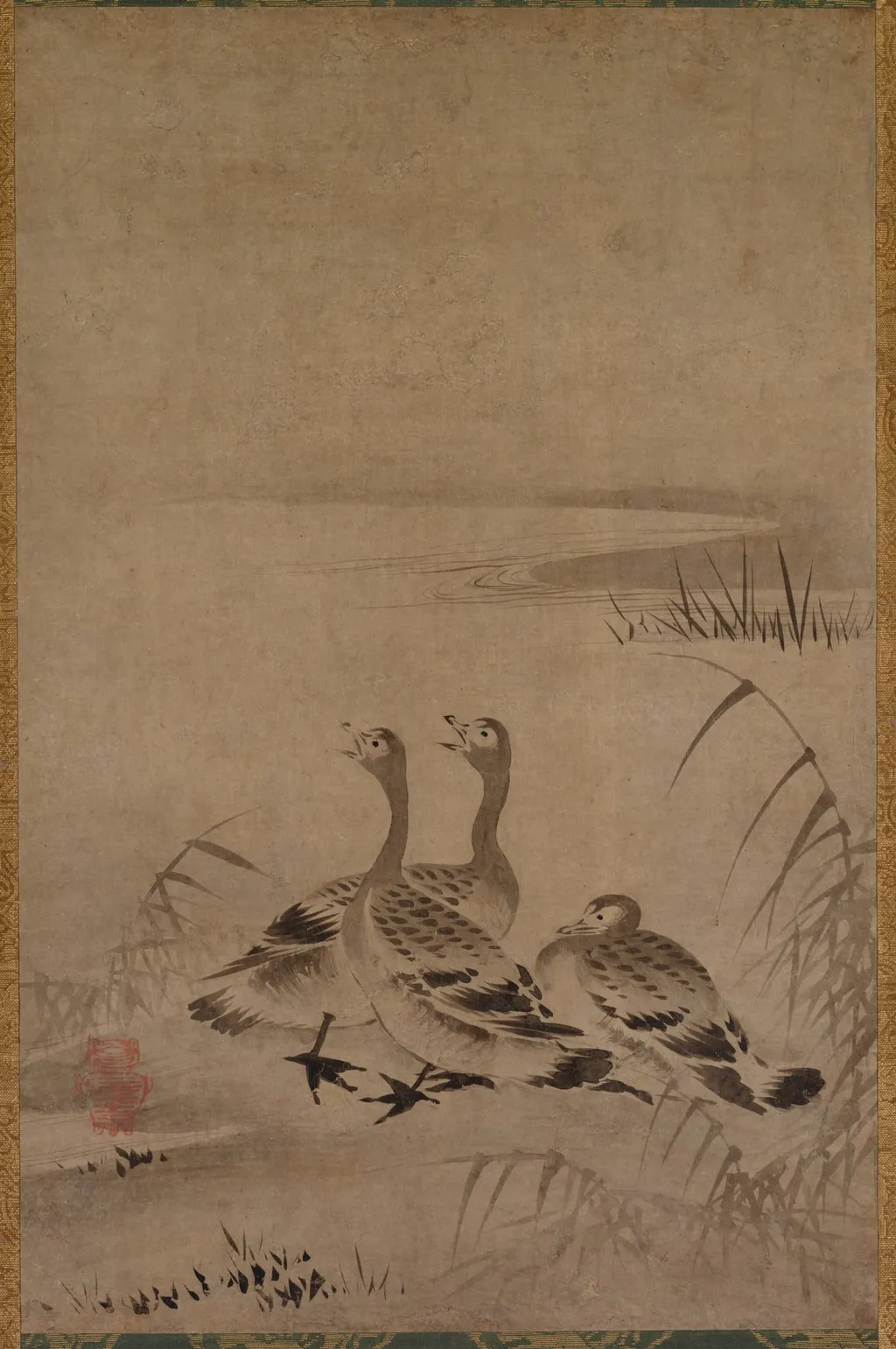
Wild Geese is an unspecified painting by the Ming dynasty painting artist Chōkichi. It dates from 1504 and is held in the collection of the Cleveland Museum of Art.
About this work
Overview
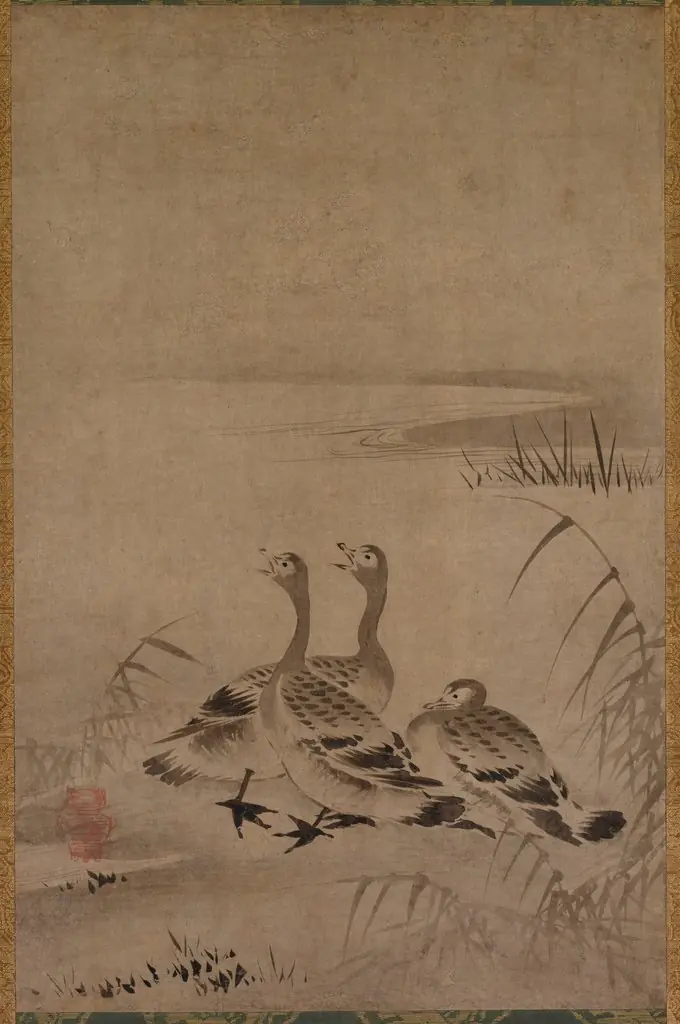
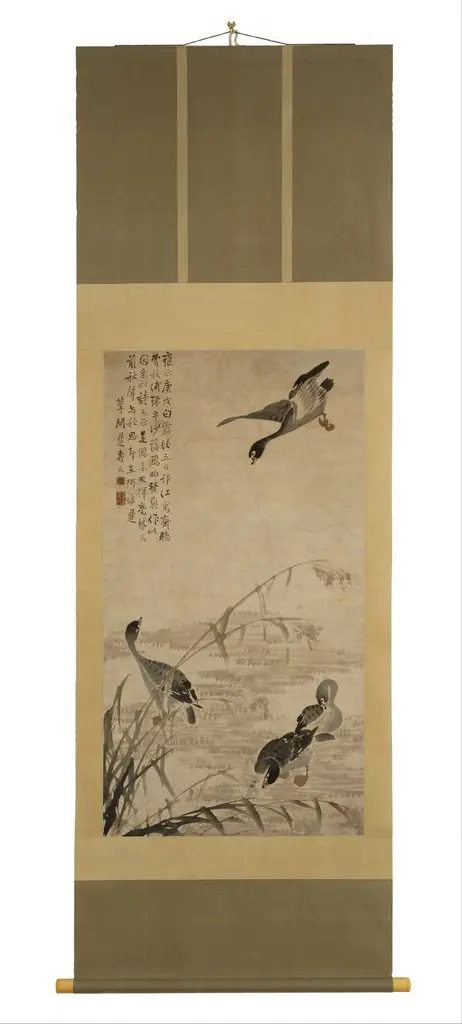
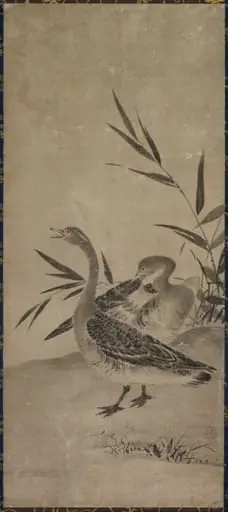
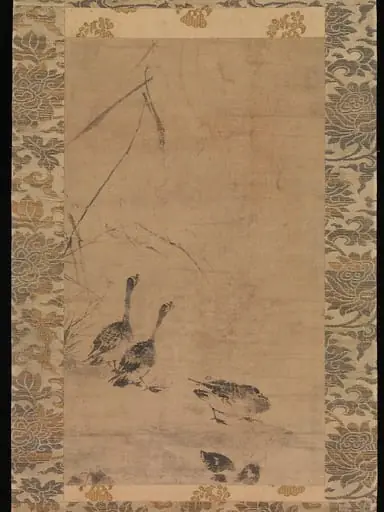
Created around 1504 by the artist Chōkichi, this ink-on-paper painting depicts three wild geese amid tall reeds beside a quiet body of water. The composition is sparse, with minimal background elements and a muted palette of soft browns and whites. The work reflects the Muromachi period’s preference for understated naturalism and suggestive space, emphasizing form and atmosphere over detail.
Subject & Meaning
The absence of human figures or dramatic elements invites contemplation, aligning with Zen-influenced aesthetics that value stillness and implied narrative.
The three geese, rendered with alert postures and subtle directional gestures, suggest communication or movement across a landscape. Their presence evokes seasonal change and the quiet rhythms of nature, themes common in Japanese ink painting. The absence of human figures or dramatic elements invites contemplation, aligning with Zen-influenced aesthetics that value stillness and implied narrative.
Technique & Style
Chōkichi employs bold, economical brushwork to define the geese’s forms, using varying ink tones to suggest volume without shading. The grass and reeds are rendered with quick, rhythmic strokes, while the water and horizon are barely indicated. This restrained technique—rooted in suiboku-ga—prioritizes spontaneity and suggestion, characteristic of Muromachi-era ink painters who valued expressive simplicity.
History & Provenance
The painting entered the collection of The Cleveland Museum of Art through documented acquisitions in the 20th century. Its origins trace to a private Japanese collection, likely from the late medieval or early Edo period. While little is known of Chōkichi’s life, the work’s style and materials align with regional ink traditions of 16th-century Japan, suggesting it was produced by a practitioner trained in monastic or courtly artistic circles.
Context
This work emerged during the Muromachi period, when ink painting flourished under Zen Buddhist influence. Artists like Chōkichi drew inspiration from Chinese Southern Song models but adapted them to Japanese sensibilities, favoring asymmetry, empty space, and natural subjects. Wild Geese reflects this synthesis—its minimalism and focus on wildlife mirror the period’s broader cultural turn toward introspection and harmony with nature.
Legacy
Though Chōkichi’s oeuvre is limited, this painting exemplifies a quiet strand of Japanese ink art that prioritized observation over ornamentation. Its preservation in a major Western institution underscores its role in shaping international appreciation for Japanese monochrome painting. The work continues to inform contemporary understandings of how restraint and suggestion can convey vitality in visual form.
Artist & collection