Artwork
A View of Norwich, from Mousehold Hill, near the ruins of Kett's Castle
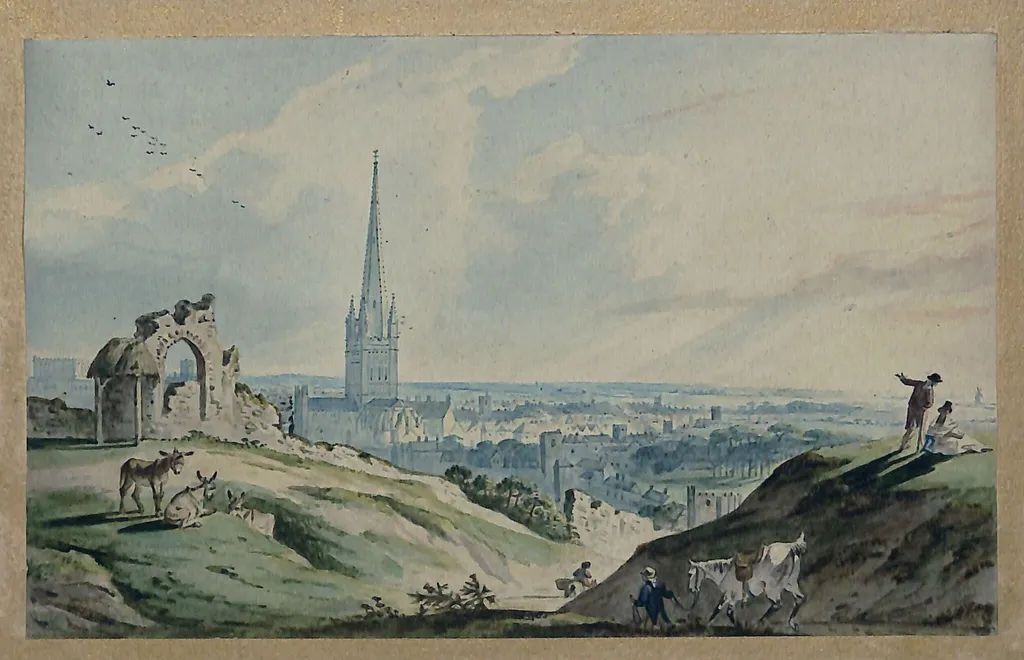
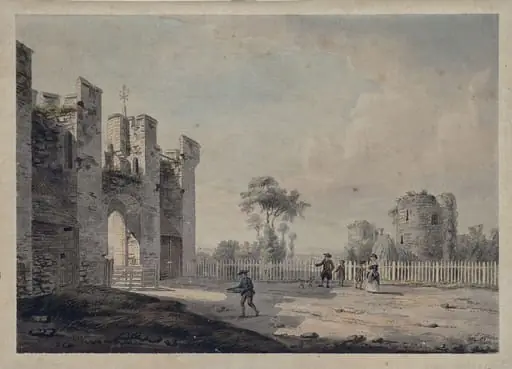
A View of Norwich, from Mousehold Hill, near the ruins of Kett's Castle is a watercolor work on paper by the British Romanticist artist Charles Catton junior. It dates from 1790 and is held in the collection of the Victoria and Albert Museum. Painted in 1790 by Charles Catton the younger, this watercolour captures a panoramic view of Norwich from Mousehold Hill.
About this work
Overview
Soft washes of color and delicate brushwork convey a quiet, contemplative mood, characteristic of late 18th-century topographical watercolours.
Painted in 1790 by Charles Catton the younger, this watercolour captures a panoramic view of Norwich from Mousehold Hill. The composition centers on the crumbling remains of Kett’s Castle in the foreground, with the city’s spires and rooftops rising gently behind. Soft washes of color and delicate brushwork convey a quiet, contemplative mood, characteristic of late 18th-century topographical watercolours.
Subject & Meaning
The scene juxtaposes the ruins of Kett’s Castle—a relic of 1549 peasant rebellion—with the orderly expansion of Norwich. The presence of figures and livestock in the foreground suggests rural life continuing near historical decay. The painting does not idealize the past but quietly acknowledges its persistence within the evolving urban landscape.
Technique & Style
Catton employed transparent watercolour washes to render atmospheric depth, layering pale blues, greys, and earth tones to suggest distance and cloud cover. Fine linear detail defines architectural forms, while loose, wet-in-wet techniques soften the hills and sky. The absence of strong chiaroscuro reinforces the work’s subdued, observational tone.
History & Provenance
Created during a period of growing interest in regional topography, the work was likely made for private patrons interested in local heritage. It remained in private collections until the 20th century, when it entered institutional holdings. No record of public exhibition exists from Catton’s lifetime, suggesting its initial reception was modest and localized.
Context
In the 1790s, Norwich was one of England’s largest provincial cities, undergoing gradual modernization. Artists like Catton documented its changing skyline as industrialization began to reshape the countryside. Mousehold Hill, once a site of rebellion, had become a popular vantage for sketching, reflecting a cultural shift toward landscape appreciation.
Legacy
Catton’s view of Norwich is one of several topographical works that preserved the city’s pre-industrial silhouette. Though not widely known outside regional art circles, it contributes to a broader archive of English watercolours that valued quiet observation over dramatic effect, influencing later topographical traditions in the 19th century.
Artist & collection

Artist
Charles Catton the younger was an English-born American topographical artist, illustrator, theatrical scene-painter, and slave-owner.

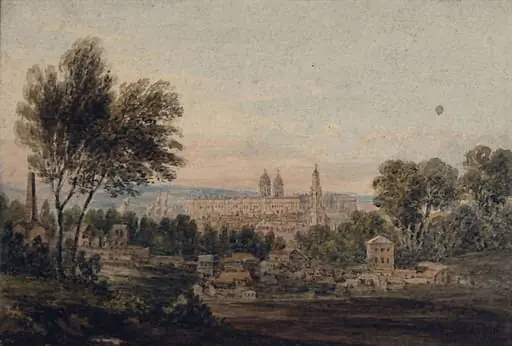 Distant View of Greenwich Hospital
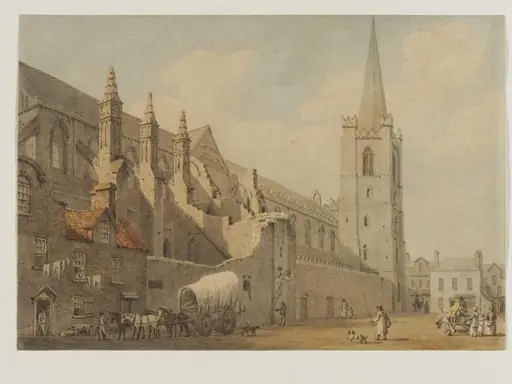 St Patrick's Cathedral, Dublin
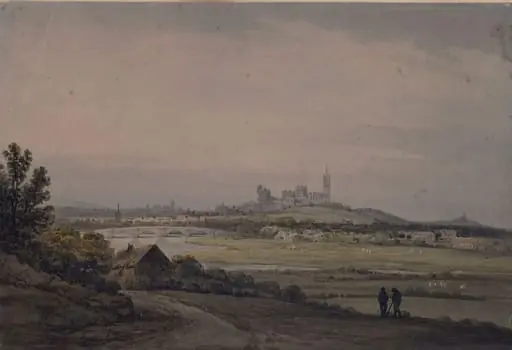 Lancaster
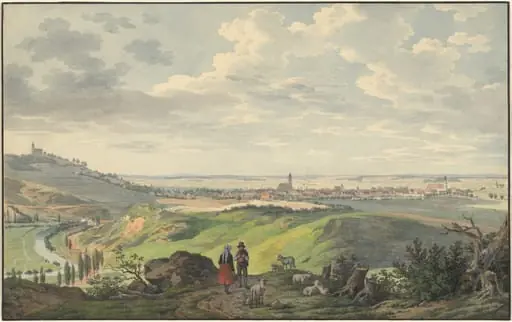 The City of Arnberg in the Oberpfalz
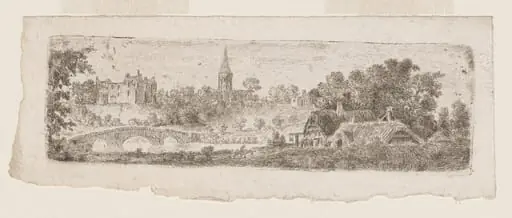 Dairsie II
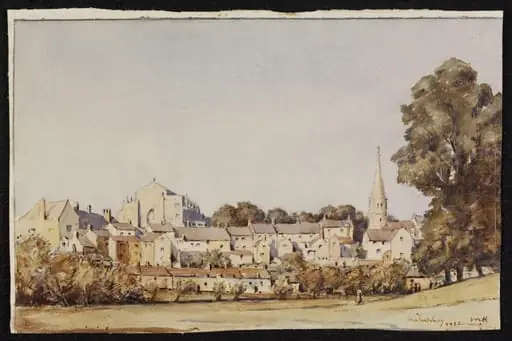 Malmesbury
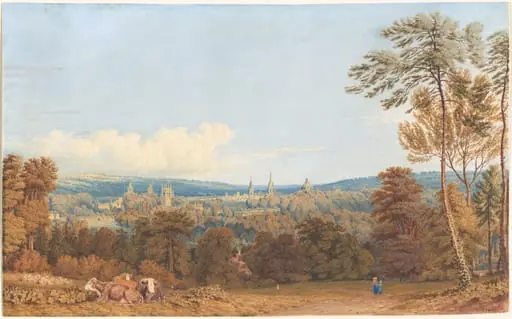 View of Oxford from Headington Hill
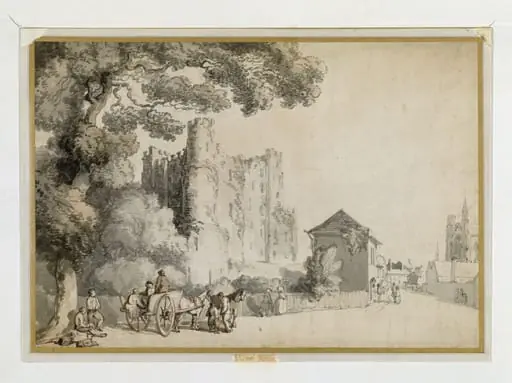 Boley Hill and Castle, Rochester, with the "Justice Tree"
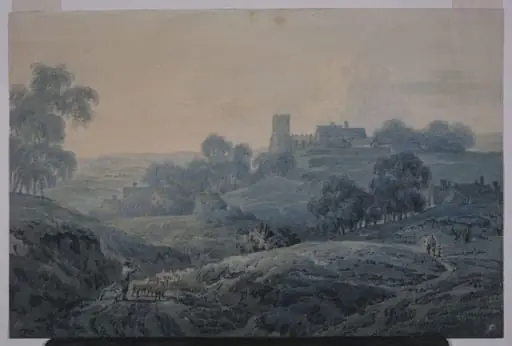 Landscape with church and cottages
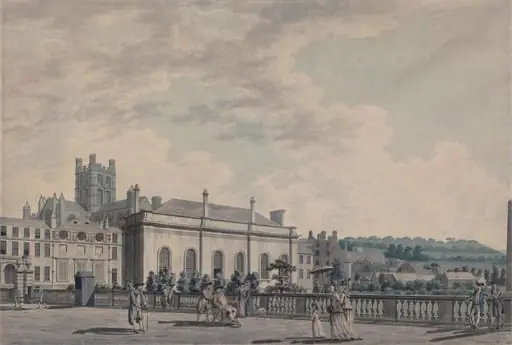 North Parade, Bath
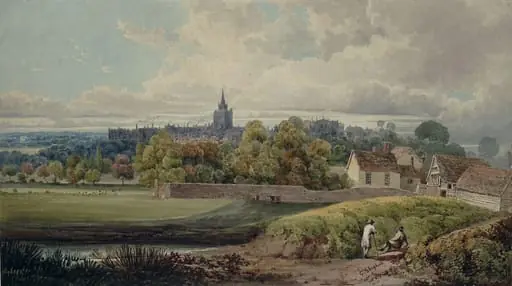 View of Aylesbury, Bucks
 Interior view of the ruins of Cowling (or Cooling) Castle, Kent