Artwork
The Wood Sawyer
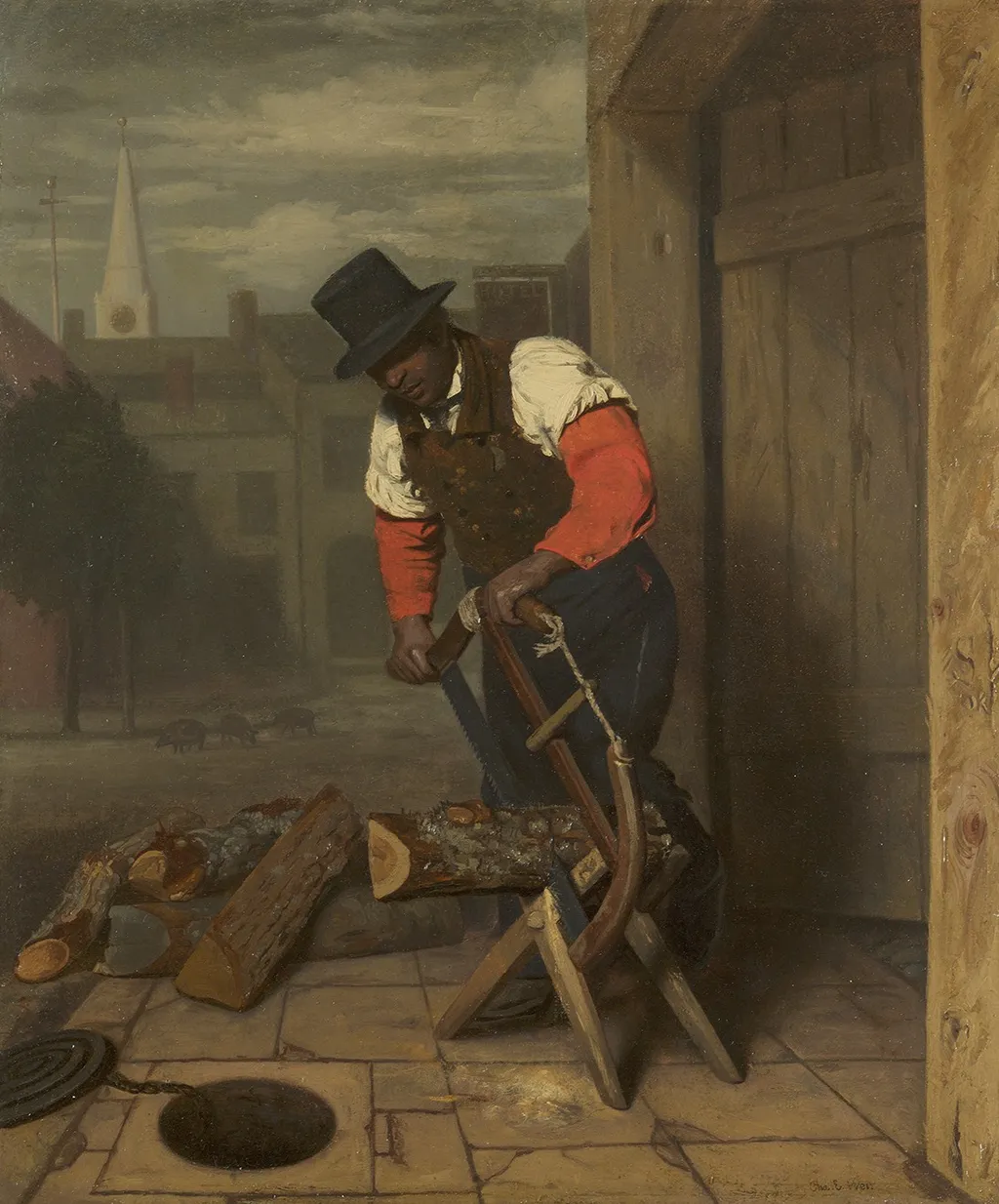
The Wood Sawyer is an unspecified painting by Charles E. Weir. It dates from 1842 and is held in the collection of the Metropolitan Museum of Art. Charles E.
About this work
Overview
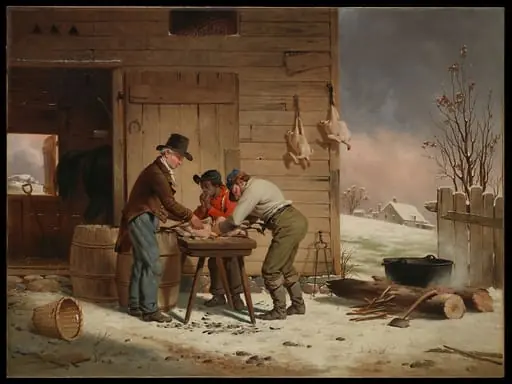
Charles E. Weir’s mid‑nineteenth‑century oil on board, titled The Wood Sawyer, presents a domestic workshop scene in New York City. The work belongs to the Metropolitan Museum of Art’s collection and is classified as genre painting, depicting everyday labor rather than historical or mythological subject matter.
Subject & Meaning
The composition centers on two men engaged in sawing timber. One leans over the workbench, clad in a dark cap, white apron and red sleeves, while his companion steadies the log, wearing a white head covering and a red shirt. The setting suggests a modest, interior space where manual craft is performed, emphasizing the dignity of ordinary labor.
Technique & Style
Executed in oil on board, Weir renders the scene with a muted palette and careful attention to texture. The saw’s handle appears polished from repeated use, and the floor bears small holes, conveying the wear of a working environment. Light streams through a doorway, illuminating the figures and creating a subtle contrast between interior shadows and the bright exterior view.
Context
The painting reflects a period when New York’s rapid urban growth still relied on traditional trades such as timber processing. By portraying a wood‑sawyer within a city interior, the work bridges rural craft and metropolitan life, offering a glimpse into the everyday economies that underpinned mid‑19th‑century American cities.
History & Provenance
The Wood Sawyer entered the Metropolitan Museum of Art’s holdings through acquisition, though specific details of its earlier ownership are not recorded in the available sources. Its presence in the museum’s collection underscores the institution’s interest in documenting American genre scenes from the nineteenth century.
Artist & collection