Artwork
Apple Trees in Bloom (Pommiers en fleurs)
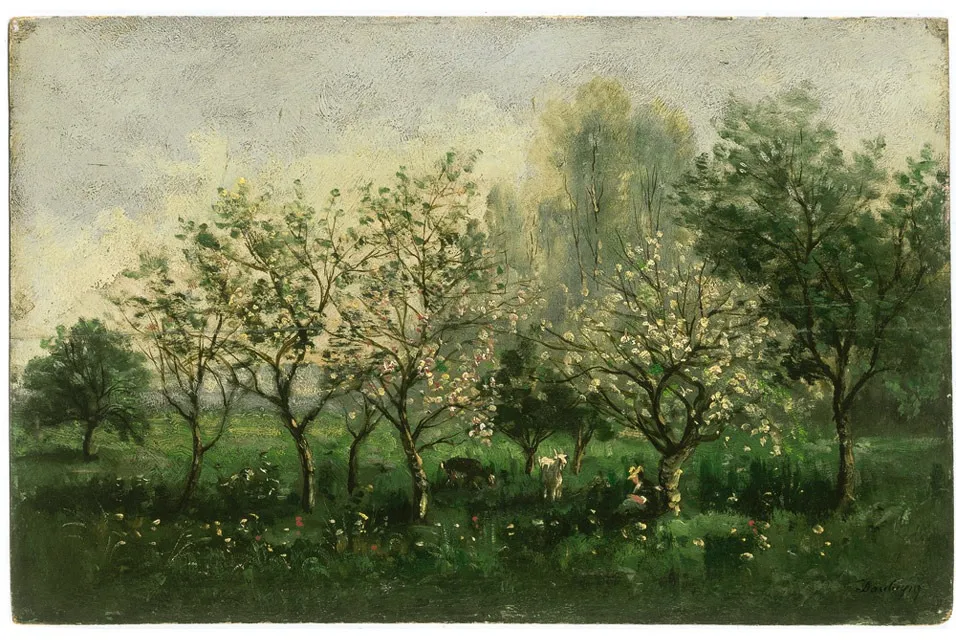
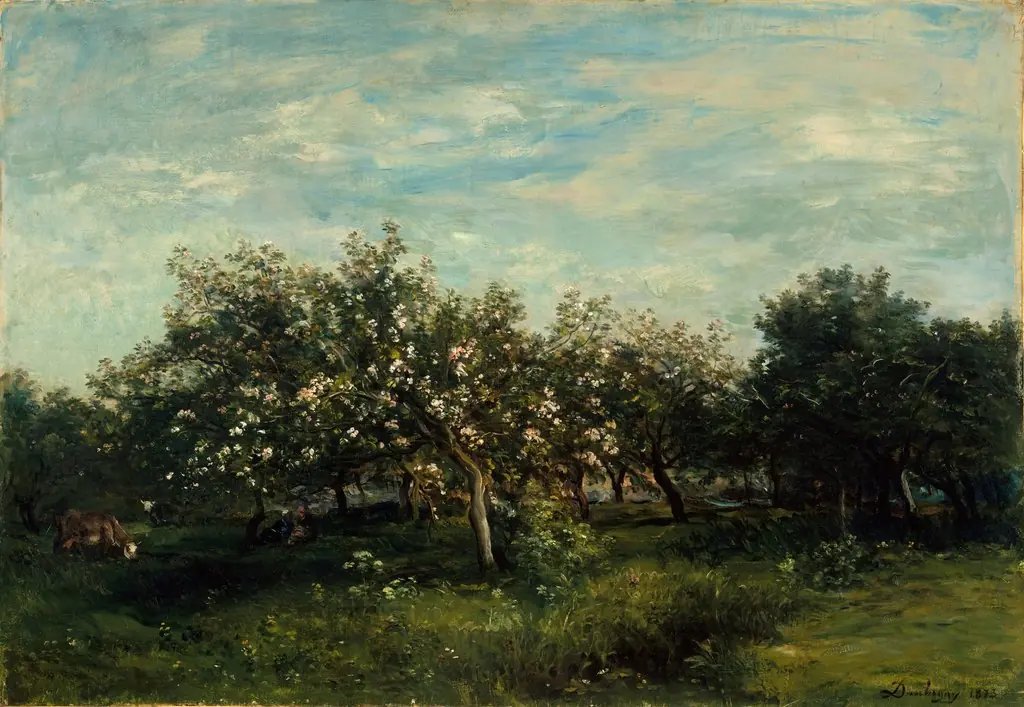
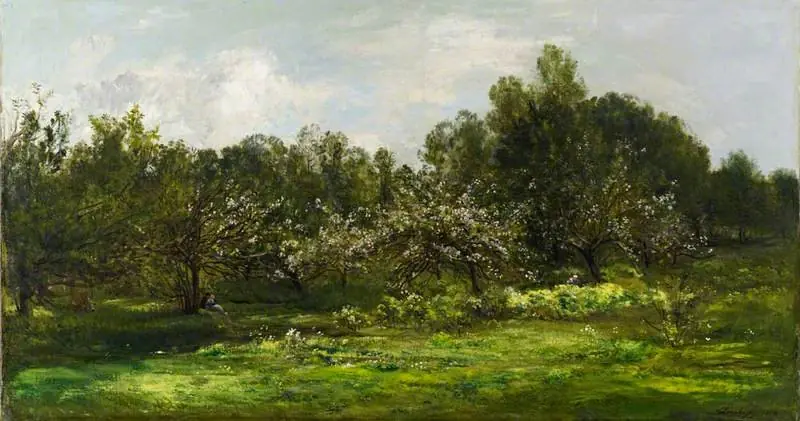
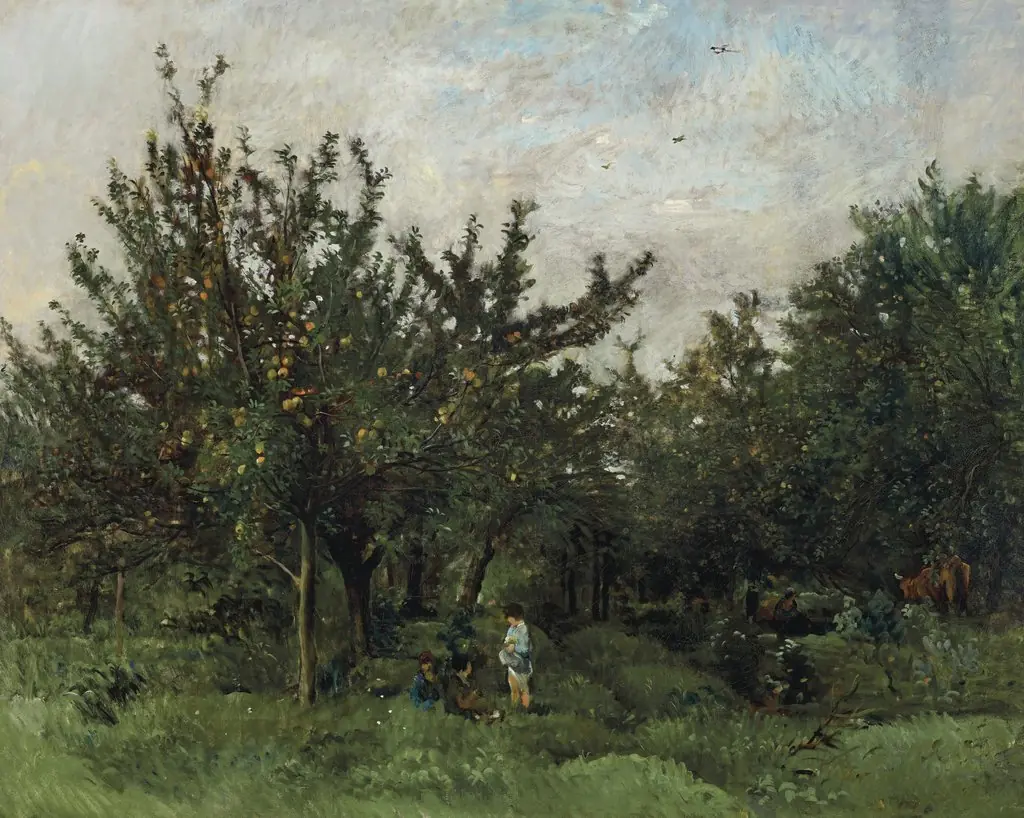
Apple Trees in Bloom (Pommiers en fleurs) is an oil painting by the Barbizon school artist Charles François Daubigny. It dates from 1860 and is held in the collection of the Israel Museum.
About this work
Overview
Apple Trees in Bloom (Pommiers en fleurs), created in 1860 by Charles-François Daubigny, is a wood painting depicting a serene landscape of blossoming trees.
Subject & Meaning
The painting showcases a rural landscape with scattered apple trees in full bloom, emphasizing natural beauty and tranquility. The composition balances foreground and distant elements, with white and pink blossoms set against a hazy backdrop.
Technique & Style
Executed in a realistic style, the work highlights Daubigny's attention to detail and texture, characteristic of his approach to capturing natural light and atmosphere.
History & Provenance
Part of the Barbizon school, Daubigny's piece is now held in the collection of the Israel Museum, reflecting his influence as a precursor to Impressionism.
Context
As a key figure in the Barbizon school, Daubigny's landscapes, such as this, bridged traditional approaches and the emerging emphasis on light and outdoor settings that would define Impressionism.
Legacy
Apple Trees in Bloom exemplifies Daubigny's contribution to the transition towards Impressionist practices, through his focus on luminous, natural scenes.
Artist & collection
Artist
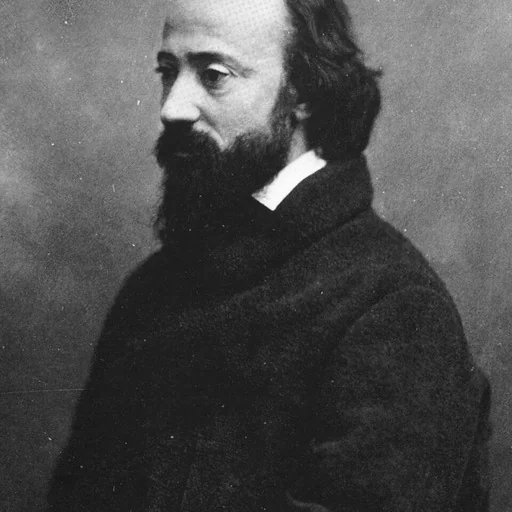
Charles-François Daubigny ( DOH-bin-yee, US: DOH-been-YEE, doh-BEEN-yee, French: ; 15 February 1817 – 19 February 1878) was a French painter, one of the members of the Barbizon school, and is considered an important precursor of…