Artwork
Horsted Keynes, Sussex
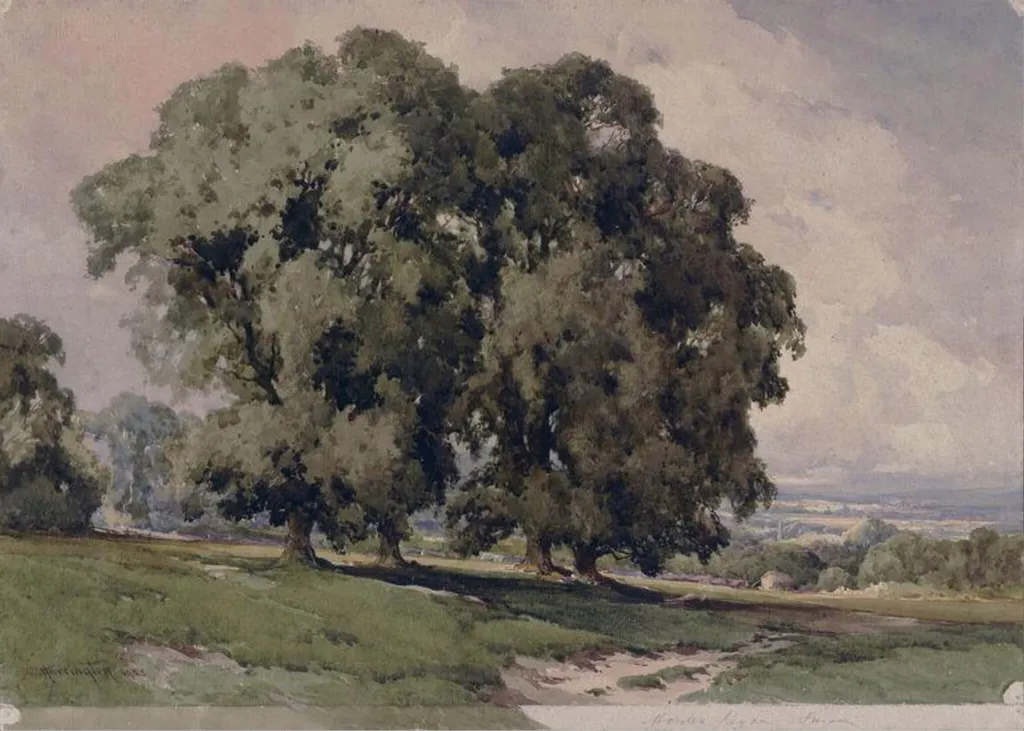
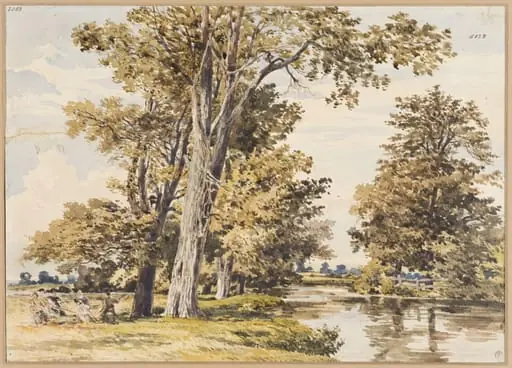
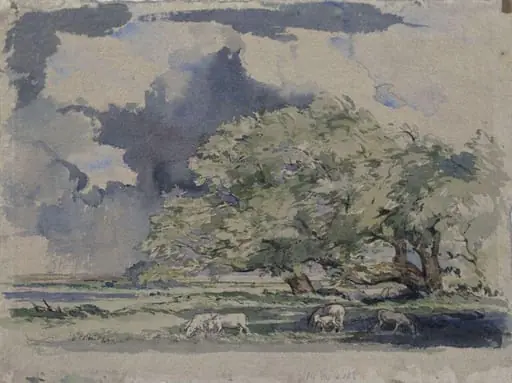
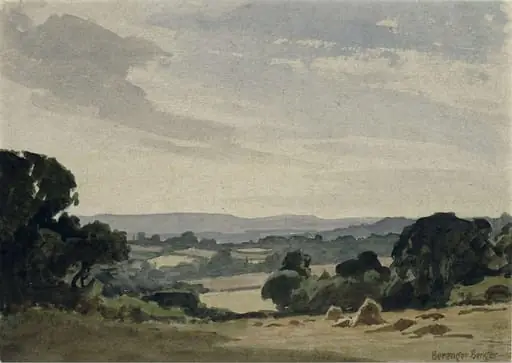
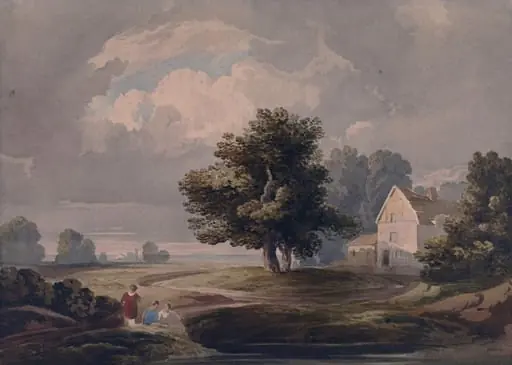
Horsted Keynes, Sussex is a watercolor work on paper by Charles Harrington. It dates from 1921 and is held in the collection of the Victoria and Albert Museum.
About this work
Overview
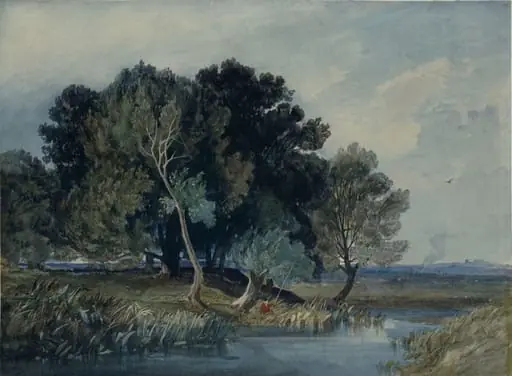
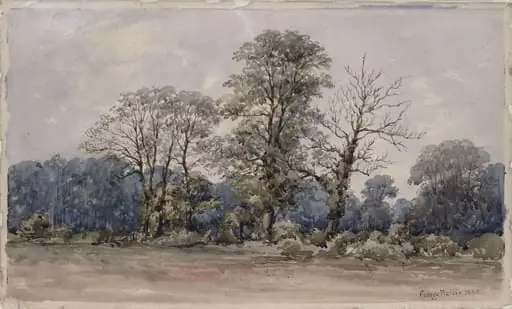
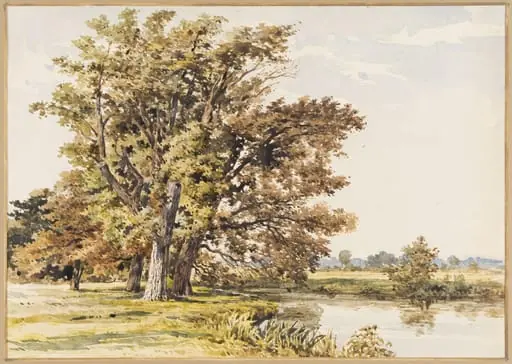
Charles Harrington created this watercolour in 1921, capturing the rural landscape of Horsted Keynes in Sussex. The work is signed, dated, and titled by the artist, affirming its personal and documentary character. Executed in transparent watercolour, it reflects a quiet observation of the English countryside during the early 20th century, avoiding dramatic emphasis in favor of subtle atmosphere.
Subject & Meaning
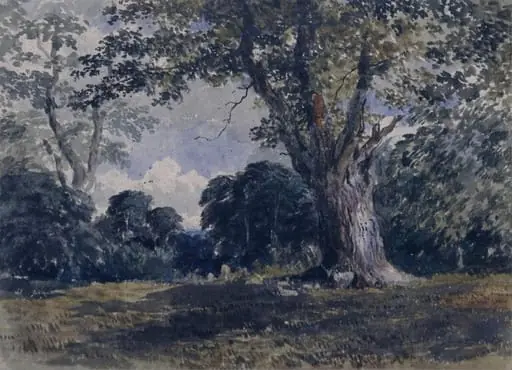
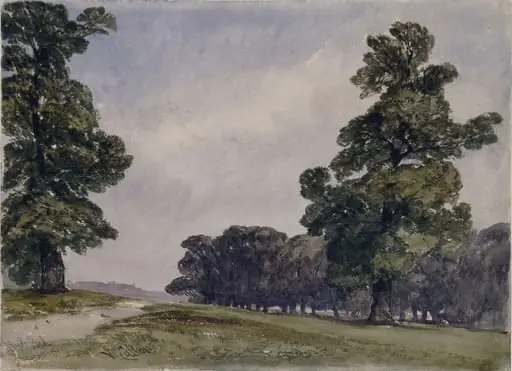
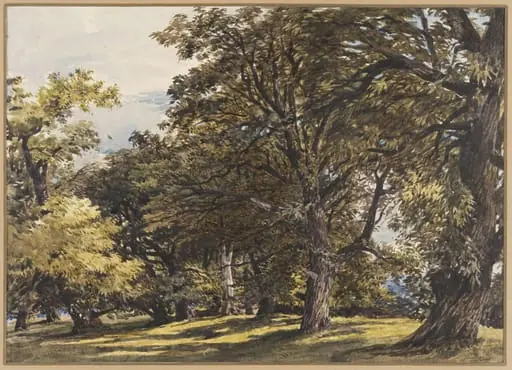
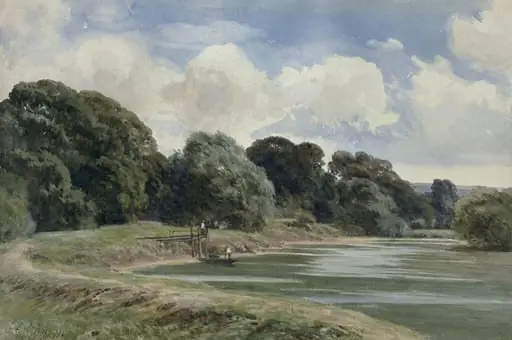
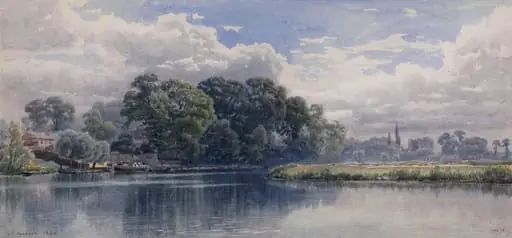
The painting presents a modest country lane flanked by mature trees, a narrow stream winding through the grass, and a soft, hazy sky. There are no figures or architectural focal points, suggesting an intentional focus on stillness and natural rhythm. The scene conveys an unremarkable yet deliberate moment in rural life, valuing quietude over narrative or spectacle.
Technique & Style
The watercolour’s transparency allows the paper’s whiteness to contribute to the luminosity of the sky and undergrowth.
Harrington employed light, fluid brushwork to suggest foliage and grass without detailed rendering. The watercolour’s transparency allows the paper’s whiteness to contribute to the luminosity of the sky and undergrowth. Delicate washes define the stream and tree canopies, while loose strokes imply texture rather than define it, aligning with a tradition of English watercolour that prioritizes atmosphere over precision.
History & Provenance
The painting entered the collection of the Victoria and Albert Museum, where it remains accessible to the public. Its preservation suggests recognition of its quiet aesthetic value within the broader context of British watercolour traditions. No record of prior ownership or exhibition history is widely documented, indicating it may have been kept privately until its acquisition by the museum.
Context
Created in the aftermath of the First World War, the work reflects a broader cultural turn toward pastoral calm in British art. While urban modernism gained traction in cities, artists like Harrington continued to document rural England with restraint. This piece aligns with a generation of watercolourists who found dignity in ordinary landscapes, resisting grandiosity in favor of intimate observation.
Legacy
Though not widely published or reproduced, the painting endures as an example of early 20th-century British watercolour practice. Its presence in the V&A underscores its role as a representative work of regional landscape painting, valued for its sincerity and technical restraint. It contributes to an understated but persistent tradition of English art that finds significance in the unadorned countryside.
Artist & collection
Artist
Charles Fortnum Harrington was a lawyer, judge and political figure in Nova Scotia. He represented Richmond County in the Nova Scotia House of Assembly from 1847 to 1851 and from 1859 to 1863 as a Conservative.