Artwork
Deer In Richmond Park
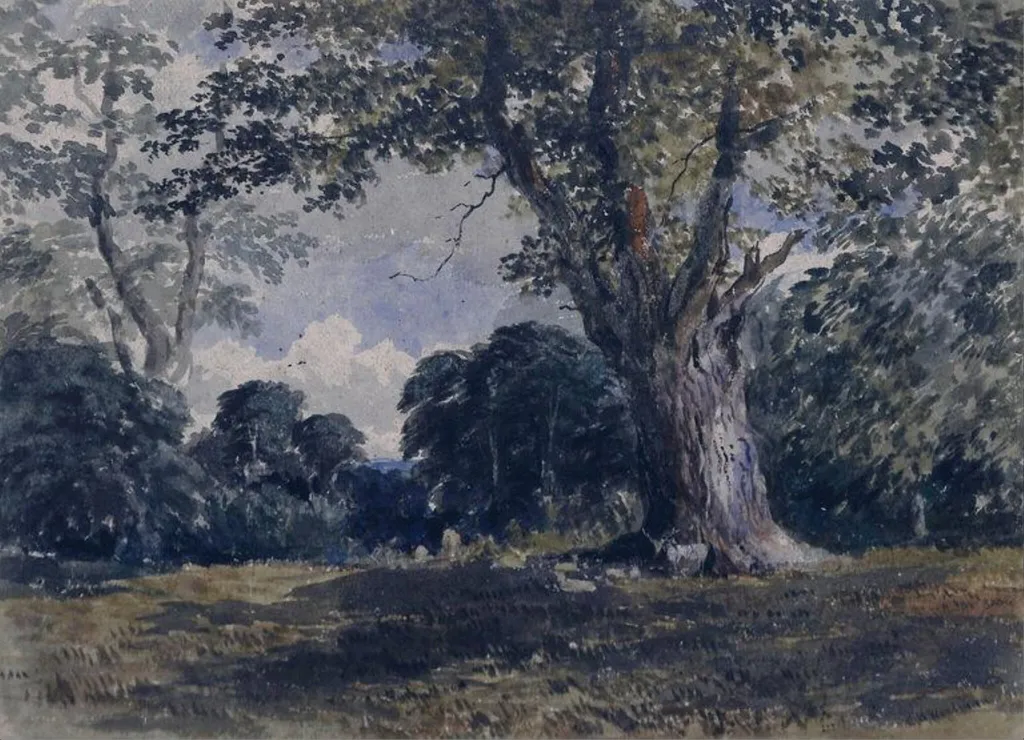
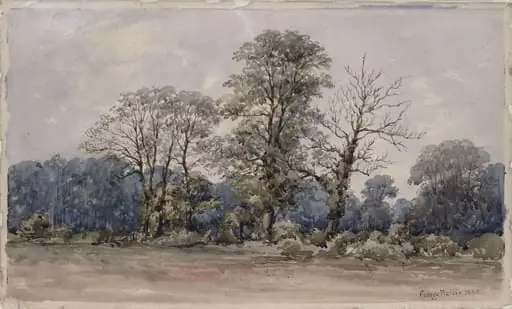
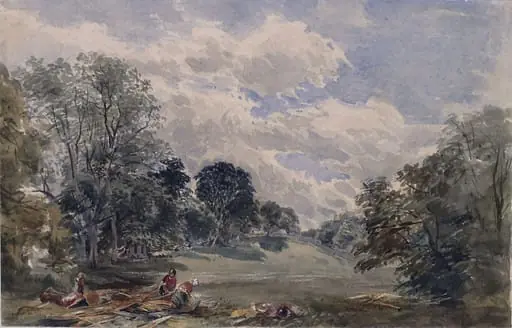
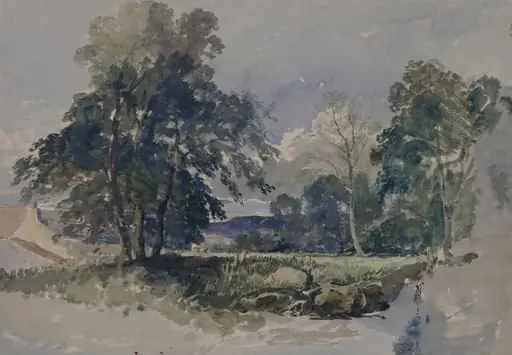
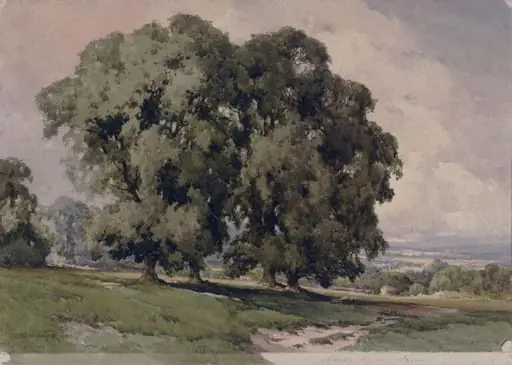
Deer In Richmond Park is a watercolor work on paper by Charles Henry Woodman. It is held in the collection of the Victoria and Albert Museum.
About this work
Overview
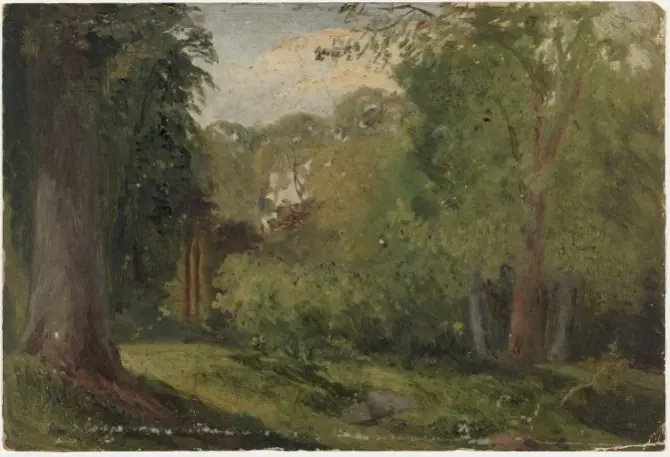
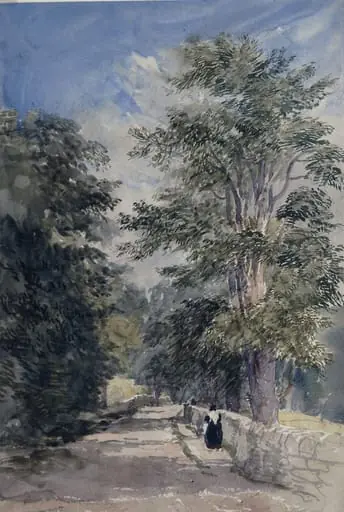
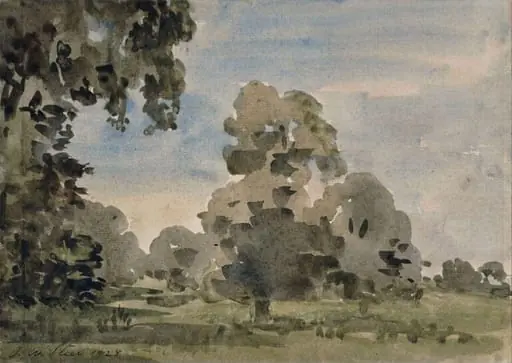
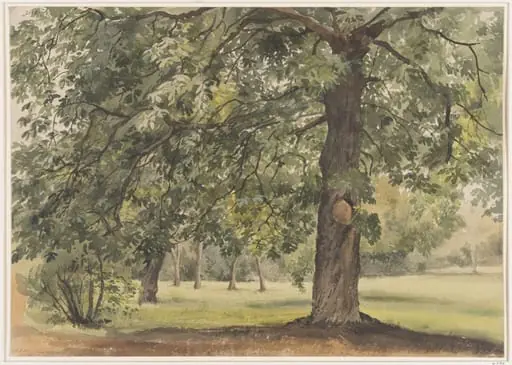
Charles Henry Woodman created this watercolour depicting deer within Richmond Park, capturing a tranquil woodland moment. The work is executed in transparent watercolour on paper, allowing the natural texture of the surface to contribute to the overall effect. Its intimate scale and delicate handling reflect a tradition of British landscape sketching, emphasizing observation over grandeur.
Subject & Meaning
A single deer stands beneath a sprawling tree, partially obscured by the surrounding foliage. The animal is not posed dramatically but rather integrated into the quiet rhythm of the forest, suggesting a moment of stillness in nature. The composition avoids narrative or symbolism, instead focusing on presence and atmosphere, inviting quiet contemplation rather than interpretation.
Technique & Style
Woodman employed loose, rapid brushwork to suggest form and movement, leaving areas of the paper exposed to imply light filtering through leaves.
Woodman employed loose, rapid brushwork to suggest form and movement, leaving areas of the paper exposed to imply light filtering through leaves. Washes of diluted pigment create soft transitions between shadow and sunlit space, while minimal detail in the deer’s form encourages the viewer to perceive it through suggestion rather than definition. The technique aligns with plein air sketching practices of the time.
History & Provenance
The painting is held in the collection of the Victoria and Albert Museum, where it is catalogued as part of a broader group of 19th-century British watercolours. Its origin traces to Woodman’s personal studies of Richmond Park, a popular subject for artists seeking naturalistic scenes near London. No record of public exhibition or prior ownership is widely documented.
Context
Created during a period when British artists increasingly turned to everyday landscapes for inspiration, this work reflects a shift away from idealized scenery toward intimate, observed moments. Richmond Park, a royal hunting ground turned public space, offered accessible wilderness for artists and naturalists alike, becoming a frequent subject in watercolour studies of the era.
Legacy
Though not widely known outside institutional collections, Woodman’s watercolour exemplifies the quiet, observational approach that defined much of 19th-century British landscape watercolour. Its preservation in the V&A underscores its value as a representative example of amateur and professional artists’ engagement with the natural world beyond formal commissions.
Artist & collection
Artist
Charles Henry Woodman painted quiet English watercolors in the 19th century. His brush traced rivers and parks with a light, steady hand—try Denham Locks, Windsor, where stone arches hold back the water, or Deer in…