Artwork
The Awakening
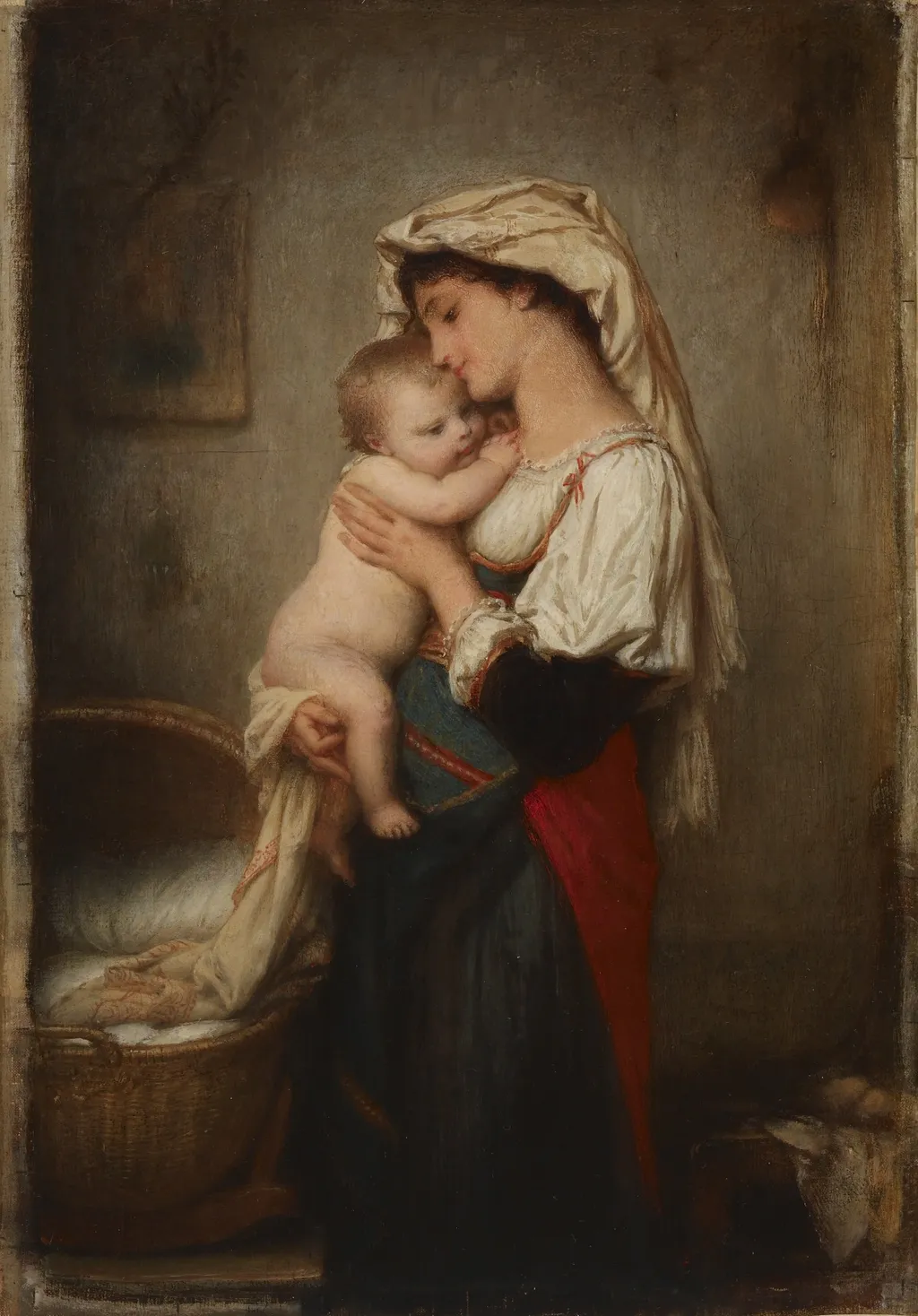
The Awakening is an oil painting by the French Romanticist artist Charles Jalabert. It dates from 1863 and is held in the collection of the Walters Art Museum.
About this work
Overview
Though rooted in the academic tradition, the painting diverges from grand historical narratives to focus on a private, emotional encounter.
Painted in 1863 by French academic artist Charles François Jalabert, *The Awakening* is an oil-on-canvas work that captures a quiet, intimate moment between mother and child. Though rooted in the academic tradition, the painting diverges from grand historical narratives to focus on a private, emotional encounter. It resides today in the Walters Art Museum, where its subdued palette and tender composition invite contemplation rather than spectacle.
Subject & Meaning
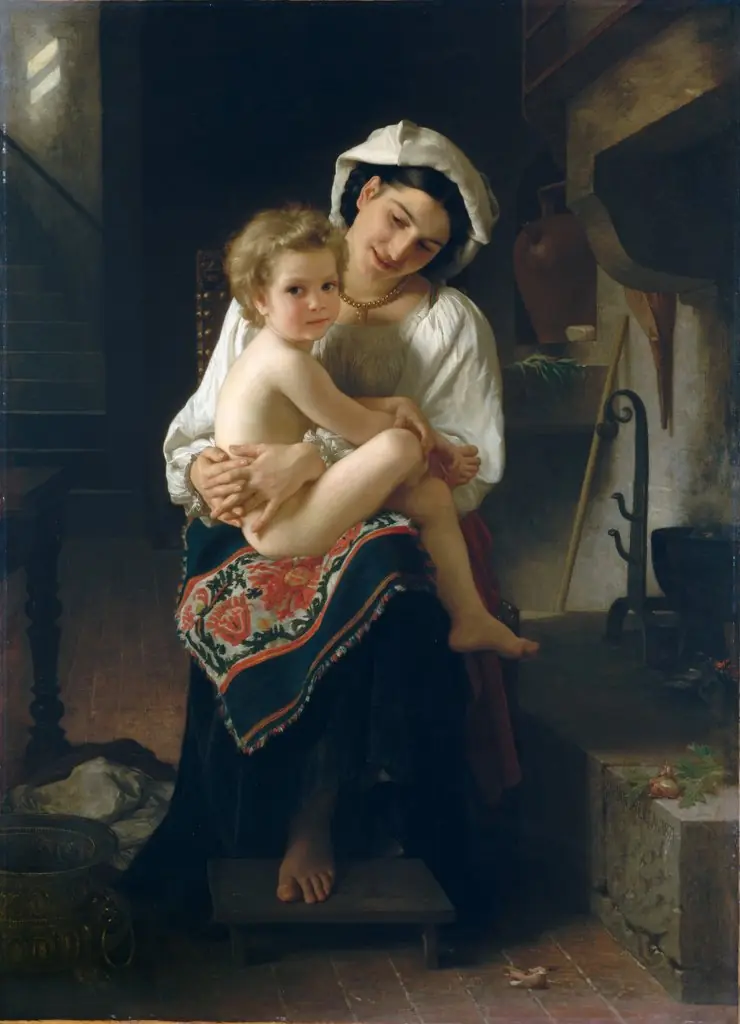
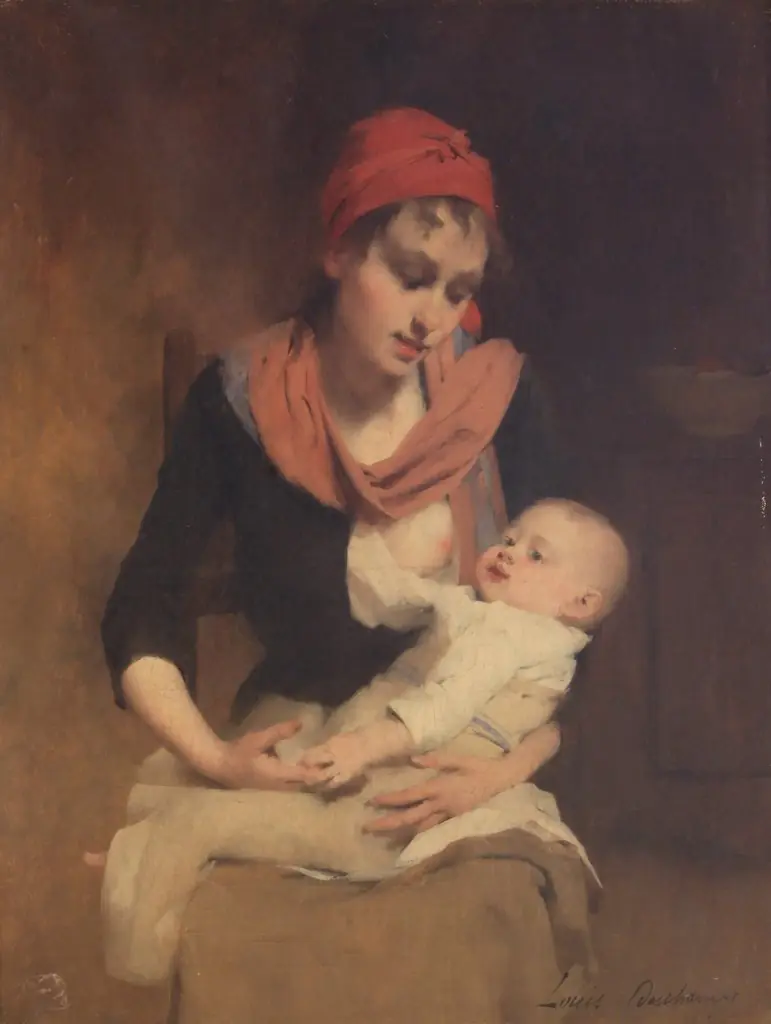
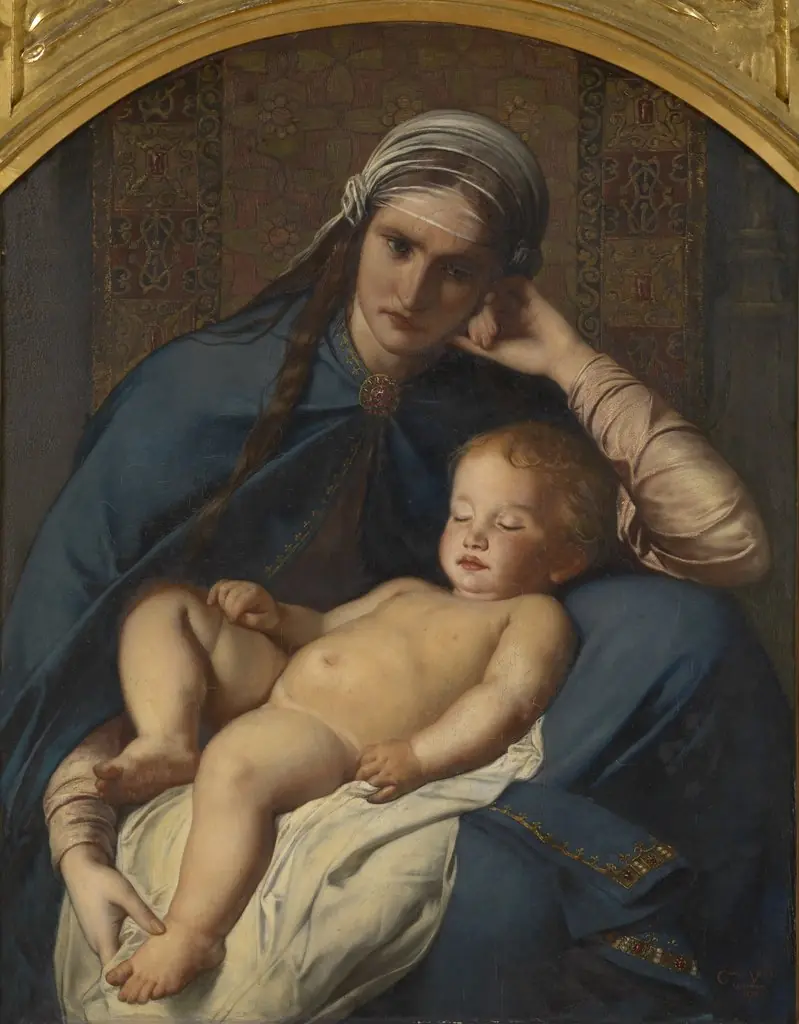
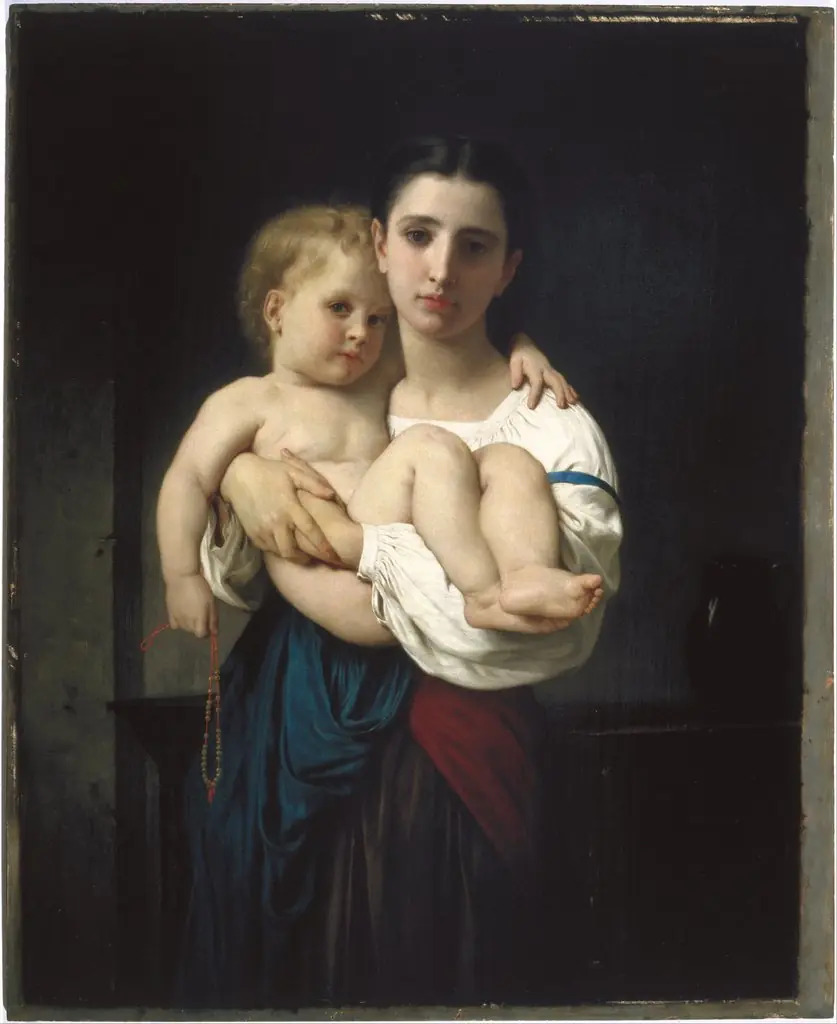
The painting portrays a woman in a dark dress and white headscarf cradling a naked infant, their bodies pressed close in mutual embrace. The baby clings to her neck, eyes lowered, while she gazes downward with quiet attention. The absence of narrative context or symbolic props suggests a focus on the rawness of early maternal connection. The scene evokes tenderness without sentimentality, emphasizing physical closeness as its central theme.
Technique & Style
Jalabert employs chiaroscuro to model the figures with soft, sculptural light, drawing focus to the interplay of skin and fabric. The muted brown background recedes, isolating the pair in a hushed space. Brushwork is controlled and refined, typical of academic training, yet the intimacy of the subject tempers its formality. The red sash provides a subtle accent, guiding the eye without disrupting the scene’s quiet harmony.
History & Provenance
Created during Jalabert’s time in Paris, where he painted portraits and historical scenes for elite patrons, *The Awakening* stands apart from his more conventional commissions. Its origin prior to its acquisition by the Walters Art Museum remains undocumented, but its preservation suggests early recognition of its emotional resonance. The painting entered the museum’s collection in the 20th century, where it continues to be studied for its quiet departure from academic norms.
Context
While French Romanticism often emphasized drama and heroism, Jalabert’s work reflects a quieter current within the movement—one that turned toward domestic intimacy and psychological nuance. In the mid-19th century, as bourgeois values gained prominence, depictions of maternal care became increasingly common in art. *The Awakening* aligns with this shift, offering a restrained yet powerful vision of private life amid a culture still dominated by grand historical themes.
Legacy
Though Jalabert is not widely remembered today, *The Awakening* endures as a quiet example of academic painting’s capacity for emotional depth. Its focus on an unadorned, everyday moment anticipates later realist and impressionist interests in domestic life. The painting’s preservation in a major museum underscores its value as a subtle counterpoint to the more theatrical works of its era.
Own this work as a print
Artist & collection
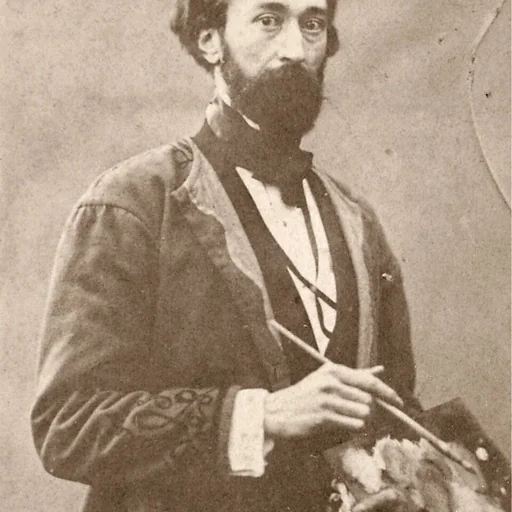
Artist
Charles François Jalabert (1819–1901) was a French painter in the academic style.