Artwork
The Martyrdom of St. Andrew
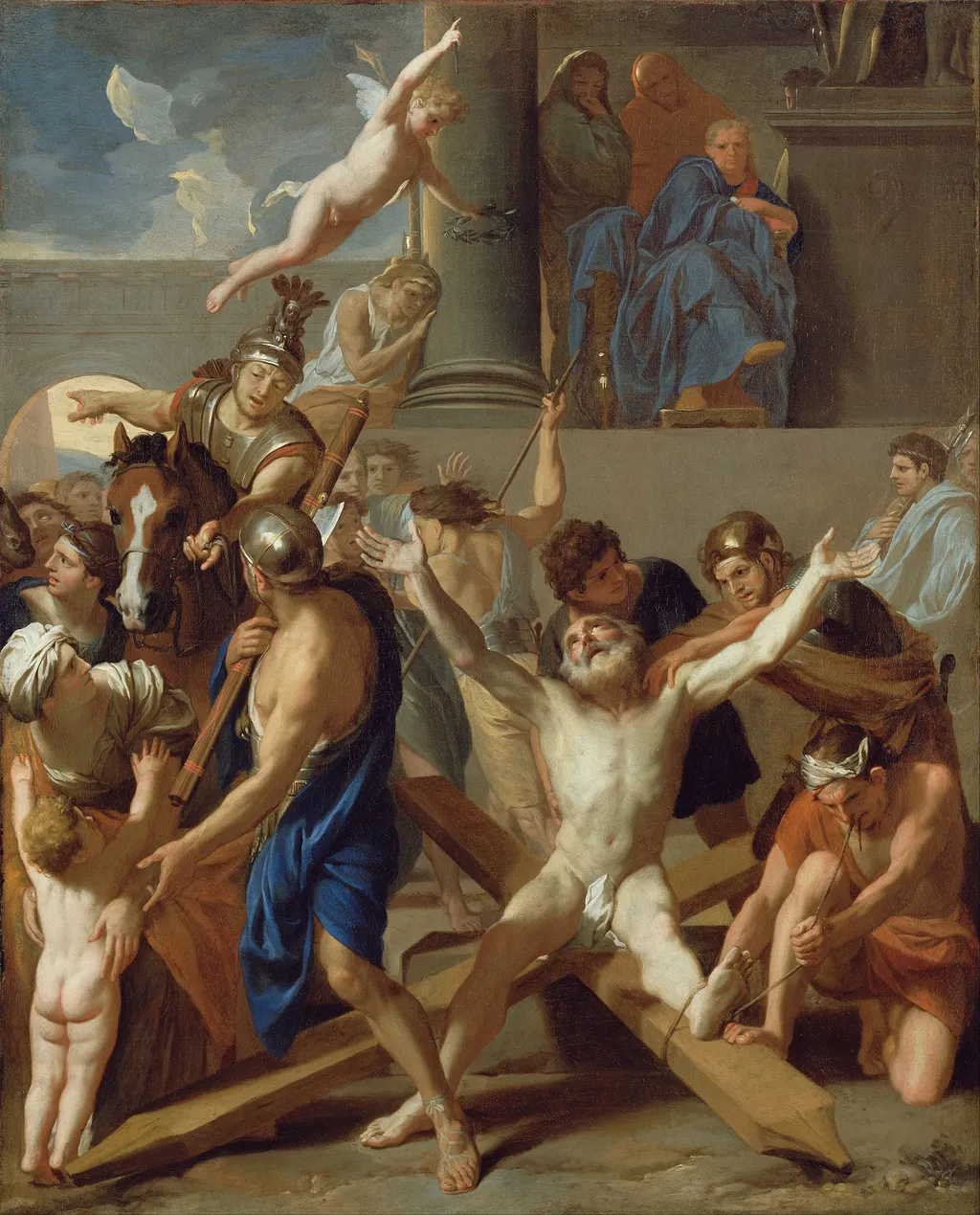
The Martyrdom of St. Andrew is an oil painting by the French Classical Baroque artist Charles Le Brun. It dates from 1646 and is held in the collection of the J. Paul Getty Museum.
About this work
Overview
Charles Le Brun’s 1646 oil painting depicts the crucifixion of Saint Andrew, one of Christ’s apostles, according to tradition martyred on an X-shaped cross.
Charles Le Brun’s 1646 oil painting depicts the crucifixion of Saint Andrew, one of Christ’s apostles, according to tradition martyred on an X-shaped cross. Executed during the height of French Classical Baroque, the work aligns with the era’s emphasis on moral gravity and structured drama. Le Brun, then emerging as a leading figure in French court art, channels both emotional intensity and compositional discipline in this scene of religious sacrifice.
Subject & Meaning
The painting centers on Saint Andrew, bound to a diagonal cross, his body twisted in agony yet composed in resignation. Around him, a crowd of Roman soldiers and onlookers react with varied expressions—some indifferent, others alarmed—underscoring the public nature of his execution. The scene conveys not merely physical torment but spiritual endurance, reflecting Counter-Reformation ideals that valorized steadfast faith in the face of persecution.
Technique & Style
Le Brun employs chiaroscuro to heighten emotional contrast, illuminating the saint’s body against deep shadows that engulf the surrounding figures and landscape. His brushwork is controlled, favoring sculptural forms over expressive brushiness, a legacy of Poussin’s influence. The figures are arranged with geometric clarity, balancing theatrical tension with classical order, a hallmark of French academic painting at the time.
History & Provenance
Commissioned during Le Brun’s early career, the painting predates his appointment as First Painter to Louis XIV. It remained in private collections in France before entering the J. Paul Getty Museum’s holdings. Its survival through centuries reflects its recognition as a significant example of mid-17th-century French religious art, though it was never widely reproduced or publicly displayed until modern institutional acquisition.
Context
Created amid France’s religious and political consolidation under Louis XIII and the regency of Anne of Austria, the painting resonates with state-sponsored efforts to reinforce Catholic orthodoxy. Le Brun’s approach—combining classical structure with emotional gravity—mirrored broader cultural ambitions to align art with moral authority, positioning religious narratives as vehicles for civic virtue.
Legacy
Though overshadowed by Le Brun’s later royal commissions, this early work reveals the foundations of his artistic philosophy: narrative clarity, anatomical precision, and controlled drama. It influenced subsequent generations of French history painters and remains a key reference for understanding the transition from Italian Baroque influences to a distinctly French academic style in the 17th century.
Own this work as a print
Artist & collection
Artist
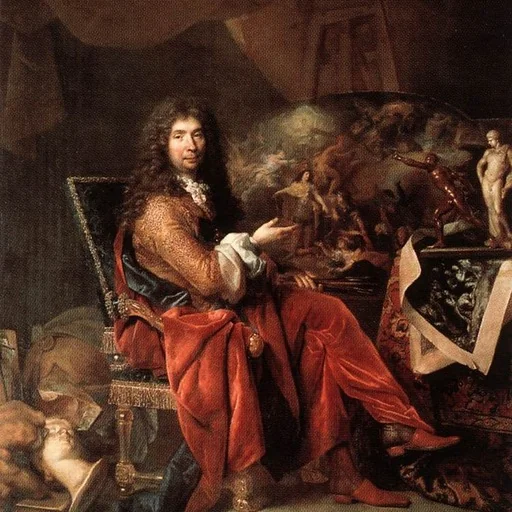
Charles Le Brun (French pronunciation: ; baptised 24 February 1619 – 12 February 1690) was a French painter, physiognomist, art theorist, and a director of several art schools of his time.

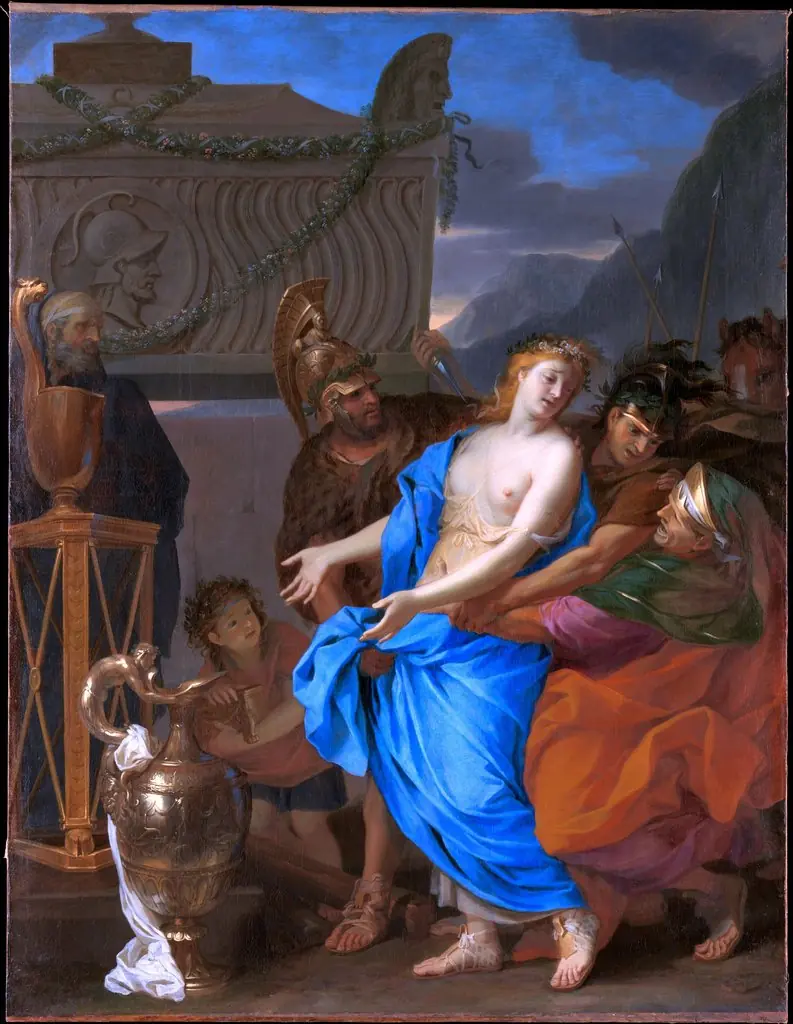
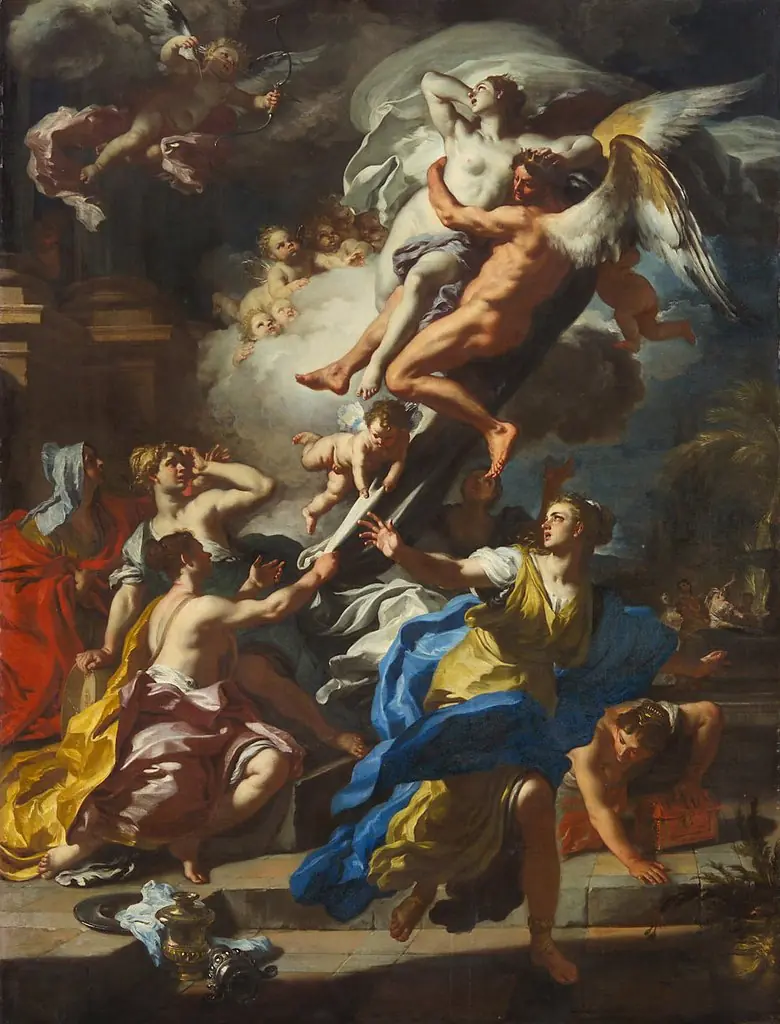 Boreas is robbing Orethyia
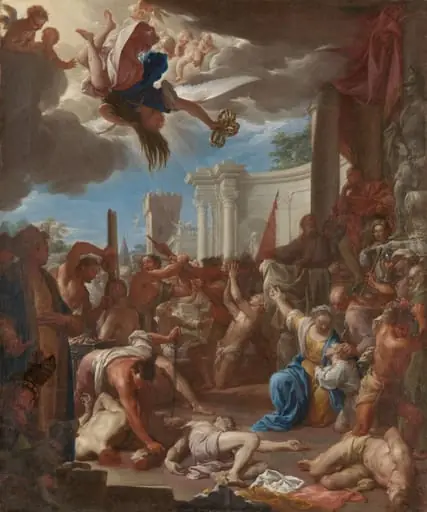 Het martelaarschap van de zeven broers, de zonen van de heilige Felicitas
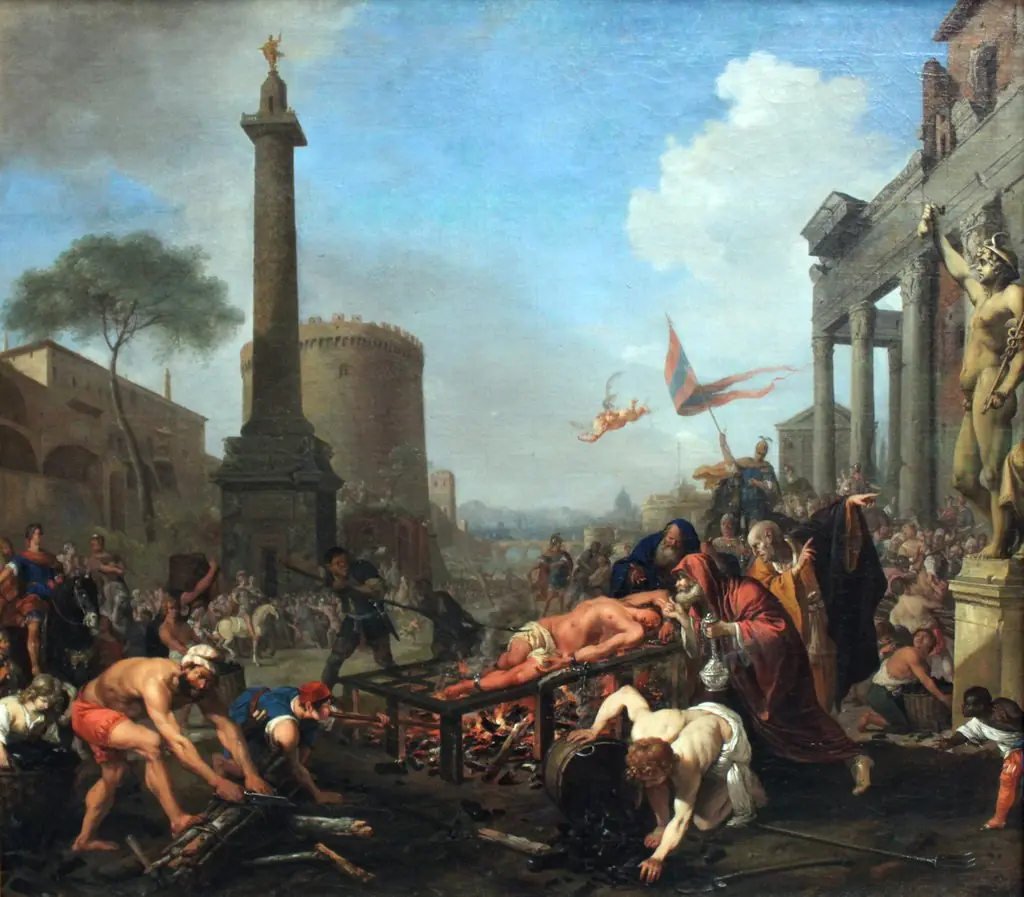 The Martyrdom of St. Laurence
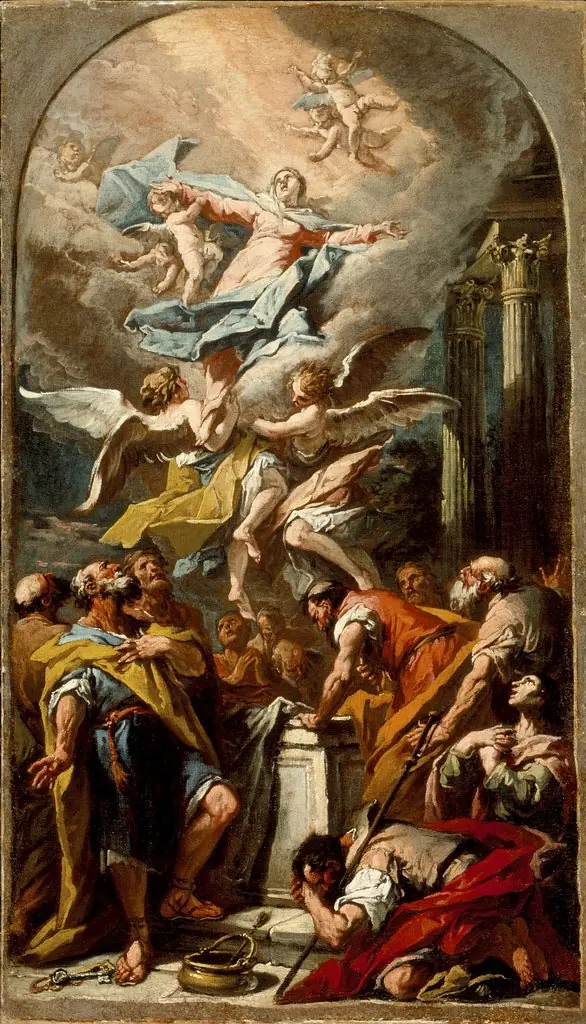 The Assumption of the Virgin
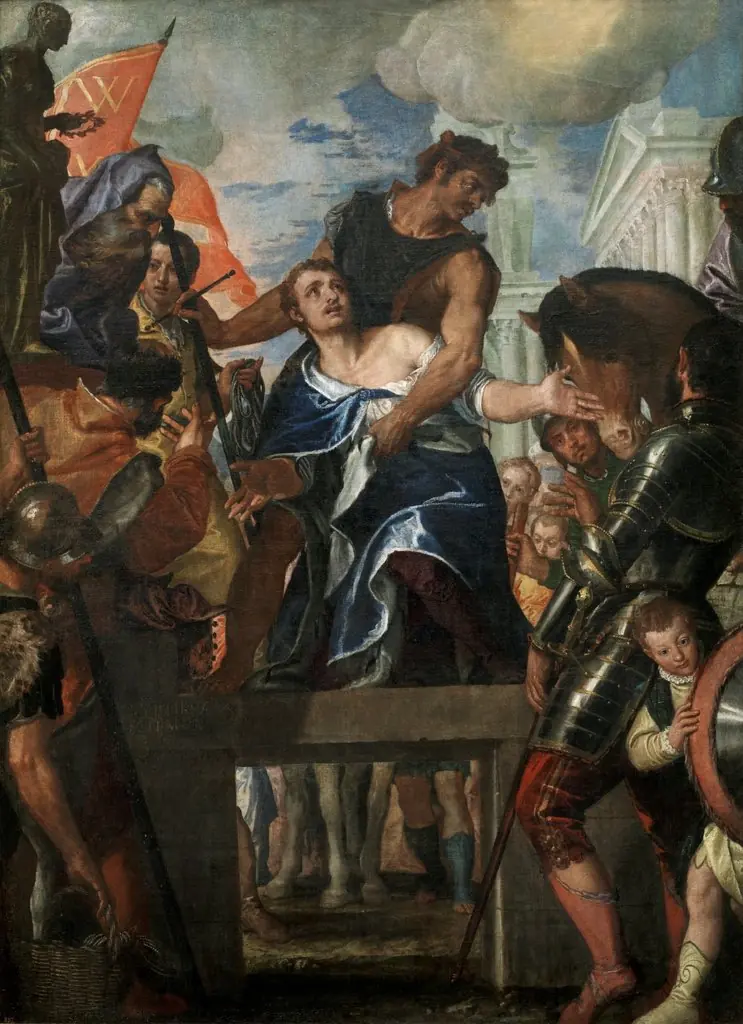 The Martyrdom of Saint Mennas
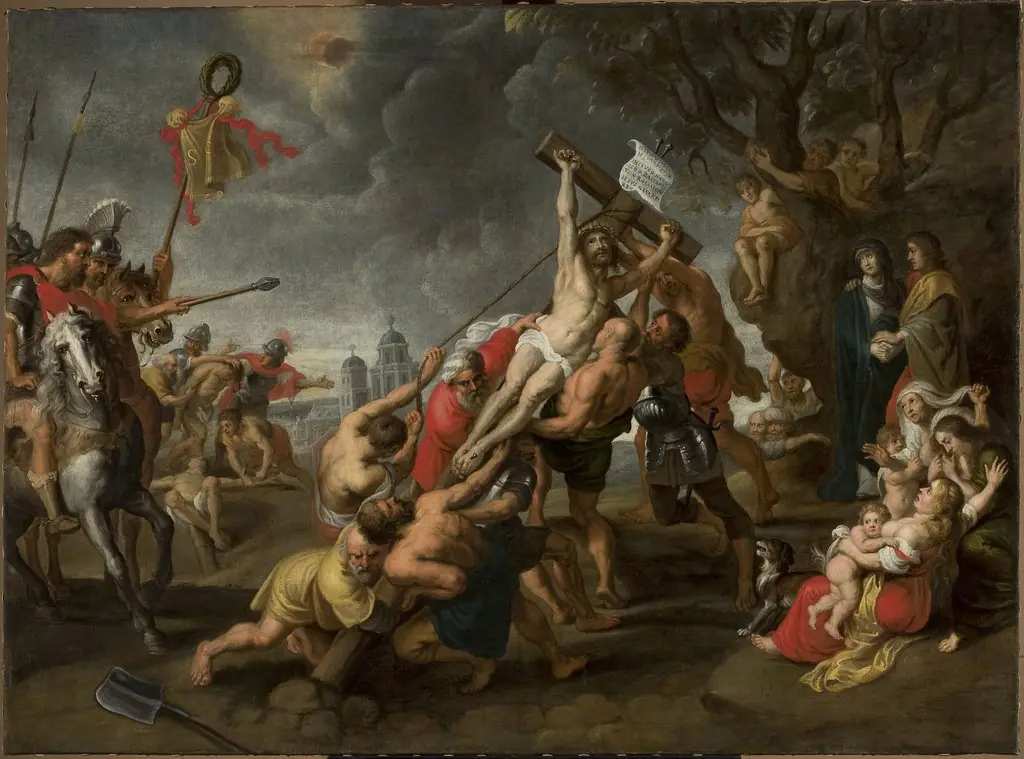 Golgotha (Matthew 27:35-38; Mark 15:24-27; Luke 23:33; John 19:18)
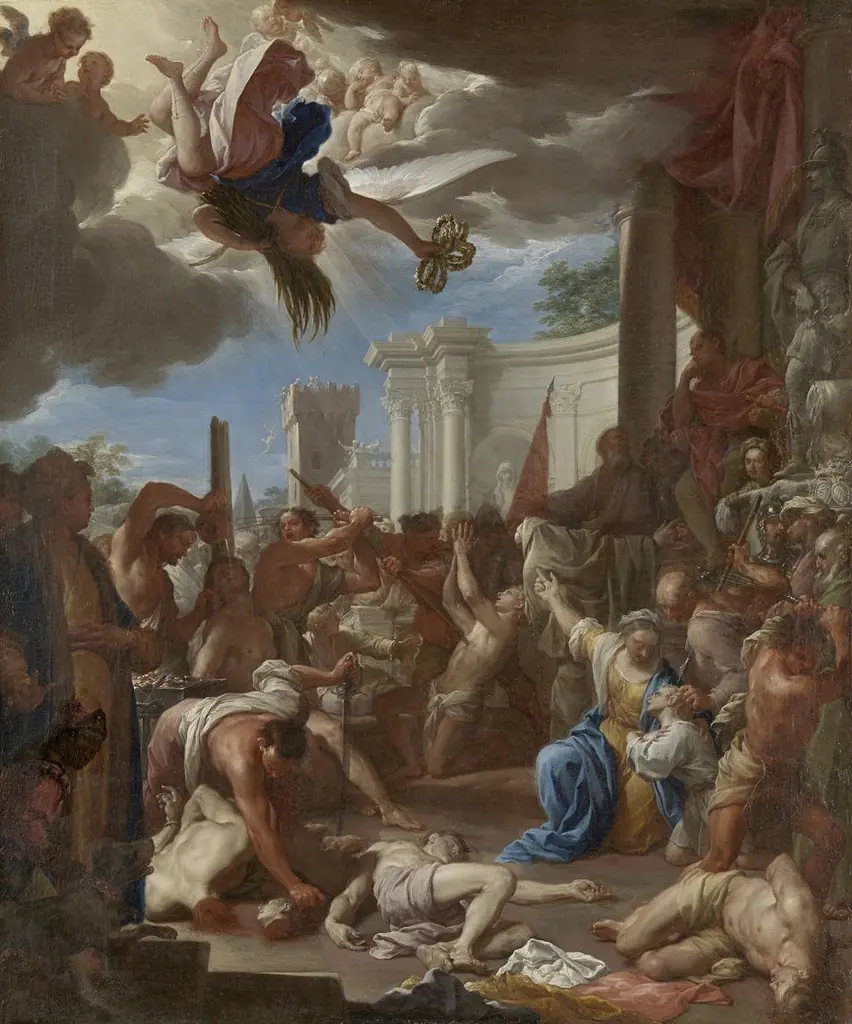 The Martyrdom of the Seven Sons of Saint Felicity
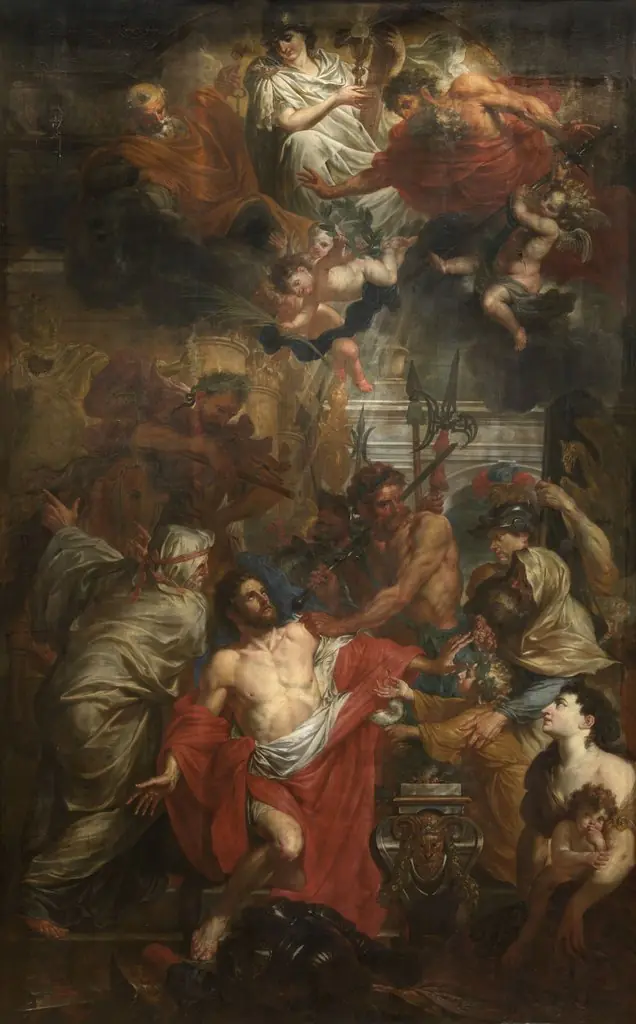 The Martyrdom of Saint George
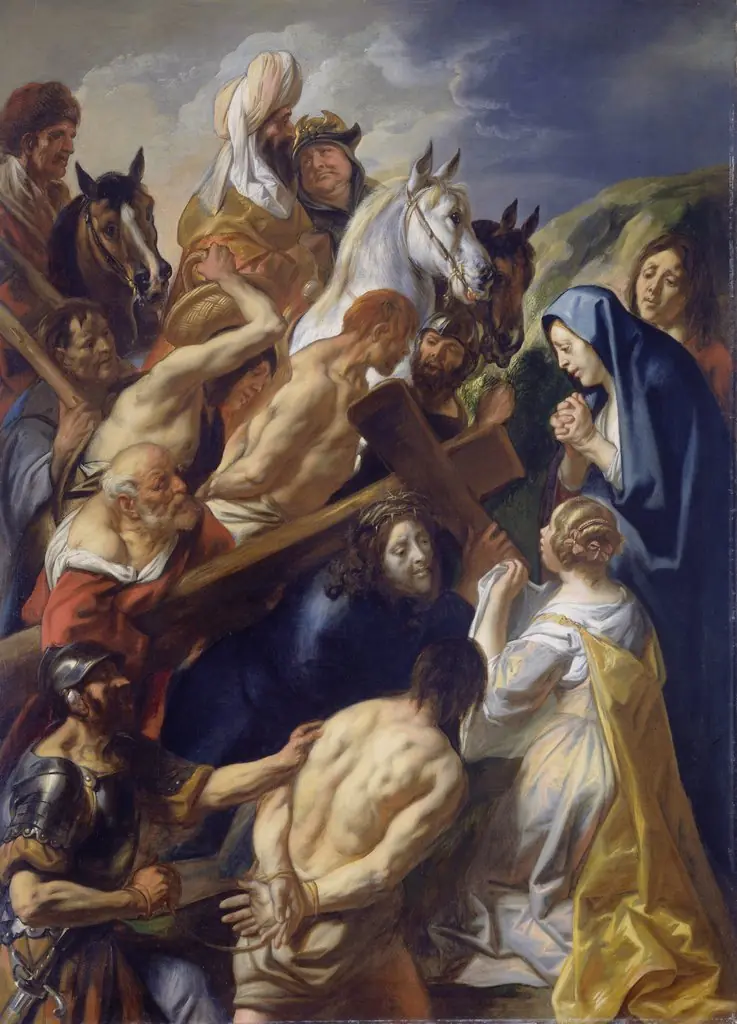 The carrying of the cross