Artwork
Burgundian Cottages
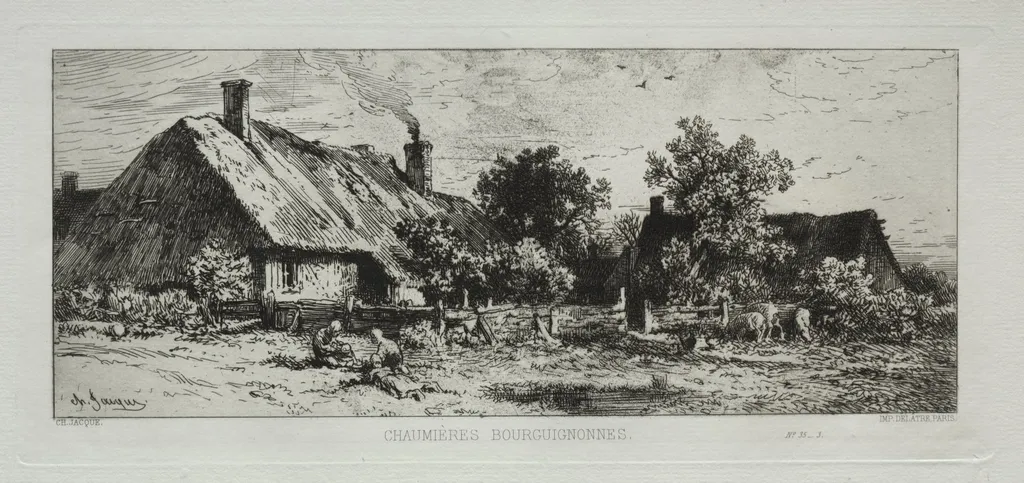
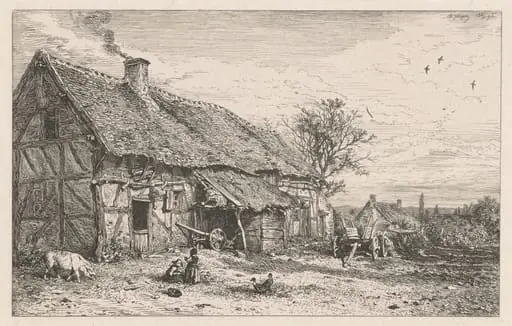
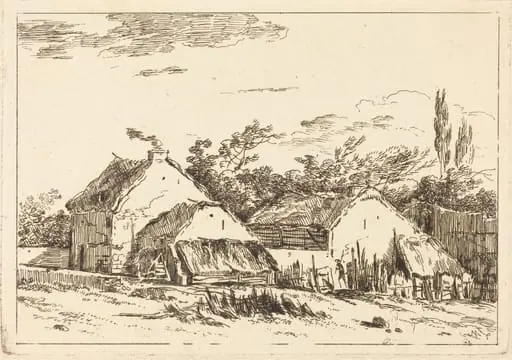
Burgundian Cottages is a print by the Impressionist artist Charles Jacque. It dates from 1866 and is held in the collection of the Cleveland Museum of Art.
About this work
Overview
Though trained as a military map engraver, he turned to pastoral subjects, aligning with the Barbizon School’s interest in unidealized countryside scenes.
Charles-Émile Jacque produced *Burgundian Cottages* in 1866 as a print reflecting his deep engagement with rural French life. Though trained as a military map engraver, he turned to pastoral subjects, aligning with the Barbizon School’s interest in unidealized countryside scenes. The work captures modest architecture and quiet human presence without theatricality, emphasizing observation over narrative.
Subject & Meaning
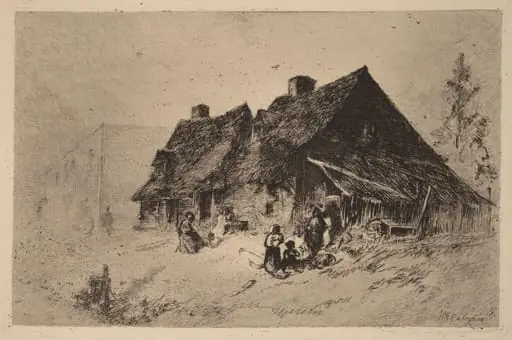
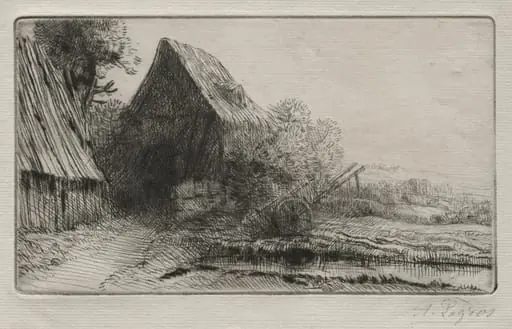
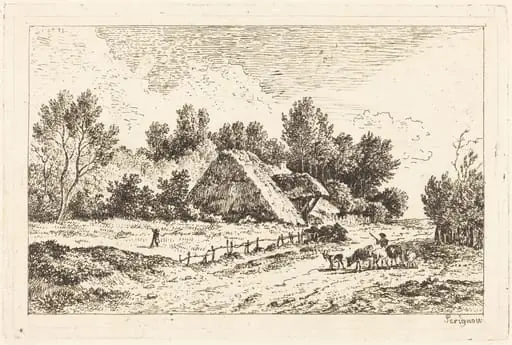
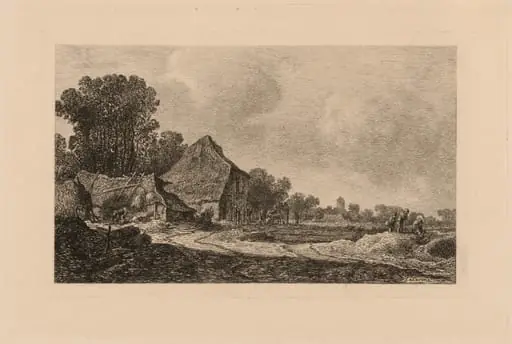
The scene portrays two small, thatched cottages nestled in a quiet Burgundian landscape. Smoke drifts from their chimneys, and two figures rest near one dwelling, suggesting daily labor or respite. The absence of grandeur or drama underscores a quiet dignity in peasant life. Jacque’s focus on ordinary moments reflects a broader 19th-century shift toward documenting rural existence with sincerity.
Technique & Style
Jacque employed fine, expressive lines to render textures—rough thatch, uneven earth, sparse vegetation—with precision yet spontaneity. His background in engraving informed a controlled hand, allowing subtle gradations of light and shadow. The sketchlike quality avoids overfinishing, preserving a sense of immediacy. The composition is deliberately uncluttered, drawing attention to the harmony between structure and terrain.
History & Provenance
Created during Jacque’s mature period, the print emerged from his sustained study of rural France, particularly the Burgundy region. It was likely produced as part of a series of etchings circulated among collectors interested in peasant life. While specific ownership records are sparse, its inclusion in institutional collections confirms its recognition within 19th-century print circles.
Context
Jacque worked alongside Jean-François Millet and other Barbizon artists who rejected academic idealism in favor of direct observation. *Burgundian Cottages* aligns with this movement’s ethos, emerging amid rising urbanization and a cultural fascination with vanishing rural traditions. The print contributes to a broader visual archive of French countryside life, distinct from romanticized or picturesque depictions.
Legacy
Jacque’s prints, including this one, influenced later generations of realist and regionalist artists by demonstrating how technical precision could serve quiet, unembellished observation. His work helped legitimize landscape and peasant subjects in printmaking, expanding the medium beyond illustration into expressive art. The piece remains a quiet testament to the value of everyday rural scenes.
Artist & collection
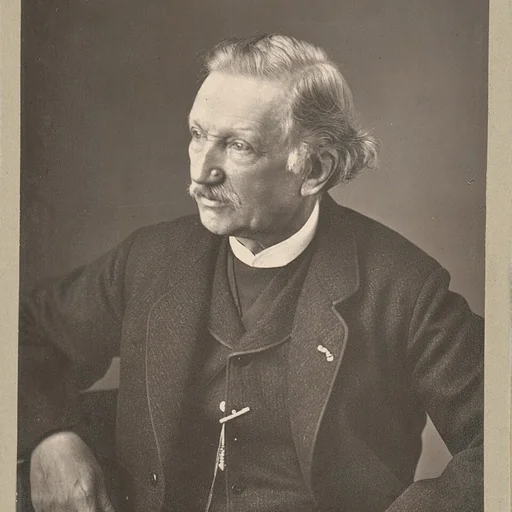
Artist
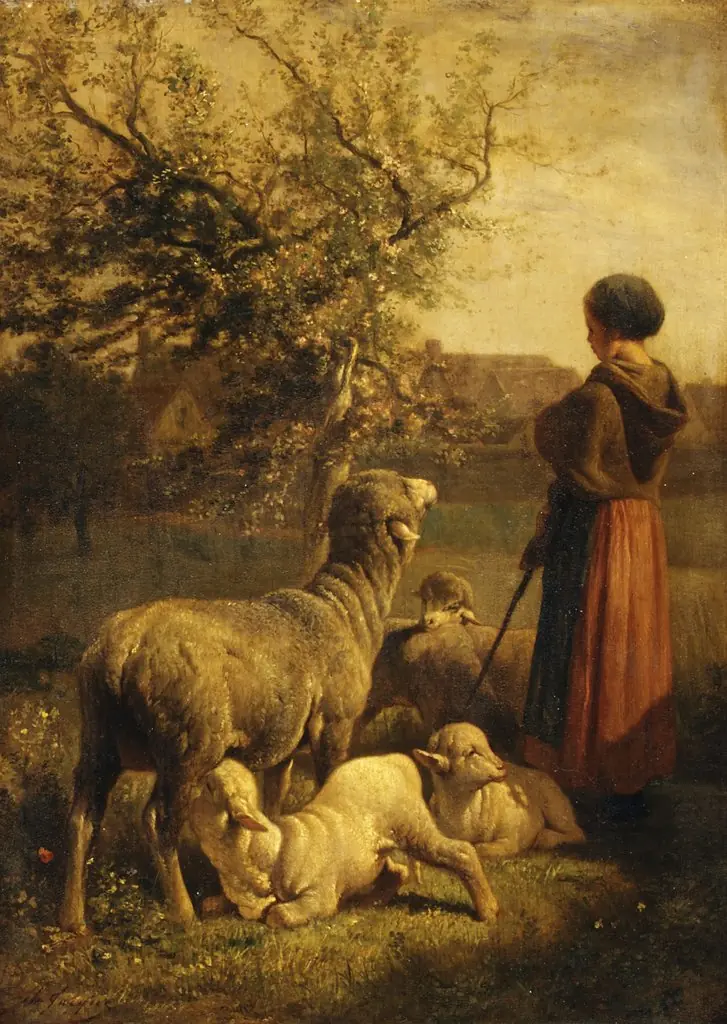
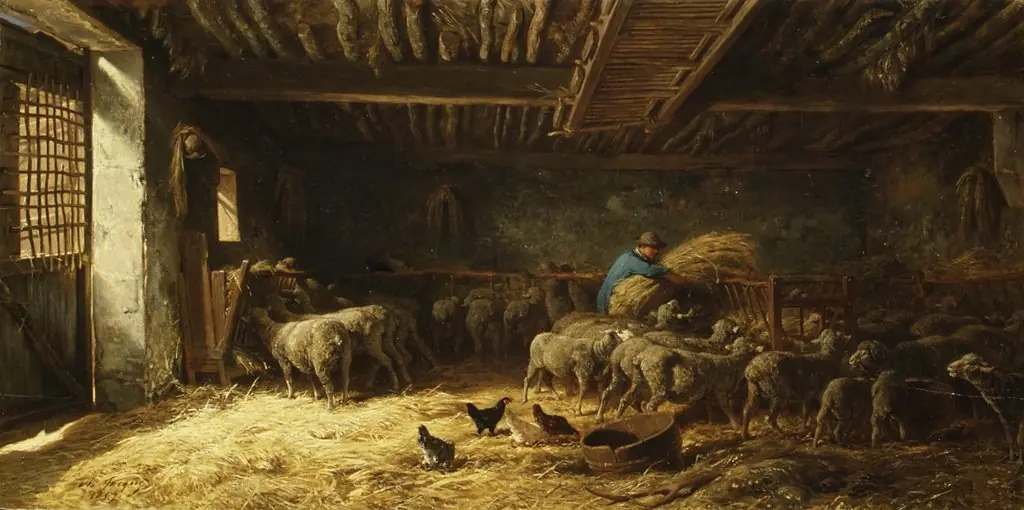
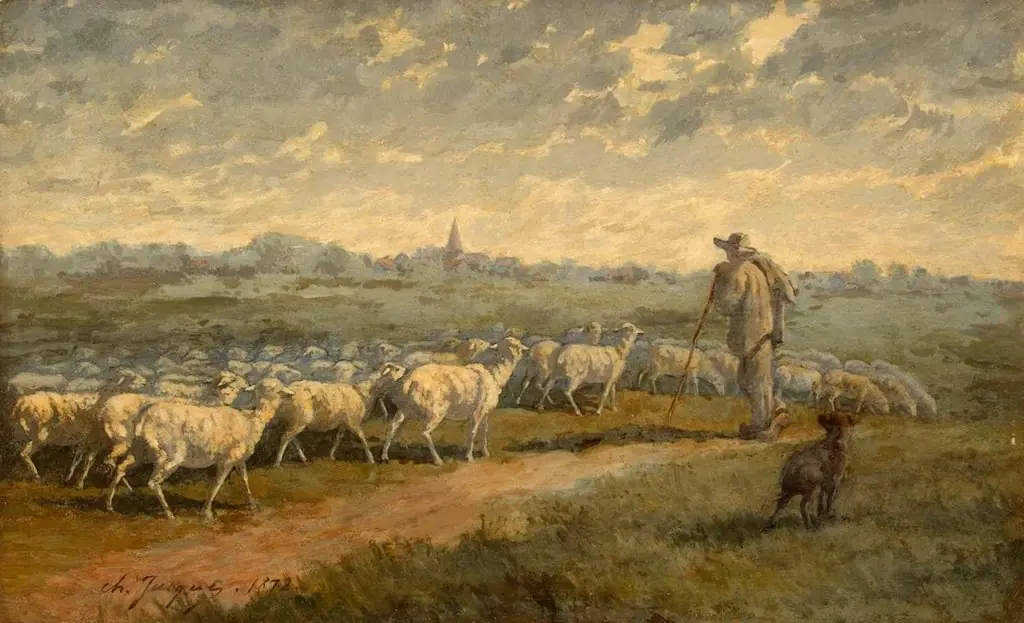
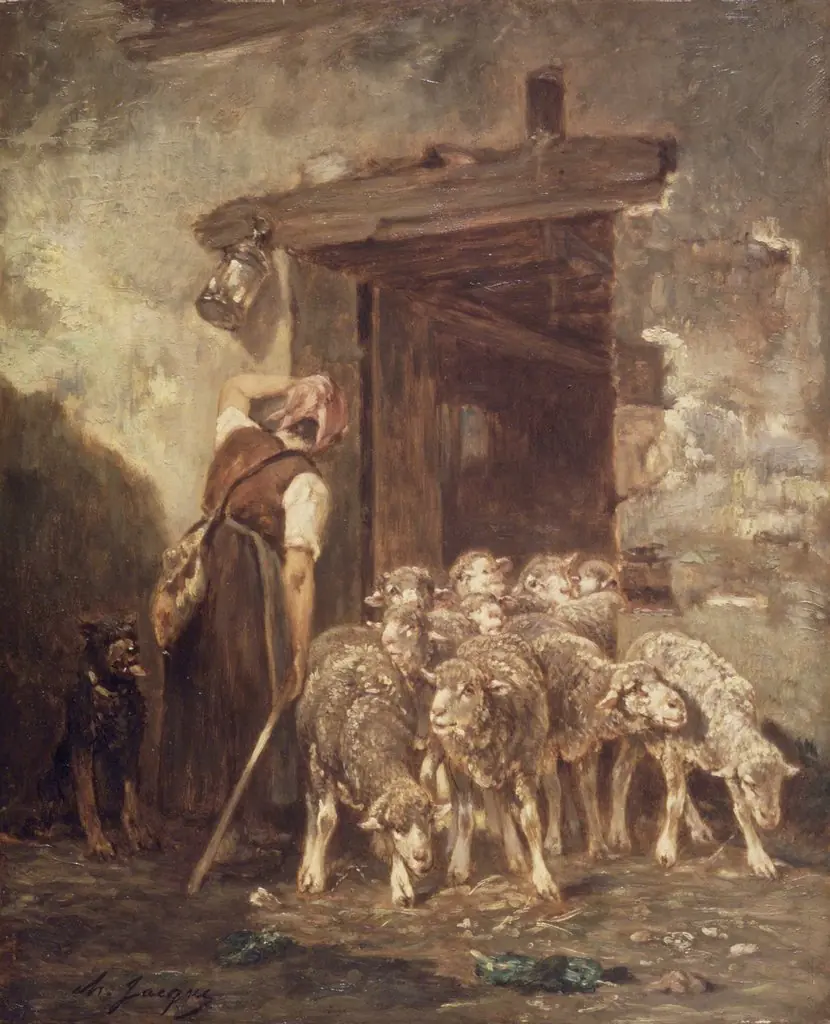
Charles-Émile Jacque (23 May 1813 – 7 May 1894) was a French painter of Pastoralism and engraver who was, with Jean-François Millet, part of the Barbizon School. He first learned to engrave maps when he spent seven years in the French Army.