Artwork
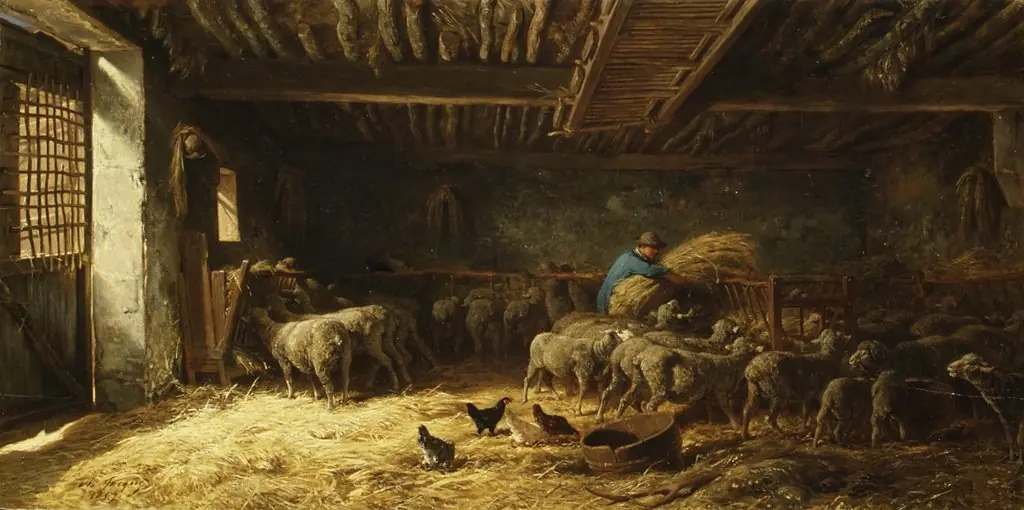
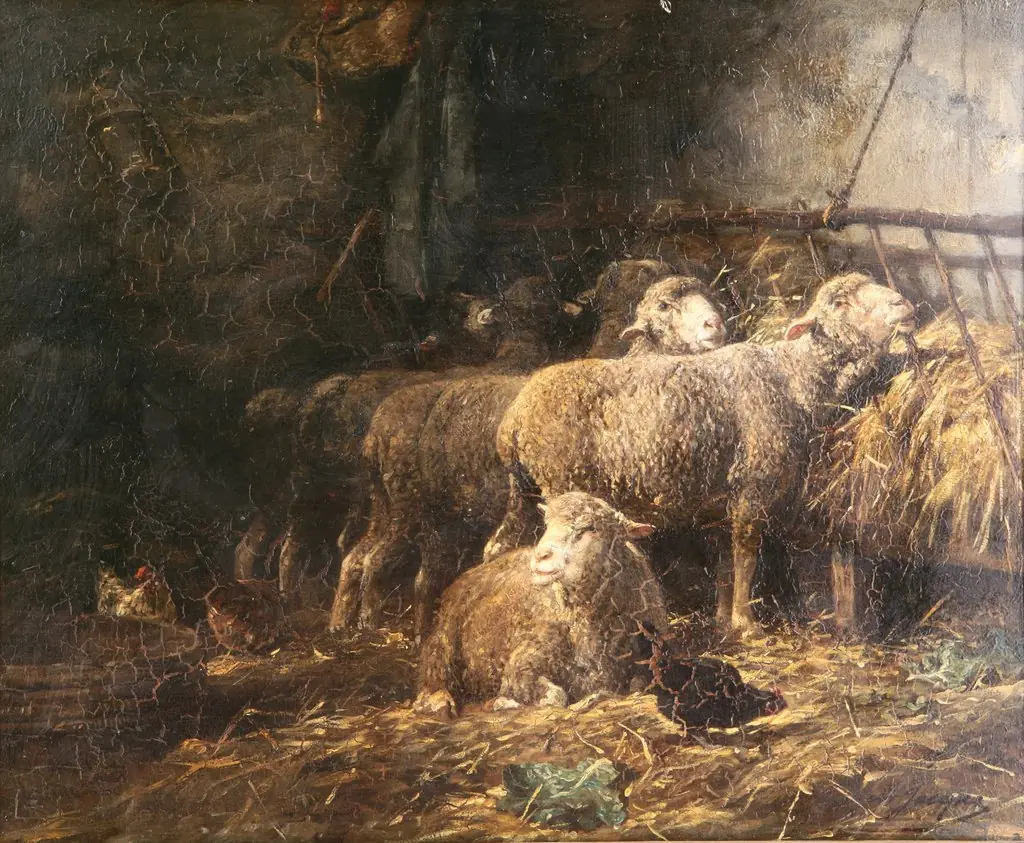
Sheep and Chickens in a Barn
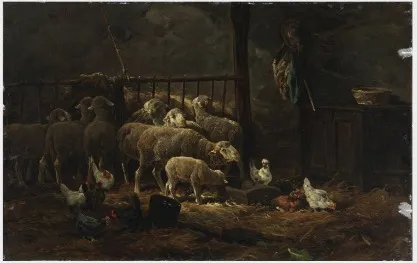
Sheep and Chickens in a Barn is an oil painting by the Barbizon school artist Charles Jacque. It dates from 1867 and is held in the collection of the National Gallery of Ireland.
About this work
Overview
Jacque, trained as an engraver during his military service, brought precision to his brushwork, favoring intimate observations over grand narratives.
Charles Jacque’s 1867 oil painting *Sheep and Chickens in a Barn* captures a quiet moment in rural French farm life. Rendered in warm, muted tones, the scene presents livestock within a dimly lit wooden structure, emphasizing the simplicity and stillness of agricultural routine. Jacque, trained as an engraver during his military service, brought precision to his brushwork, favoring intimate observations over grand narratives.
Subject & Meaning
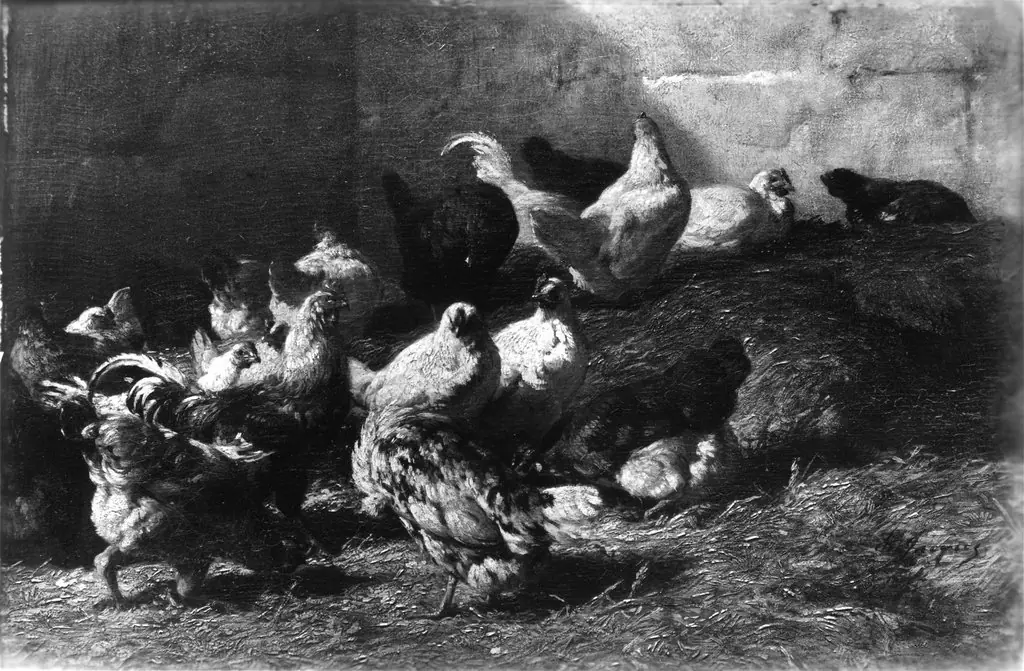
The painting portrays sheep clustered near the center and chickens scattering across the floor, engaged in mundane, natural behaviors. There is no human presence, yet the space feels inhabited by quiet labor. The composition suggests harmony between animals and their environment, reflecting a broader 19th-century interest in rural authenticity and the dignity of everyday farm existence.
Technique & Style
Jacque employed layered oil paint to build texture in the wool of the sheep and the rough grain of the barn wood. Subtle shifts in light, falling from an unseen entrance, model forms without dramatic contrast. His background in engraving informs the careful delineation of details—feathers, straw, and fence slats—while the palette remains restrained, avoiding sentimentality in favor of observed truth.
History & Provenance
Completed in 1867, the painting entered the collection of the National Gallery of Ireland at an unknown date, likely through acquisition or donation in the late 19th or early 20th century. Jacque’s reputation as a Barbizon-associated artist ensured his works were collected by institutions interested in realist rural themes, though this particular piece remained relatively unpublicized compared to his engravings.
Context
In mid-19th-century France, artists increasingly turned from historical or mythological subjects to depict ordinary rural life. Jacque, alongside peers like Millet and Rousseau, contributed to this shift by focusing on animals and farmsteads with unembellished attention. His work aligned with broader social and aesthetic movements that valued the land and its keepers as worthy of artistic representation.
Legacy
Though less celebrated than some of his contemporaries, Jacque’s focus on livestock and barn interiors influenced later realist and regionalist painters. His ability to convey atmosphere through subtle light and quiet composition offered a model for depicting domestic animal life without anthropomorphism. The painting remains a quiet testament to the enduring appeal of unadorned rural scenes in European art.
Artist & collection
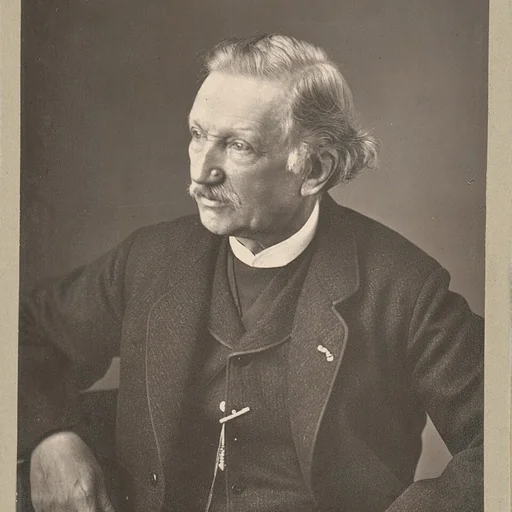
Artist
Charles-Émile Jacque (23 May 1813 – 7 May 1894) was a French painter of Pastoralism and engraver who was, with Jean-François Millet, part of the Barbizon School. He first learned to engrave maps when he spent seven years in the French Army.