Artwork
Chickens
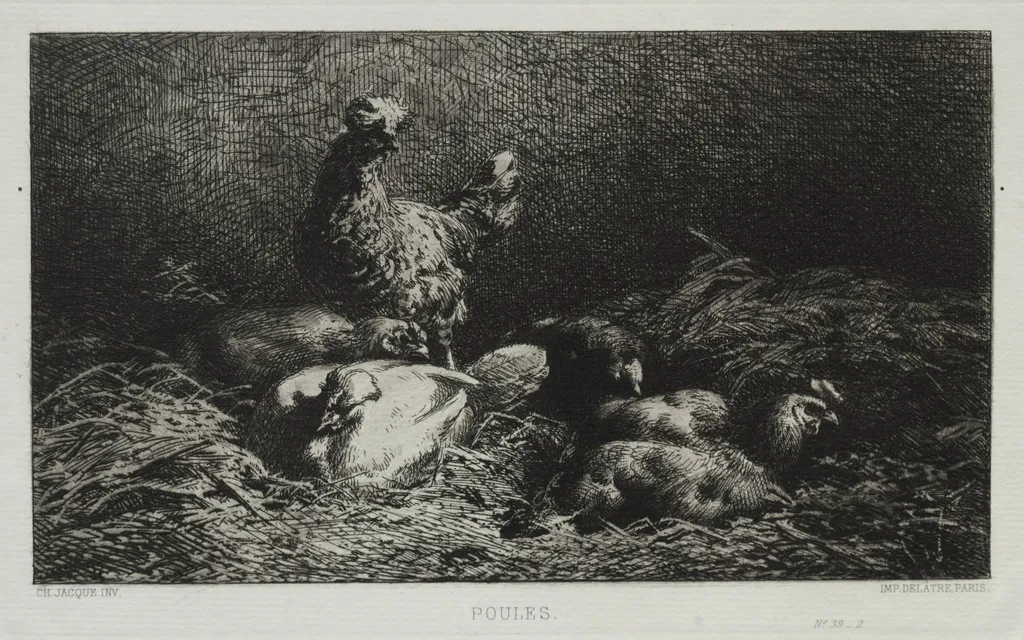
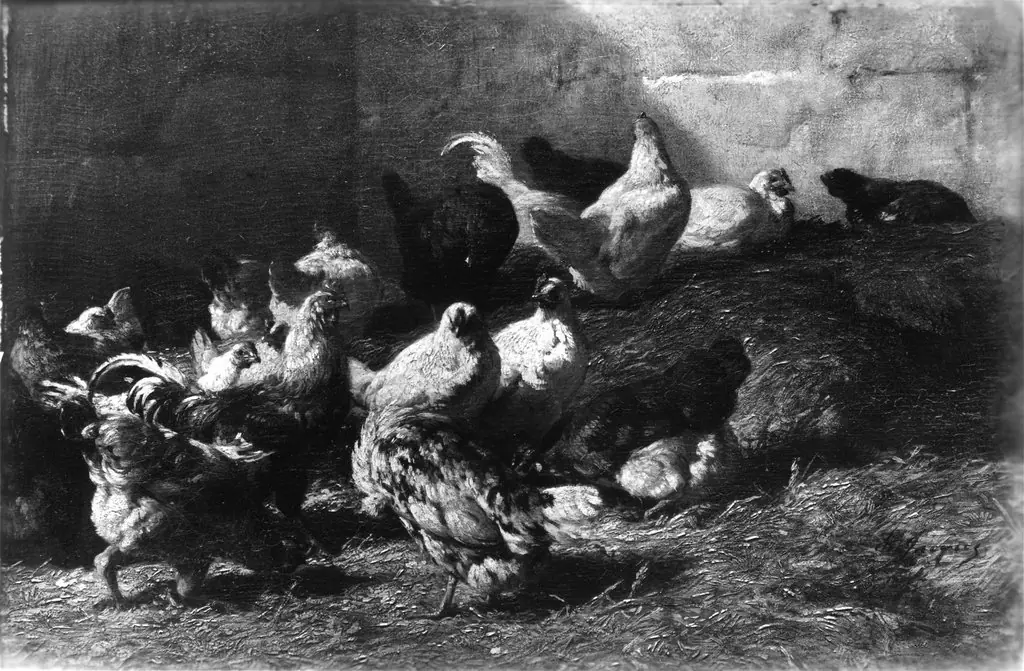
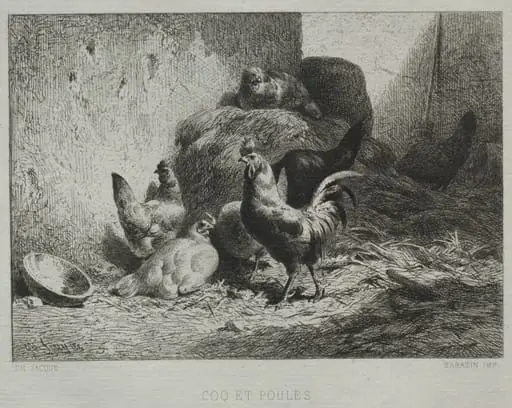
Chickens is a print by the Impressionist artist Charles Jacque. It dates from 1867 and is held in the collection of the Cleveland Museum of Art.
About this work
Overview
Chickens, a print by Charles-Émile Jacque, dates to 1867 and exemplifies the Barbizon School’s emphasis on rural themes. Jacque, a French painter and engraver, often depicted pastoral scenes, aligning with the movement’s focus on everyday country life.
Subject & Meaning
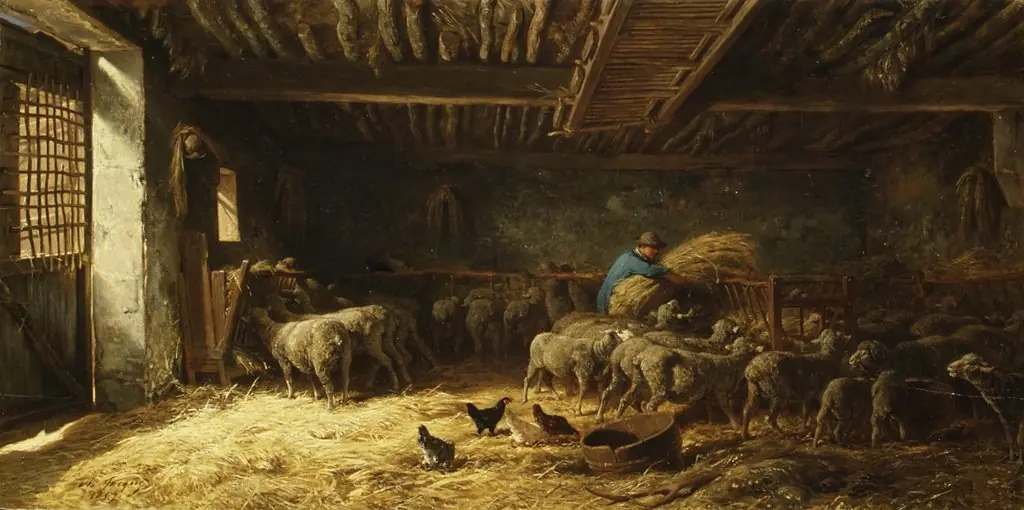
The print portrays a serene farmyard scene with chickens, including a hen tending to her chicks. This composition reflects Jacque’s affection for animals and his interest in capturing the simplicity of rural life in 19th-century France.
Technique & Style
The work features warm, realistic coloring and noticeable impasto, characterized by thick, visible brushstrokes that add texture, especially evident in the depiction of the chickens’ soft feathers and the play of light upon them.
History & Provenance
Created in 1867, Chickens is associated with Jacque’s work within the Barbizon School, a movement he was part of alongside notable artists like Jean-François Millet. Specific provenance details are not provided.
Context
Chickens situates itself within the broader Barbizon School movement, which sought to highlight the beauty and simplicity of rural life and landscapes in France during the 19th century, contrasting with the urbanization of the time.
Legacy
While specific legacy details of Chickens are not highlighted, Jacque’s contributions to the Barbizon School have endured, influencing subsequent depictions of pastoral life in European art.
Own this work as a print
Artist & collection
Artist
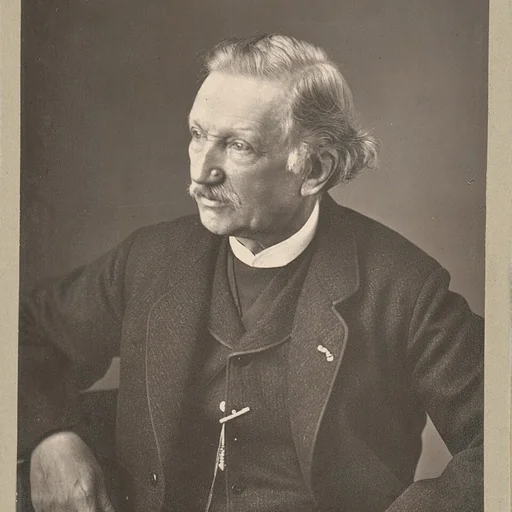
Charles-Émile Jacque (23 May 1813 – 7 May 1894) was a French painter of Pastoralism and engraver who was, with Jean-François Millet, part of the Barbizon School. He first learned to engrave maps when he spent seven years in the French Army.