Artwork
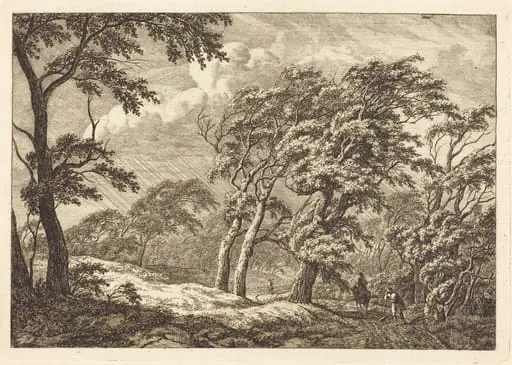
Travelers on a Road in a Wooded Landscape
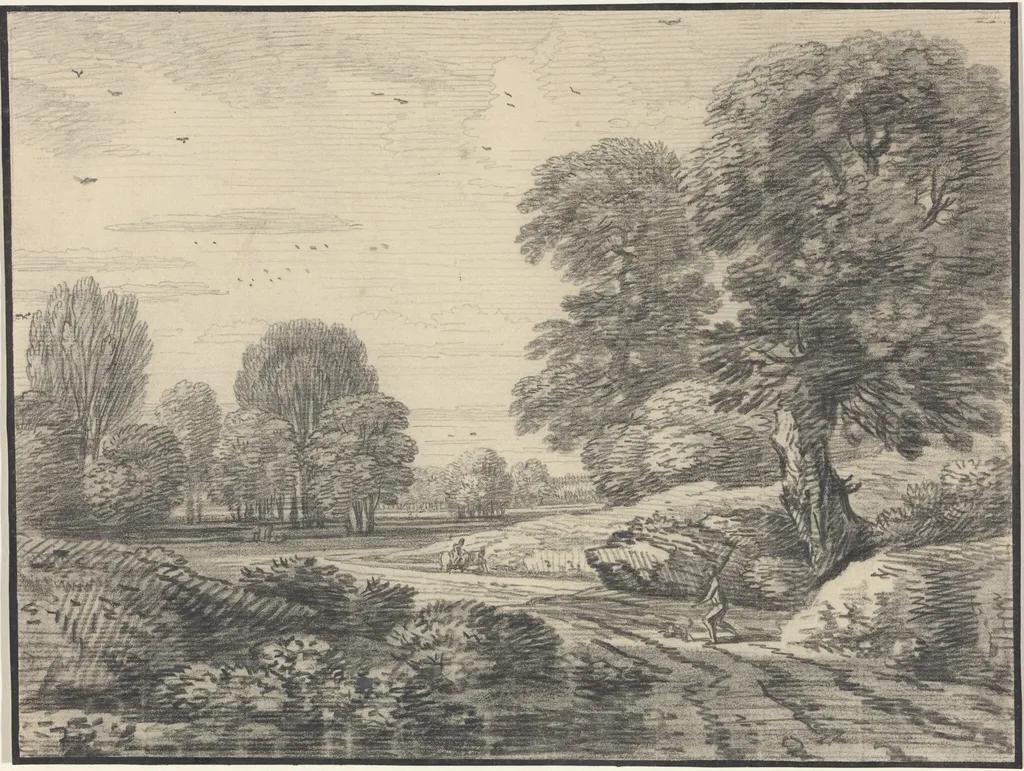
Travelers on a Road in a Wooded Landscape is a chalk drawing by the Baroque artist Jean Baptiste Claude Chatelain. It dates from 1740 and is held in the collection of the National Gallery of Art.
About this work
Overview
This drawing, dated around 1740, is a landscape study by Jean Baptiste Claude Chatelain, executed in black chalk and graphite on laid paper.
This drawing, dated around 1740, is a landscape study by Jean Baptiste Claude Chatelain, executed in black chalk and graphite on laid paper. It depicts a rural path winding through a dense woodland, rendered with careful attention to naturalistic detail. The composition emphasizes quiet movement and spatial depth, avoiding theatrical elements in favor of subdued observation. The medium allows for subtle tonal gradations that define form without bold contrast.
Subject & Meaning
A handful of small figures traverse the winding path, their scale emphasizing the vastness of the surrounding trees and terrain. The scene conveys no narrative or symbolic intent; instead, it captures a moment of ordinary passage through nature. The isolation of the travelers and the enclosing foliage suggest contemplation of solitude within the natural world, reflecting an 18th-century interest in quiet, unidealized landscapes.
Technique & Style
Chatelain employed layered black chalk and graphite to model the solidity of tree trunks and the texture of the ground. Soft, directional shading creates volume and receding space, while delicate hatching suggests dappled light beneath the canopy. The lines are controlled but not rigid, allowing the drawing to feel spontaneous. The absence of strong highlights or dramatic shadows distinguishes it from Baroque conventions, favoring quiet realism.
History & Provenance
The drawing is attributed to Chatelain based on stylistic analysis and period documentation, though its early ownership remains undocumented. It likely originated as a preparatory study or independent sketch from the artist’s travels in rural France. Its survival in good condition suggests it was preserved by a collector or studio associate, possibly as an example of observational draftsmanship.
Context
Created during the early Rococo period, the work diverges from the ornamental and mythological themes common in French art of the time. Instead, it aligns with a growing trend among draftsmen to record natural scenes with fidelity. Such studies reflected broader Enlightenment values—observation, modesty, and the quiet dignity of everyday experience—offering an alternative to grand historical or allegorical subjects.
Legacy
This drawing contributes to an understated tradition of French landscape drawing that prioritized direct observation over idealization. While Chatelain is not widely known today, works like this illustrate how artists of the period cultivated a personal, intimate mode of seeing nature. Its preservation offers insight into the development of landscape as a subject worthy of independent artistic attention.
Own this work as a print
Artist & collection


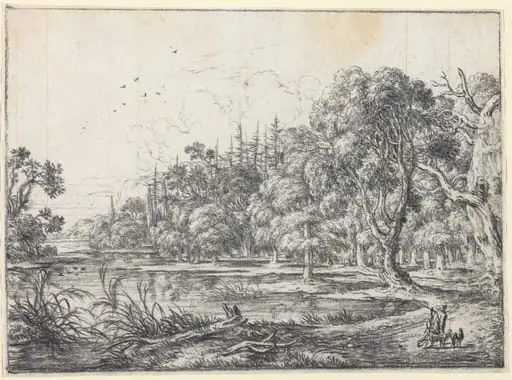 A Woodland Pond with a Hunter
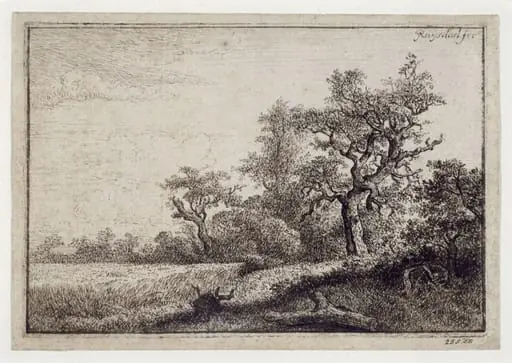 The Wheatfield. After Jacob Ruysdael
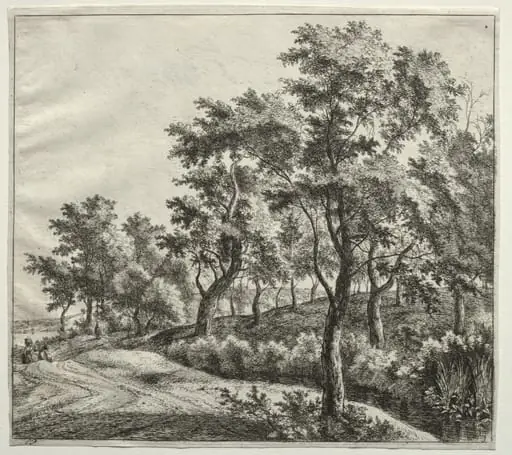 The Narrow Stream
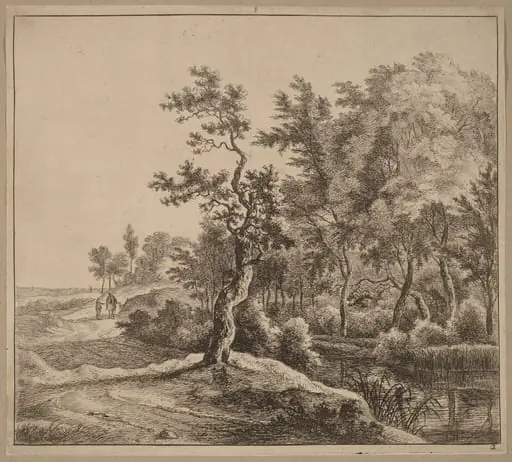 Landscape with a Winding Road
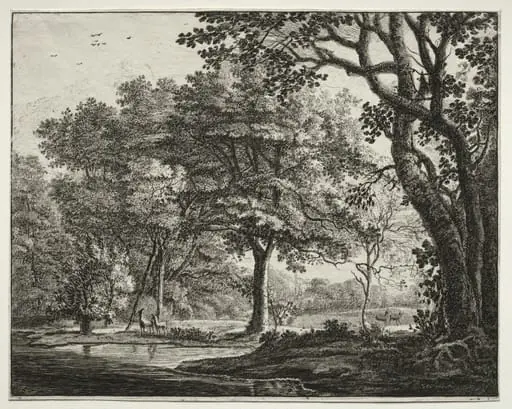 Six views in the Wood of the Hague: Plate 6, Two Deer
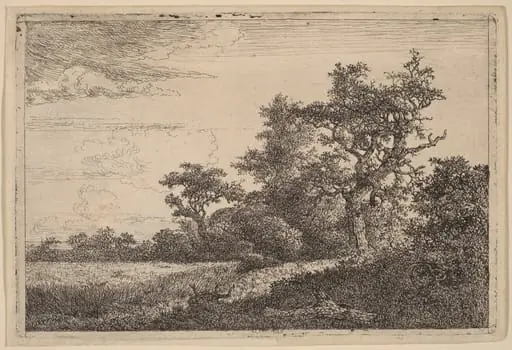 Grain Field at the Edge of a Wood (Corn Field)
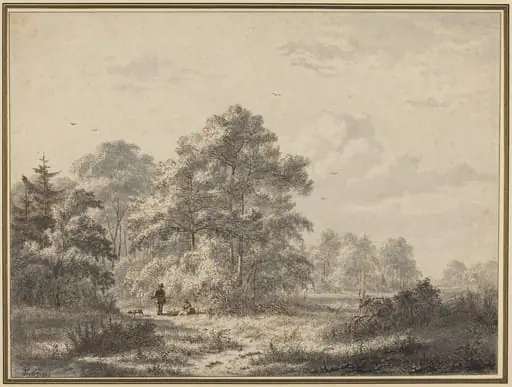 Hunters at the Edge of the Woods
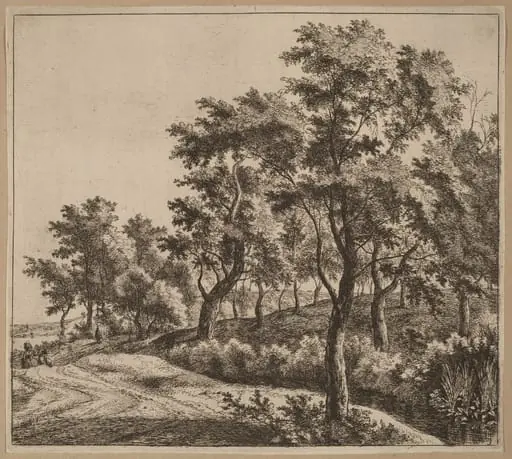 Landscape with a Stream
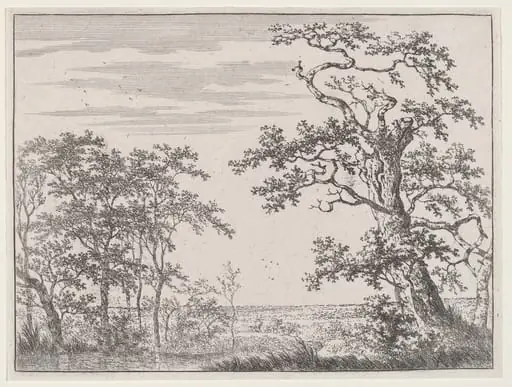 Landscape with a Stream and an Ancient Tree
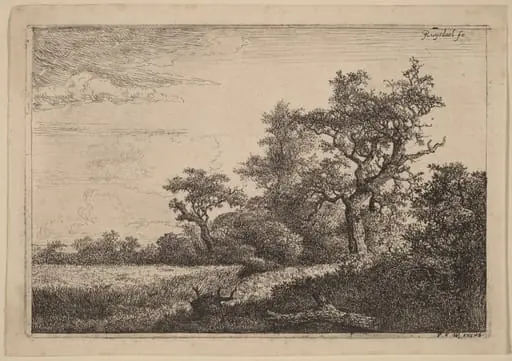 Grain Field at the Edge of a Wood (Corn Field)
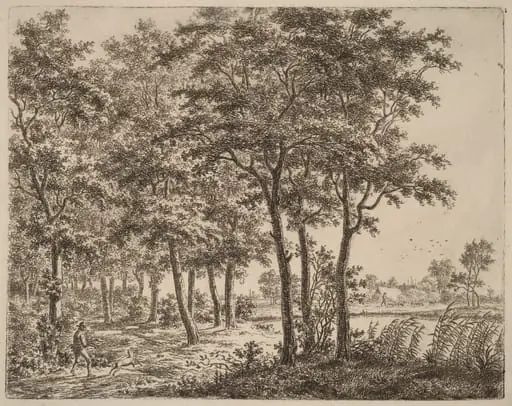 Landscape with a Peasant Carrying Firewood
 Travelers on a Forest Road in a Storm