Artwork
Hunters at the Edge of the Woods
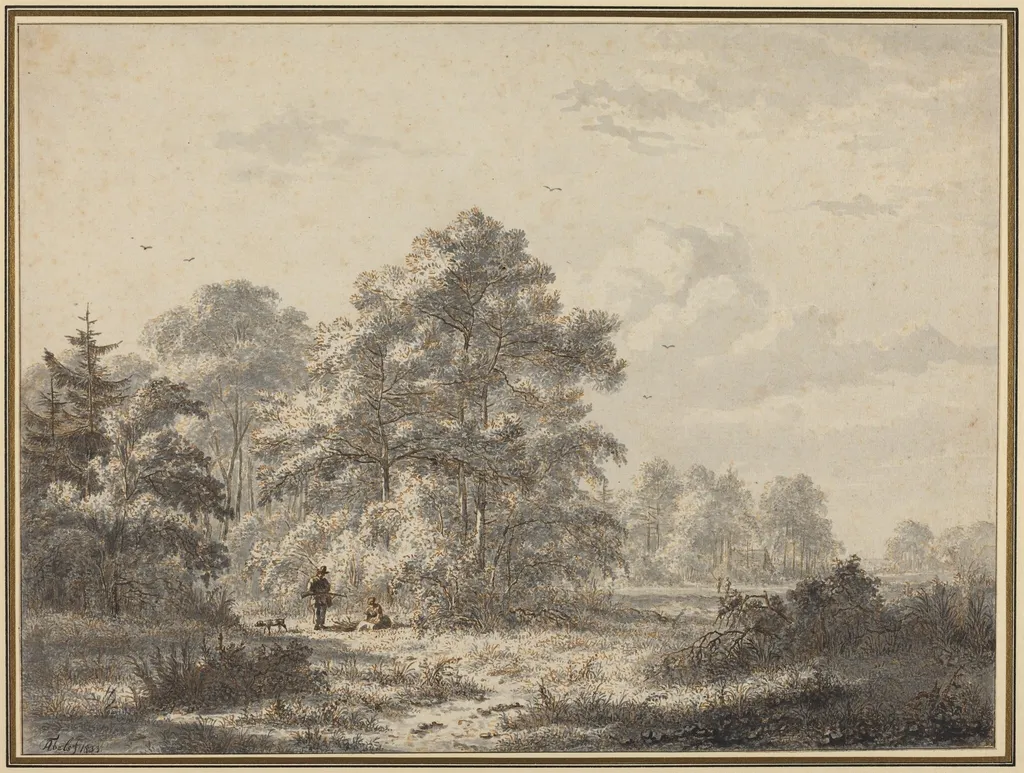
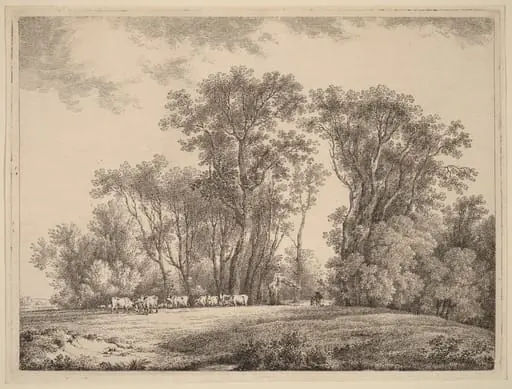
Hunters at the Edge of the Woods is an ink drawing by the Romanticist artist Jacobus Theodorus Abels. It dates from 1833 and is held in the collection of the National Gallery of Art.
About this work
Overview
Hunters at the Edge of the Woods is a drawing by Jacobus Theodorus Abels, dated to 1833. Executed in pen and brown ink with gray and black wash over black chalk, it showcases the artist's skill in combining media.
Subject & Meaning
The subject of the drawing depicts hunters positioned at the boundary of a wooded area, suggesting a moment of pause or transition. The composition may imply a narrative of preparation, pursuit, or reflection, though the exact meaning depends on the viewer's interpretation.
Technique & Style
Abels' technique in this work involves layering black chalk with pen and ink, enhanced by gray and black washes. This multi-layered approach achieves depth and texture, characteristic of 19th-century European drawing practices that emphasized detail and atmospheric effect.
History & Provenance
Created in 1833, the drawing's early history and ownership before its current location are not detailed here. For specific provenance, further research into archival records or the holding institution's documentation would be necessary.
Context
Produced during the 19th century, Hunters at the Edge of the Woods reflects the period's interest in natural landscapes and outdoor activities. It may relate to broader themes of Romanticism or the Dutch tradition of meticulous, observant artistry.
Legacy
The significance of Hunters at the Edge of the Woods lies in its representation of Abels' artistic technique and the 19th-century drawing traditions. Its impact on later artists or its presence in significant exhibitions would further illuminate its legacy, though such details are not provided here.
Own this work as a print
Artist & collection


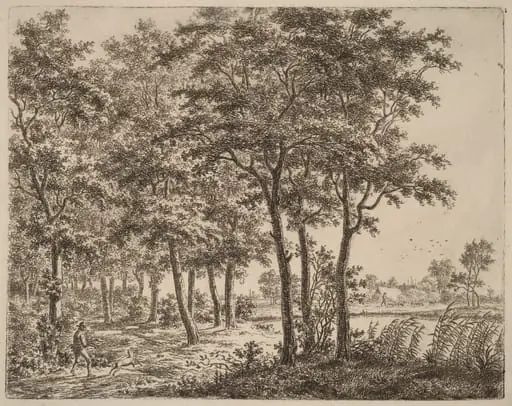 Landscape with a Peasant Carrying Firewood
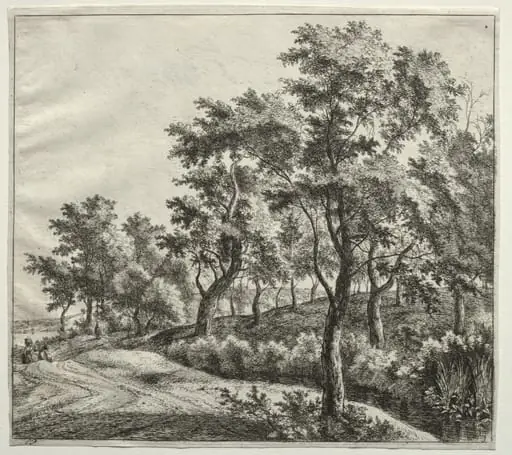 The Narrow Stream
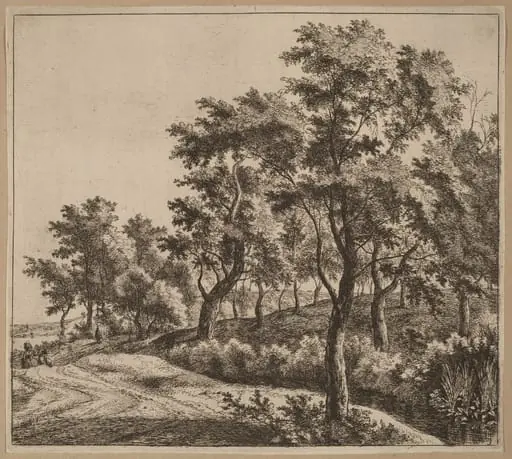 Landscape with a Stream
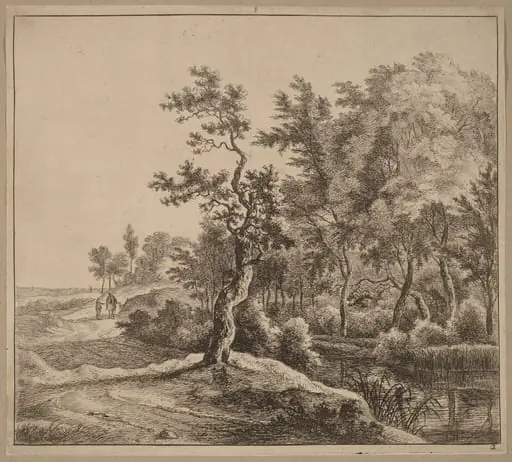 Landscape with a Winding Road
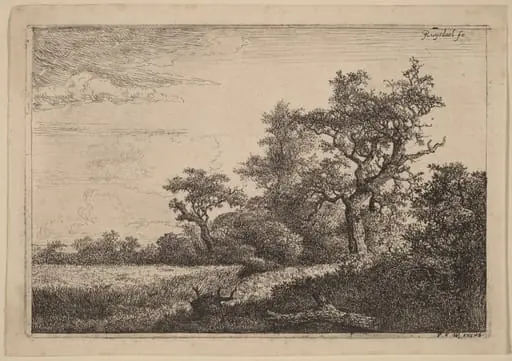 Grain Field at the Edge of a Wood (Corn Field)
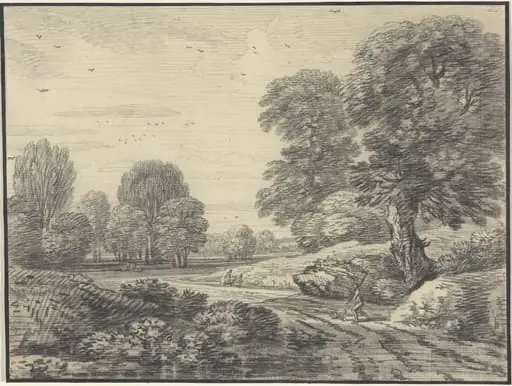 Travelers on a Road in a Wooded Landscape
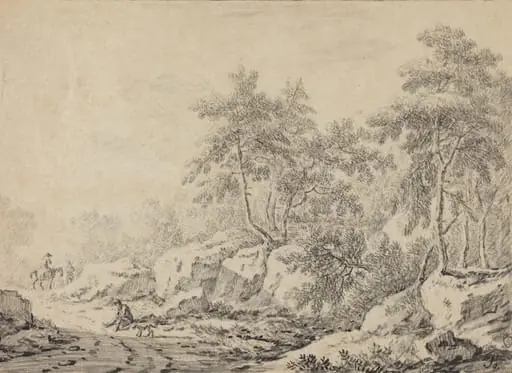 Travelers in a Rocky Wood
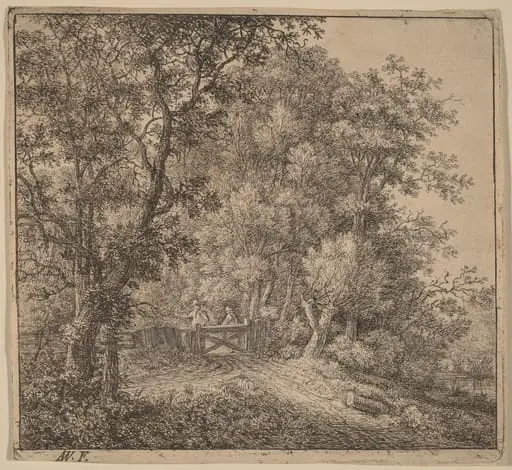 Two Men at a Gate
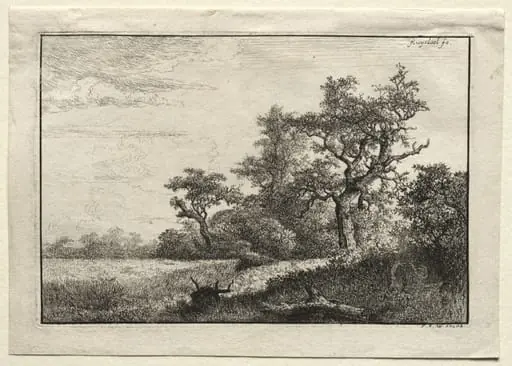 The Wheat Field
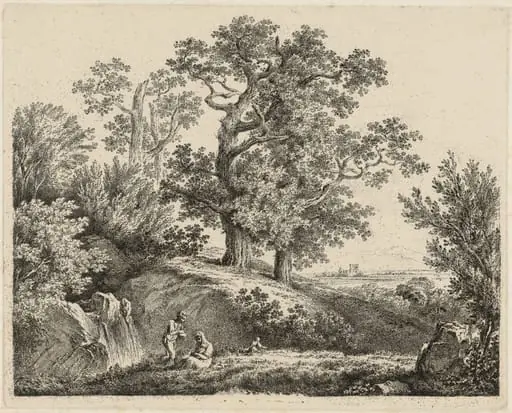 Landscape with a Waterfall and a Resting Family
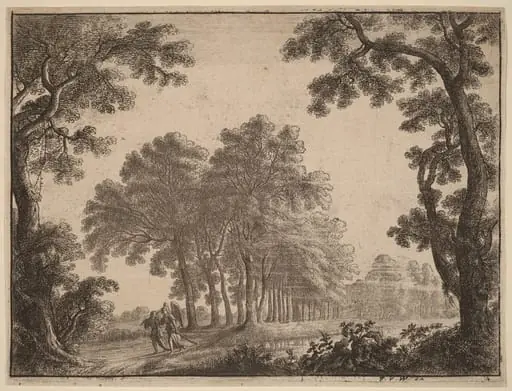 Landscape with Tobias and the Angel
 A Meadow with Cattle at the Edge of a Wood