Artwork
Paintings after Ancient Masters: A Bird and Peach-Blossom Branch
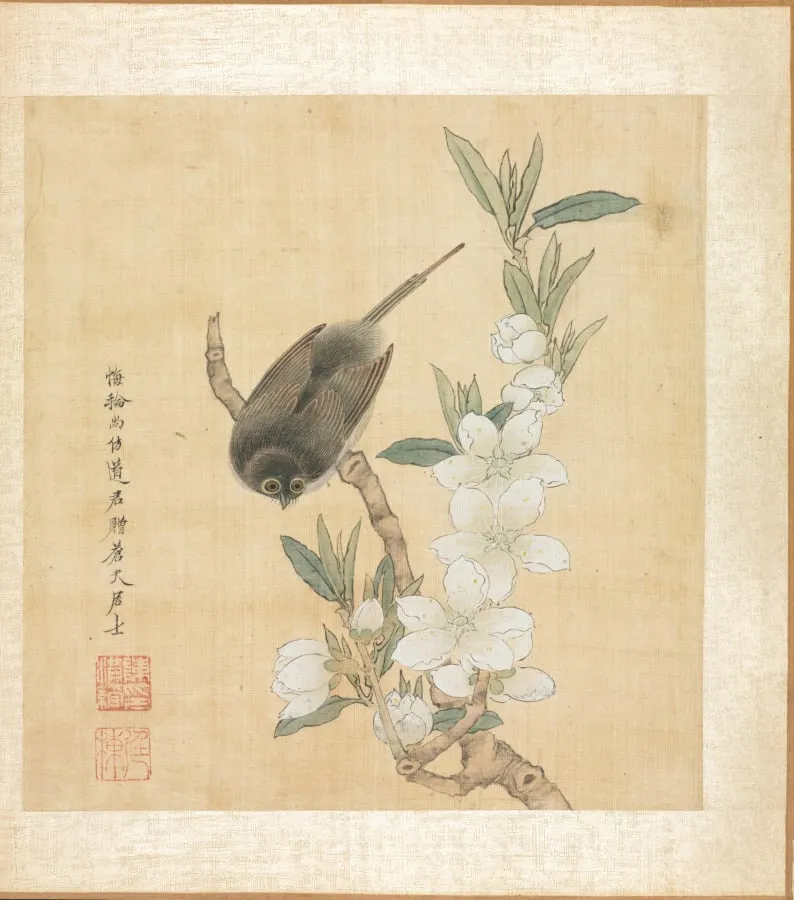
Paintings after Ancient Masters: A Bird and Peach-Blossom Branch is an unspecified painting by the Chinese Orthodox School artist Chen Hongshou. It dates from 1625 and is held in the collection of the Cleveland Museum of Art.
About this work
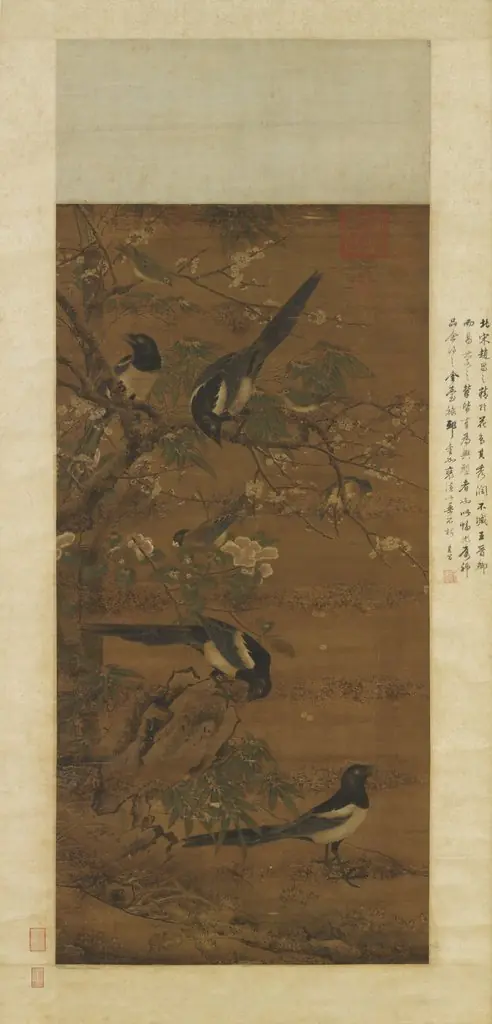
A delicate bird perches on a peach-blossom branch. Pink petals frame its curved beak and soft feathers. Chen Hongshou painted it in ink that bleeds slightly, giving the petals a fuzzy look.
This isn’t just a bird picture. The bird’s head tilts like it’s listening. It feels alive, but also stiff—like a careful copy of something old.
Try looking up Chen Hongshou (Chinese, 1598/99–1652) next.
Overview
Chen Hongshou’s double-album of twenty small paintings includes floral, figural, and landscape subjects, created during his final years.
Chen Hongshou’s double-album of twenty small paintings includes floral, figural, and landscape subjects, created during his final years. Among them is a rare depiction of a woman, unusual for his later output. The works are compact in scale, echoing the intimate aesthetics of scholar’s rocks and miniature gardens. Their restrained size and deliberate archaism reflect a broader cultural withdrawal following the fall of the Ming dynasty.
Subject & Meaning
The bird and peach-blossom branch depicts a quiet, observant creature perched amid fragile blooms. The bird’s tilted head suggests attentiveness, yet its posture carries a rigid stillness, as if modeled after older prototypes. This duality—life held in formal restraint—mirrors the psychological tension of Ming loyalists who preserved cultural identity under political suppression, finding dignity in diminished circumstances.
Technique & Style
Chen rendered the petals and feathers with ink that subtly bleeds at the edges, creating a soft, blurred contour that avoids sharp definition. Lines are precise yet restrained, evoking archaic models without direct imitation. The composition is sparse, emphasizing negative space and delicate detail, aligning with his late style: refined, self-consciously antique, and emotionally restrained yet deeply intentional.
History & Provenance
Created between the 1640s and Chen’s death in 1652, the album emerged during a period of dynastic collapse and personal displacement. As a Ming loyalist, Chen withdrew from public life, focusing on small-scale works that preserved classical forms. The album’s survival suggests it was kept privately, likely among fellow scholars who shared his cultural resistance, avoiding imperial patronage.
Context
In the wake of the Ming collapse, many scholar-officials retreated from political engagement, turning to art as a means of preserving moral and aesthetic values. Chen’s miniaturized compositions reflect this shift: they are not escapes, but acts of quiet defiance. The emphasis on antiquated forms and intimate scale became a visual language for sustaining identity amid loss.
Legacy
Chen’s late works influenced later Qing-era artists who sought to reconcile tradition with personal expression under foreign rule. His ability to infuse archaic forms with psychological depth set a precedent for introspective painting. The bird and peach branch, though seemingly modest, became emblematic of a generation that found meaning in restraint, precision, and the endurance of cultural memory.
Artist & collection


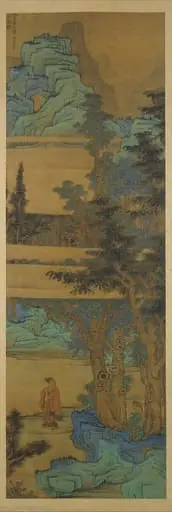 明 陳洪綬 樹下高士圖 軸|Scholar-recluse in blue-green landscape
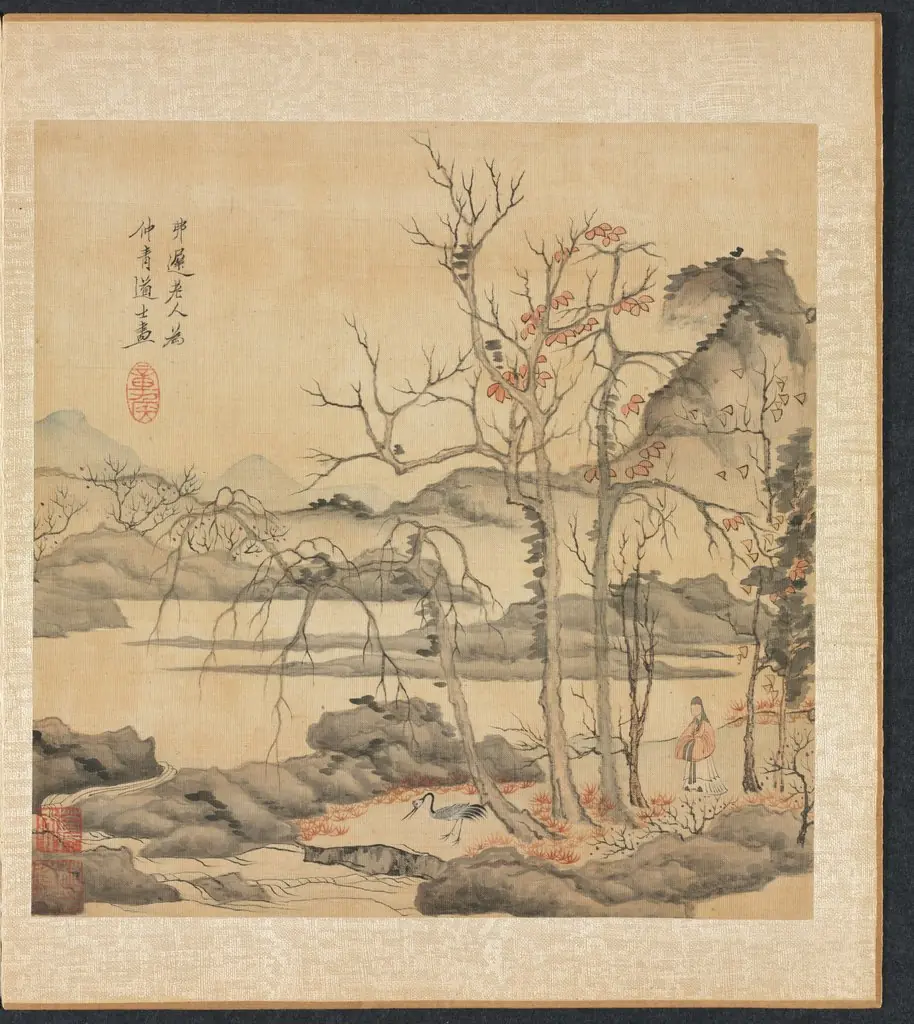 Paintings after Ancient Masters: Daoist and Crane in Autumn Landscape
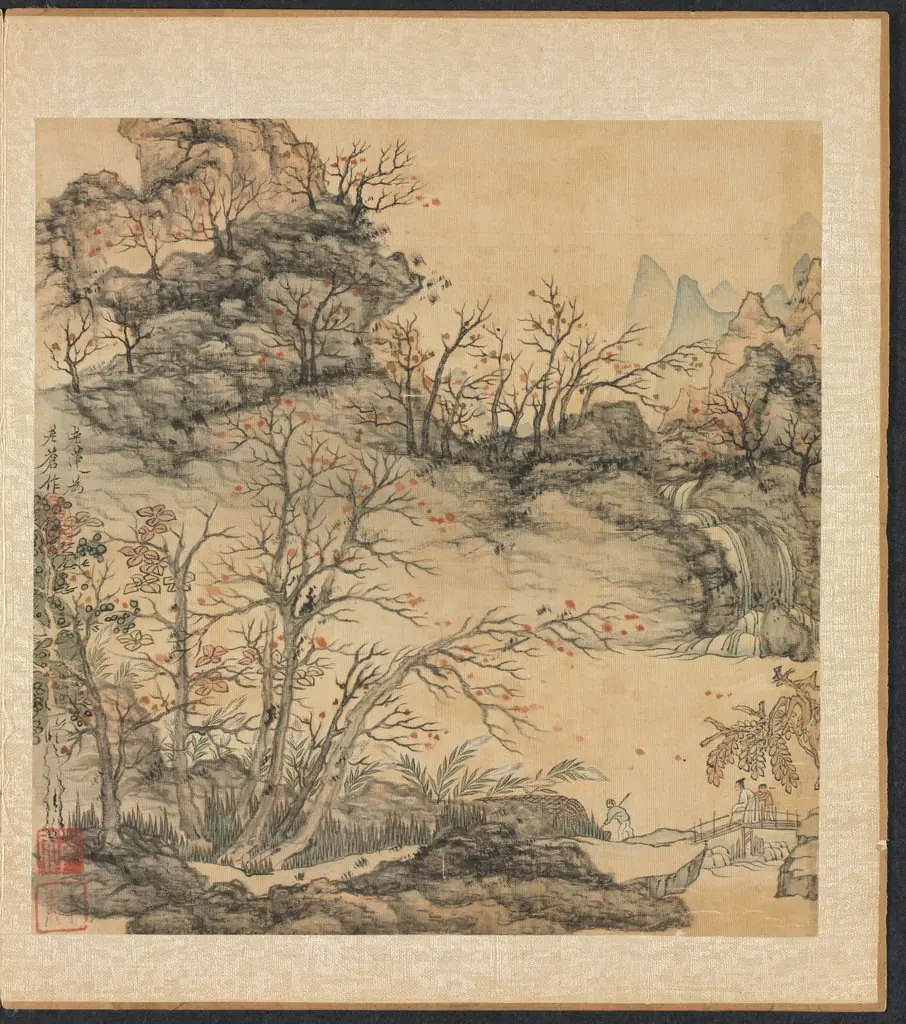 Paintings after Ancient Masters: Autumn Landscape
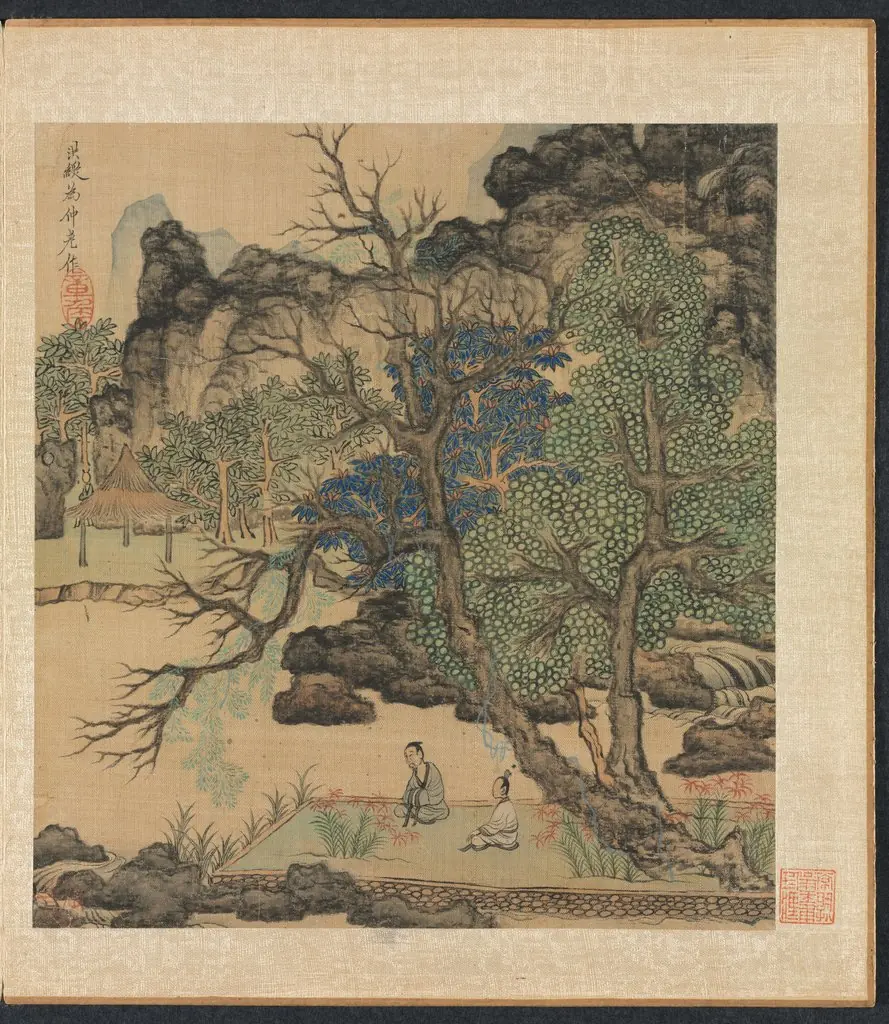 Paintings after Ancient Masters: Scholars in a Garden
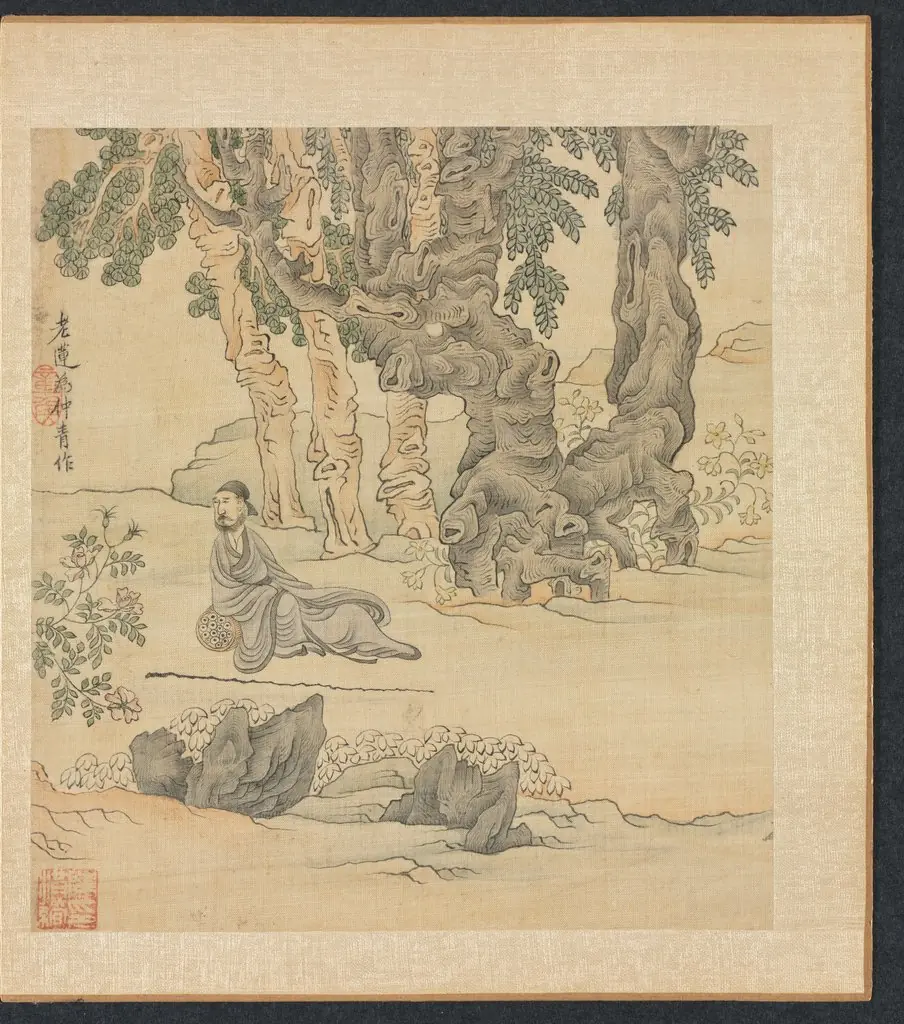 Paintings after Ancient Masters: Portrait of Zhongqing in a Landscape
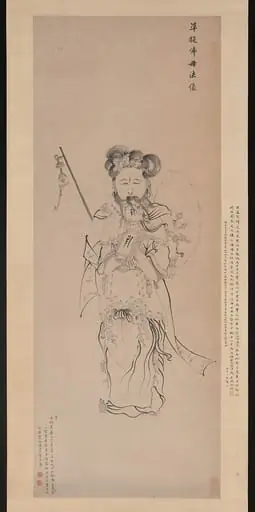 明 陳洪綬 準提佛母法像圖 軸|Bodhisattva Guanyin in the Form of the Buddha Mother
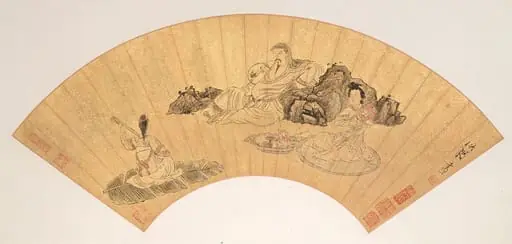 明 陳洪綬 山水花鳥人物圖 扇冊|Landscapes and Flowers
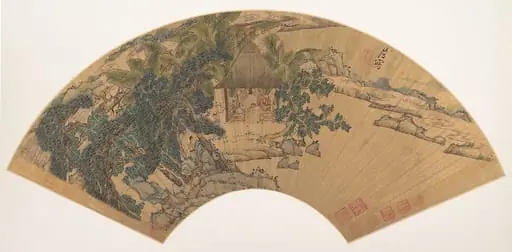 明 陳洪綬 山水圖 扇|Landscape
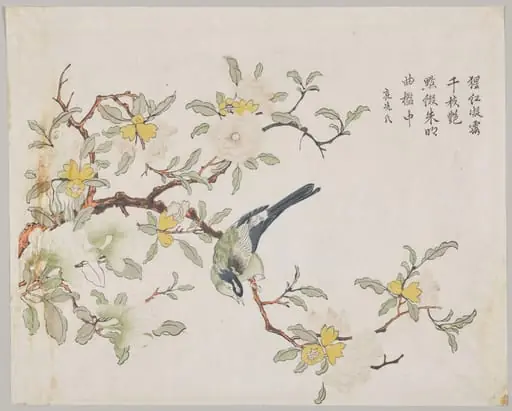 Bird on Pomegranate
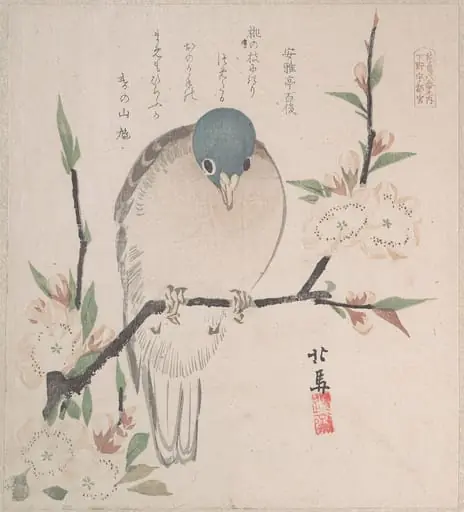 摺物帖 『春雨集』 『花鳥六番之内 下野宇都宮』 桃に山鳩|Spring Rain Collection (Harusame shū), vol. 3: Mountain Dove and Peach Flowers
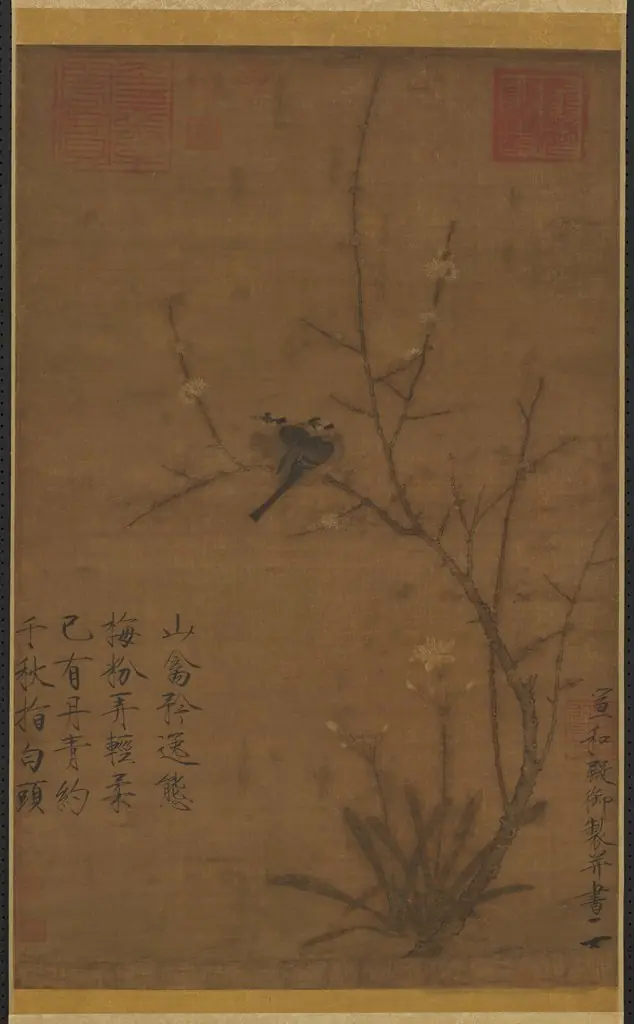 宋徽宗蠟梅山禽 軸
 Untitled
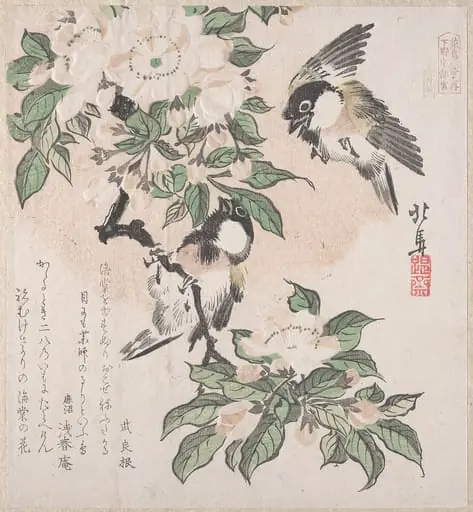 摺物帖 『春雨集』 『花鳥六番之内 下野宇都宮』 海棠に山雀|Spring Rain Collection (Harusame shū), vol. 3: Marsh-tits and Crab Apple Flowers
 Untitled
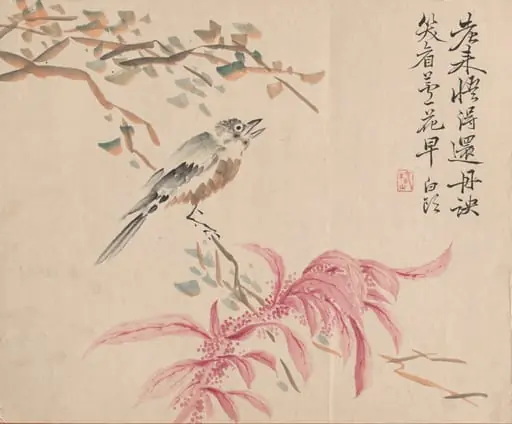 Strawberry Spinach and Nightingale
 Four Magpies