Artwork
明/清 陳洪綬 山水人物花卉圖 冊|Landscapes, Figures, and Flowers
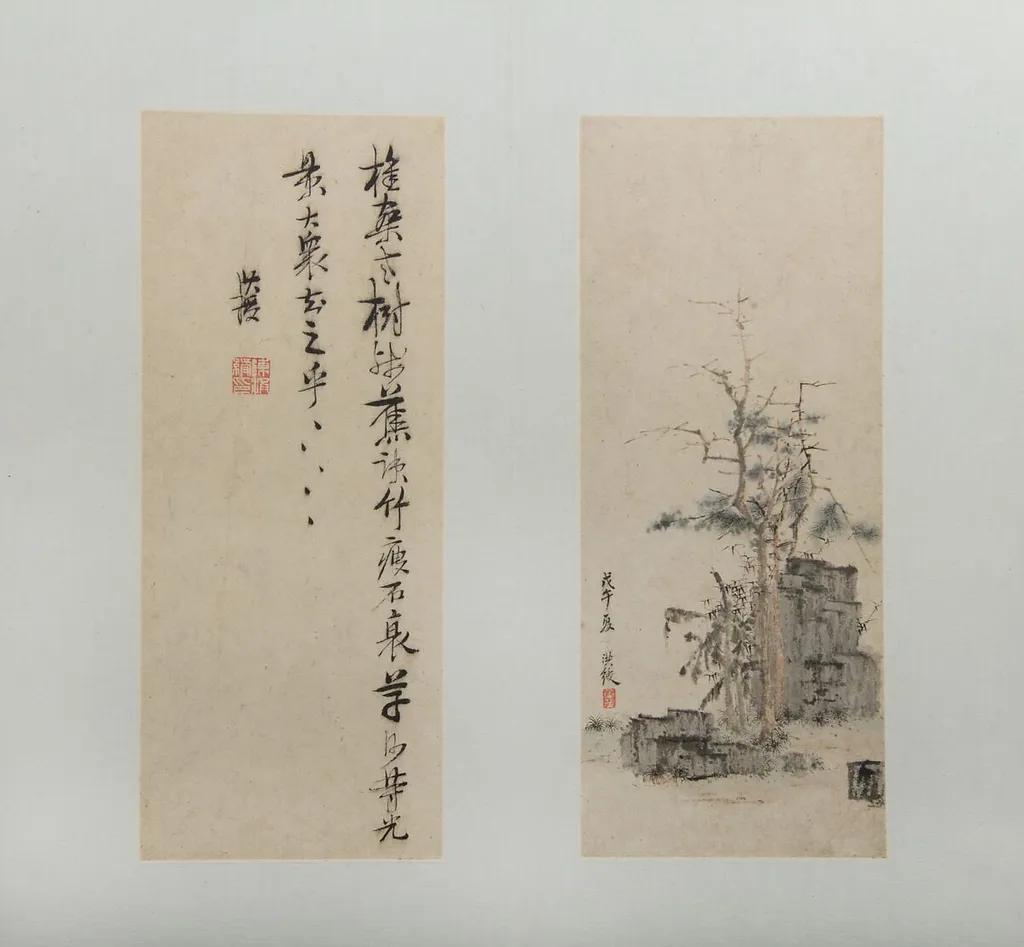
明/清 陳洪綬 山水人物花卉圖 冊|Landscapes, Figures, and Flowers is an ink painting by the Baroque artist Chen Hongshou. It dates from 1620 and is held in the collection of the Metropolitan Museum of Art.
About this work
The colors are mostly muted—soft grays, blues, and browns—with just a hint of green near the ground.
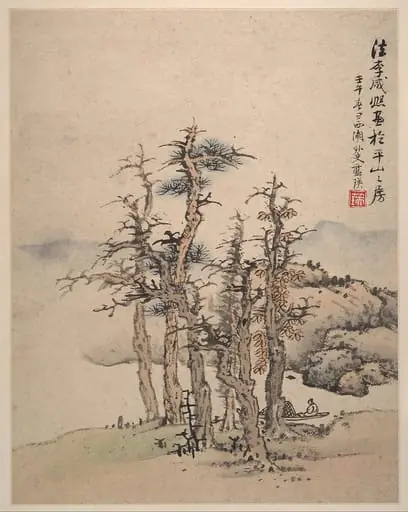
This painting shows a bare tree with twisted branches beside a crumbling stone wall. The background has faint mountains and a small hut. The colors are mostly muted—soft grays, blues, and browns—with just a hint of green near the ground.
The artist signed the work in 1618–22, using ink and light color on paper. Notice how the tree’s branches look almost skeletal, while the wall feels weathered and old.
Look up cross-hatching next to see how artists build texture with layered lines.
Overview
Chen Hongshou's Landscapes, Figures, and Flowers is an album comprising twelve distinct paintings, executed with ink and light colors on paper. Created between 1618 and 1622, this collection showcases the artist's engagement with traditional Chinese artistic themes. The album format allows for a varied exploration of natural scenery, human figures, and botanical subjects, reflecting the diverse interests characteristic of the period's scholarly art.
Subject & Meaning
One notable composition within the album features a stark, bare tree with dramatically twisted branches, standing adjacent to a crumbling stone wall. In the background, faint mountain contours and a modest hut suggest a remote, perhaps introspective, setting. This imagery frequently appears in traditional Chinese art, often symbolizing resilience, the transient nature of human endeavors, and the enduring power of the natural world.
Technique & Style
The artwork is rendered using ink and subtle applications of color on paper, resulting in a predominantly muted palette. Tones of soft gray, blue, and brown prevail, with a slight hint of green near the base of the composition. Chen Hongshou's distinctive style is evident in the almost skeletal appearance of the tree's branches and the weathered texture of the stone wall, conveying a sense of age and fragility.
Artist & collection


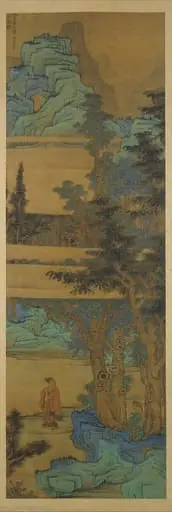 明 陳洪綬 樹下高士圖 軸|Scholar-recluse in blue-green landscape
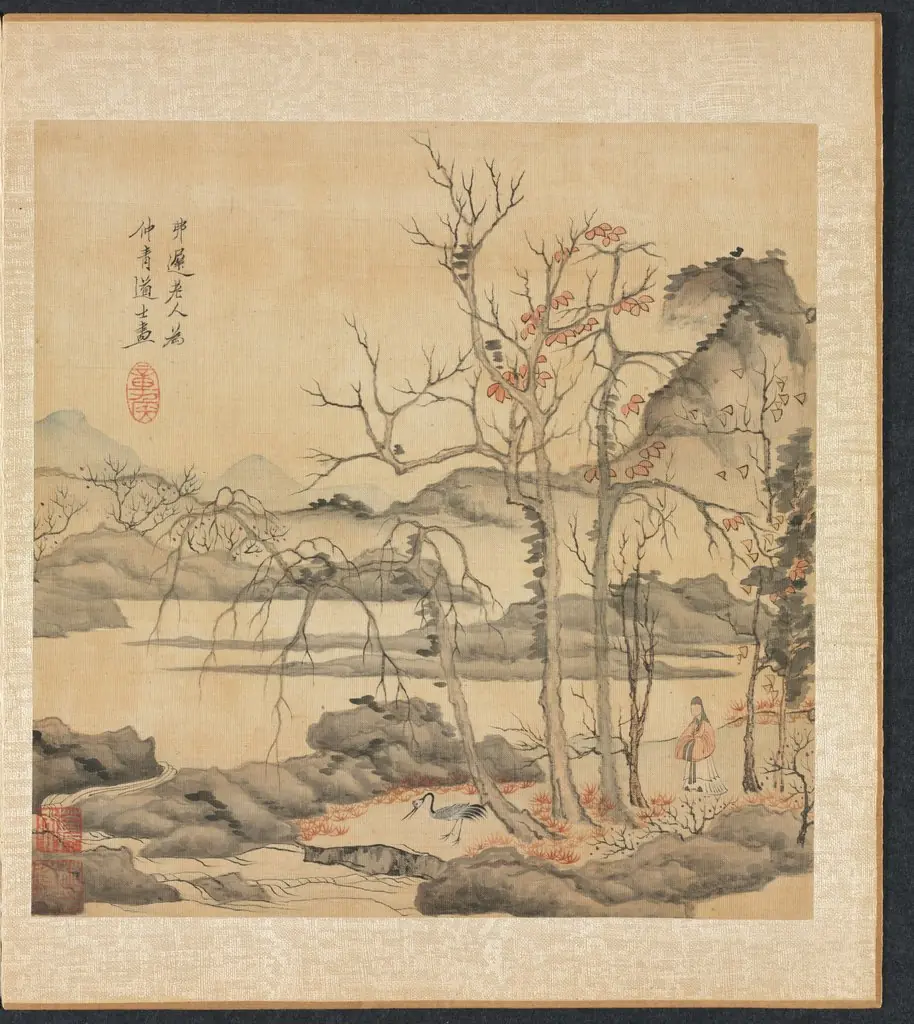 Paintings after Ancient Masters: Daoist and Crane in Autumn Landscape
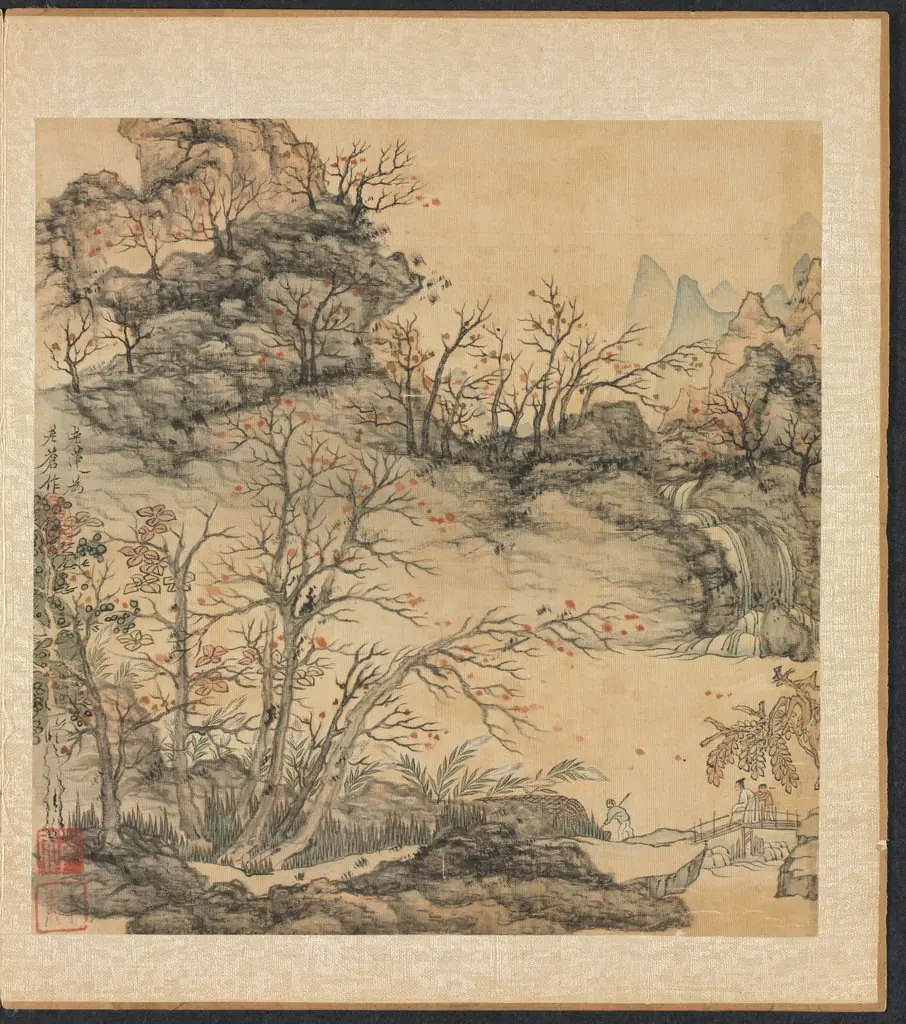 Paintings after Ancient Masters: Autumn Landscape
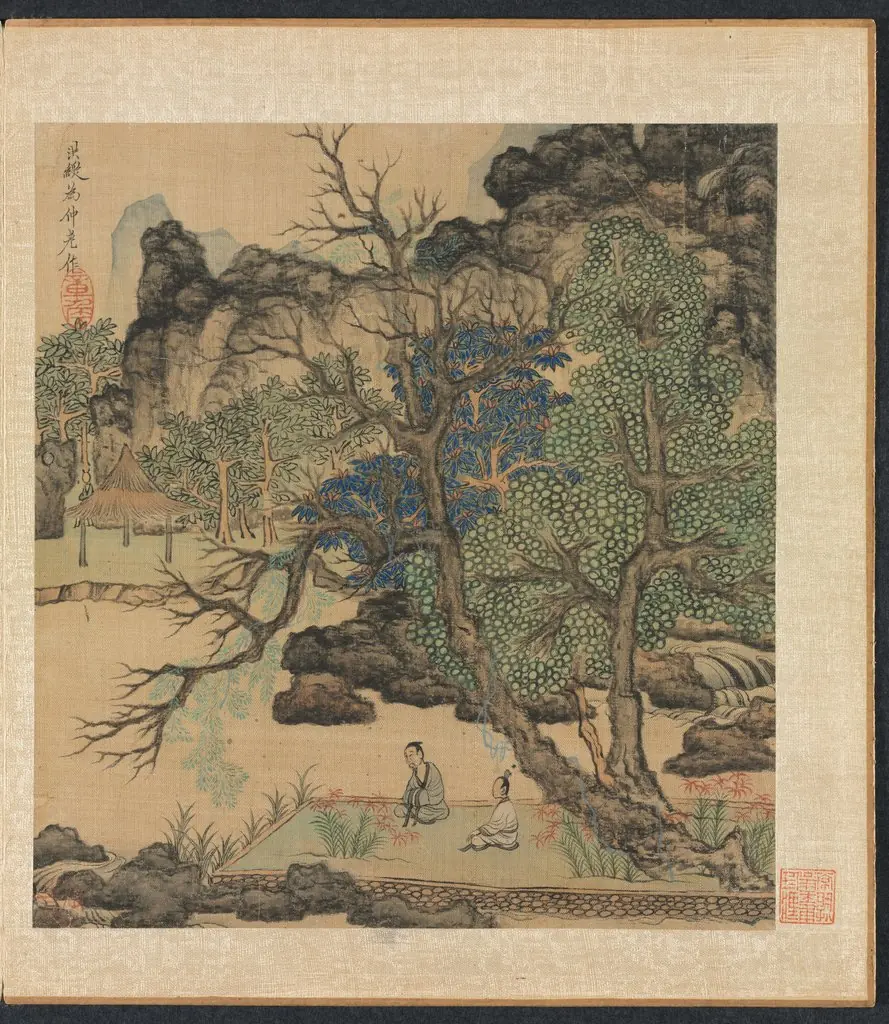 Paintings after Ancient Masters: Scholars in a Garden
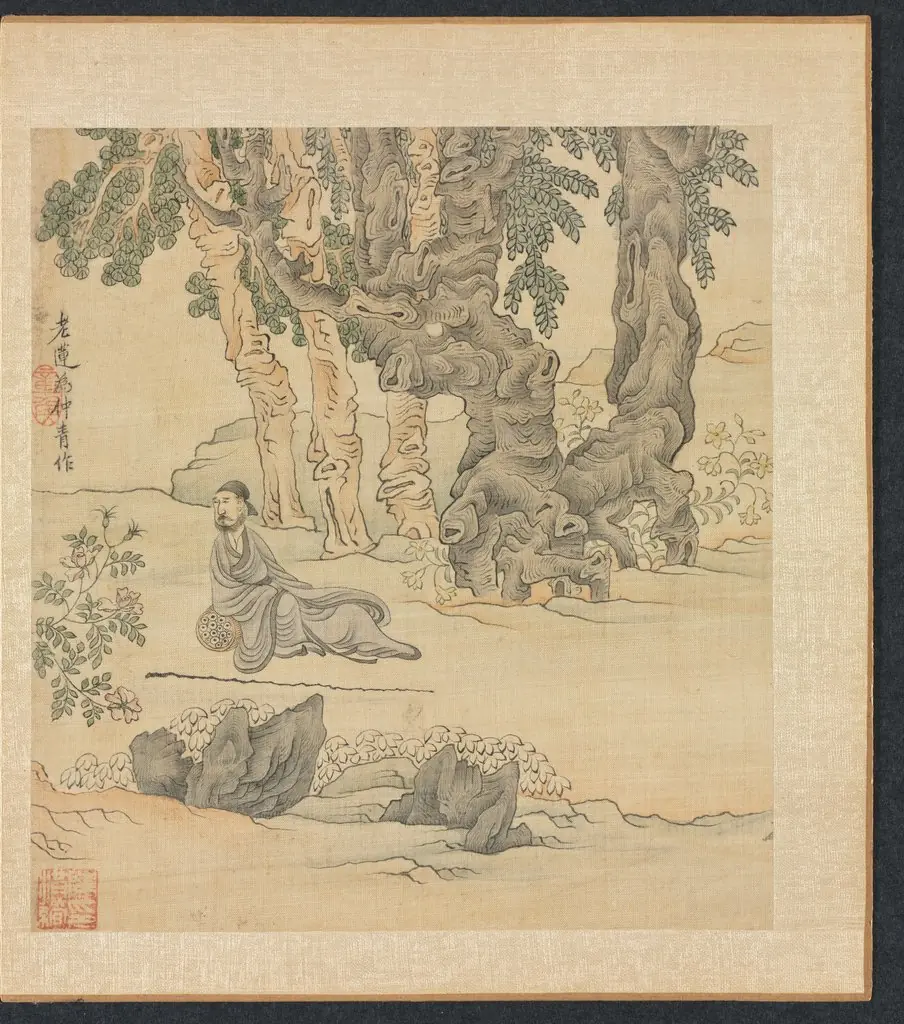 Paintings after Ancient Masters: Portrait of Zhongqing in a Landscape
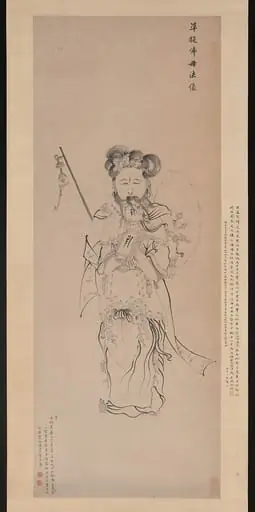 明 陳洪綬 準提佛母法像圖 軸|Bodhisattva Guanyin in the Form of the Buddha Mother
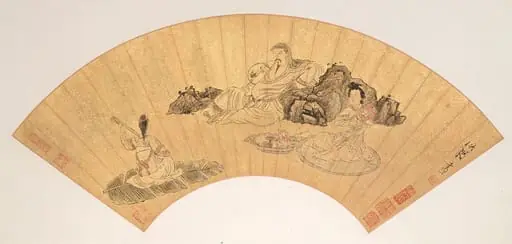 明 陳洪綬 山水花鳥人物圖 扇冊|Landscapes and Flowers
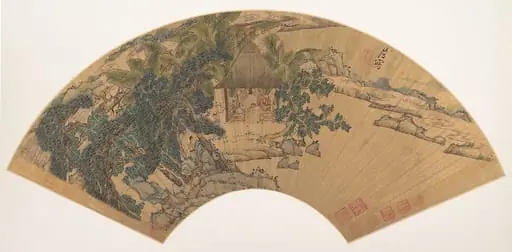 明 陳洪綬 山水圖 扇|Landscape
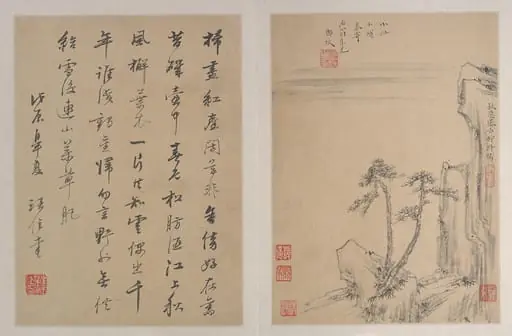 Untitled
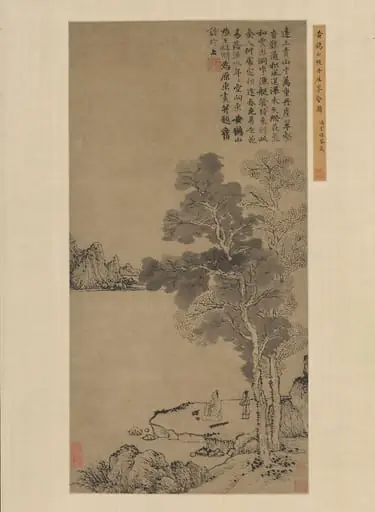 元 王蒙 丹崖翠壑圖 軸|Red Cliffs and Green Valleys
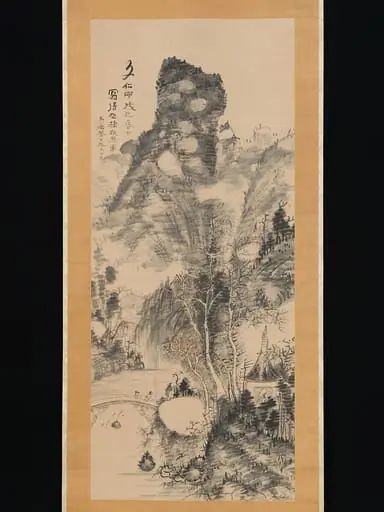 Untitled
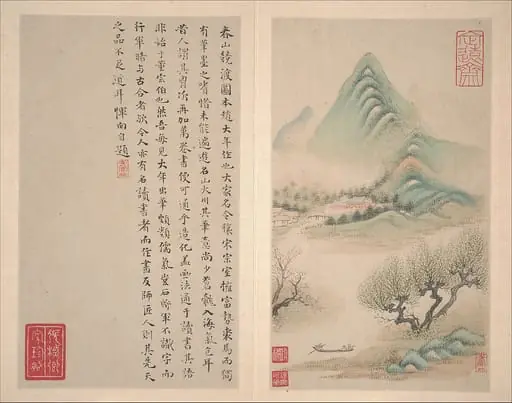 明/清 惲向 仿古山水圖 冊 紙本|Landscapes after old masters
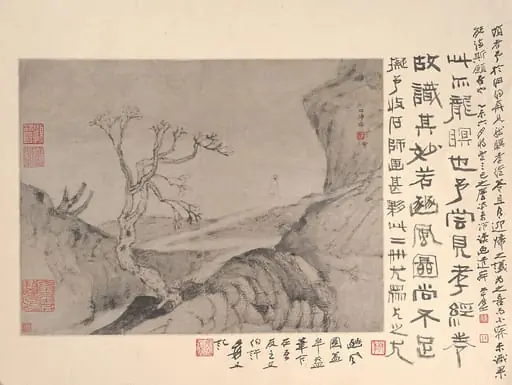 清 石濤 (朱若極) 山水人物圖 冊頁|Landscape with solitary figure
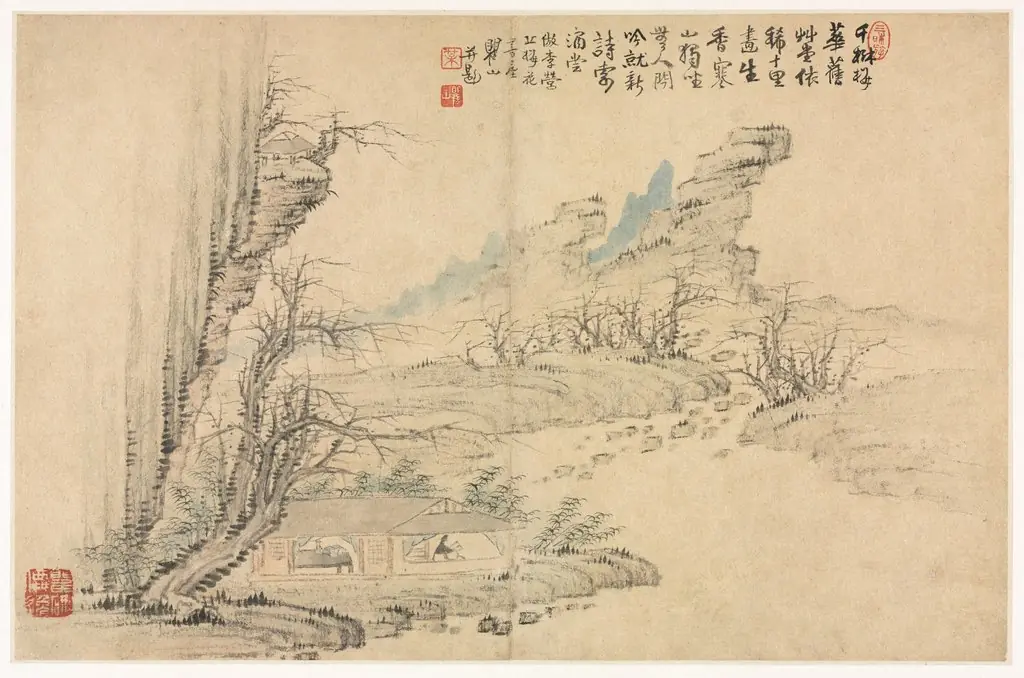 Landscapes in Various Styles after Old Masters
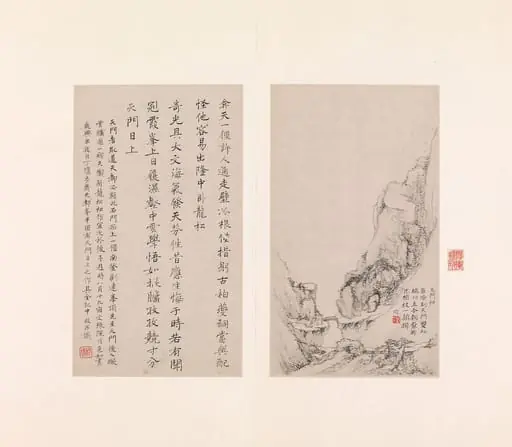 鄭旼 黃山八景 水墨紙本 九開冊|Eight views of the Yellow Mountains
 明 藍瑛 仿宋元山水圖 冊|Landscapes after Song and Yuan masters