Artwork
Le Bon Exemple
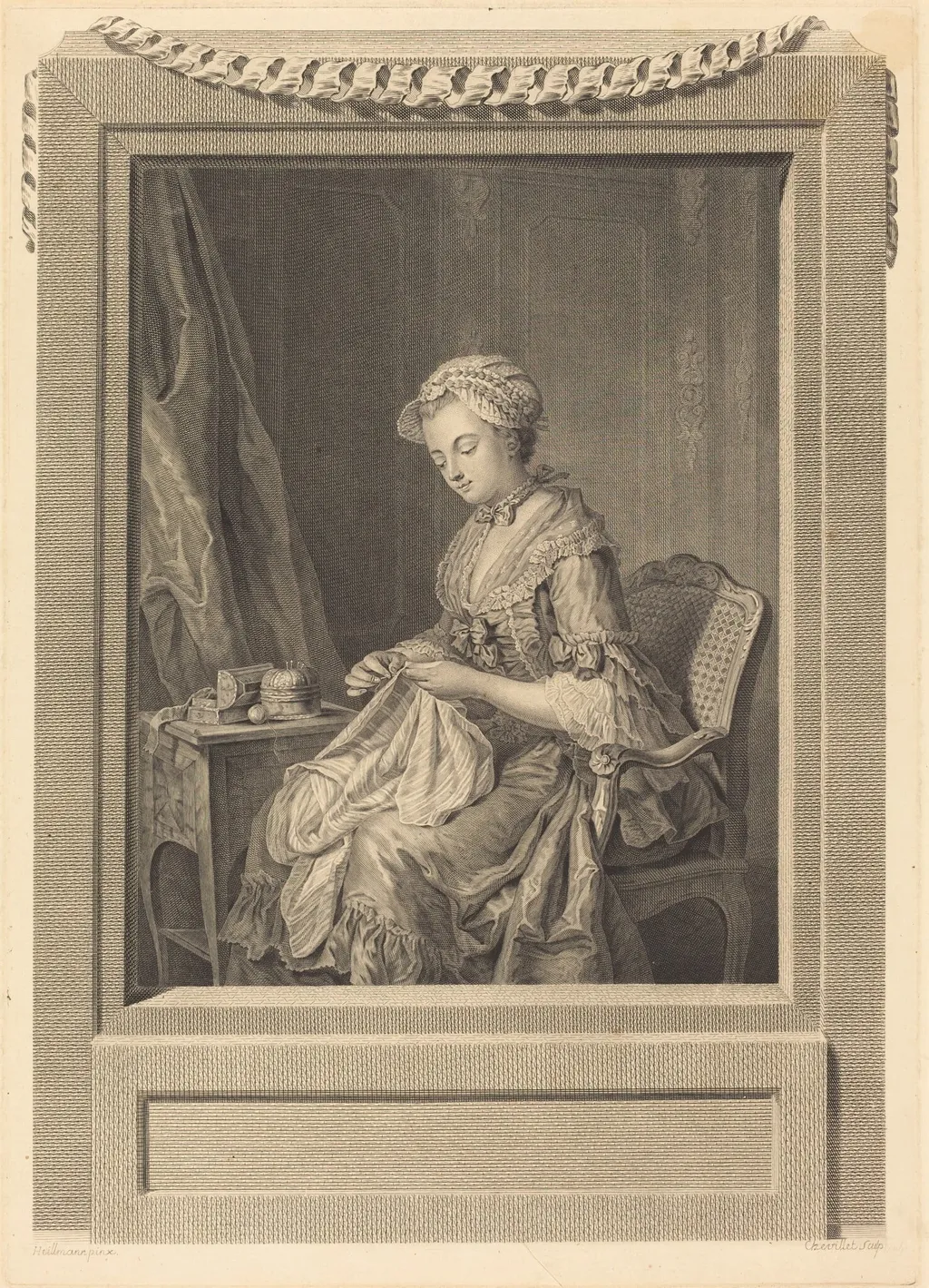
Le Bon Exemple is an ink print by the Romanticist artist Juste Chevillet. It dates from 1762 and is held in the collection of the National Gallery of Art.
About this work
Overview
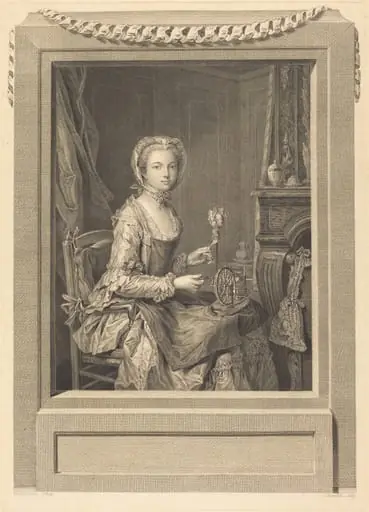
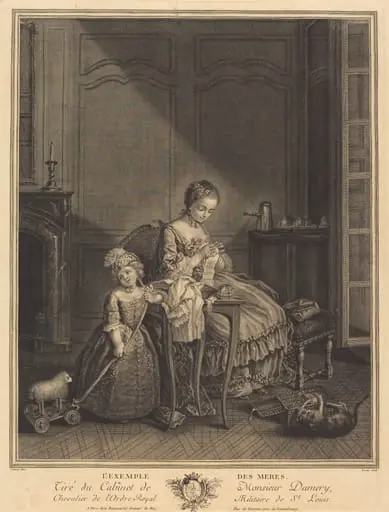
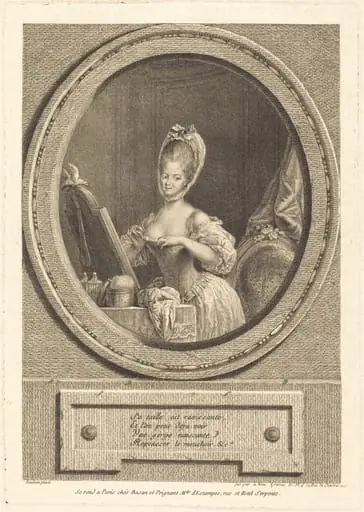
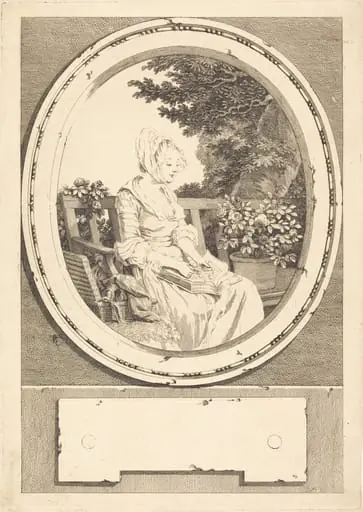
Created in 1762, *Le Bon Exemple* is a black‑and‑white print produced by the French engraver Juste Chevillet. Executed through a combination of etching and engraving on a metal plate, the work measures the delicate balance of line and tone characteristic of eighteenth‑century printmaking. The image presents a domestic interior centered on a solitary woman engaged in a quiet activity.
Subject & Meaning
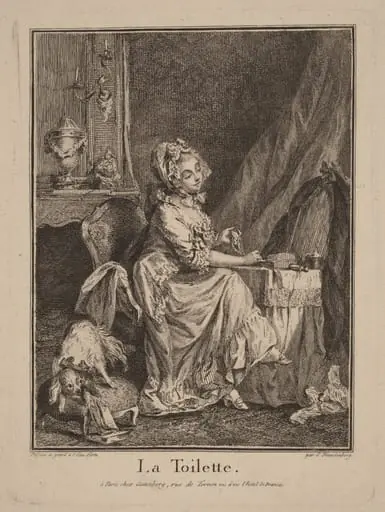
The composition depicts a woman seated in a chair, illuminated by daylight streaming through a nearby window. She is dressed in an elaborate gown with ruffled details and a modest cap, and a basket rests on her lap as she sews. Adjacent to her, a small table holds a teapot, a cup, and assorted objects, suggesting a moment of everyday household routine and the virtues of industriousness.
Technique & Style
Chevillet employed fine, intersecting lines to render the folds of the woman's attire and the texture of the surrounding curtain, a hallmark of metal‑plate engraving. The etching component allowed for subtle tonal variations, while the engraving added crisp definition to edges and decorative elements. This meticulous linework creates a sense of depth and materiality without the use of colour.
History & Provenance
The print was issued in the mid‑eighteenth century, a period when French engravers frequently reproduced genre scenes for a growing market of collectors and domestic audiences. While specific ownership records are scarce, *Le Bon Exemple* has appeared in several catalogues of Chevillet’s oeuvre, confirming its attribution and situating it within the artist’s broader output of decorative prints.
Artist & collection