Artwork
Jusques dans la moindre chose
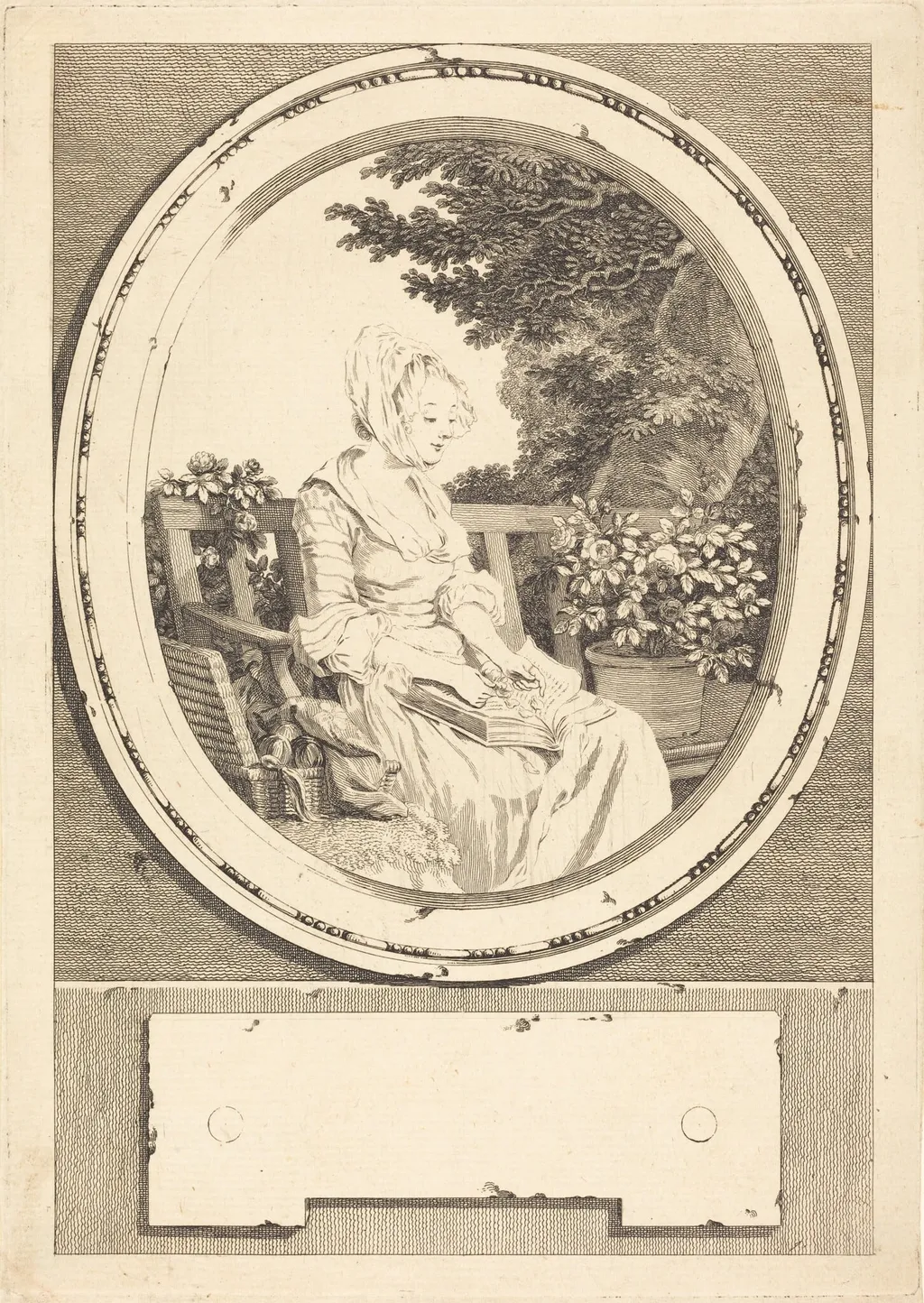
Jusques dans la moindre chose is an ink print by the Romanticist artist Louis-Joseph Masquelier. It dates from 1774 and is held in the collection of the National Gallery of Art.
About this work
Next, check out the technique: etching to see how artists like Masquelier created these fine lines.
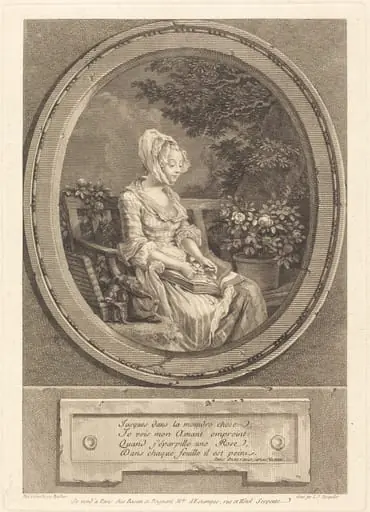
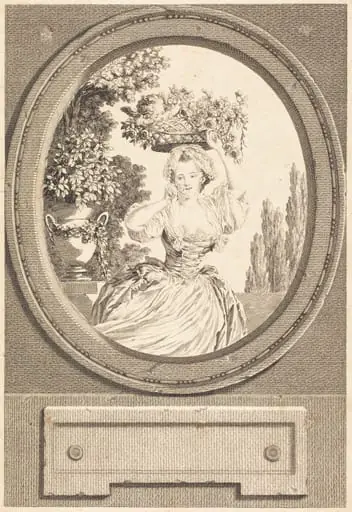
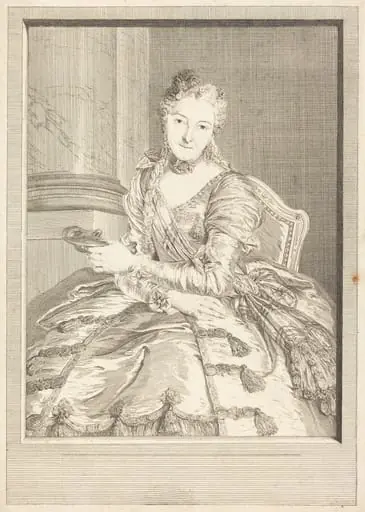
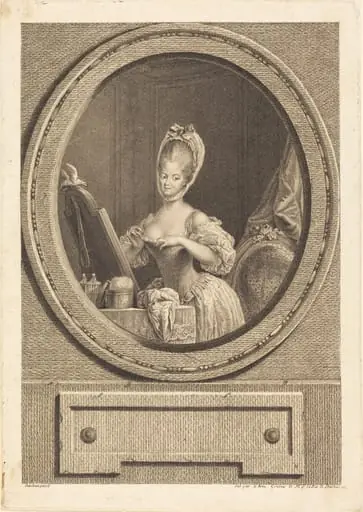
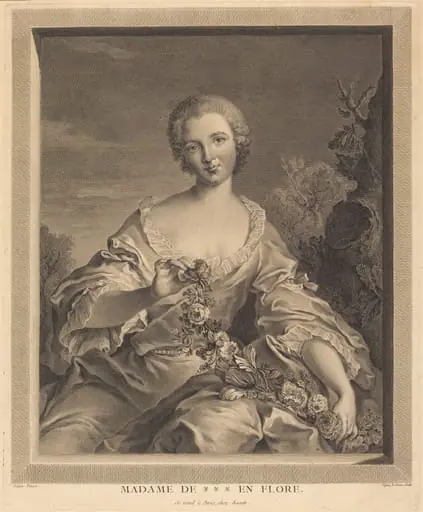
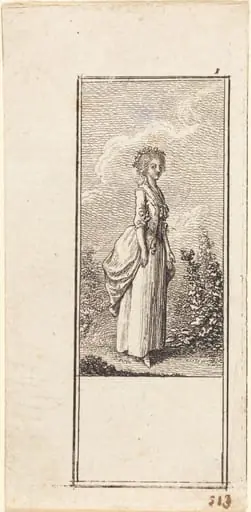
This etching shows a woman sitting in a garden. She’s holding a book or papers, dressed in a loose, fancy dress with a cap on her head. Behind her, a tree and potted flowers fill the background, and a bench sits to her left.
The artist used shading to show light and fabric folds, making the scene feel quiet and detailed. This was made in 1774, and it’s a type of print called an etching.
Next, check out the technique: etching to see how artists like Masquelier created these fine lines.
Overview
Jusques dans la moindre chose is an etching produced in 1774 by French printmaker Louis‑Joseph Masquelier. Executed on a copper plate and printed as a single‑sheet work, the image presents a quiet garden scene rendered in fine line work typical of eighteenth‑century French prints.
Subject & Meaning
The composition centers on a woman seated amid a cultivated garden. She holds a book or sheet of paper, wears a loosely draped, elaborately styled dress and a small cap, while a tree, potted flowers, and a nearby bench complete the setting. The tranquil pose and domestic objects suggest a moment of contemplation or study within an idyllic outdoor space.
Technique & Style
Masquelier employed the etching process, incising lines into a copper plate with acid after drawing with a resist. Varying line density creates subtle shading that models the folds of the fabric and the play of light across the foliage. The delicate, precise strokes reflect the period’s interest in detailed, realistic representation within a decorative framework.
History & Provenance
Created in 1774, the print belongs to the later phase of Masquelier’s career, during which he produced a range of genre and decorative subjects for the French market. While specific ownership records are scarce, the work is documented in catalogues of eighteenth‑century French prints and has appeared in several scholarly inventories of Masquelier’s oeuvre.
Artist & collection