Artwork
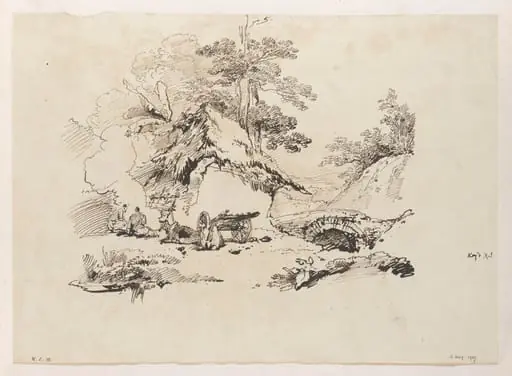
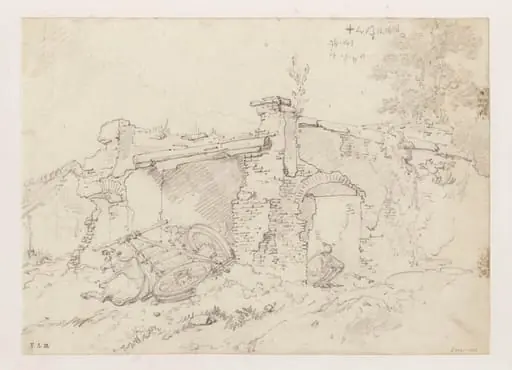
An ox and cart by a ruined building, Bengal
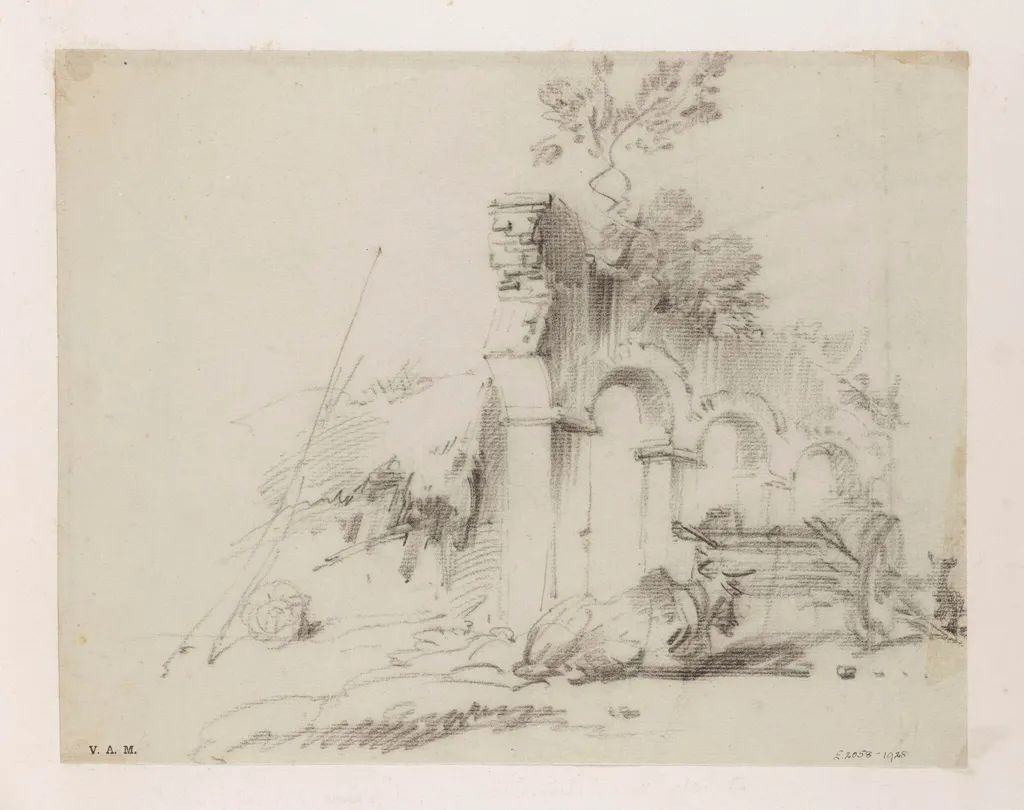
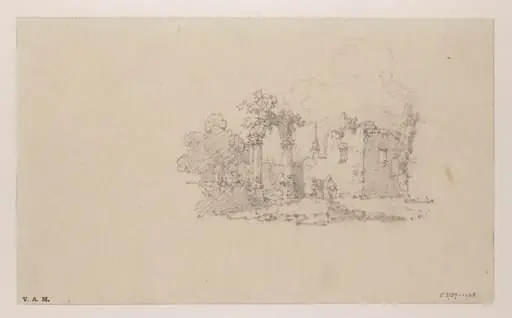
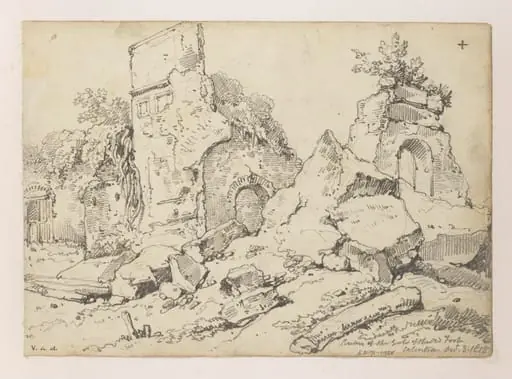
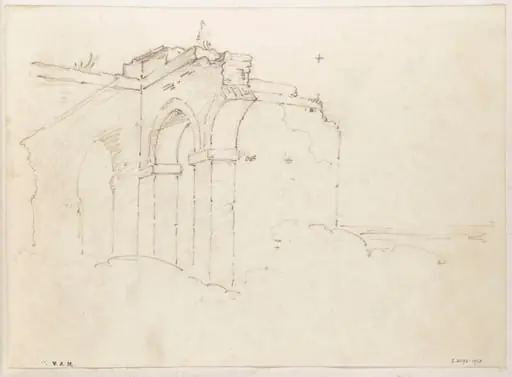
An ox and cart by a ruined building, Bengal is a drawing by the Romanticist artist George Chinnery. It dates from 16 and is held in the collection of the Victoria and Albert Museum. The work is a drawing depicting a dilapidated structure in Bengal, its three surviving arches framed by encroaching vegetation.
About this work
Overview
The work is a drawing depicting a dilapidated structure in Bengal, its three surviving arches framed by encroaching vegetation. Near the ruin an ox and a two‑wheeled cart are placed, introducing a modest, everyday element to the composition.
Subject & Meaning
The composition juxtaposes the decay of architecture with the persistence of rural labor. The ox and cart suggest continued agricultural activity despite the building’s abandonment, hinting at the resilience of local life amid ruin.
Technique & Style
Rendered in fine line work, the drawing emphasizes architectural detail through careful shading of the arches while using looser strokes for the surrounding foliage. The inclusion of a working animal and cart reflects a genre‑like approach common in late‑eighteenth‑century Indian landscape sketches.
Context
The scene aligns with the visual language of George Chinnery, who frequently portrayed Indian and Bengali settings where historic structures coexist with quotidian labor. Such images served both documentary and aesthetic purposes for European audiences interested in the subcontinent.
Artist & collection
Artist
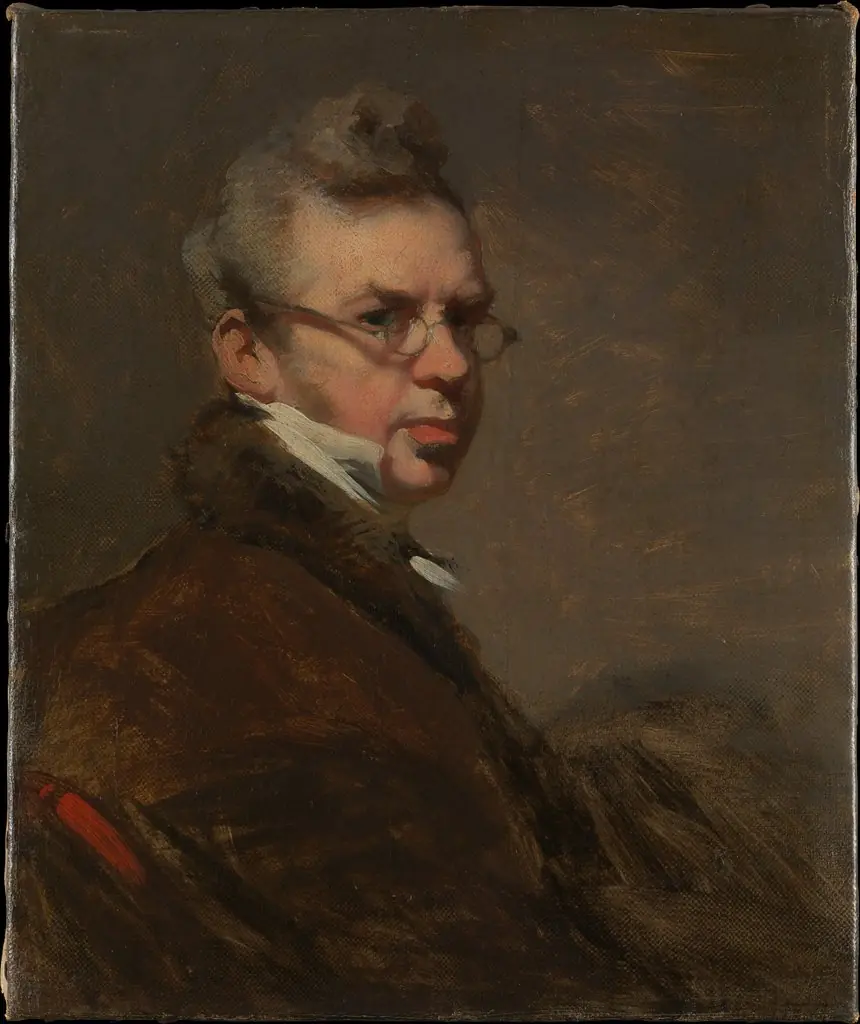
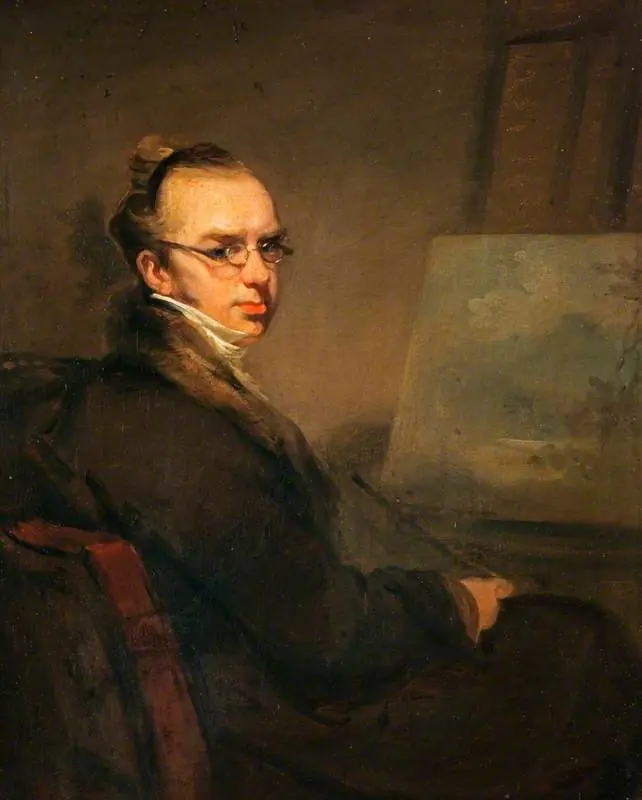
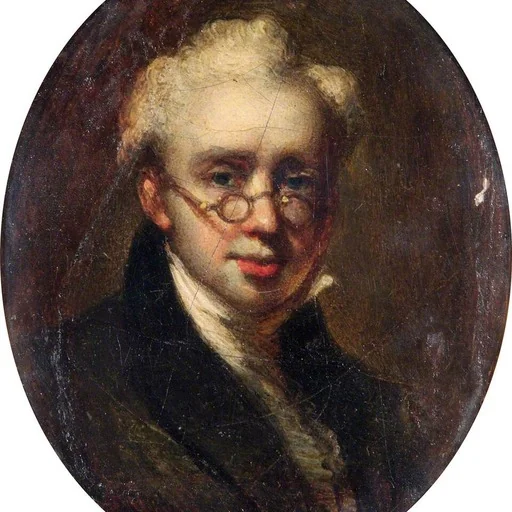
George Chinnery (Chinese: 錢納利; 5 January 1774 – 30 May 1852) was an English painter who spent most of his life in Asia, especially India and southern China.