Artwork
Ruins of the Old Fort, Calcutta
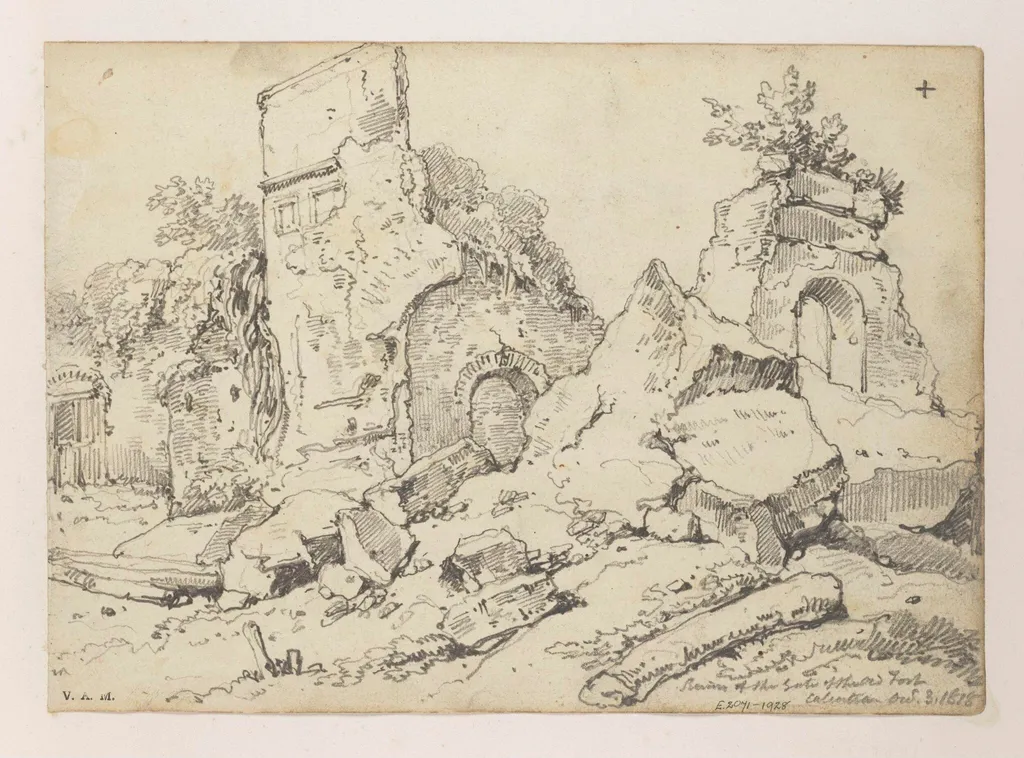
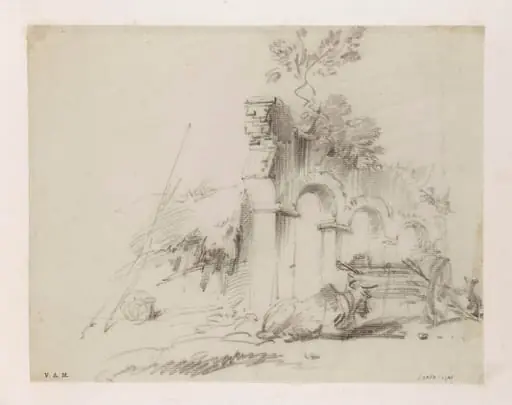
Ruins of the Old Fort, Calcutta is a drawing by the Romanticist artist George Chinnery. It dates from 6 and is held in the collection of the Victoria and Albert Museum.
About this work
Pencil lines are firm but light, like the artist sketched fast before the light changed.
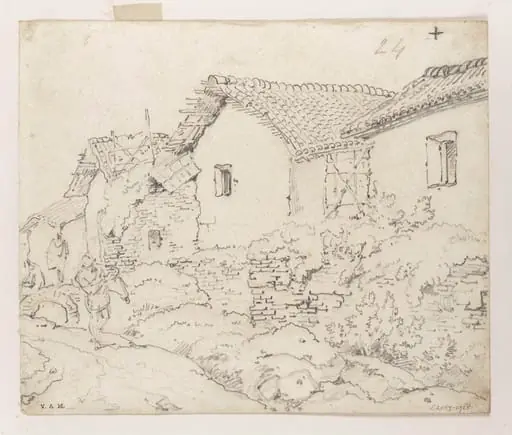
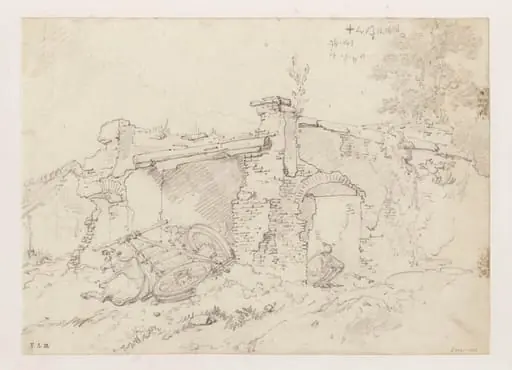
This shows old bricks and crumbling walls covered in vines. Pencil lines are firm but light, like the artist sketched fast before the light changed. The arches still stand, but plants creep through every crack.
The British left this fort after 1757, yet bits of it stayed standing for decades. It’s a quiet record of time eating away at man-made things. You can almost feel the humidity in the lines.
Compare this to how Chinnery, George drew the same mood in other ruins.
Overview
Ruins of the Old Fort, Calcutta is a drawing depicting the remnants of the first Fort William, showcasing its state of decay with overgrown vegetation and visible architectural elements like arches and windows.
Subject & Meaning
The drawing captures the transience of human construction in the face of nature's persistence, illustrating how the abandoned fort (vacated by the British in 1757) was gradually reclaimed by the environment over more than a century.
Technique & Style
Executed with firm yet light pencil lines, the drawing suggests a rapid sketching process, possibly done before lighting conditions changed. The style conveys a sense of atmospheric humidity and decay.
Context
The work can be contextualized alongside similar depictions of ruins by contemporaries like George Chinnery, who also explored the melancholic mood of decaying structures in their art.
History & Provenance
Originally abandoned by the British in 1757, remnants of the fort persisted for over a century, with the drawing serving as a historical record of its state of disrepair at the time of creation.
Artist & collection
Artist
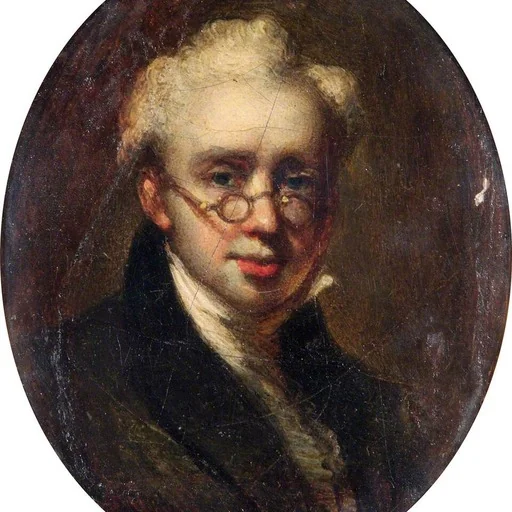
George Chinnery (Chinese: 錢納利; 5 January 1774 – 30 May 1852) was an English painter who spent most of his life in Asia, especially India and southern China.