Artwork
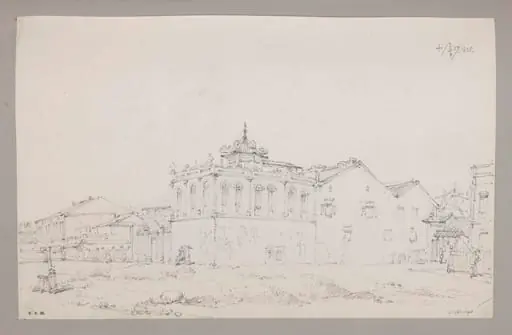
Chungqua's premises seen from the portico of the East India Company's 'factory' at Guangzhou (Canton)
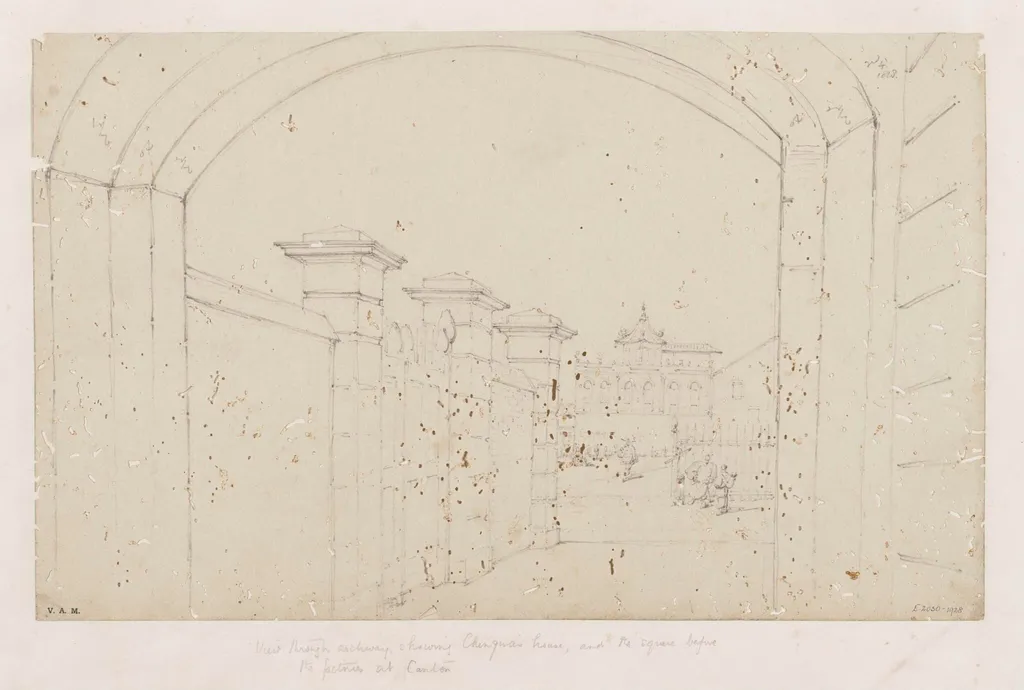
Chungqua's premises seen from the portico of the East India Company's 'factory' at Guangzhou (Canton) is a drawing by the Romanticist artist George Chinnery. It dates from 4 and is held in the collection of the Victoria and Albert Museum.
About this work
Overview
This drawing captures a view from the portico of the East India Company’s trading compound in Guangzhou, looking east across a bustling commercial square.
This drawing captures a view from the portico of the East India Company’s trading compound in Guangzhou, looking east across a bustling commercial square. It depicts a row of Chinese merchant buildings known as hongs, with particular focus on the structure belonging to Chungqua, a prominent Cantonese trader. The scene reflects the spatial and regulatory boundaries of foreign trade in early 19th-century China, where European merchants operated under strict limitations.
Subject & Meaning
The drawing centers on Chungqua’s hong, a symbol of wealth and status among Canton’s merchant class. Its prominent position and distinctive roof mark it as the most notable among the hongs. The building’s later roof removal after Chungqua’s financial collapse adds historical weight to the image, turning it into a quiet record of economic fragility within a rigid trade system that privileged foreign oversight.
Technique & Style
Executed in pencil or ink, the drawing employs precise linear perspective to convey depth and spatial order. Architectural details—curved eaves, whitewashed walls, and tiled roofs—are rendered with observational clarity. The composition emphasizes the contrast between the orderly European portico and the dense, irregular Chinese hongs, suggesting a deliberate framing of cultural and commercial difference.
History & Provenance
Created in the 1820s, the drawing likely originated from an East India Company employee or artist attached to the factory. It was preserved within company archives and later acquired by the Victoria and Albert Museum. The building it depicts lost its roof in the mid-1830s after Chungqua’s bankruptcy, making the image a rare visual document of a structure that no longer existed in its original form.
Context
In 1820s Guangzhou, foreign traders were confined to the hong quarter and barred from entering the city proper. The East India Company’s factory served as both commercial hub and fortified enclave. Chungqua’s hong, like others, was part of a tightly controlled system where Chinese merchants acted as intermediaries. The drawing reflects this asymmetry: foreign observers recorded the scene, but had no access beyond its boundaries.
Legacy
The drawing endures as a primary record of Sino-Western commercial interaction during the Canton System. It illustrates not only architectural form but also the social hierarchy and economic volatility of the trade. Its preservation offers insight into how foreign observers documented Chinese urban life under restrictive conditions, preserving a moment before major political and commercial upheavals.
Artist & collection
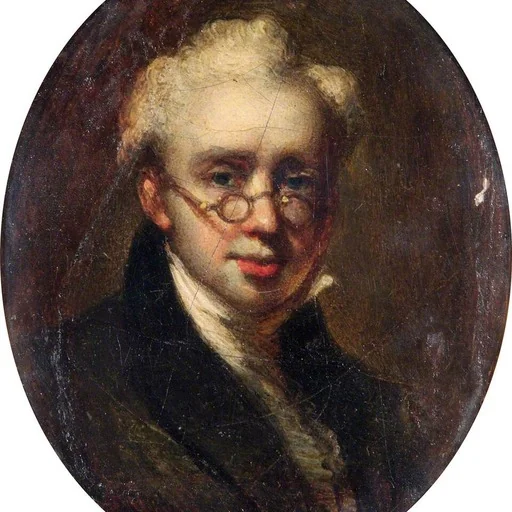
Artist
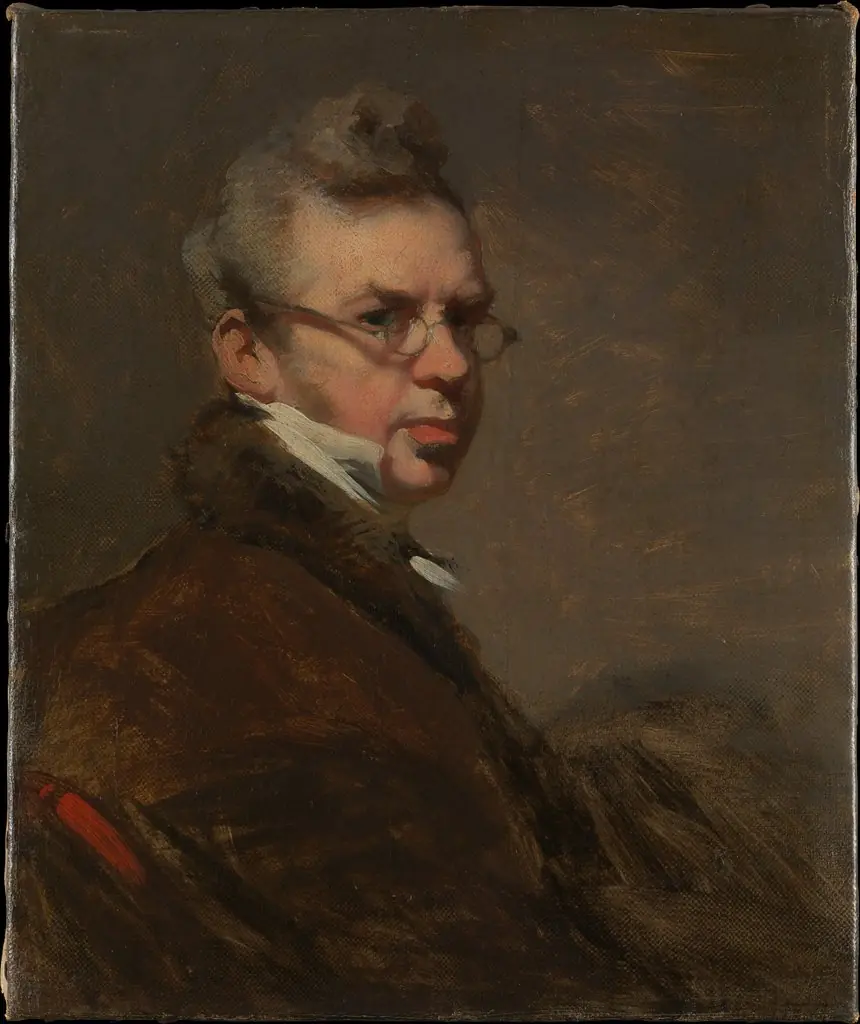
George Chinnery (Chinese: 錢納利; 5 January 1774 – 30 May 1852) was an English painter who spent most of his life in Asia, especially India and southern China.

 Chinqua's house, with entrance to China Street, Canton
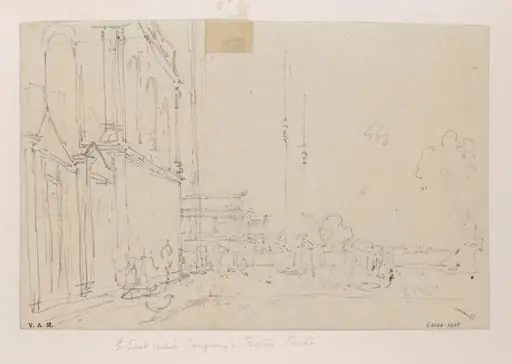 The East India Company's 'factory' in Canton (Guangzhou)
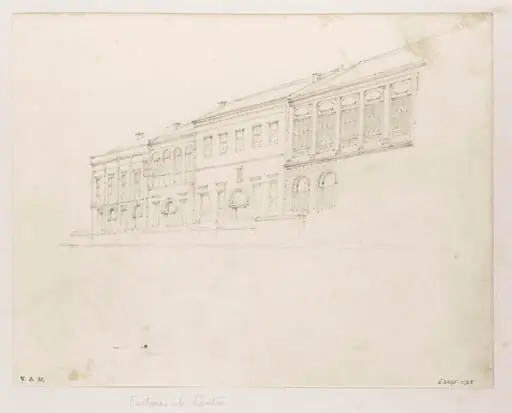 Four of the 'factories' (trading bases) at Canton (Guangzhou)
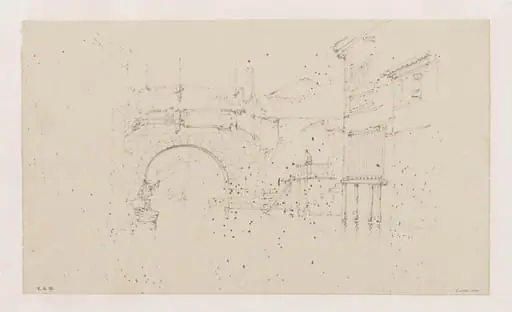 A bridge at Honan
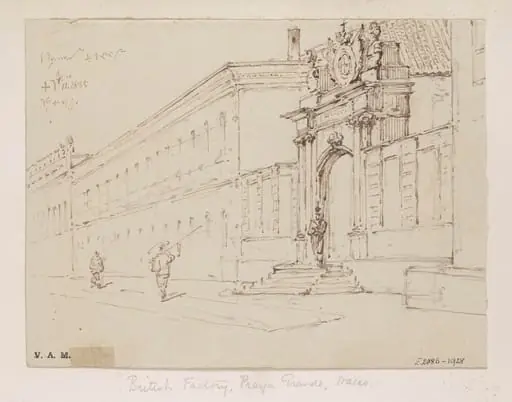 The British 'factory' on the Praya Grande, Macau
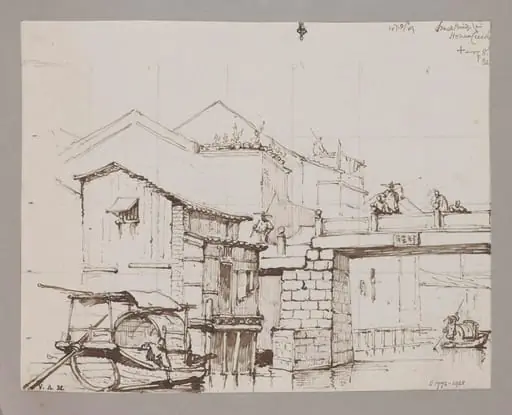 Small bridge near Honan
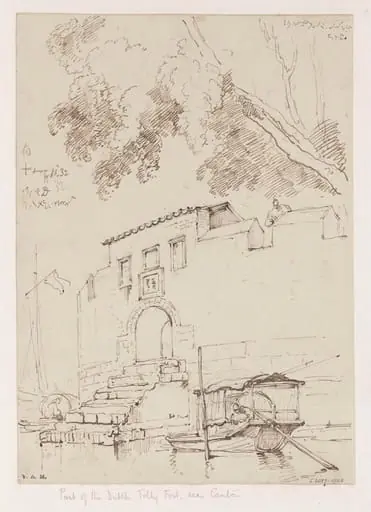 The 'Dutch folly fort', Canton (Guangzhou)