Artwork
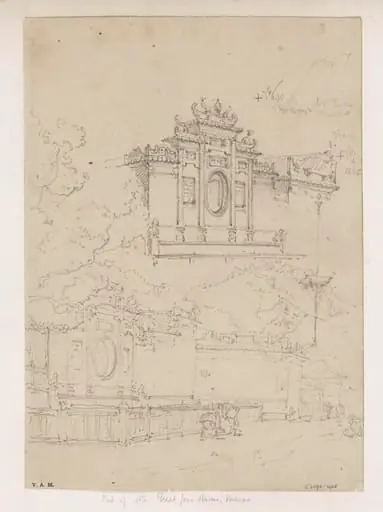
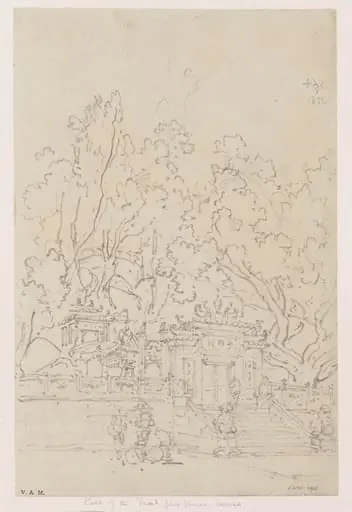
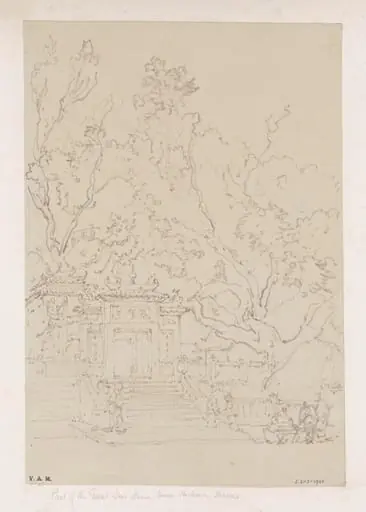
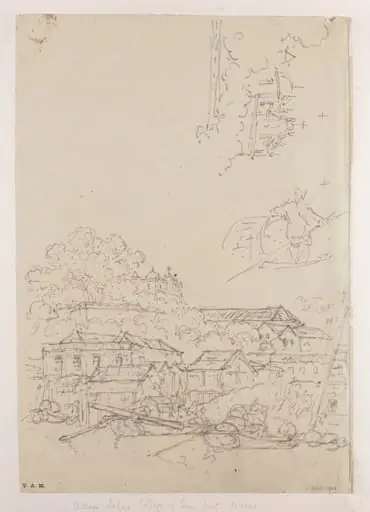
Part of the A-Ma temple, Macau
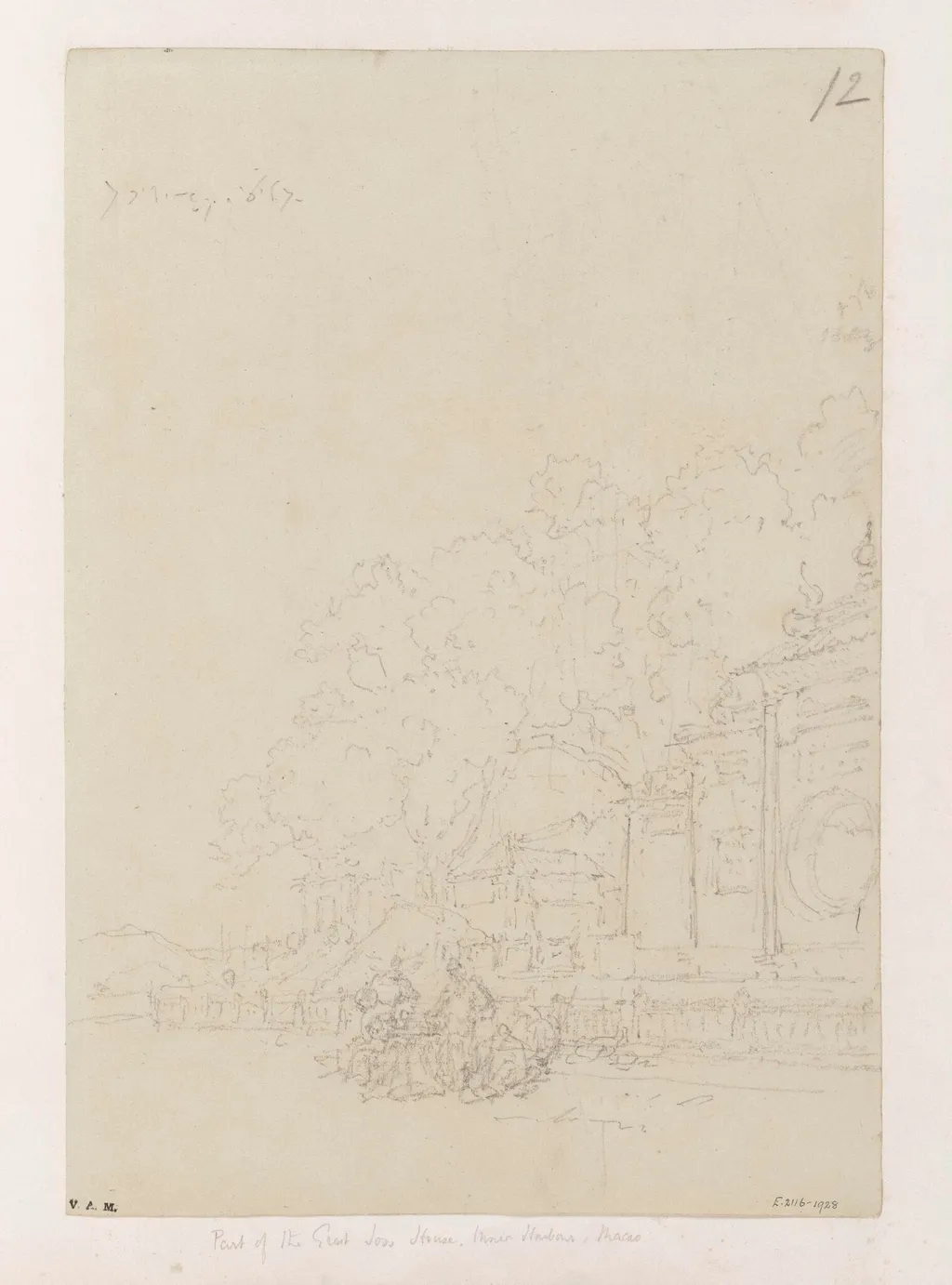
Part of the A-Ma temple, Macau is a drawing by the Romanticist artist George Chinnery. It dates from 19 and is held in the collection of the Victoria and Albert Museum. A detailed pen-and-ink drawing depicts the A-Ma Temple in Macau, viewed from the northwest.
About this work
Overview
The composition centers on the temple’s entrance, framed by a circular moon gate to the right, with the waters of the Inner Harbour stretching behind.
A detailed pen-and-ink drawing depicts the A-Ma Temple in Macau, viewed from the northwest. The composition centers on the temple’s entrance, framed by a circular moon gate to the right, with the waters of the Inner Harbour stretching behind. Rendered in fine linear strokes, the work captures architectural elements with precision, reflecting the observational rigor typical of 19th-century topographical drawings.
Subject & Meaning
The A-Ma Temple, dedicated to the sea goddess Mazu, was a spiritual and commercial landmark in Macau’s maritime community. The inclusion of the moon gate and harbor suggests a focus on both sacred architecture and the port’s economic vitality. The drawing implicitly acknowledges the temple’s role as a cultural anchor amid Macau’s hybrid Chinese-Portuguese identity.
Technique & Style
The drawing employs cross-hatching to model form and suggest depth, particularly in the temple’s tiled roofs and stone foundations. Delicate, controlled lines define architectural details without embellishment, aligning with the conventions of documentary illustration. The absence of color and the emphasis on structure reflect a functional, rather than decorative, intent.
History & Provenance
Created likely in the early to mid-1800s, the drawing may have been produced by a European artist or surveyor stationed in Macau. Its precise perspective and architectural accuracy suggest it was made for record-keeping or publication, possibly as part of a broader visual catalog of Asian ports under colonial observation.
Context
Macau, a Portuguese trading post since the 16th century, hosted a unique blend of Chinese religious traditions and European urban planning. The A-Ma Temple, one of the oldest in the region, stood as a symbol of this coexistence. Drawings like this served to document cultural sites for Western audiences unfamiliar with East Asian sacred architecture.
Legacy
This drawing contributes to a visual archive of Macau’s pre-modern landscape, preserving the temple’s appearance before later renovations. As one of few surviving contemporary records of the site, it remains a reference for historians studying the intersection of religion, trade, and colonial documentation in Southeast Asia.
Artist & collection
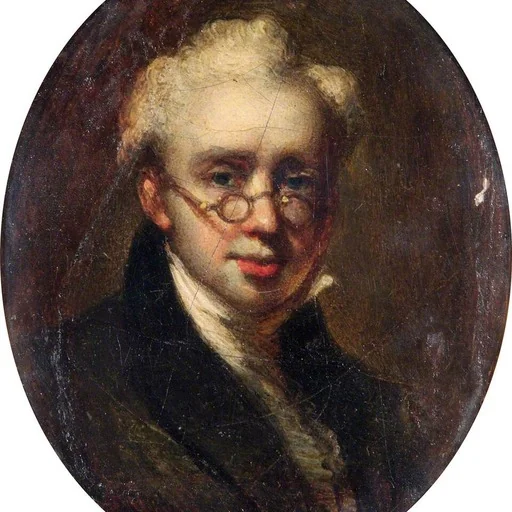
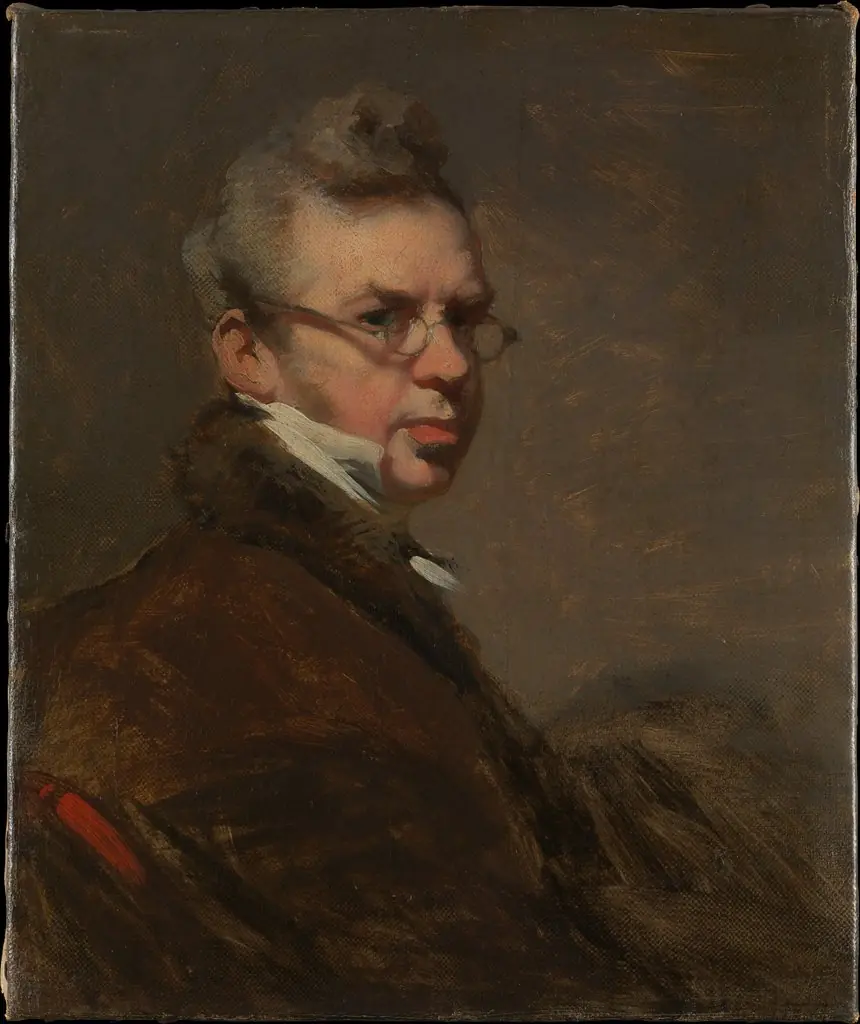
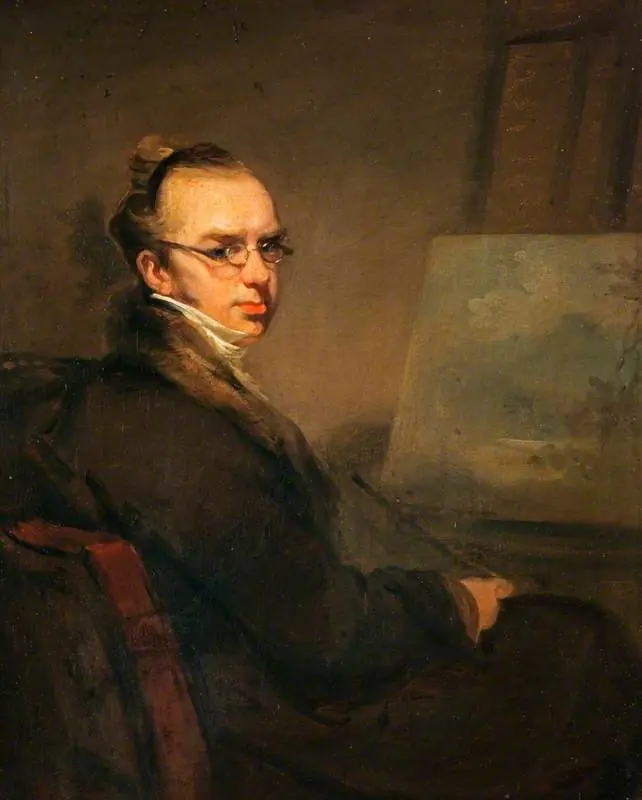
Artist
George Chinnery (Chinese: 錢納利; 5 January 1774 – 30 May 1852) was an English painter who spent most of his life in Asia, especially India and southern China.