Artwork
The Praya Grande, Macau, with studies of a boatwoman and a rowing boat
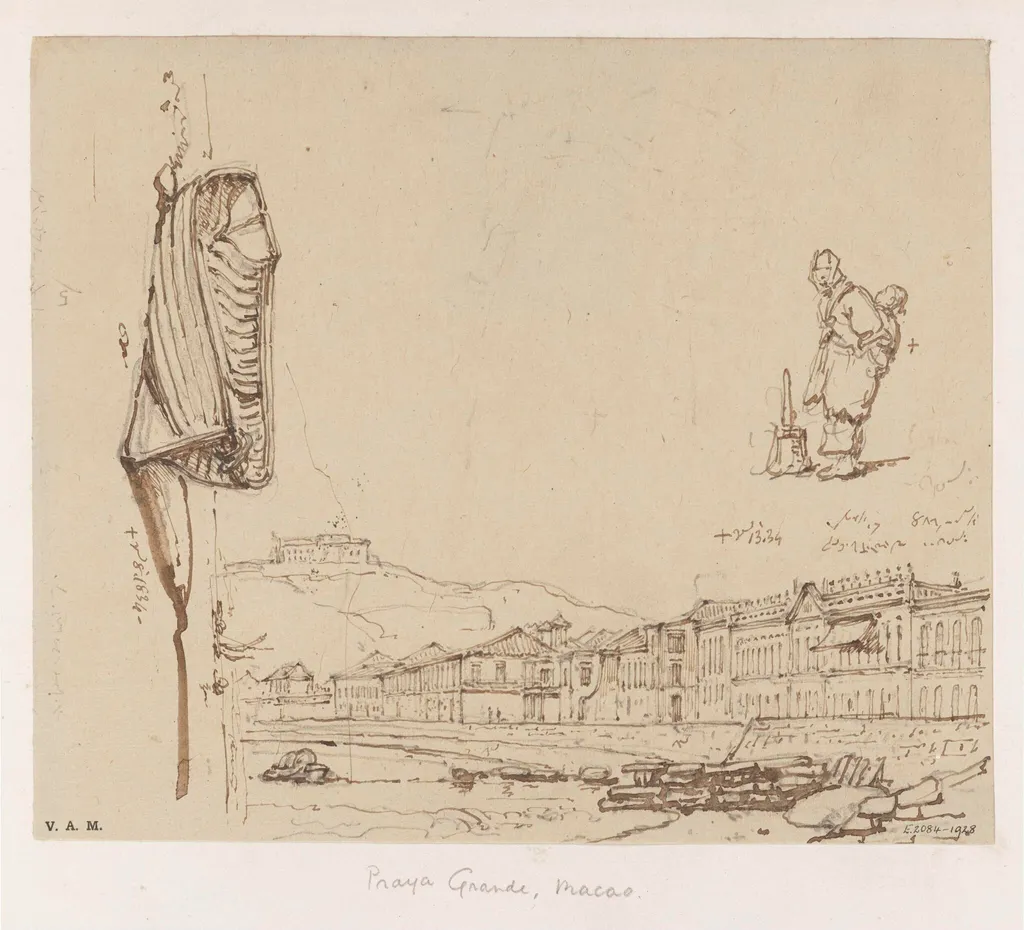
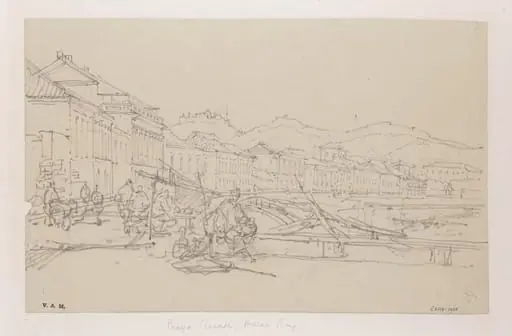
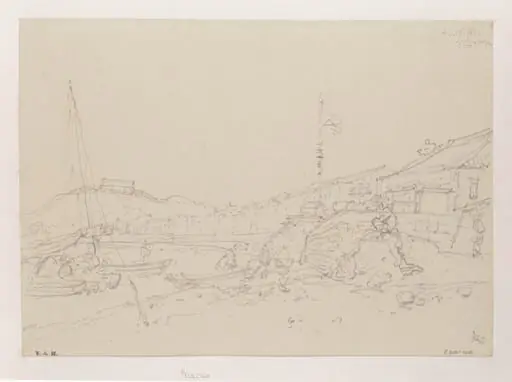
The Praya Grande, Macau, with studies of a boatwoman and a rowing boat is a drawing by the Romanticist artist George Chinnery. It dates from 6 and is held in the collection of the Victoria and Albert Museum. This drawing captures a stretch of the Praya Grande in Macau, oriented westward toward Penha Hill.
About this work
Overview
The seawall-lined waterfront is lined with modest buildings, their forms rendered with careful attention to architectural detail.
This drawing captures a stretch of the Praya Grande in Macau, oriented westward toward Penha Hill. The seawall-lined waterfront is lined with modest buildings, their forms rendered with careful attention to architectural detail. Two supplemental studies flank the main scene: a woman standing with a child secured on her back, and a beached rowing boat, both grounded in quiet observation of daily routines.
Subject & Meaning
The figures and vessel depicted are not ceremonial or grand, but ordinary elements of coastal life. The boatwoman, burdened yet composed, and the idle boat suggest rhythms of labor and rest. These studies emphasize the human presence within the urban waterfront, framing the scene not as a landmark but as a lived environment shaped by routine and necessity.
Technique & Style
The artist employs fine, controlled cross-hatching to model form and suggest texture across surfaces—stone walls, fabric, wood. Lines are deliberate, not hurried, conveying weight and structure without embellishment. The compositional separation of the main vista from the marginal studies reflects a methodical approach to recording visual information, prioritizing observation over narrative.
History & Provenance
Created during the 19th century, likely by a European artist or colonial resident, the work belongs to a tradition of topographical sketches made in Macau as trade and travel increased. Its survival suggests it was preserved as a record rather than a finished artwork, possibly used for reference or personal documentation rather than public display.
Context
At the time, Macau functioned as a Portuguese trading post with a hybrid cultural landscape. The Praya Grande was a bustling waterfront where local laborers, merchants, and foreign residents intersected. This drawing reflects the quiet coexistence of Portuguese architecture and Chinese daily life, offering a glimpse into a society in transition, documented through unembellished observation.
Legacy
As a record of everyday life in colonial Macau, the drawing contributes to a visual archive of 19th-century coastal Asia. Its modest scale and focus on the mundane distinguish it from grander imperial or religious imagery of the period. Today, it serves as a quiet testament to the overlooked details of historical urban existence.
Artist & collection
Artist
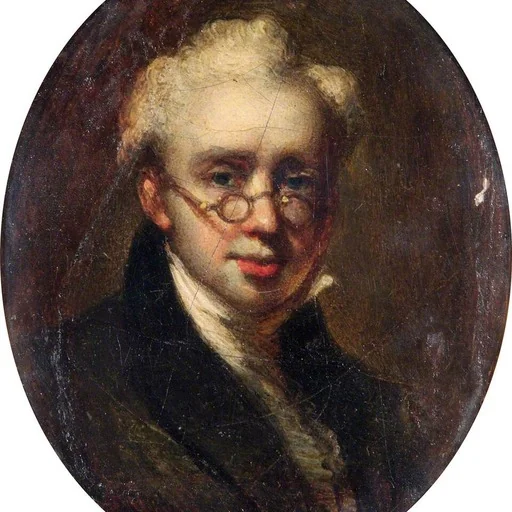
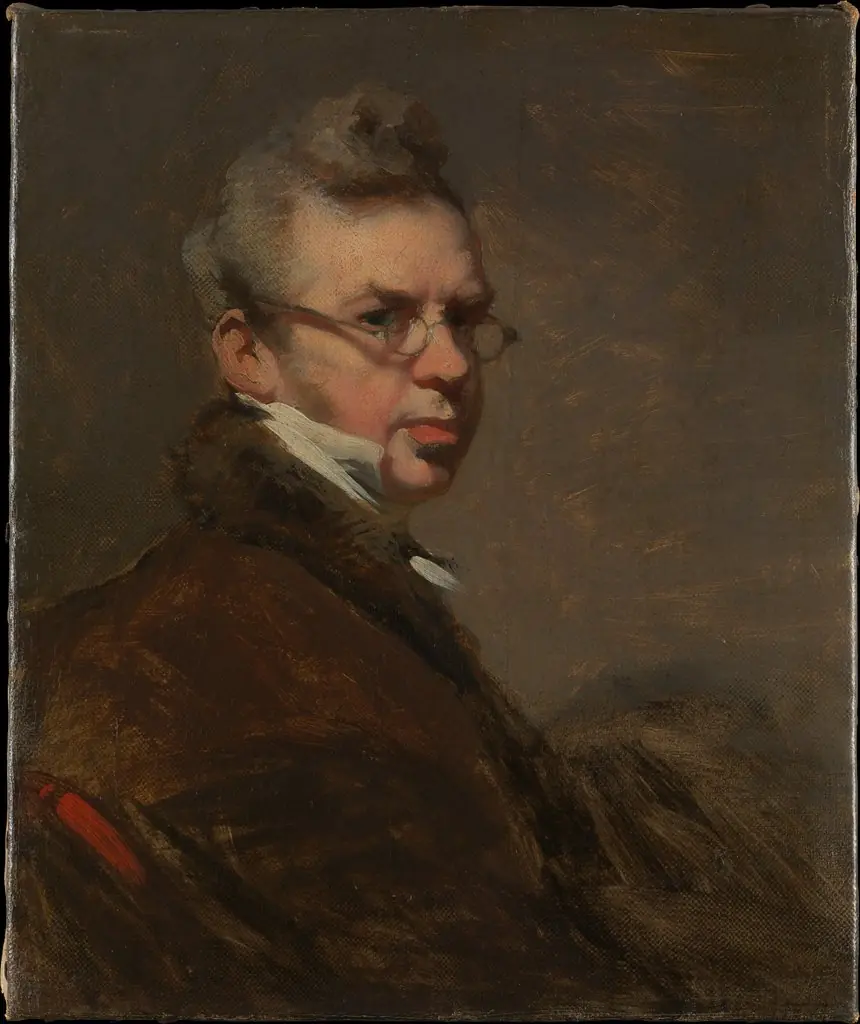
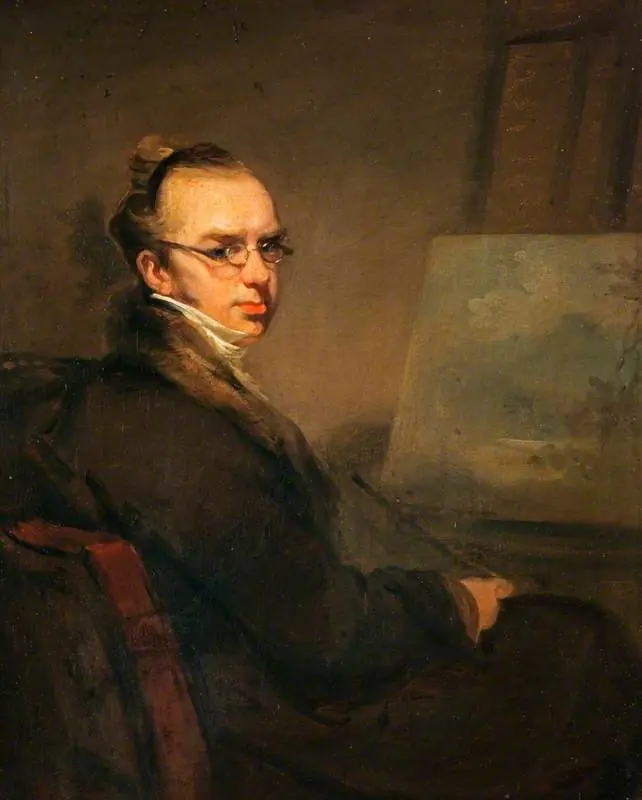
George Chinnery (Chinese: 錢納利; 5 January 1774 – 30 May 1852) was an English painter who spent most of his life in Asia, especially India and southern China.

 Houses on the Praya Grande, Macau, looking north-east
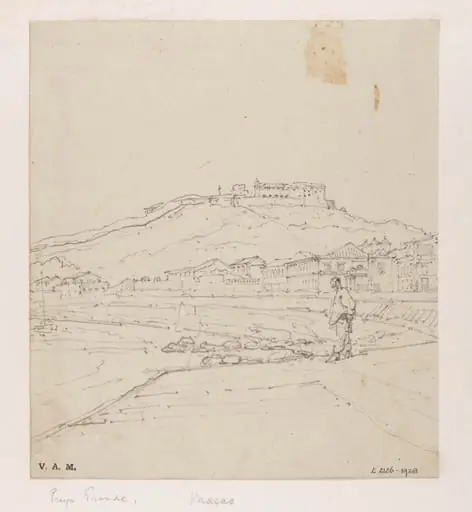 Part of the Praya Grande, Macau
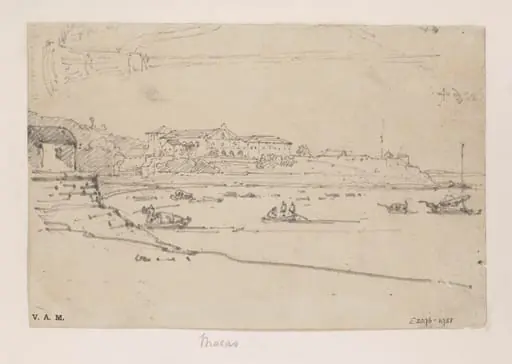 The convent and church of S. Francisco, Macau, seen from across the bay
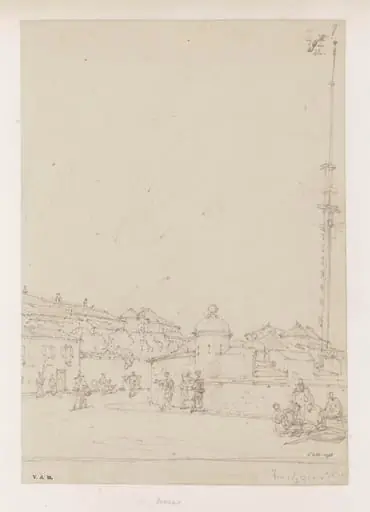 The fort of S. Pedro, Macau
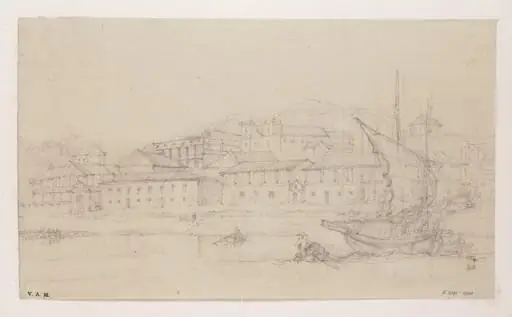 Macau with the church of S. Lourenço
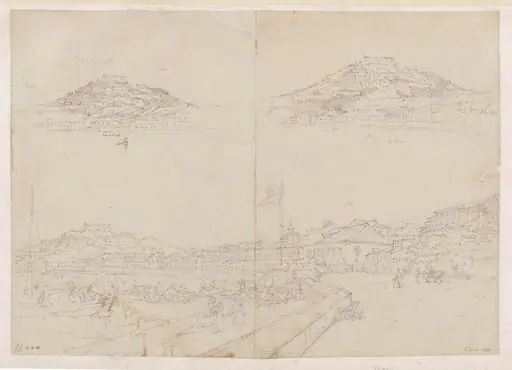 Penha Hill and the Praya Grande, Macau
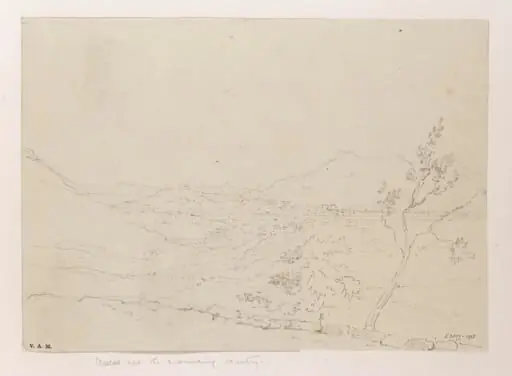 Macau, looking south-west along the peninsula
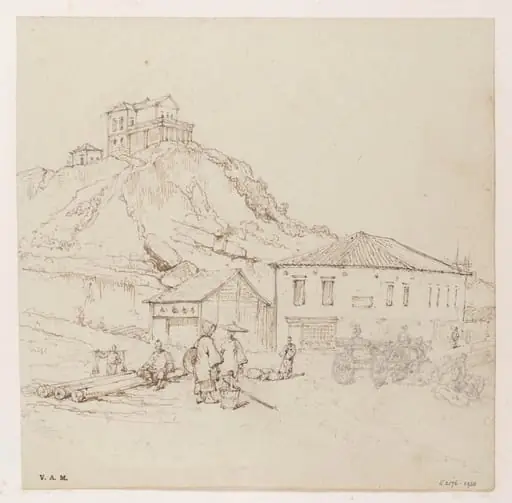 A steep hill in Macau, with buildings below it and on its summit
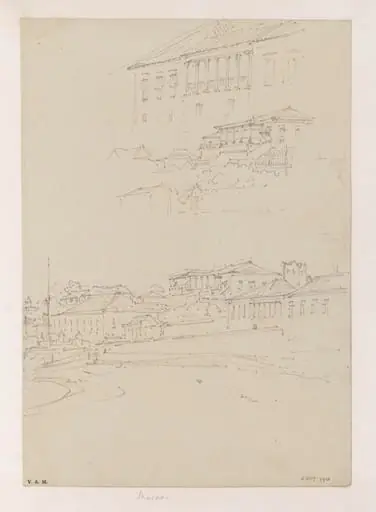 Three drawings of buildings on the Praya Grande, Macau
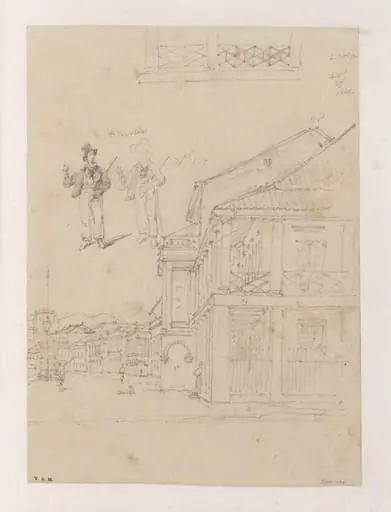 Buildings on the Praya Grande, Macau, with two studies of a Westerner
 The Praya Grande, Macau, from S. Pedro fort
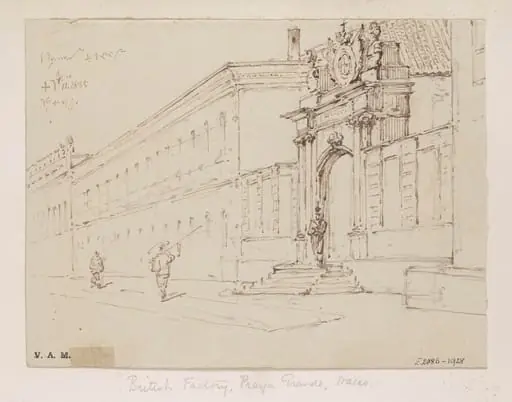 The British 'factory' on the Praya Grande, Macau