Artwork
Mainebene in Gewitterstimmung
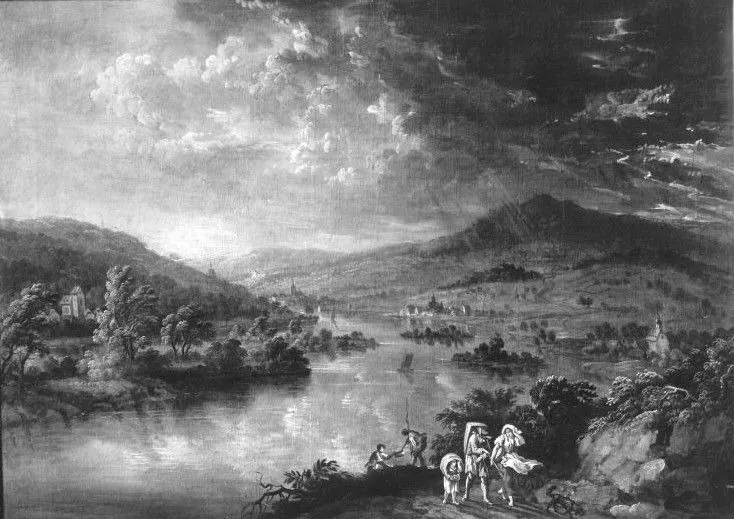
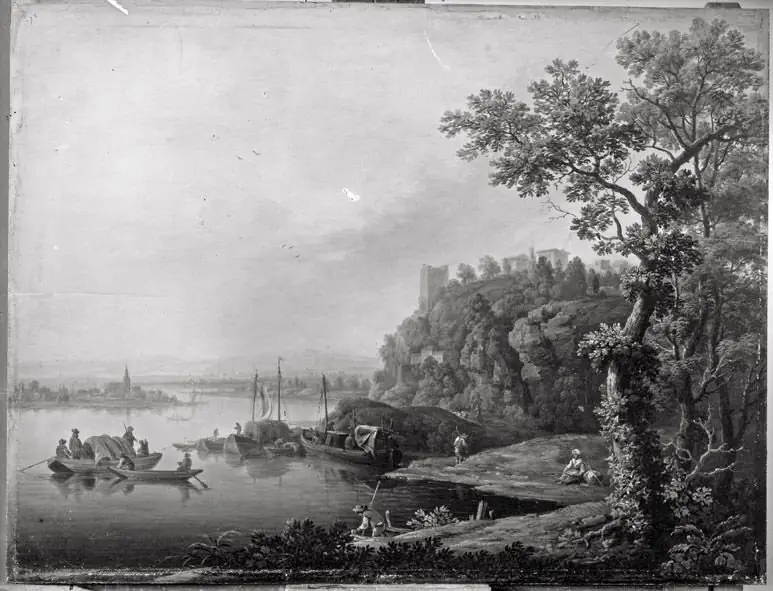
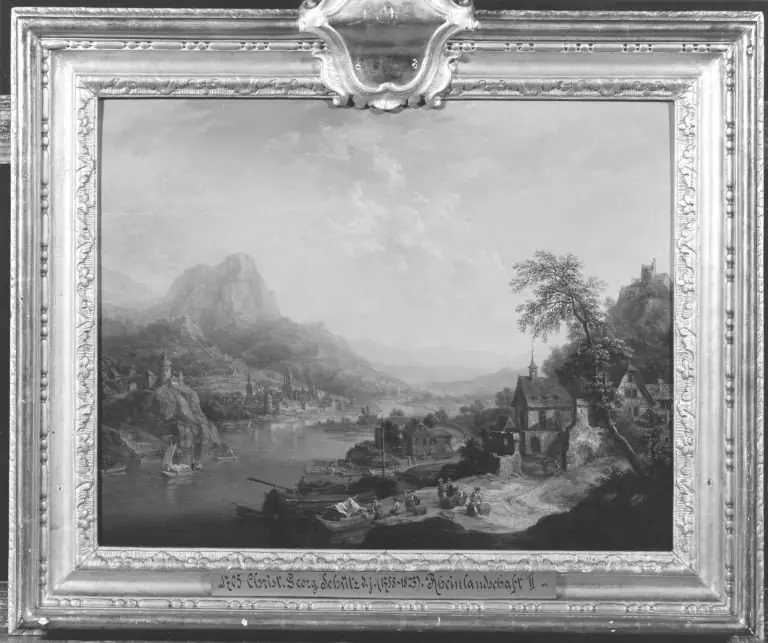
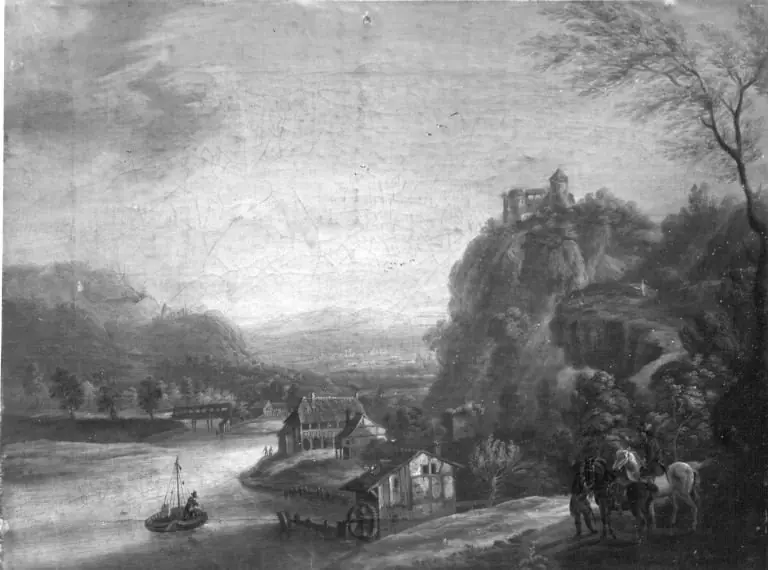
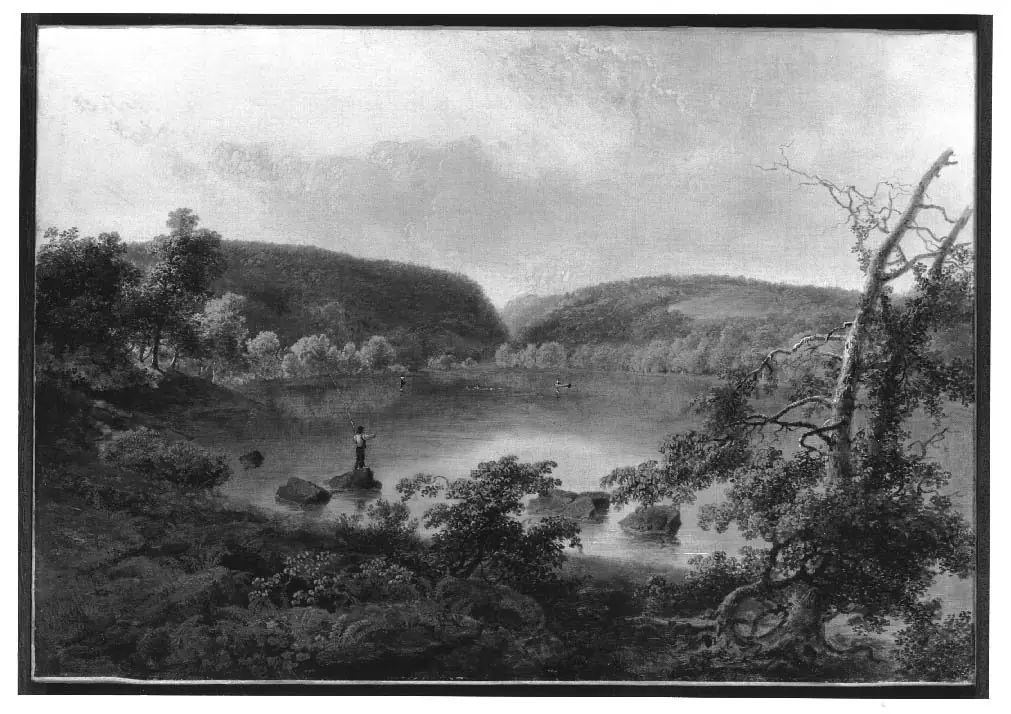
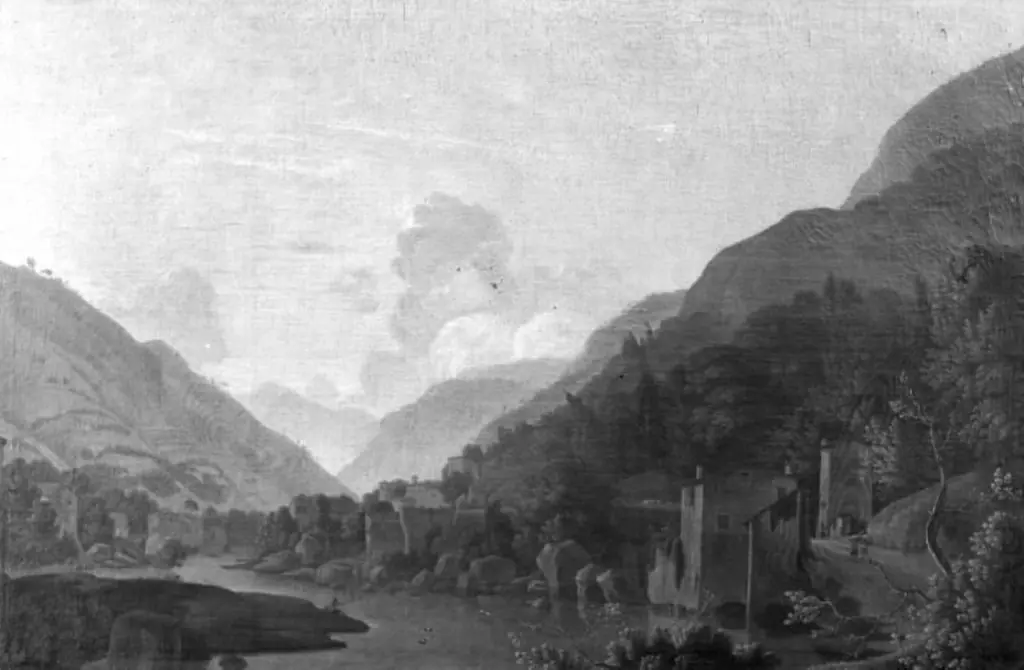
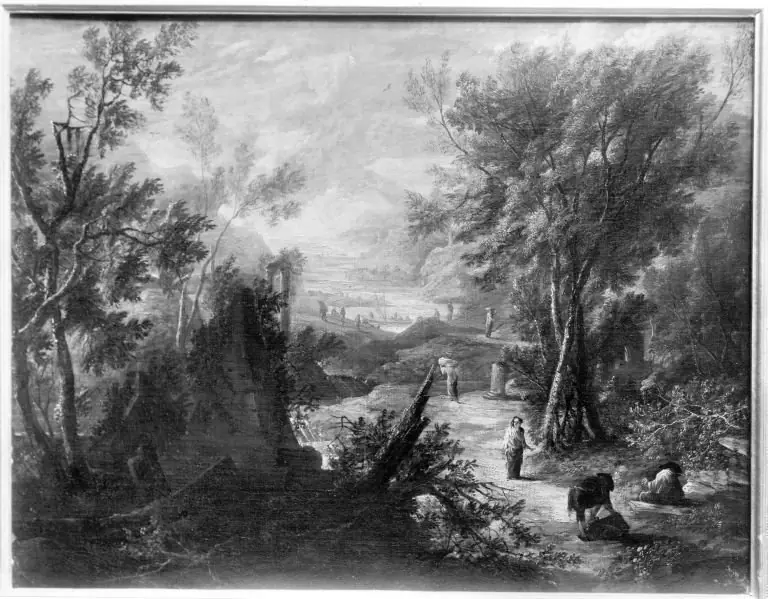
Mainebene in Gewitterstimmung is an unspecified painting by the Rococo painting artist Christian Georg Schütz. It dates from 1754 and is held in the collection of the Bavarian State Painting Collections.
About this work
Overview
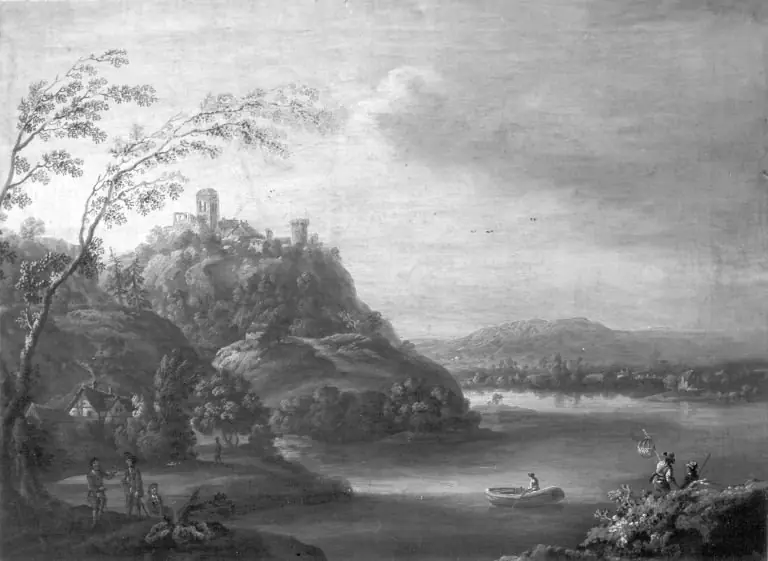
Painted in 1754 by Christian Georg Schütz, this landscape depicts a quiet riverside scene under a brooding sky. Though titled with reference to stormy weather, the atmosphere remains subdued, emphasizing stillness rather than turmoil. The work is part of the Alte Pinakothek’s collection in Munich, where it has been held since its acquisition.
Subject & Meaning
Figures on the left bank appear to rest or converse near the water, while a solitary walker with a dog crosses the right.
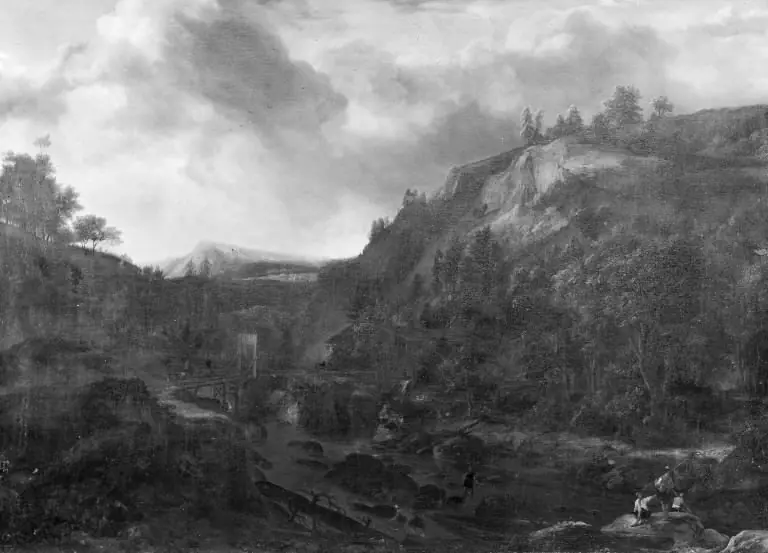
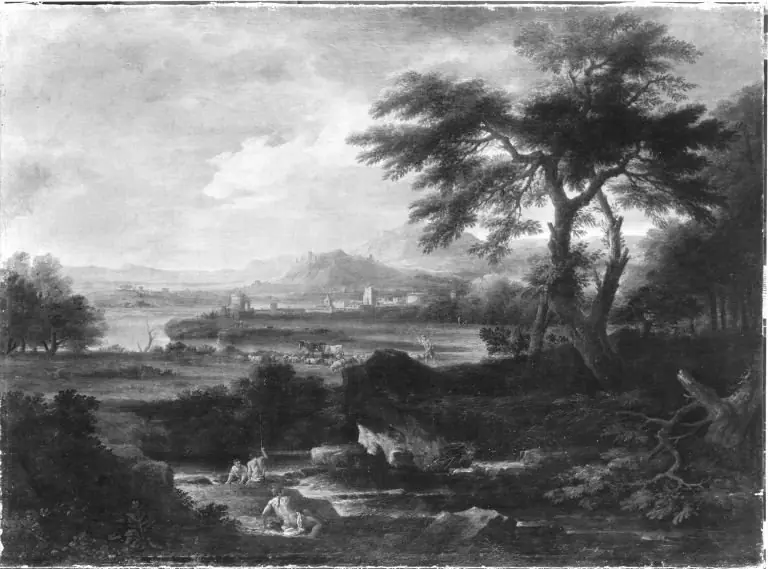
The scene centers on a calm river flanked by gentle hills and distant mountains. Figures on the left bank appear to rest or converse near the water, while a solitary walker with a dog crosses the right. These elements suggest everyday rural life, framed not as drama but as quiet observation. The title’s reference to stormy conditions is implied by the sky, yet the mood remains tranquil, perhaps reflecting a contemplative view of nature’s quiet tension.
Technique & Style
Schütz employs soft brushwork and layered pigments to build depth in the landscape. Greens of foliage transition smoothly into the muted blues and grays of the overcast sky, creating a cohesive tonal harmony. The foreground’s textured earth and water reflect careful attention to natural detail, while the distant hills are rendered with subtle atmospheric perspective, enhancing spatial recession without sharp definition.
History & Provenance
The painting entered the Alte Pinakothek’s collection in the 19th century, likely through the Bavarian royal acquisitions that expanded the museum’s holdings of German and Austrian artists. Its attribution to Schütz, a lesser-known 18th-century painter from Saxony, reflects scholarly consensus based on stylistic comparison and archival records from the period.
Context
Created during the mid-18th century, the work aligns with a broader European trend of landscape painting that valued serene, observed nature over dramatic narratives. Schütz’s approach echoes the quiet realism favored in Saxony and southern Germany, where artists sought to capture the subtleties of local topography and daily life without idealization or theatricality.
Legacy
Though Schütz did not achieve widespread fame, this painting contributes to the understanding of regional landscape traditions in 18th-century Germany. It stands as a modest but thoughtful example of how artists of the time engaged with nature not as spectacle, but as a quiet, enduring presence in human life.
Artist & collection
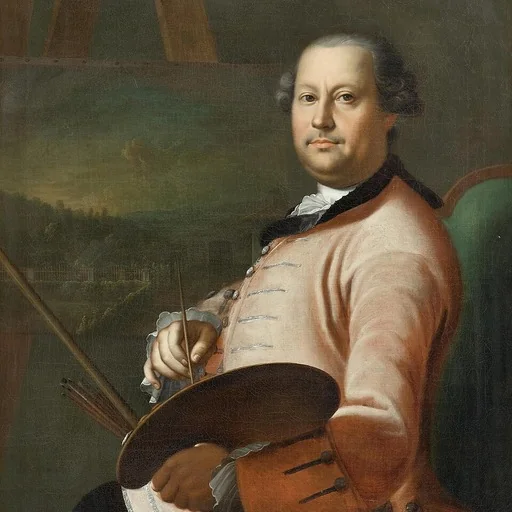
Artist
Christian Georg Schütz (1718–1791) was an artist, born in Flörsheim am Main.