Artwork
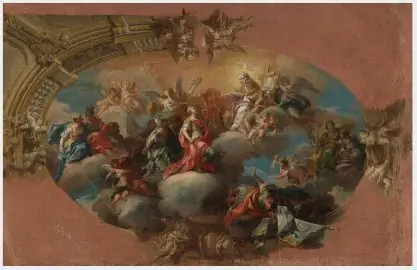
Apotheose des Kurfürsten Maximilian III. Joseph von Bayern
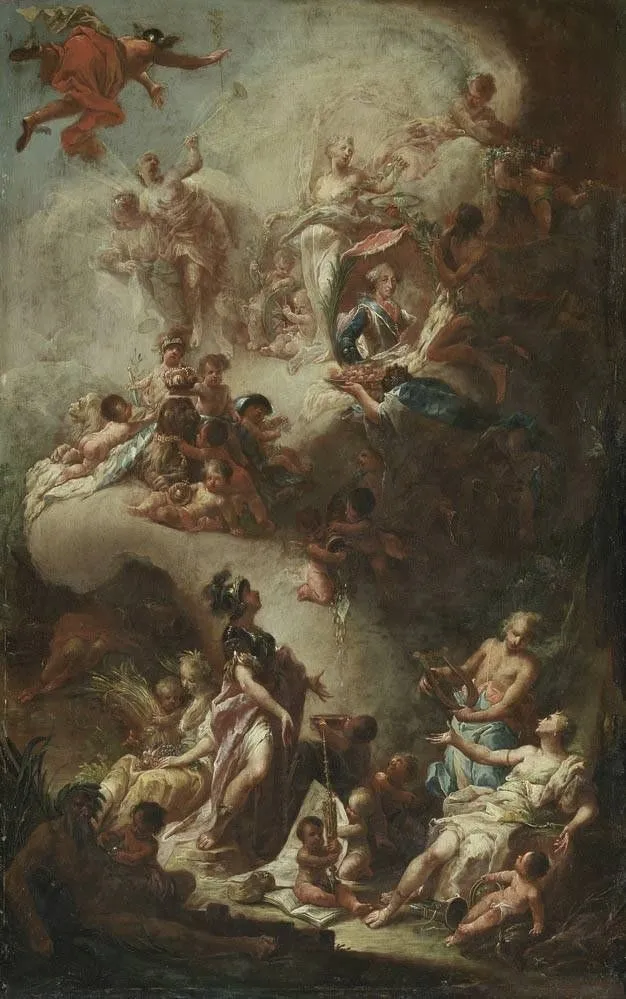
Apotheose des Kurfürsten Maximilian III. Joseph von Bayern is an unspecified painting by the Rococo painting artist Christian Winck. It dates from 1764 and is held in the collection of the Bavarian State Painting Collections.
About this work
Overview
Painted in 1764 by Christian Winck, this work commemorates the deification of Maximilian III Joseph, Elector of Bavaria. Executed in oil on canvas, it presents an allegorical scene rather than a literal portrait. The painting resides in the Alte Pinakothek in Munich, where it remains part of the collection of 18th-century Bavarian court art.
Subject & Meaning
The imagery aligns with Enlightenment-era traditions of honoring rulers through mythological elevation, blending political reverence with spiritual metaphor.
The painting depicts Maximilian III Joseph ascending to divine status, surrounded by celestial figures and symbolic elements. Putti, or cherubic beings, gather in a heavenly assembly, their playful gestures suggesting celestial joy and approval. The imagery aligns with Enlightenment-era traditions of honoring rulers through mythological elevation, blending political reverence with spiritual metaphor.
Technique & Style
Winck employs a restrained palette dominated by earth tones—browns, grays, and muted golds—to convey solemnity amid celebration. The composition is layered with soft, diffused lighting that draws attention to the central figure. The putti are rendered with delicate brushwork, their movements suggesting fluidity and weightlessness, enhancing the illusion of an ethereal realm.
History & Provenance
Commissioned shortly after Maximilian III Joseph’s death, the painting was likely intended for a courtly or religious setting to reinforce his legacy. It entered the Alte Pinakothek’s collection in the 19th century as part of the Bavarian royal art holdings. Its preservation reflects the continued interest in dynastic iconography during the early modern period.
Context
In mid-18th-century Bavaria, allegorical portraiture was a common tool for legitimizing rule through divine association. Winck’s work follows a broader European trend, where rulers were depicted alongside mythological figures to imply cosmic favor. The use of putti echoes Baroque traditions but adapts them to a more restrained, Rococo-influenced aesthetic prevalent in German courts.
Legacy
While not widely known outside regional art history, the painting exemplifies how Bavarian courts used visual allegory to sustain political narratives after a ruler’s death. It contributes to the understanding of how Enlightenment ideals were visually reconciled with traditional monarchical symbolism, offering insight into the cultural priorities of late Baroque Germany.
Artist & collection

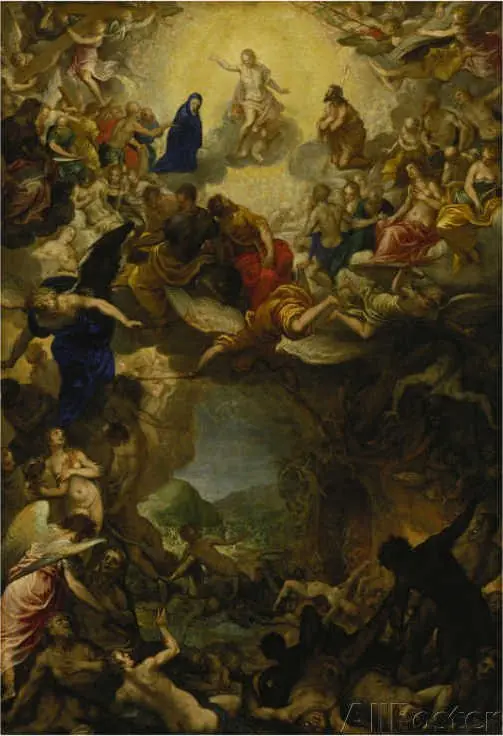 The Last Judgement
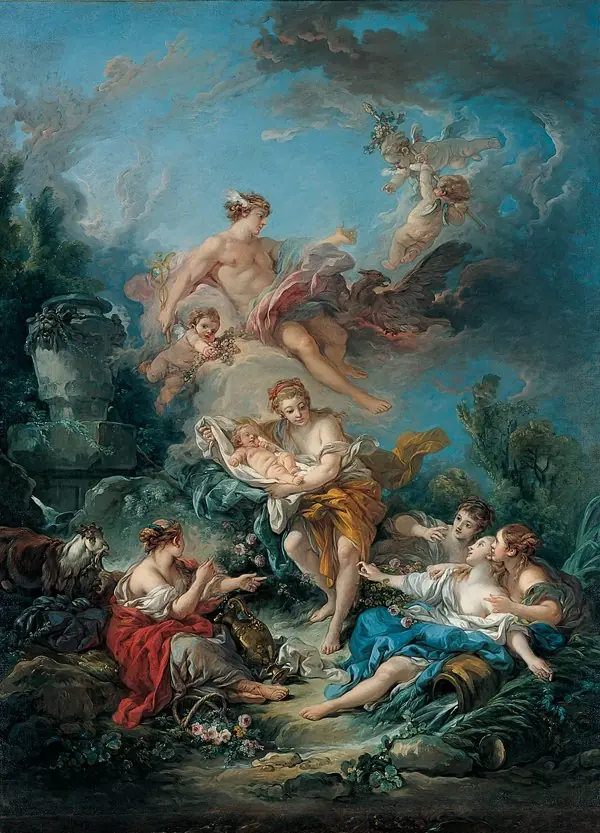 Mercury Confiding the Infant Bacchus to the Nymphs of Nysa
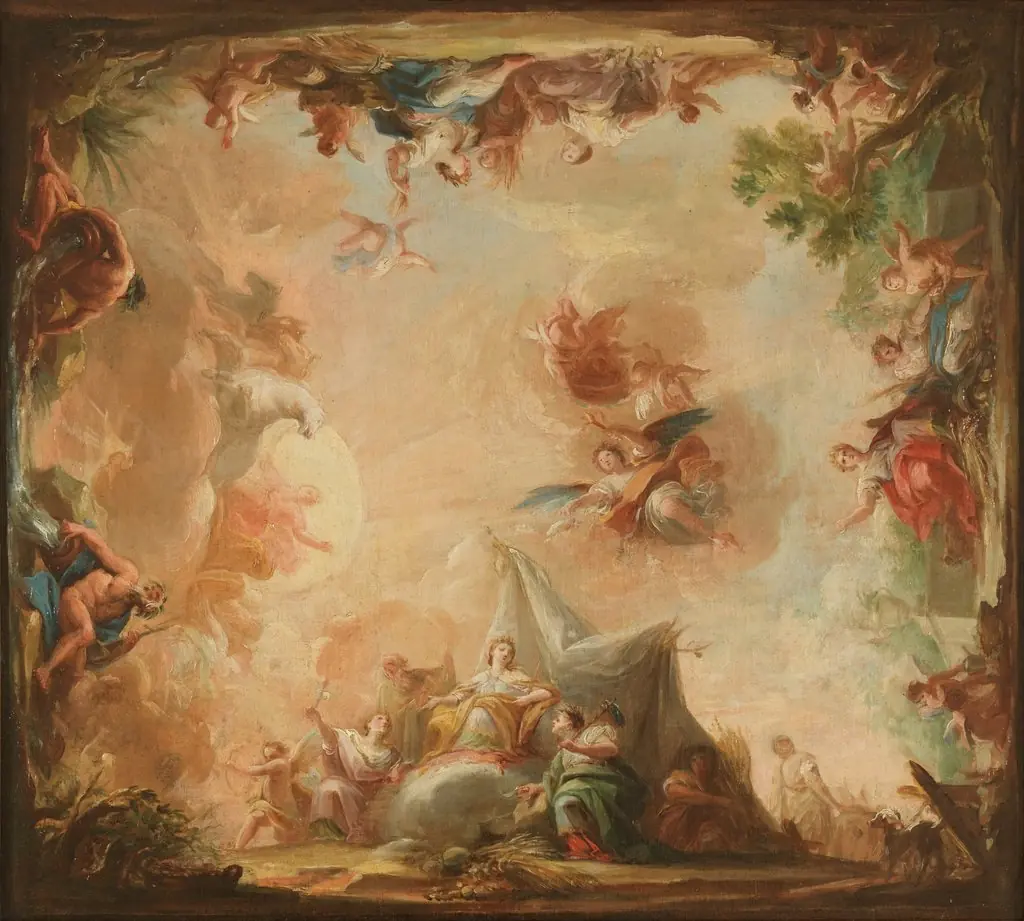 The Goddess Cybele offering her Produce to the Earth
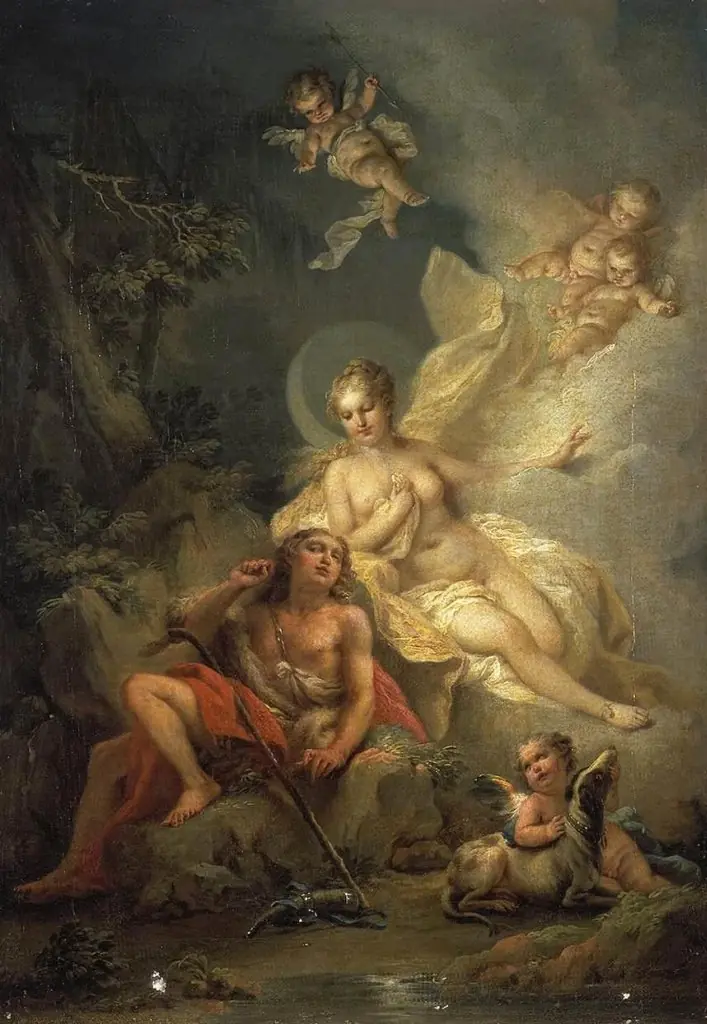 Diana and Endymion
 The Glorification of Saint Dominic
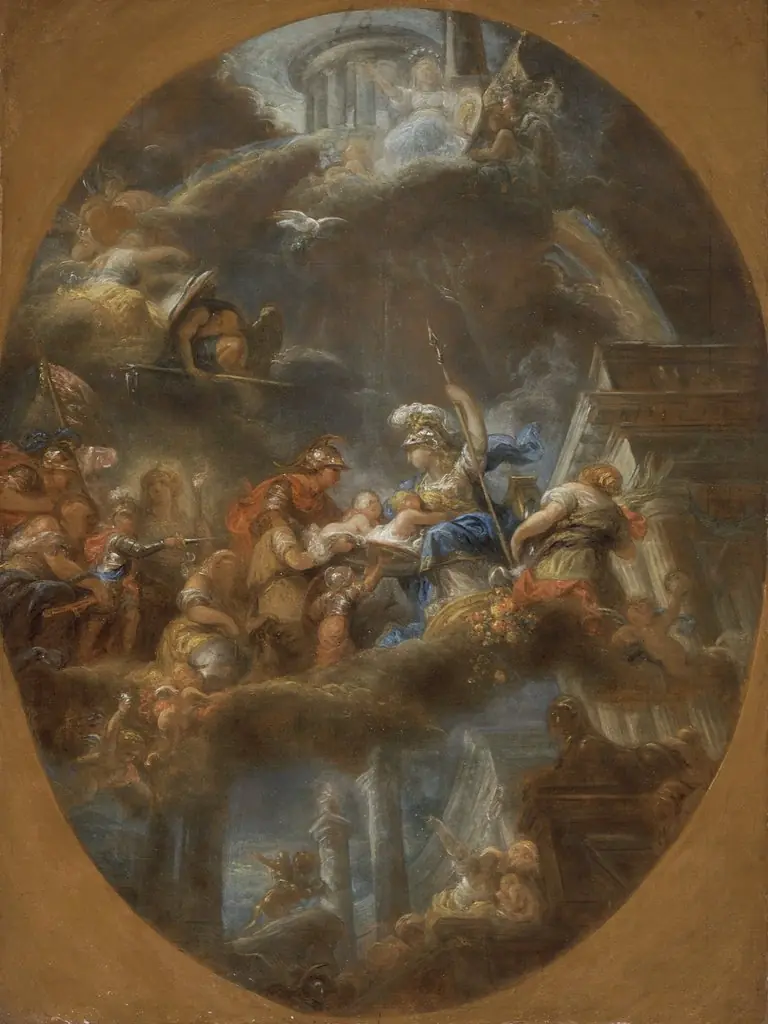 Nobility Offering the Imperial Russian Children to Minerva
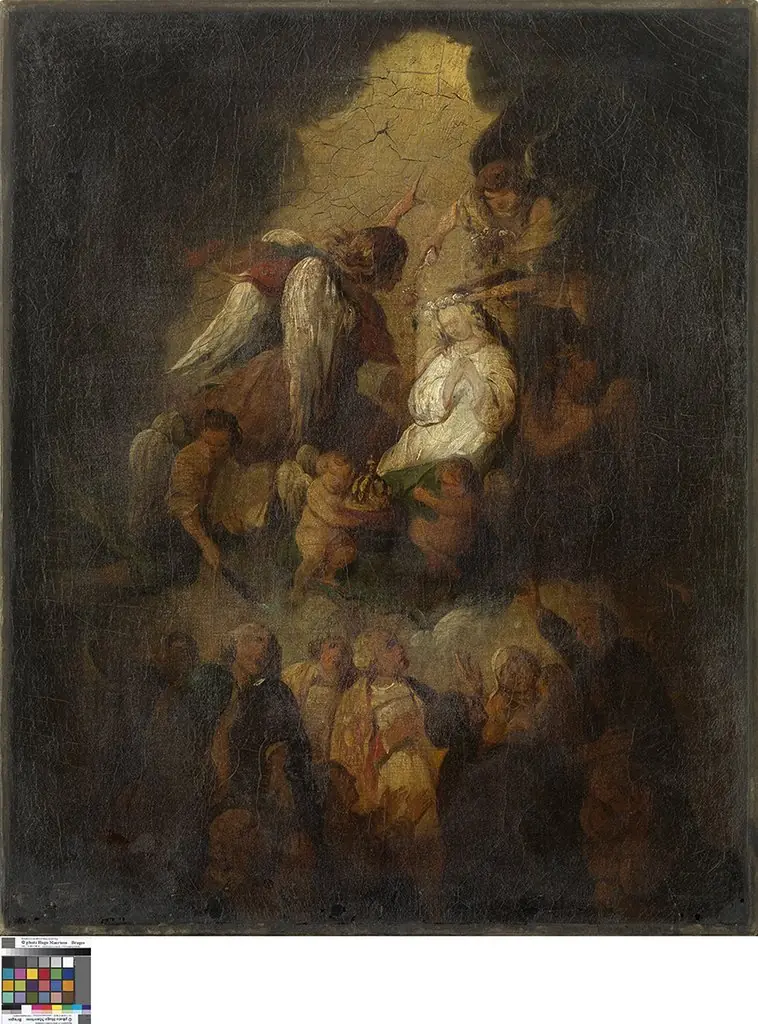 Verheerlijking van een vrouwelijke heilige
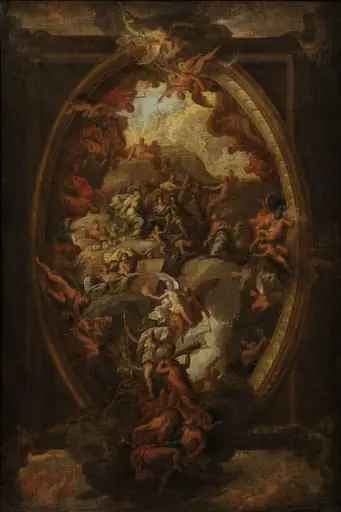 William and Mary Presenting the Cap of Liberty to Europe (sketch for the painted ceiling of the Great Hall, Greenwich Hospital)
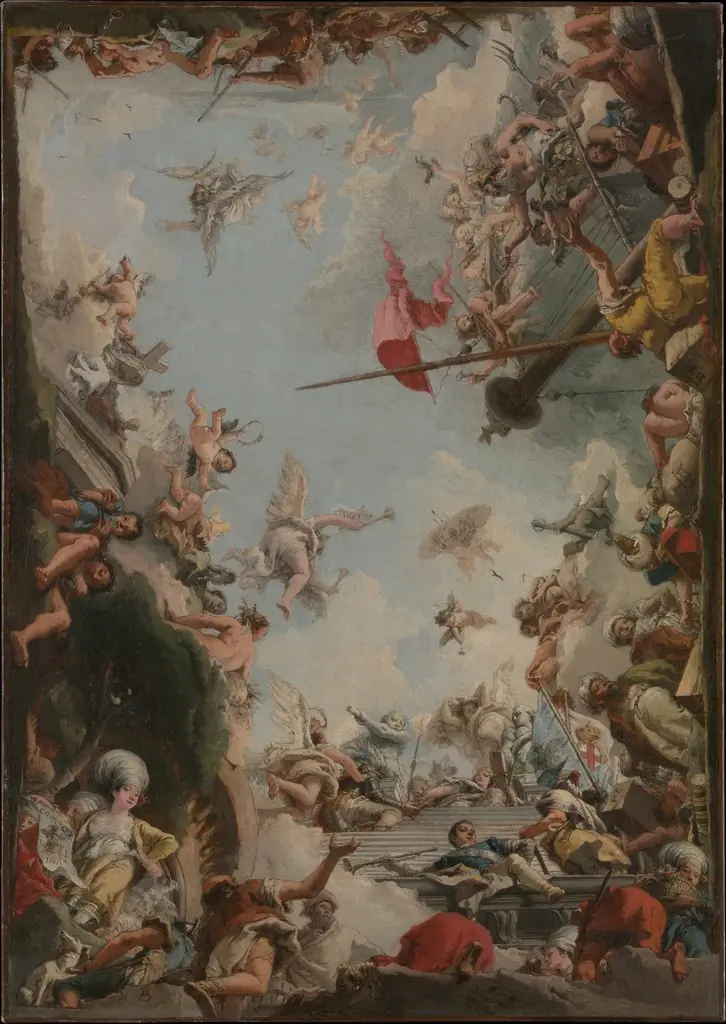 The Glorification of the Giustiniani Family
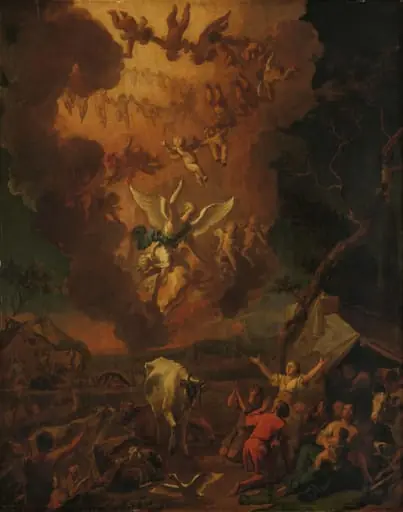 The Annunciation to the Shepherds
 The Glorification of Saint James the Great
 The Felicity of the Regency