Artwork
Diana and Endymion
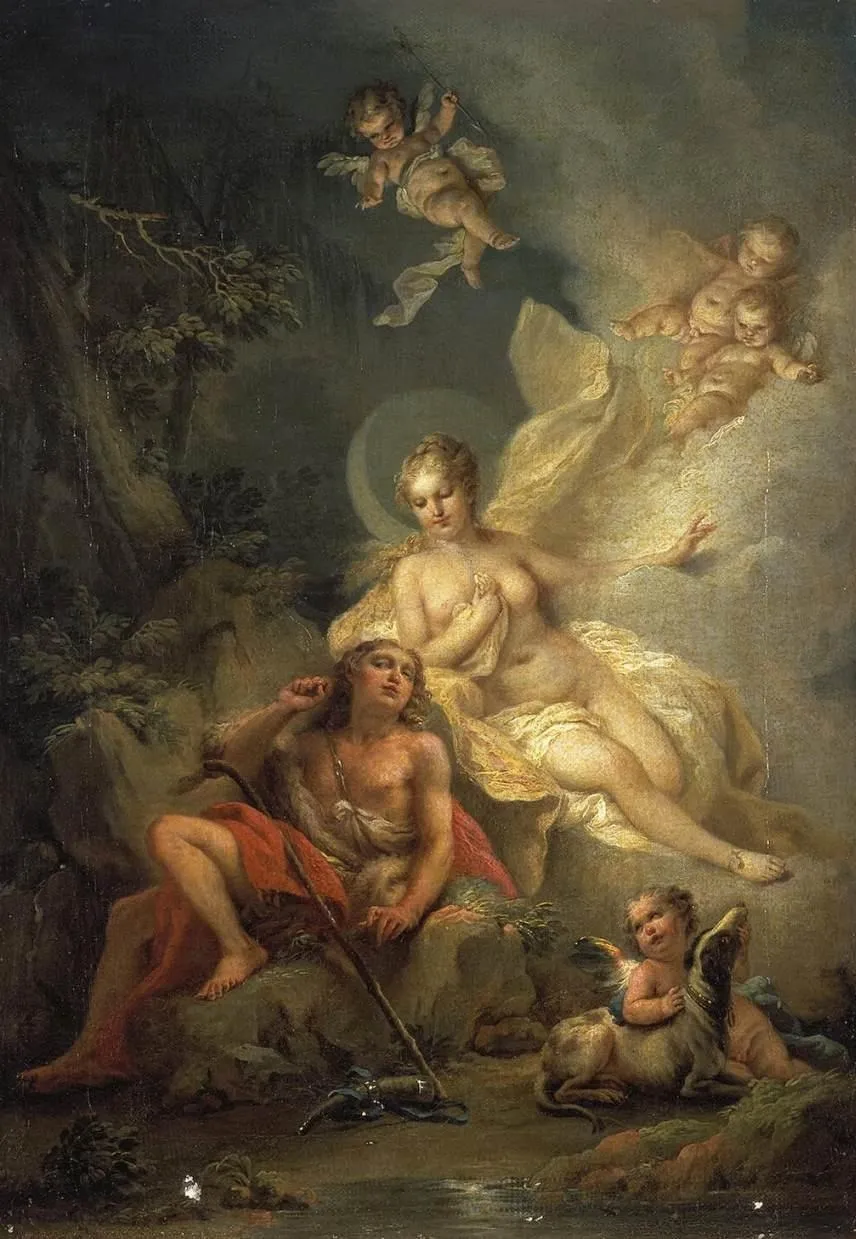
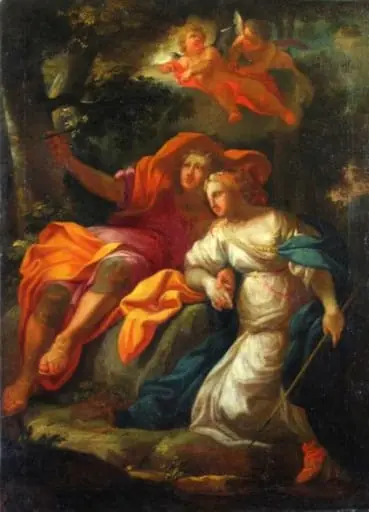
Diana and Endymion is an oil painting by the Rococo painting artist Stefano Torelli. It dates from 1765 and is held in the collection of the Hermitage Museum.
About this work
Overview
Stefano Torelli's 1765 oil painting Diana and Endymion brings together two figures from classical mythology. The work is characterized by a dreamy, nocturnal scene where the goddess Diana interacts with the mortal Endymion, set against a dark, contrasting backdrop.
Subject & Meaning
The painting illustrates a mythological narrative where Diana, goddess of the hunt, is depicted in a serene state, hovering above Endymion, a mortal favored by the gods. The peaceful expressions and gentle interactions between the two, surrounded by playful putti (winged babies), convey a sense of divine, idyllic love.
Technique & Style
Torelli employs chiaroscuro, a strong contrast between light and dark, to create depth and emphasize the figures. Diana's illuminated, pale skin and white dress, alongside the red cloth of Endymion, stand out against the dark, muted background of a forest, drawing the viewer's eye to the central figures.
History & Provenance
Created in 1765, the painting is now part of the collection at the State Hermitage Museum.
Context
Painted during the 18th century, Diana and Endymion reflects the ongoing European fascination with classical mythology as a subject for art, combining elements of Baroque lighting techniques with the softer, more ethereal qualities of Rococo.
Legacy
While specific lasting impacts of this work are not broadly documented, it contributes to the broader legacy of mythological themes in European painting and the evolution of lighting techniques in art.
Artist & collection