Artwork
Untitled
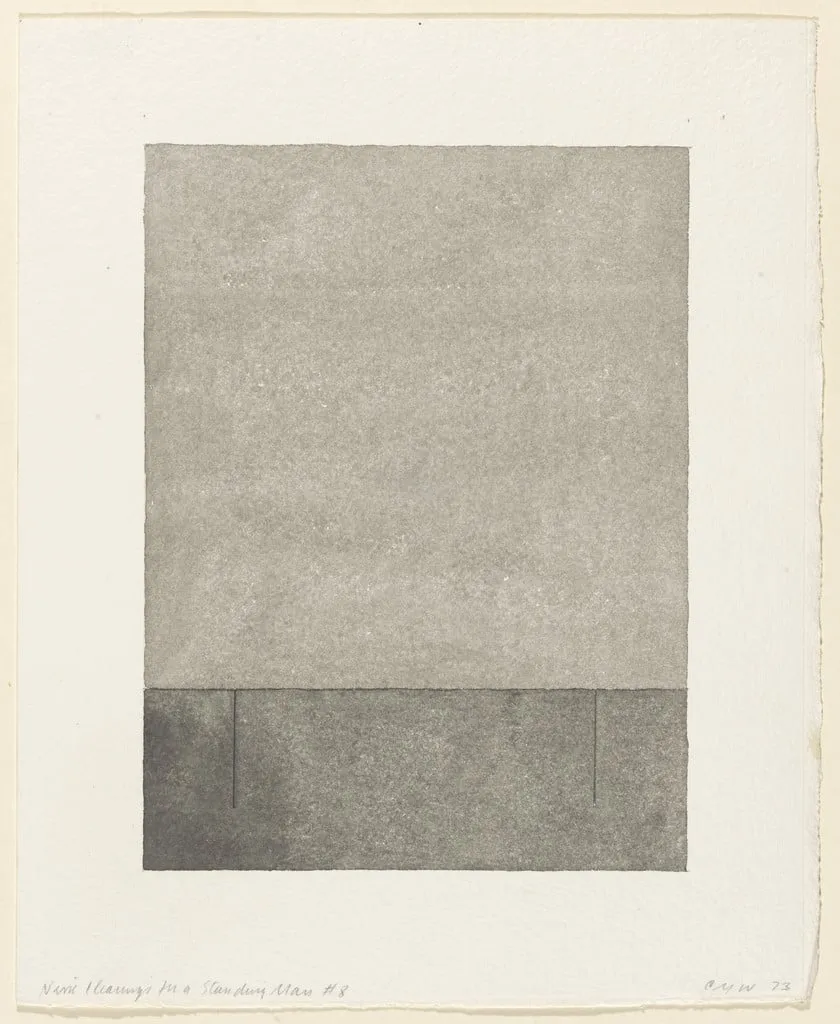
Untitled is a graphite drawing by Christopher Wilmarth. It dates from 1973 and is held in the collection of the Museum of Modern Art.
About this work
Overview
The work is held in the collection of The Museum of Modern Art, reflecting its significance within his broader artistic development.
Christopher Wilmarth created this drawing in 1973 using ink and pencil on paper. Though primarily recognized for his sculptural works in glass and steel, Wilmarth produced a body of two-dimensional pieces during this period as he explored spatial relationships beyond three-dimensional form. The work is held in the collection of The Museum of Modern Art, reflecting its significance within his broader artistic development.
Subject & Meaning
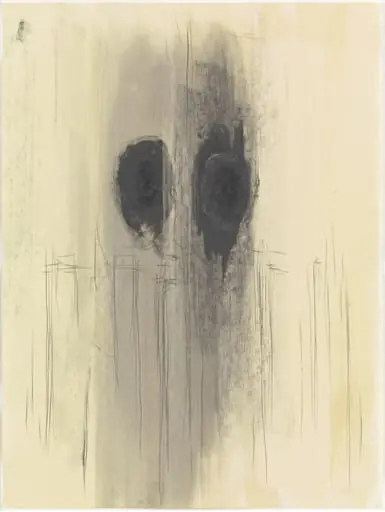
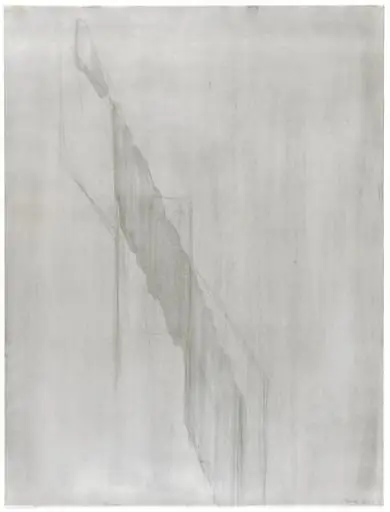
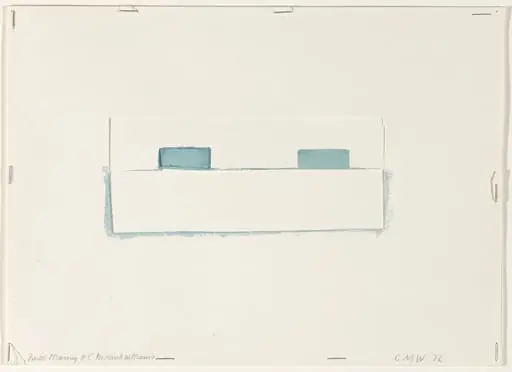
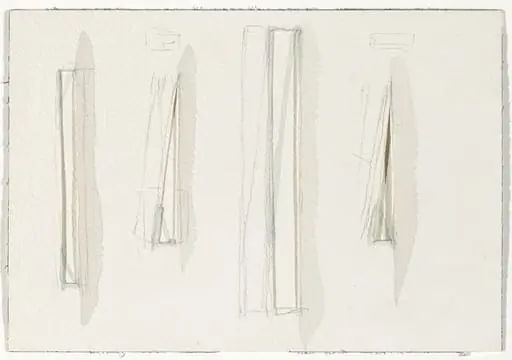
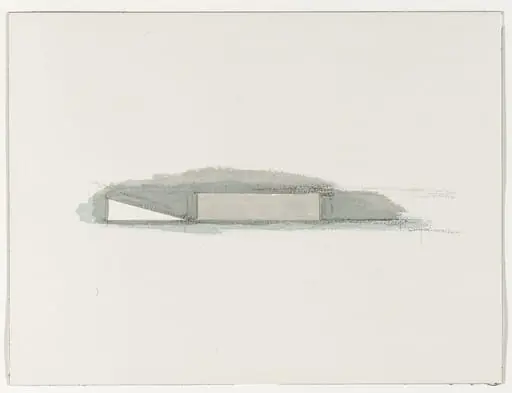
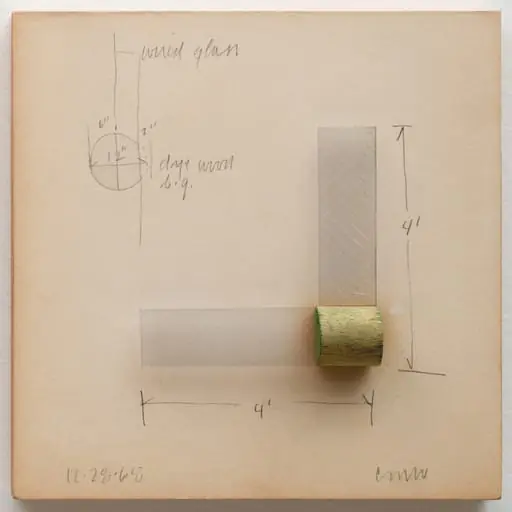
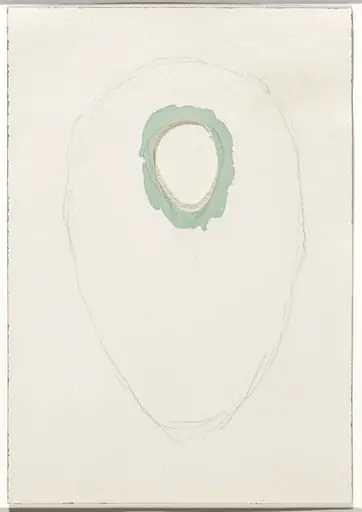
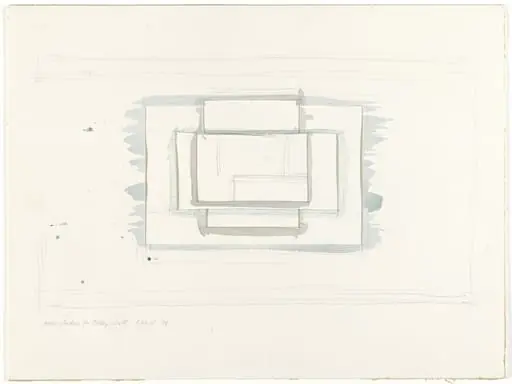
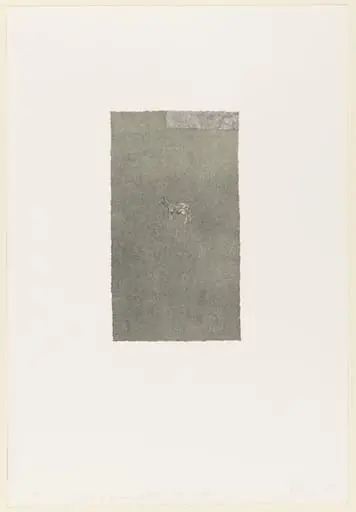
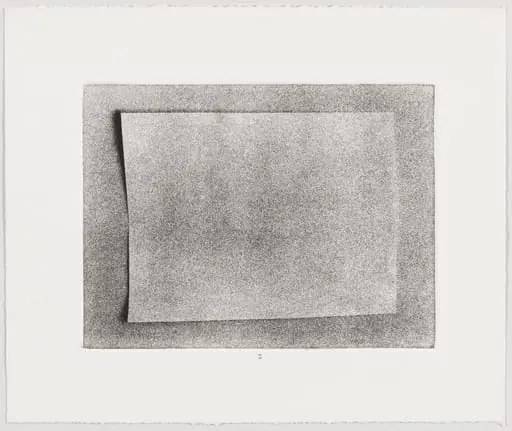
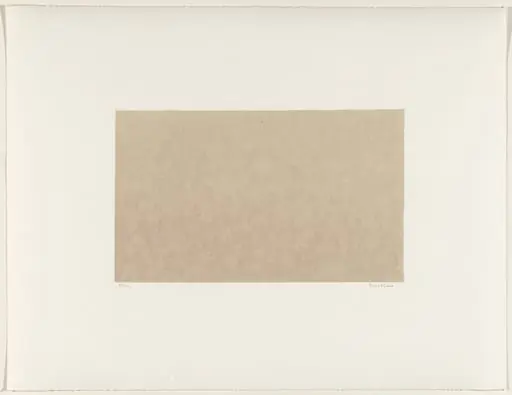
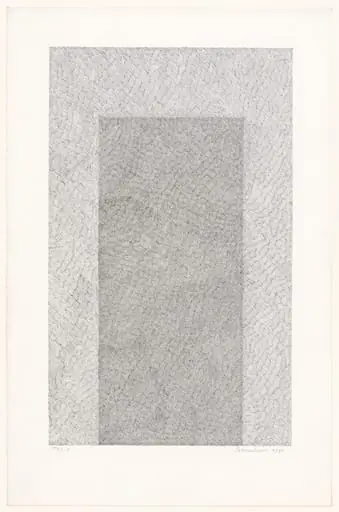
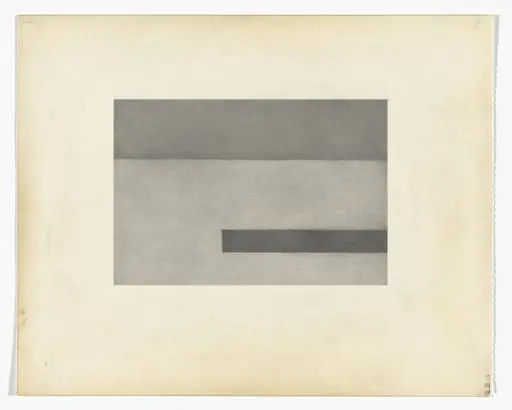
The drawing presents two rectangular forms—a large gray shape and a smaller, darker one—separated by a fine black line. Positioned against a white ground, the composition suggests architectural elements or layered surfaces without literal reference. The absence of narrative or symbolic content invites contemplation of form, weight, and spatial tension, aligning with Wilmarth’s interest in quiet, perceptual experiences.
Technique & Style
Wilmarth employed precise ink lines and subtle pencil gestures to define the rectangles and their edges. The gray tones are applied with varying density, creating a muted texture that suggests material presence without realism. Faint pencil underdrawings remain visible, revealing the process behind the final composition. The work’s restraint and minimalism reflect an interest in clarity and the physicality of mark-making.
History & Provenance
Executed in 1973, this drawing emerged during a phase when Wilmarth was intensively investigating drawing as a parallel practice to his sculptures. It entered The Museum of Modern Art’s collection shortly after its creation, indicating early institutional recognition of its conceptual relevance. The work has remained in the museum’s holdings since, consistently exhibited as part of surveys of postwar American drawing.
Context
In the early 1970s, many American artists turned to minimal and process-based approaches, rejecting expressive gesture in favor of reduced forms. Wilmarth’s drawing aligns with this trend, resonating with contemporaries like Robert Ryman and Donald Judd. His focus on material presence and spatial ambiguity reflects broader concerns in art at the time: how perception is shaped by structure and silence.
Legacy
Though less known than his sculptures, this drawing exemplifies Wilmarth’s consistent engagement with balance, materiality, and spatial quietude. It contributes to a broader understanding of his practice as one that unified two- and three-dimensional concerns. The work continues to be referenced in discussions of minimal drawing and the role of restraint in postwar American art.
Artist & collection
Artist
Christopher Wilmarth (1943 – November 19, 1987) was an American artist, known for producing sculptures using primarily glass and steel.