Artwork
Madonna and Child Enthroned with Angels and Prophets. ˋSanta Trinità Maestà´
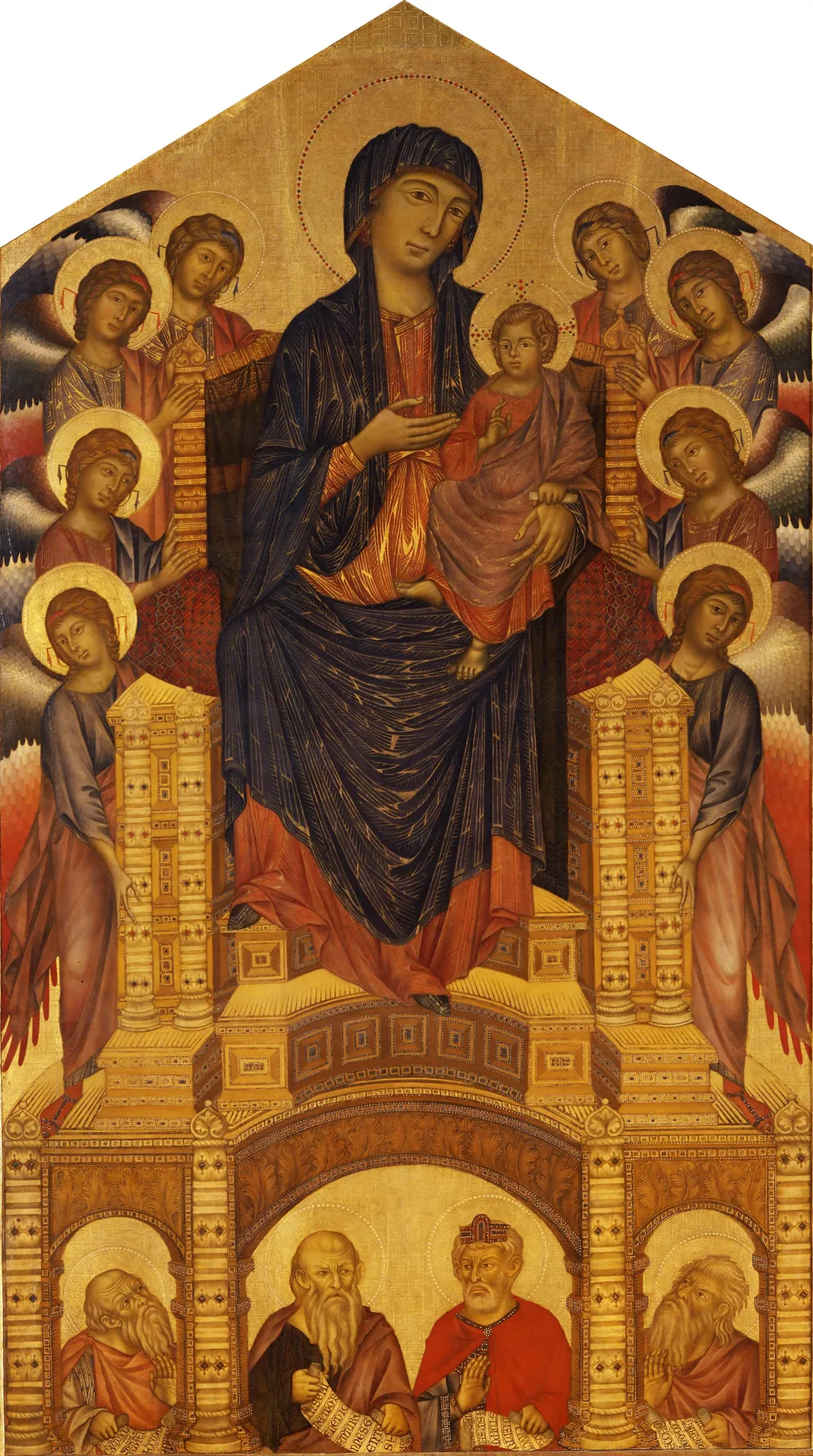
Madonna and Child Enthroned with Angels and Prophets. ˋSanta Trinità Maestà´ is a tempera painting by the Byzantine icon painting artist Cimabue. It dates from 1296 and is held in the collection of the Uffizi Gallery.
About this work
Overview
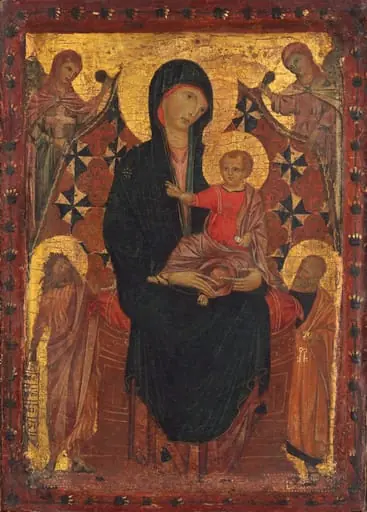
It depicts the Virgin Mary and Christ Child seated on a grand throne, flanked by angels and prophets.
Cimabue's *Santa Trinità Maestà* is a large tempera panel painting from the late 13th century. It depicts the Virgin Mary and Christ Child seated on a grand throne, flanked by angels and prophets. Originally created for a Florentine church, this work exemplifies the devotional art of the medieval period, showcasing a formal composition designed to inspire reverence. It is now a prominent piece in the Uffizi Gallery in Florence.
Subject & Meaning
The central figures are the Virgin Mary, holding the infant Jesus, enthroned in a dignified manner. Eight angels are symmetrically arranged around them, while four prophets appear in half-portraits beneath the throne. This hierarchical composition emphasizes the sacred status of the Madonna and Child, presenting a scene of profound serenity and devotion. The golden background further enhances the divine atmosphere, typical of medieval religious iconography.
Technique & Style
Executed in tempera on panel, the *Santa Trinità Maestà* demonstrates characteristics of late medieval painting. Cimabue employed a formal and reverent style, evident in the dignified poses of the Madonna and Child and the surrounding celestial figures. The use of a warm, golden background contributes to the overall luminous effect, creating an ethereal setting for the sacred narrative. This approach reflects the artistic conventions prevalent before the full emergence of the Renaissance.
History & Provenance
This monumental altarpiece was initially commissioned for the Church of Santa Trinita in Florence, where it served as a focal point for worship for nearly two centuries. The painting remained in its original ecclesiastical setting until 1471. It eventually entered the collection of the Uffizi Gallery in Florence, where it is now displayed as a significant example of Italian medieval art, illustrating its journey from a devotional object to a museum piece.
Artist & collection
Artist
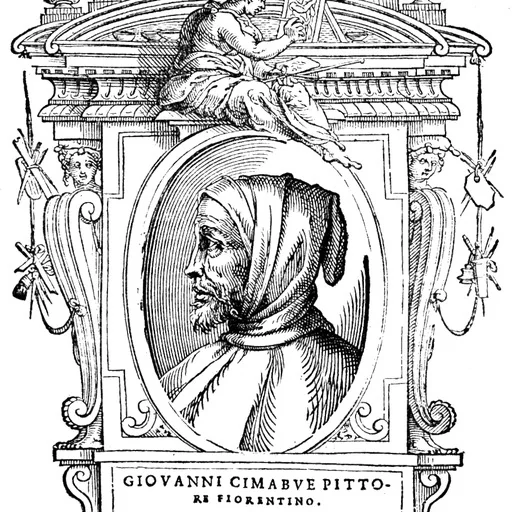
Giovanni Cimabue ( CHEE-mə-BOO-ay, Italian: ; c. 1240 – 1302), also known as Cenni di Pepo or Cenni di Pepi, was an Italian painter and designer of mosaics from Florence. Although heavily influenced by Byzantine models,…