Artwork
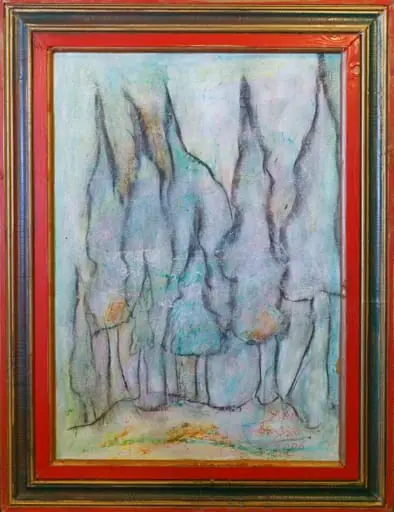
Compoziție cu copaci
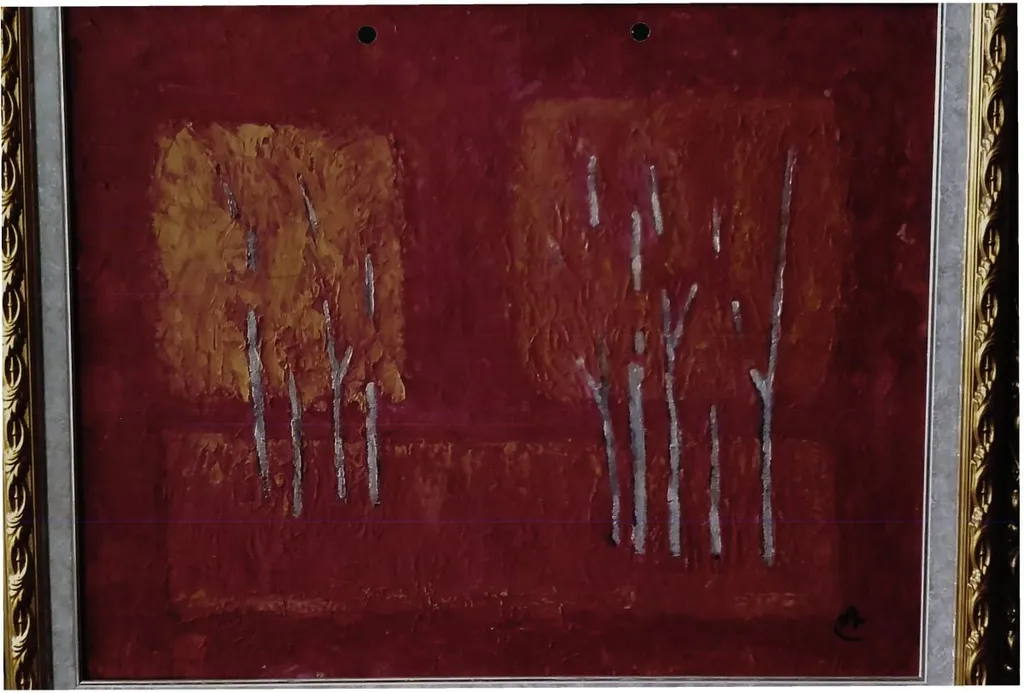
Compoziție cu copaci is a print by Alexandru Ciucurencu. It dates from 1950 and is held in the collection of the Colecție particulară - Maramureș.
About this work
Overview
Created around 1950, *Compoziție cu copaci* is a painting by Romanian artist Alexandru Ciucurencu, a key figure in the country’s Post-Impressionist movement.
Created around 1950, *Compoziție cu copaci* is a painting by Romanian artist Alexandru Ciucurencu, a key figure in the country’s Post-Impressionist movement. Trained at Bucharest’s National School of Fine Arts and later at Paris’s Académie Julian, Ciucurencu developed a distinctive visual language that merged structural clarity with expressive brushwork. The work resides in the Museum of Ethnography’s collection, reflecting his mature style during a period of artistic consolidation in postwar Romania.
Subject & Meaning
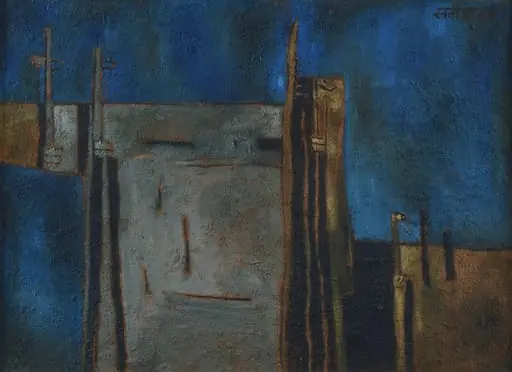
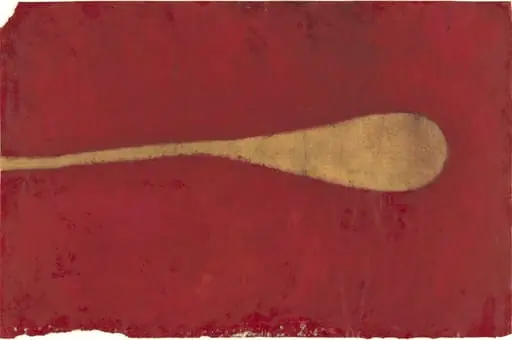
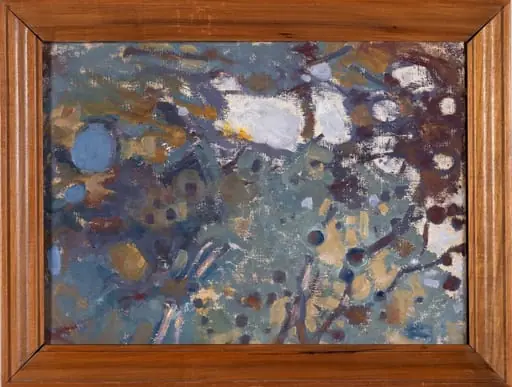
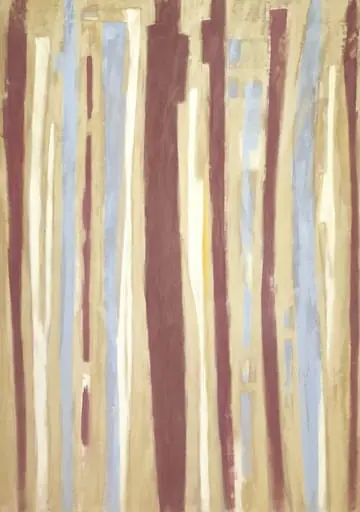
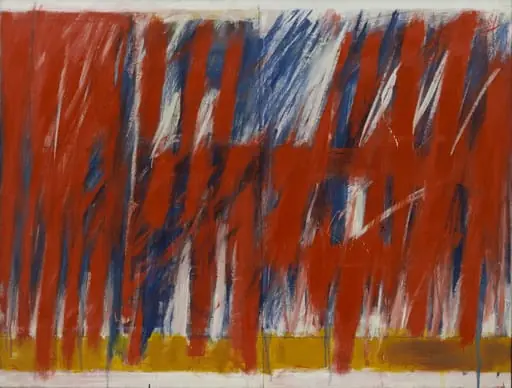
The painting depicts two clusters of bare, slender trees standing rigidly against a deep red ground. Without foliage, the branches appear stark and angular, suggesting endurance rather than seasonal change. The absence of leaves and the lack of a horizon or context strip the scene of narrative, focusing attention on form and emotional tone. The composition evokes isolation and quiet resilience, qualities often associated with Ciucurencu’s contemplative approach to nature.
Technique & Style
Ciucurencu applied paint thickly and unevenly, using a knife or stiff brush to build texture in places, creating a tactile surface that catches light differently across the canvas. The left side glows with a muted yellow, contrasting the intense red of the right. Brushstrokes are deliberate yet rough, with areas scraped or layered to suggest erosion or weathering. This impasto technique emphasizes materiality over realism, aligning with Post-Impressionist concerns for emotional expression through form and pigment.
History & Provenance
The painting entered the Museum of Ethnography’s holdings after its creation, likely through acquisition or donation during the early 1950s. Ciucurencu, a corresponding member of the Romanian Academy, was recognized nationally by this time, and his works were increasingly collected by public institutions. While specific exhibition history is limited, its inclusion in a museum focused on cultural heritage signals its perceived significance within Romania’s modernist canon.
Context
Painted in the early years of communist Romania, *Compoziție cu copaci* emerged during a period when state-sponsored art favored socialist realism. Ciucurencu’s abstracted, non-narrative style stood apart from official mandates, yet avoided overt political messaging. His continued focus on landscape and formal experimentation suggests a quiet resistance to ideological conformity, preserving personal expression within a restrictive cultural climate.
Legacy
The work remains a representative example of Ciucurencu’s mature style, illustrating how Romanian Post-Impressionism adapted European modernist principles to local sensibilities. Though not widely exhibited internationally, it holds a steady place in Romanian art history as a bridge between early 20th-century experimentation and mid-century abstraction. Its preservation in a national museum underscores its role in documenting the diversity of artistic practice beyond state-approved themes.
Artist & collection
Artist
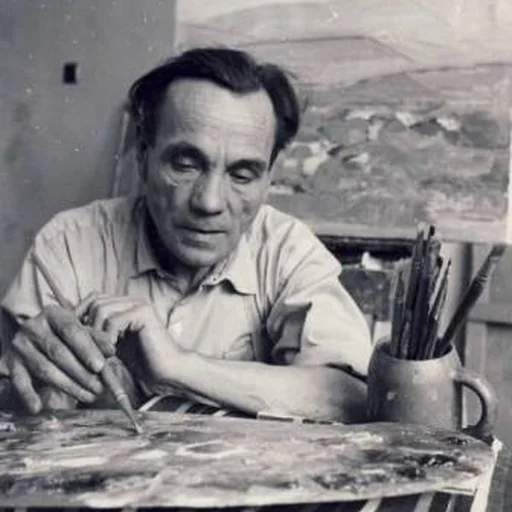
Alexandru Ciucurencu (Romanian pronunciation: ; 27 September 1903 – 27 December 1977) was a Romanian Post-Impressionist painter, and a corresponding member of the Romanian Academy.