Artwork
Natură statică
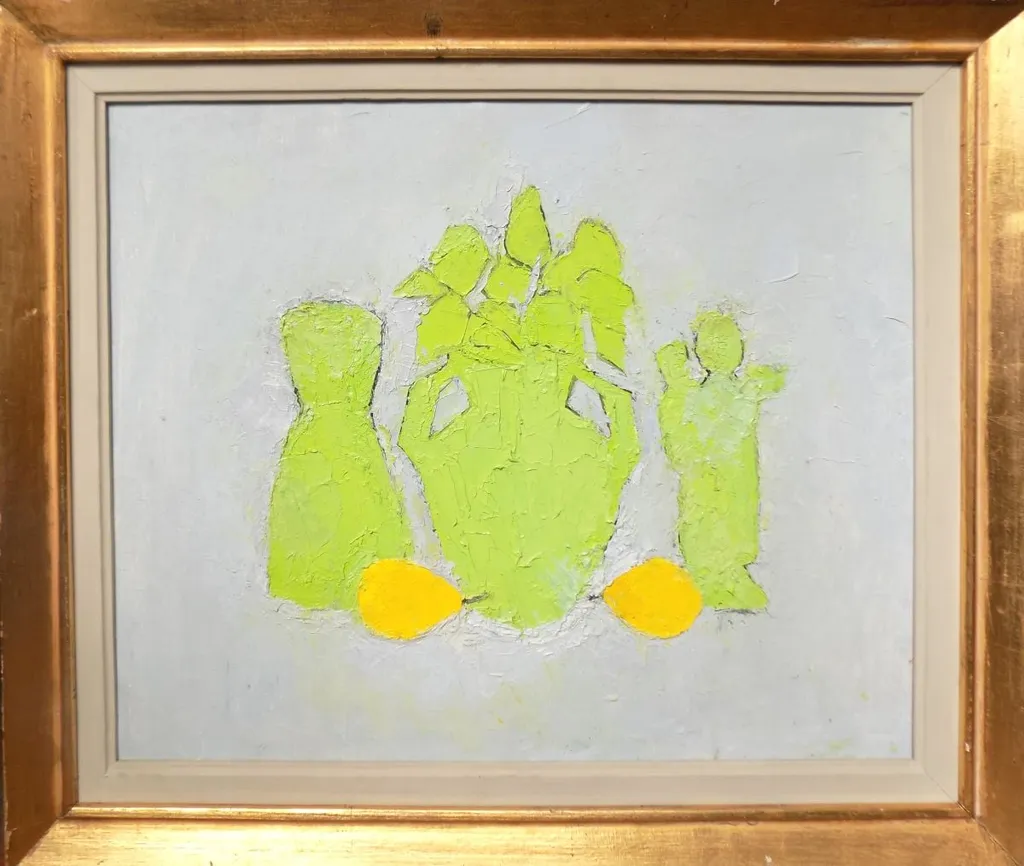
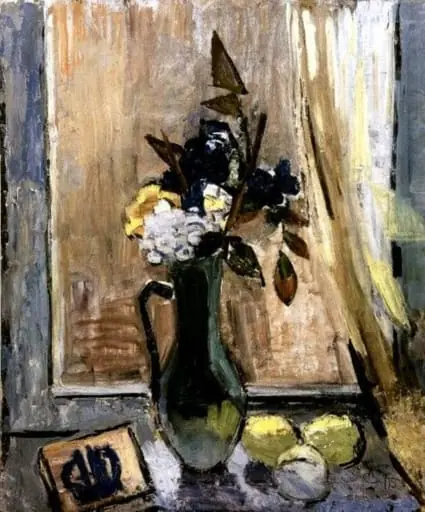
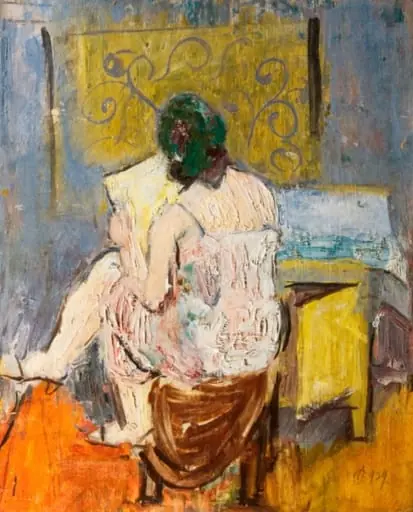
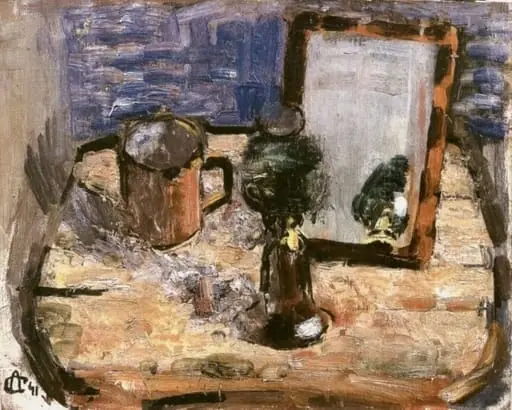
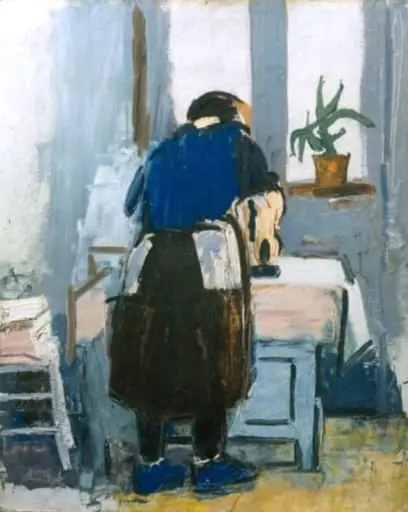
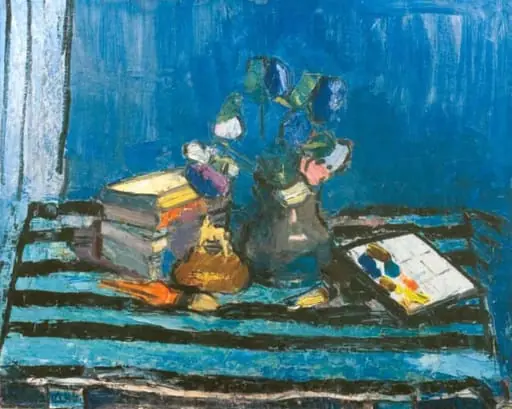
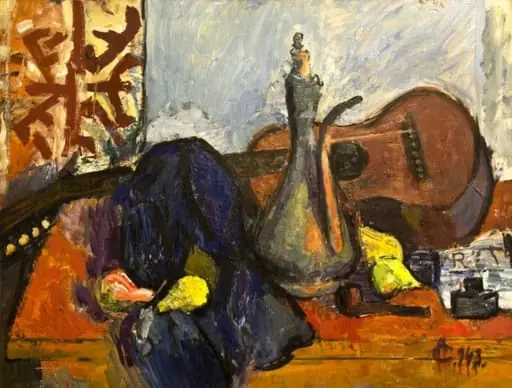
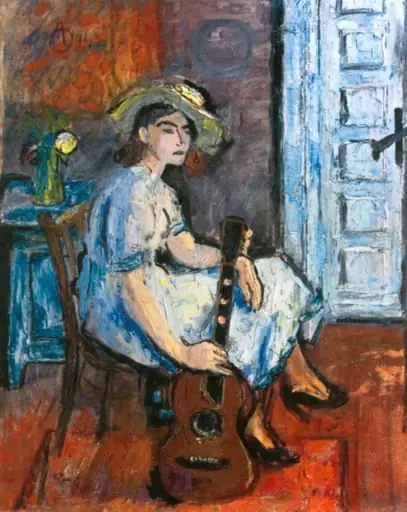
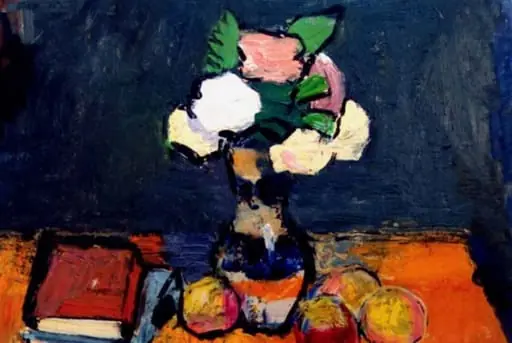
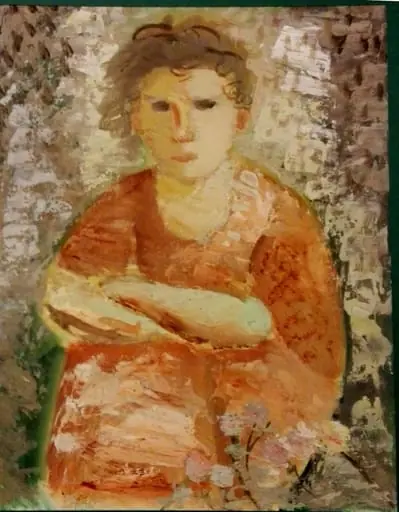
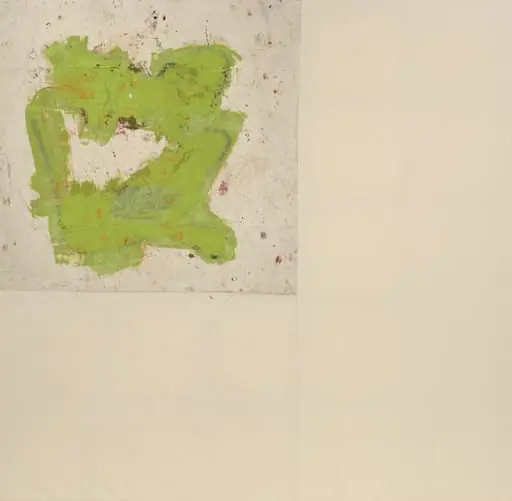
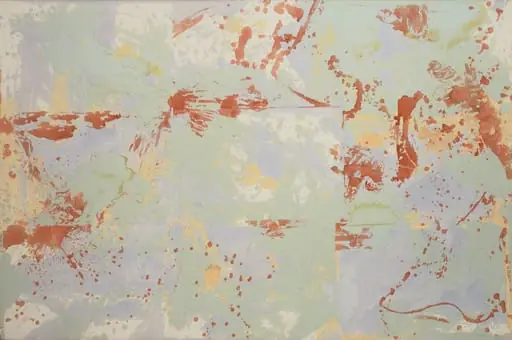
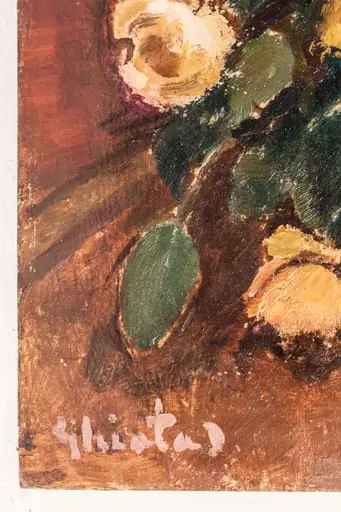
Natură statică is a print by Alexandru Ciucurencu. It dates from 1950 and is held in the collection of the Bucharest Municipality Museum.
About this work
Overview
Alexandru Ciucurencu painted *Natură statică* circa 1950, near the end of a career shaped by Romanian academic training and exposure to Parisian modernism.
Alexandru Ciucurencu painted *Natură statică* circa 1950, near the end of a career shaped by Romanian academic training and exposure to Parisian modernism. The work belongs to the Museum of Ethnography’s collection and exemplifies his mature style, blending Post-Impressionist color and form with a reductive, almost symbolic approach. Its abstracted figures and simplified environment reflect a move away from literal representation toward emotional and structural harmony.
Subject & Meaning
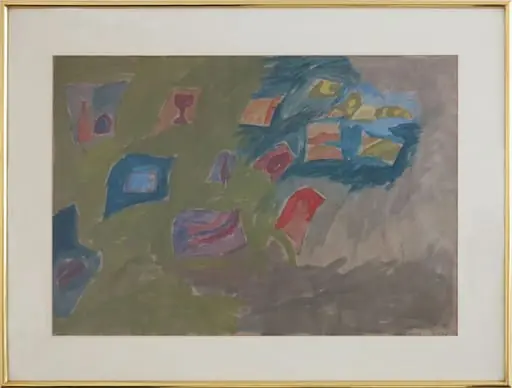
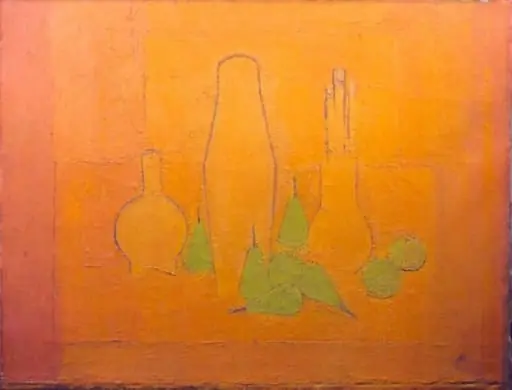
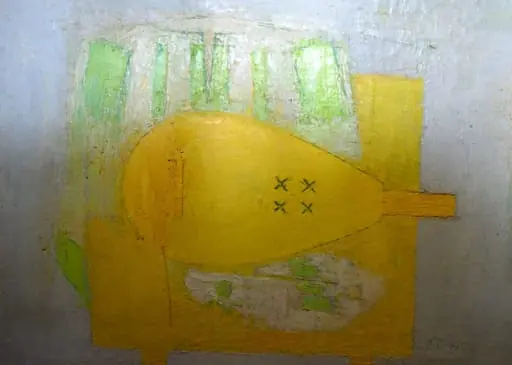
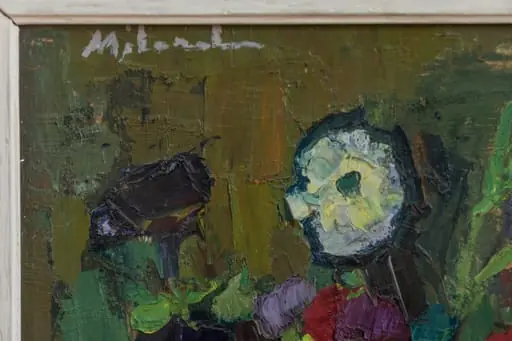
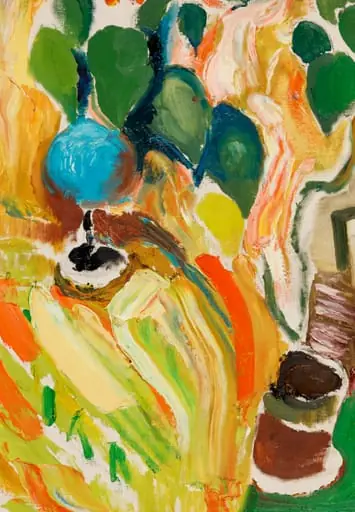
Three amorphous green forms, devoid of facial features or individual detail, stand in close proximity, suggesting human presence without narrative. Behind them, clustered leaf-like shapes evoke natural growth, while two bold yellow circles on the ground may represent fruit or flowers—reduced to pure color and shape. The composition resists clear storytelling, instead inviting contemplation of form, balance, and the quiet rhythm of everyday objects and figures in a subdued landscape.
Technique & Style
Ciucurencu applied thick, textured brushstrokes to create a tactile surface, emphasizing materiality over precision. Colors are flattened and intensified—greens dominate the figures and foliage, while pale blue-gray and vivid yellow provide contrast. Forms are simplified into broad planes, echoing Post-Impressionist precedents but stripped of decorative flourish. The result is a restrained, almost sculptural treatment of space and volume, where paint itself becomes a carrier of mood.
History & Provenance
Created in the early 1950s, *Natură statică* emerged during a period when Romanian artists navigated shifting cultural policies under postwar socialism. Though Ciucurencu had studied in Paris under André Lhote and was affiliated with the Romanian Academy, this work avoids overt political symbolism. It entered the Museum of Ethnography’s collection as part of a broader effort to document national artistic production, preserving his unique synthesis of European modernism and local sensibility.
Context
In mid-20th century Romania, artists like Ciucurencu balanced international modernist influences with state expectations for accessible imagery. His work diverged from socialist realism, favoring abstraction and emotional resonance. *Natură statică* reflects this quiet resistance—using color and form to evoke presence without narrative, aligning with broader European trends while maintaining a distinctly personal vocabulary rooted in Romanian landscape and light.
Legacy
Ciucurencu’s *Natură statică* stands as a quiet example of Romanian modernism’s nuanced evolution. It demonstrates how Post-Impressionist principles were adapted beyond Western Europe, finding new expression in a culturally specific context. Though not widely exhibited internationally, the painting remains significant within Romania for its formal restraint and its role in expanding the boundaries of national art during a restrictive era.
Artist & collection
Artist
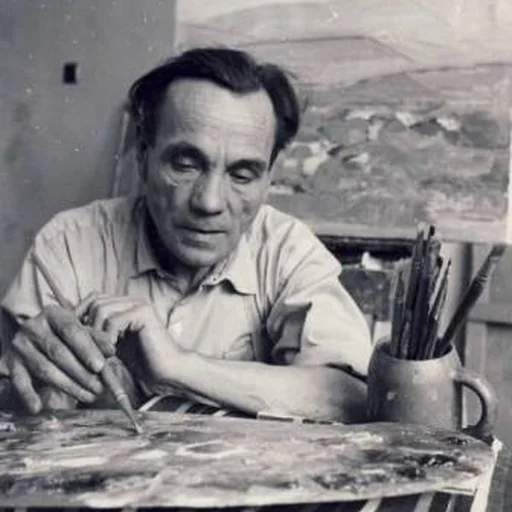
Alexandru Ciucurencu (Romanian pronunciation: ; 27 September 1903 – 27 December 1977) was a Romanian Post-Impressionist painter, and a corresponding member of the Romanian Academy.