Artwork
Pădurea Mogoșoaia (Peisaj)
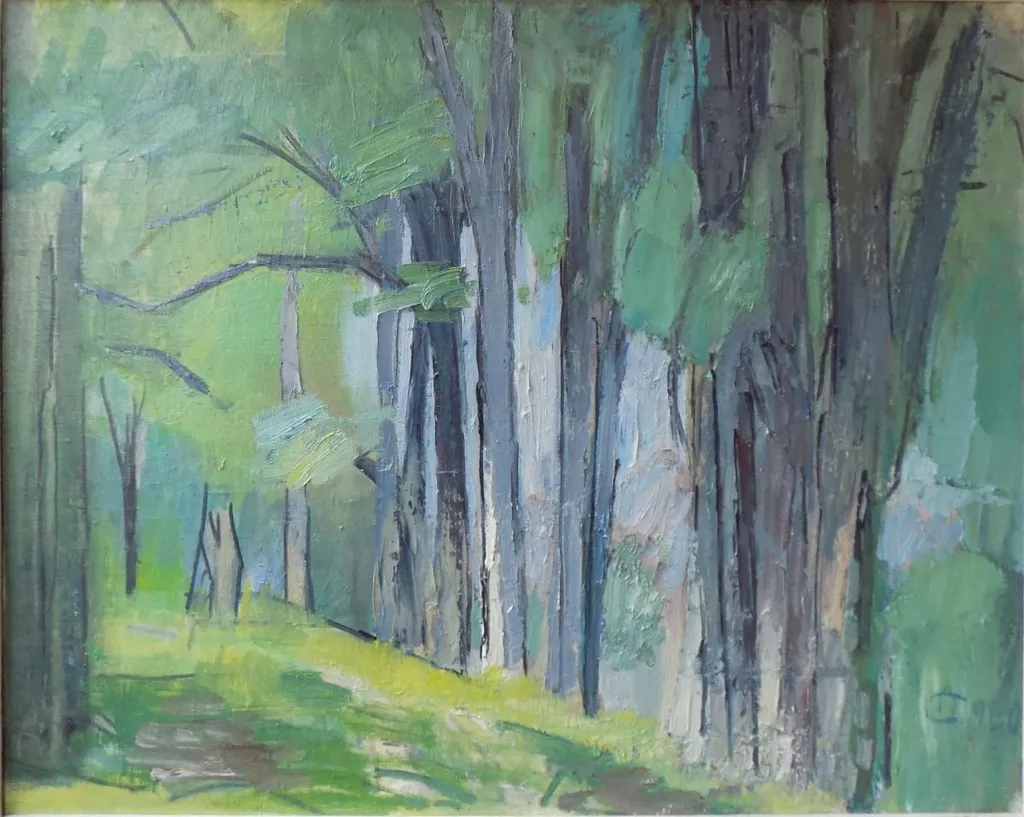
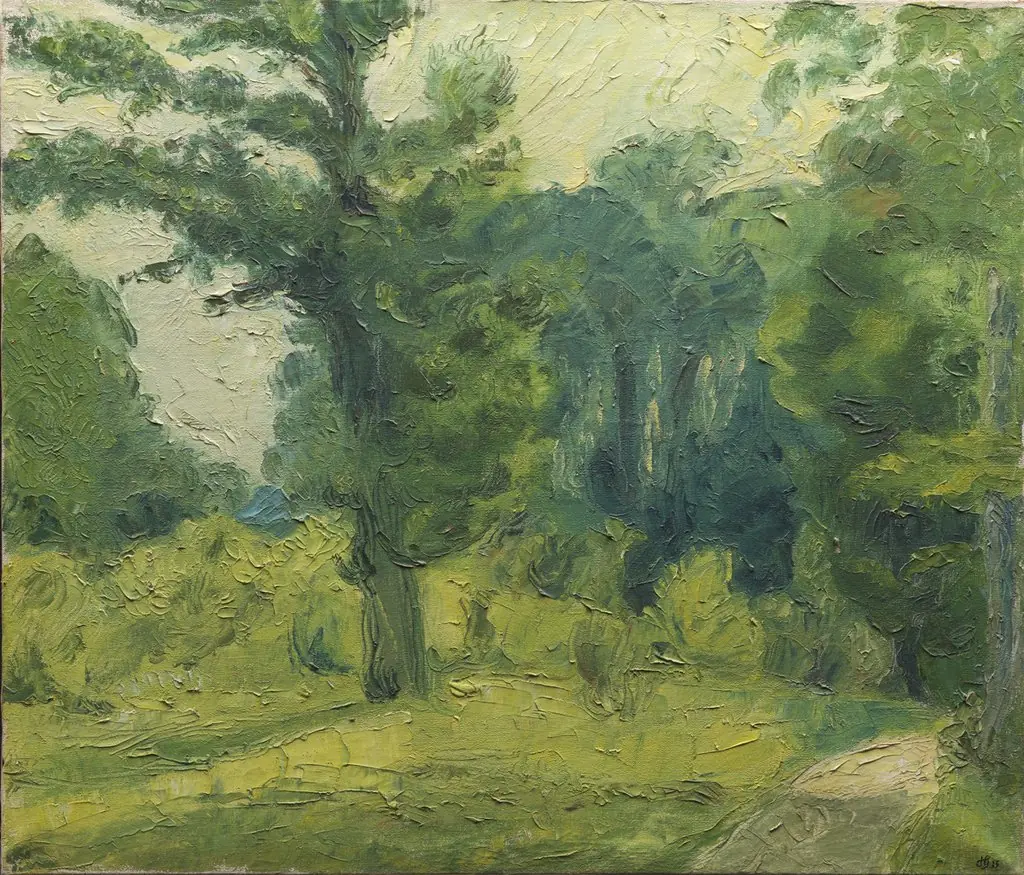
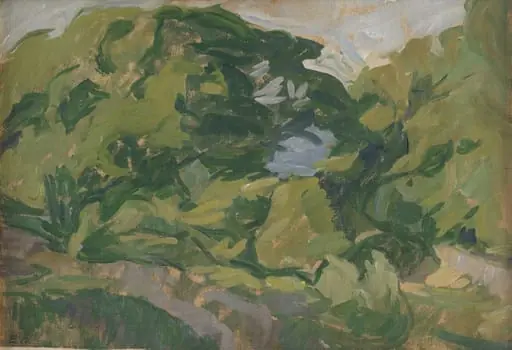
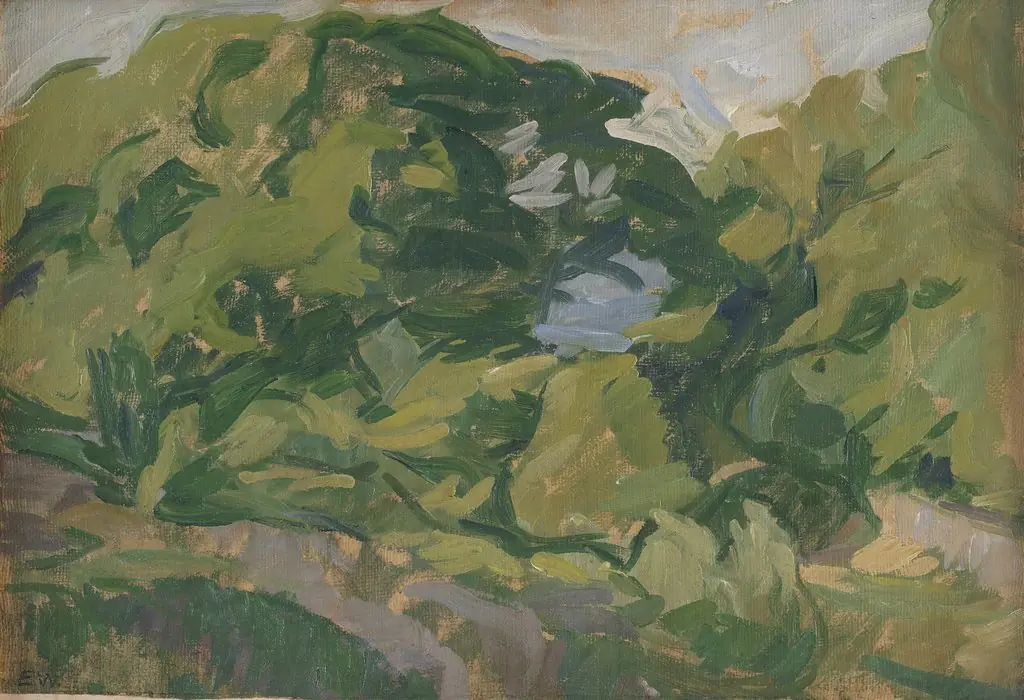
Pădurea Mogoșoaia (Peisaj) is a print by Alexandru Ciucurencu. It dates from 1960 and is held in the collection of the Bucharest Municipality Museum.
About this work
Overview
This work belongs to the Museum of Ethnography’s collection and reflects his sustained interest in natural environments as subjects of quiet contemplation.
Pădurea Mogoșoaia (Peisaj), painted in 1960 by Romanian artist Alexandru Ciucurencu, is a landscape rendering of a forest near Mogoșoaia. Ciucurencu, trained in Bucharest and Paris, developed a style rooted in Post-Impressionism, emphasizing tone and structure over strict realism. This work belongs to the Museum of Ethnography’s collection and reflects his sustained interest in natural environments as subjects of quiet contemplation.
Subject & Meaning
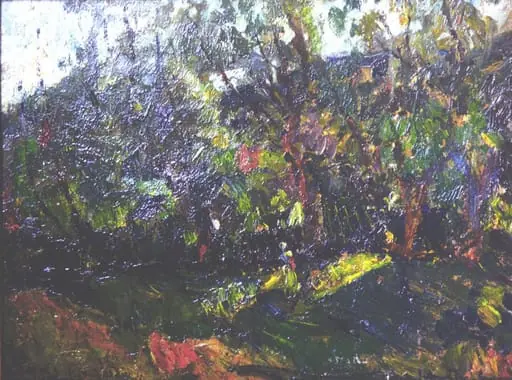
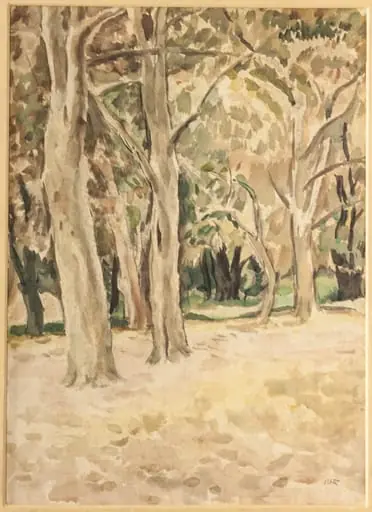
The painting presents a tranquil forest scene, with dense trees receding into a hazy background and a sunlit grassy foreground. There is no human presence or narrative element; the focus rests on the rhythm of branches, the play of light on foliage, and the subtle gradations of green and gray. The composition invites stillness, suggesting an emotional resonance with nature’s quiet endurance rather than a literal depiction of place.
Technique & Style
Ciucurencu employed layered brushwork to build texture in the foliage and grass, using muted greens and grays for the trees, contrasted with brighter yellow-green accents in the foreground to suggest sunlight. The background trees are softened through loose strokes and reduced detail, enhancing spatial depth. His approach blends structural clarity with atmospheric suggestion, characteristic of his Post-Impressionist leanings and academic training under André Lhote.
History & Provenance
Created in 1960, the painting entered the collection of the Museum of Ethnography, where it remains today. Ciucurencu, a corresponding member of the Romanian Academy, produced this work during a mature phase of his career, following decades of study and exhibition. While specific details of its acquisition are not widely documented, its inclusion in a national institution signals its recognition within Romania’s modern art canon.
Context
In postwar Romania, landscape painting persisted as a means of expressing cultural identity amid political pressures. Ciucurencu’s work diverged from state-mandated socialist realism, favoring introspective naturalism. Pădurea Mogoșoaia aligns with a broader trend among Romanian artists who turned to rural and forested scenes as subtle acts of cultural preservation, avoiding overt political symbolism while affirming national terrain.
Legacy
Though not widely exhibited internationally, Ciucurencu’s forest scenes, including this one, are regarded as significant within Romanian modernism for their emotional restraint and technical discipline. His integration of French academic training with local subject matter influenced later generations of Romanian painters seeking to reconcile European modernism with indigenous landscapes.
Artist & collection
Artist
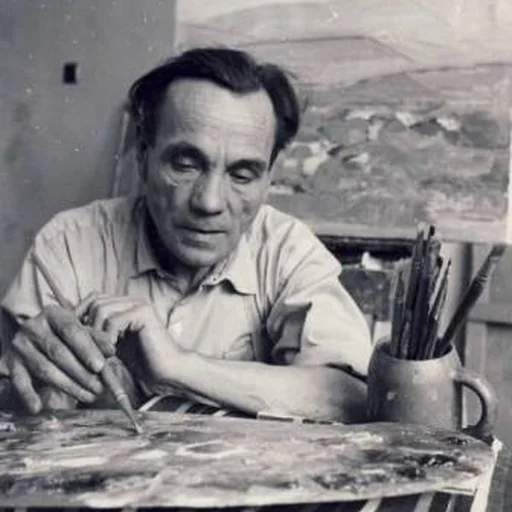
Alexandru Ciucurencu (Romanian pronunciation: ; 27 September 1903 – 27 December 1977) was a Romanian Post-Impressionist painter, and a corresponding member of the Romanian Academy.